Best Software for Employee Advocacy in 2026: 8 Tools Compared


Enterprise content sharing · Starting price: See website
How we put this together: we compare official feature and pricing pages, app store listings, privacy policies and public user reviews. Prices change, so check the provider's site before you pay.
Key takeaways
- EveryoneSocial and Sociabble suit large companies that need content libraries, approvals, and reporting across regions.
- GaggleAMP suits teams that want assigned actions and gamification to drive regular participation.
- PostBeyond and DSMN8 suit companies that want a focused advocacy feed with analytics on shares and reach.
- Most enterprise advocacy tools are quote-based, so a demo, pilot, and written quote matter more than a pricing page.
- Advocacy works best when sharing is voluntary, content is useful, and employees can add their own voice.
Quick comparison
| Name | Who it suits | Starting price | Free option | |
|---|---|---|---|---|
| EveryoneSocial | Enterprise content sharing | See website | No | Visit |
 Sociabble | Internal comms plus advocacy | See website | No | Visit |
 GaggleAMP | Assigned actions and gamification | See website | No | Visit |
 PostBeyond | Focused advocacy sharing | See website | No | Visit |
 DSMN8 | AI-assisted advocacy | See website | No | Visit |
 Hootsuite Amplify | Hootsuite customers | See website | No | Visit |
 Oktopost | B2B social plus advocacy | See website | No | Visit |
 AuthoredUp | LinkedIn content creation | $19.95 per month | Free trial | Visit |
The best software for employee advocacy
Employee advocacy software gives staff approved content to share, tracks what gets shared, and rewards participation, but it only works if employees want to share. The tools below cover enterprise programs, assignment-driven programs, internal communications, and LinkedIn creation, so match the tool to your company size and to how your staff already use social media.
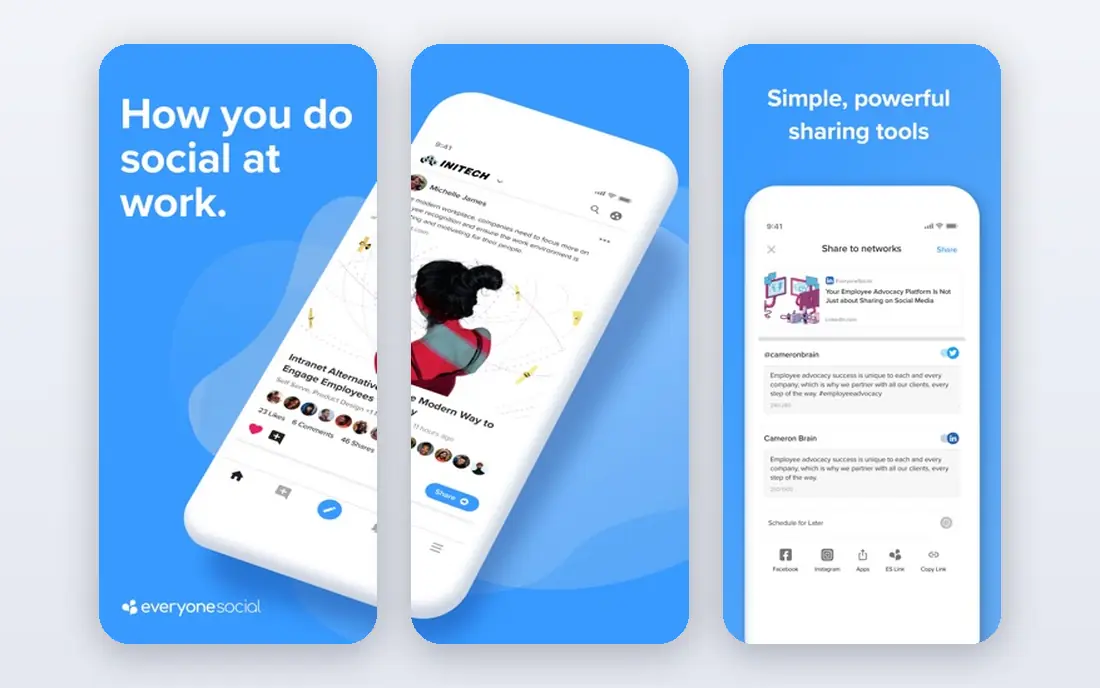
EveryoneSocial is a strong enterprise pick because it centralizes the core advocacy job: source content, review it, publish it to staff, and measure what happens next. Teams can curate articles, company news, and job posts, schedule shares, and track reach and engagement by person, team, or region. Auto-translation and multi-language support help global companies run one program across markets.
The cost model is the main risk. Pricing is quote-based and often pay-per-seat, so rolling the tool out to thousands of staff can cost far more than a pilot with a small group. A content owner is also essential, since an empty or stale feed will kill participation fast. Choose EveryoneSocial if you run a large, global program with dedicated content staff. Choose a smaller tool if you only need a pilot with one team.
- Central content hub for large teams
- Approvals and scheduling
- Analytics on shares, reach, and engagement
- Quote-based pricing
- Pay-per-seat costs add up for full adoption
- Setup needs a content owner
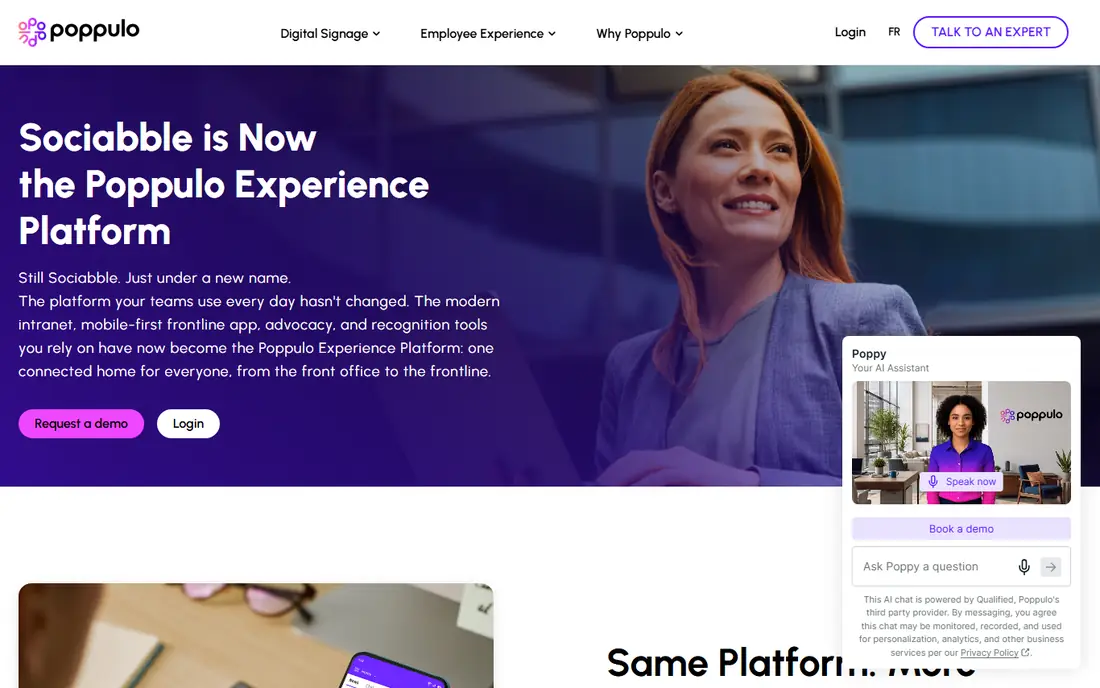
Sociabble suits companies that want internal communications and external advocacy in one place. Staff already visit the platform for company news, so the step to sharing approved external content is smaller than asking them to open a separate advocacy app. Multi-language targeting, gamification, CSR challenges, and approval workflows support global programs, and analytics show which content and teams drive reach.
The dual purpose is also a trade. A company that only needs advocacy may pay for internal communications features it will not use, and a company that only needs internal news may find the advocacy module thinner than a dedicated tool. Pricing is enterprise and quote-based, so small teams should expect a sales process. Pick Sociabble if internal news and external sharing belong together. Pick a dedicated advocacy tool if you only need one side.
- Internal communications and advocacy in one platform
- Multi-language targeting
- Gamification and approval workflows
- Quote-based enterprise pricing
- Dual purpose means neither module is as deep as a dedicated tool
- Setup is heavy for small teams
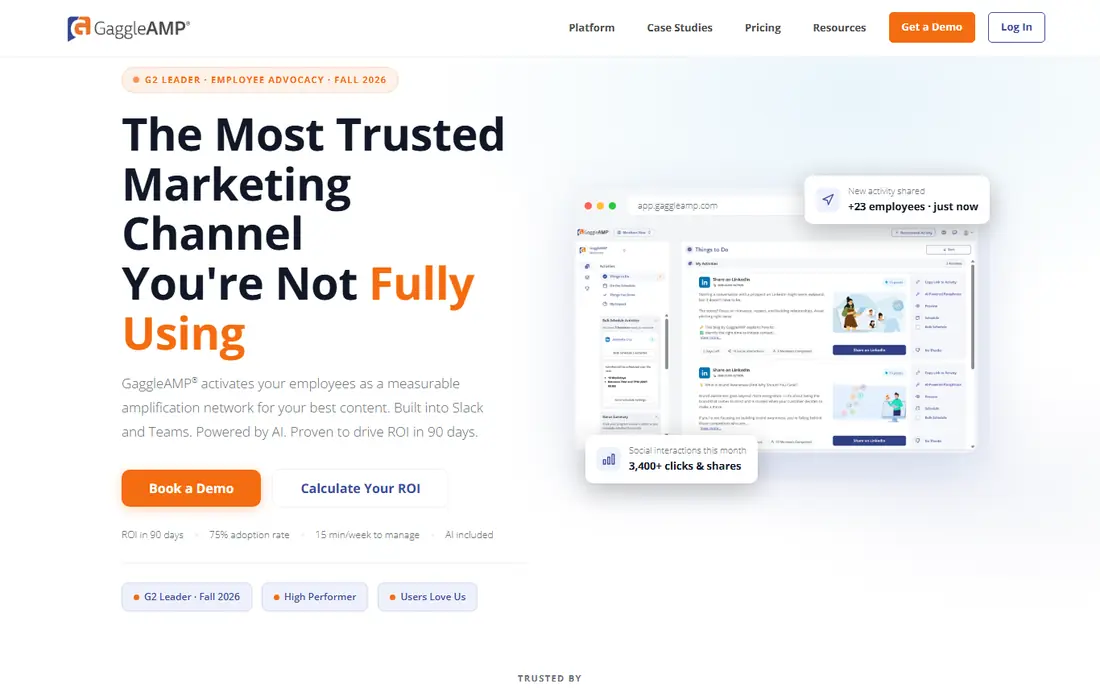
GaggleAMP takes an assignment-driven approach to advocacy. Managers assign activities, such as sharing a post, liking a company update, or commenting thoughtfully, and staff complete them in a feed with points and leaderboards. That structure helps programs that struggle with participation, since staff get clear, small tasks instead of a vague request to share more.
The model needs care. Assigned sharing can feel forced if tasks are too frequent or too generic, and managers must refresh activities regularly or participation will fade. Pricing is quote-based, so a pilot quote should include the full rollout cost, not just a small team. Choose GaggleAMP if your program needs structure and gamification to sustain participation. Choose a content-hub tool if your staff already share willingly and need good content, not assignments.
- Assigned activities for staff
- Leaderboards and gamification
- Analytics on actions and reach
- Quote-based pricing
- Activity model needs regular management
- Some staff dislike assigned sharing tasks
PostBeyond, now part of Influitive, offers a focused advocacy experience: a feed of approved content, easy sharing to social networks, and analytics on which posts perform. The simplicity helps staff who do not want to learn a large social suite, and managers get a clear view of shares, clicks, and reach by team or campaign. That focus suits mid-sized and large companies that want advocacy done well, without buying a full social management platform.
The limits are scope and price transparency. Internal communications features are thinner than Sociabble, and pricing is quote-based, so budgeting needs a demo and a written quote. Companies that also need publishing, listening, and social customer care will need another tool beside it. Pick PostBeyond if a clean advocacy feed is the core need. Pick a broader suite if social management and advocacy must live together.
- Simple advocacy feed for staff
- Content library and scheduling
- Analytics on shares and post performance
- Quote-based pricing
- Fewer internal communications features than Sociabble
- Advocacy is one focus, not a full social suite
DSMN8 suits companies that want AI help to keep an advocacy feed fresh. The platform suggests content for staff, supports gamification and leaderboards, and provides analytics on shares and engagement, with integrations for large teams. AI suggestions can reduce the content burden on a small marketing team, since the feed does not depend solely on manually curated posts.
AI suggestions still need review. Generic or off-brand suggestions can harm trust if staff share them without reading, so a content owner should approve suggestions and coach staff to add their own voice. Pricing is quote-based, so pilot costs may not reflect a full rollout. Choose DSMN8 if AI-assisted content and gamification fit your program. Choose a simpler hub if you already have a strong content pipeline and need only distribution.
- AI content suggestions for staff
- Gamification and leaderboards
- Analytics and integrations for large teams
- Quote-based pricing
- AI suggestions need human review
- Setup benefits from a dedicated program owner
Hootsuite Amplify makes sense for one group: companies already using Hootsuite for social publishing and listening. Amplify adds an advocacy layer, letting managers curate content for staff to share, with analytics that sit beside Hootsuite reports. That integration avoids a second login and a second reporting system, which helps a social team that already lives in Hootsuite.
For everyone else, Amplify is a weaker pick. It is an add-on, not a standalone advocacy product, gamification is basic compared with GaggleAMP or DSMN8, and pricing depends on the Hootsuite plan. A company that does not use Hootsuite will pay for a social suite it does not need. Pick Amplify if Hootsuite already runs your social work. Pick a standalone tool if you need advocacy alone.
- Works inside Hootsuite social management
- Content curation for staff
- Analytics tied to Hootsuite reports
- Add-on pricing, not a standalone product
- Gamification is basic
- Best value only for existing Hootsuite users
Oktopost suits B2B marketing teams that already run a heavy social and marketing automation stack and want advocacy inside it. Publishing, listening, advocacy, and analytics sit in one suite, with integrations to marketing automation tools that help tie social shares to leads and pipeline. That link matters for B2B teams that must show advocacy results in business terms, not just reach.
The trade is focus and cost. Advocacy is one module among several, pricing is quote-based with no self-serve trial, and a small team that only needs advocacy will pay for a suite it does not use. Pick Oktopost if B2B social management and advocacy belong together in your stack. Pick a dedicated advocacy tool if you only need staff sharing and reporting.
- Full B2B social suite with publishing, listening, and advocacy
- Strong marketing automation integrations
- Detailed social analytics
- Quote-based pricing
- Advocacy is one module, not the sole focus
- Overkill for a small advocacy-only program
AuthoredUp is different from the other tools in this list, because it helps staff create original LinkedIn content, not just share company posts. A rich editor, hook and call-to-action templates, scheduling, and analytics help an employee turn an idea into a readable post, with history and performance data to learn what works. That creation focus suits professionals who want a personal voice on LinkedIn, rather than identical company shares.
The limits are platform and program scope. AuthoredUp is LinkedIn only, with no multi-platform advocacy feed, leaderboards, or approval workflow for a company program, and per-profile pricing near $19.95 per month adds up for a large team. It works best as a complement to a hub tool, or as a standalone tool for a small team focused on LinkedIn. Pick AuthoredUp if original LinkedIn creation is the goal. Pick a hub tool if company-wide sharing across networks is the goal.
- Rich editor for LinkedIn posts
- Scheduling and analytics for profiles
- Helps staff create original posts, not just share company posts
- LinkedIn only, not multi-platform
- No team advocacy feed or gamification
- Per-profile pricing adds up for large teams
How we picked these
We compared official product pages, feature documentation, and recent comparisons for content libraries, approvals, scheduling, gamification, analytics, and pricing models, and we kept only tools still sold and supported in October 2026. We favored tools that cover distinct program models, from enterprise hubs to assignment-driven programs to LinkedIn creation, and we wrote See website where pricing is quote-based, rather than repeating a third-party estimate. We also weighed whether sharing stays voluntary and authentic, since a tool that pushes identical shares can harm trust with both staff and audiences.
How to run an employee advocacy program that staff actually join
Software helps, but program design decides whether staff share once and stop, or keep sharing because it helps them.
Make sharing voluntary and useful
Give staff content that helps their own professional reputation, such as industry insight, job openings in their team, or company news they would want to share anyway. Let staff edit captions and add their own voice, and never require shares or tie them to performance reviews in a way that feels forced. Voluntary, personal shares perform better and carry less risk than identical mass shares.
Assign a content owner and a weekly rhythm
A program without fresh content dies quickly. Assign an owner to curate and approve content each week, set a simple rhythm such as two to three posts per week, and remove stale items. Track which topics staff actually share, and ask staff what content they wish they had, rather than guessing from headquarters.
Measure reach, clicks, and quality, not just share counts
Share counts alone can mislead, since a hundred low-effort shares may matter less than ten thoughtful posts with real comments. Track reach, clicks, profile visits, and leads where possible, and review a sample of shared posts for quality and brand fit. Share results back with staff, so they see the effect of their participation.
Check platform rules and compliance
Review social platform rules on automation and identical sharing, and set approval workflows for regulated industries or sensitive topics. Train staff on what they can share, what needs approval, and how to handle comments and questions on their own posts. A short guide and a named contact for questions prevent most compliance problems.
Frequently asked questions
What is the best software for employee advocacy?
EveryoneSocial and Sociabble lead for large enterprise programs, with EveryoneSocial leading for content sharing and Sociabble leading for combined internal communications and advocacy. GaggleAMP leads for assignment-driven programs, while PostBeyond and DSMN8 suit focused advocacy feeds.
What is the best employee advocacy tool for small teams?
A small team should start with a pilot on a hub tool such as PostBeyond or DSMN8, or use AuthoredUp for LinkedIn-focused creation, rather than buying an enterprise platform for hundreds of seats. Pilot with one team, measure shares and reach, and expand only if staff join willingly and content stays fresh.
How much does employee advocacy software cost?
Most enterprise tools in this guide are quote-based, with pricing depending on seats, features, and contract length, so a demo and written quote are essential. AuthoredUp publishes per-profile pricing near $19.95 per month, which suits individuals and small teams, while enterprise tools often cost far more at full rollout.
Is employee advocacy software worth it?
It can be worth it when staff want to share, content is useful, and the program is run consistently, since employee shares often reach audiences a company page cannot. It is not worth it when content is stale, sharing feels forced, or no owner maintains the program, since participation will fade quickly.
What is the difference between EveryoneSocial and PostBeyond?
EveryoneSocial is a broad enterprise hub with strong content, approval, and multi-language features for large global teams. PostBeyond offers a simpler, focused advocacy feed with sharing and analytics, which suits teams that want advocacy done well without a full internal communications platform.
Can employees be required to share company content?
Companies can invite and encourage sharing, but requiring identical shares can harm trust, damage personal brands, and breach platform rules on automation in some cases. The best programs make sharing voluntary, let staff add their own voice, and reward participation without punishing staff who choose not to share.
Sources we checked (8)

Online Jobs is an independent blog about careers, online work, learning new skills and the tools that help people earn. More about us.
Keep reading
All posts
n8n Alternatives
n8n alternatives compared for 2026, with Zapier, Make, Activepieces, and more, covering visual builders, code steps, self-hosting, and pricing models.

ZoomInfo Alternatives
The best ZoomInfo alternatives in 2026, compared on price, free plans, data coverage, and which tool fits small teams or large sales teams best in detail.
Yotpo Alternatives
Find cheaper alternatives to Yotpo for reviews and loyalty, with Judge.me, Loox, Stamped, and more compared for Shopify stores in 2026, all in one guide.