Best SIEM Tools in 2026: 9 Tools Compared


Microsoft-centred security teams · Starting price: See website
How we put this together: we compare official feature and pricing pages, app store listings, privacy policies and public user reviews. Prices change, so check the provider's site before you pay.
Key takeaways
- Microsoft Sentinel suits Microsoft-centred estates, with consumption pricing and strong links to Defender and Azure services.
- Splunk Enterprise Security remains the reference choice for large teams with Splunk skills and complex hybrid environments.
- Elastic Security suits engineering-led teams that want open detection rules and control over their search platform.
- CrowdStrike Falcon Next-Gen SIEM and Palo Alto Cortex XSIAM suit teams that want SIEM, endpoint, and automation in one platform.
- Most enterprise SIEM pricing is quoted or consumption-based, so model costs on your real log volume and retention before you buy.
Quick comparison
| Name | Who it suits | Starting price | Free option | |
|---|---|---|---|---|
| Microsoft Sentinel | Microsoft-centred security teams | See website | Free trial | Visit |
 Splunk Enterprise Security | Large hybrid security operations | See website | Free trial | Visit |
 IBM QRadar SIEM | Regulated and network-heavy estates | See website | No | Visit |
 Elastic Security | Open detection and search | See website | Free trial | Visit |
 CrowdStrike Falcon Next-Gen SIEM | CrowdStrike endpoint customers | See website | No | Visit |
 Palo Alto Cortex XSIAM | Unified SIEM, XDR, and automation | See website | No | Visit |
 Exabeam | Behaviour analytics and timelines | See website | No | Visit |
 Securonix | Insider threat and large enterprises | See website | No | Visit |
 Sumo Logic Cloud SIEM | Cloud-native mid-market teams | See website | Free trial | Visit |
The best siem tools
A security information and event management tool collects logs from across your estate, correlates them into alerts, and gives analysts a place to investigate incidents. The right SIEM depends on your cloud mix, your log volume, your team's skills, and how much automation you need. We compared official product pages, pricing pages, and public documentation for tools that are live and supported in October 2026, with a focus on detection quality, investigation experience, and total cost.
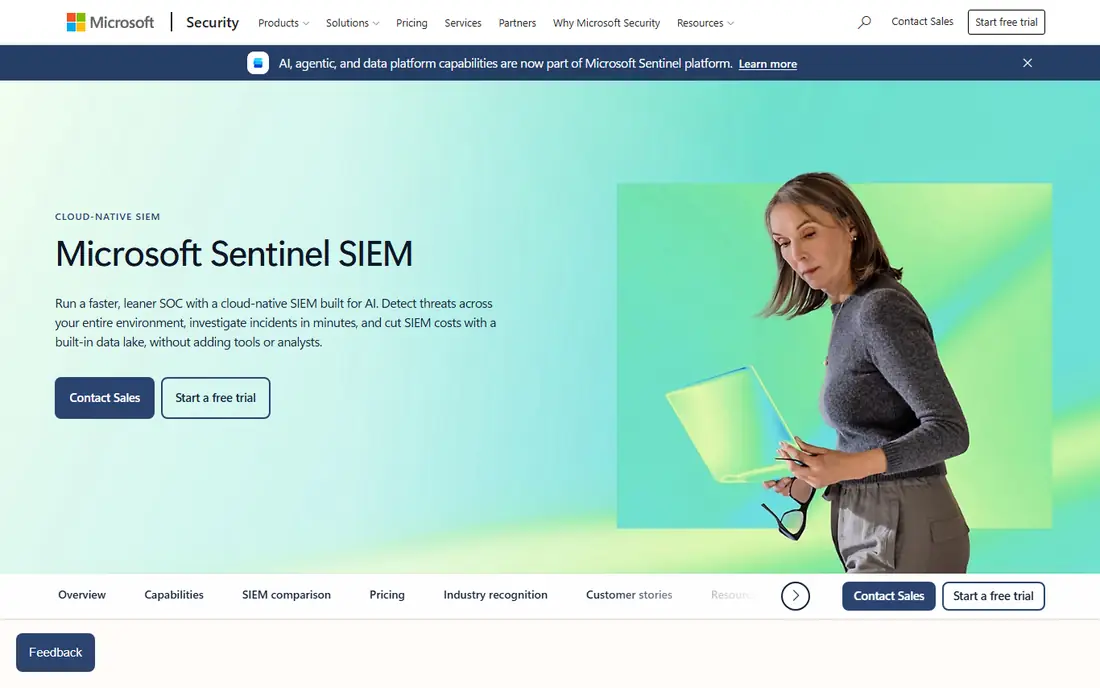
Microsoft Sentinel is a cloud-native SIEM that sits inside Azure, and it makes the most sense for organisations already running Microsoft 365 and Defender. Data from Microsoft sources flows in with minimal setup, and built-in analytics rules, workbooks, and automation playbooks cover common attack patterns. Analysts query data with Kusto Query Language, which is powerful once learned and well documented.
Pricing is consumption-based, charged per gigabyte ingested, with commitment tiers that lower the rate at higher volumes. That model rewards careful log filtering but can surprise teams that ingest everything by default. If your estate is Microsoft-heavy and you want a SIEM without managing infrastructure, Sentinel is the natural first choice.
- Native links to Microsoft 365, Defender, and Azure
- Pay-as-you-go and commitment pricing
- Large built-in detection library
- Costs scale with log volume
- Non-Microsoft sources need connectors and tuning
- Azure skills help a lot
Splunk Enterprise Security
Who it suits: Large hybrid security operations
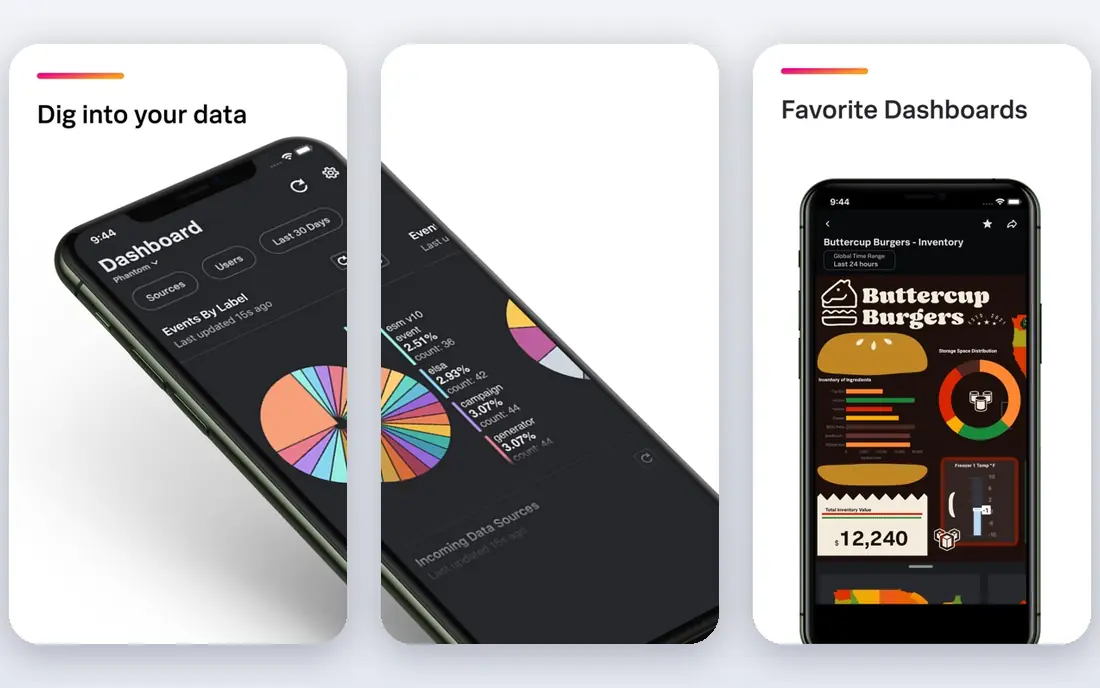
Splunk Enterprise Security is the long-standing reference SIEM for large security operations centres. Its search language lets analysts ask complex questions across huge datasets, and the Splunkbase app ecosystem adds detections, dashboards, and integrations for hundreds of products. Hybrid and on-premises estates, complex data models, and data science use cases all play to Splunk strengths.
The cost is the main barrier. Enterprise Security pricing is quoted, ingestion-based licensing can grow quickly with log volume, and running Splunk well needs trained staff or a partner. Smaller teams may find Sentinel or Elastic easier to adopt. Large teams with Splunk skills and demanding search needs will still find it the most capable platform on this list.
- Powerful search with Splunk Processing Language
- Huge app ecosystem
- Proven at very large scale
- Quote-only pricing for enterprise security
- Needs skilled staff to run well
- Ingestion costs can grow fast
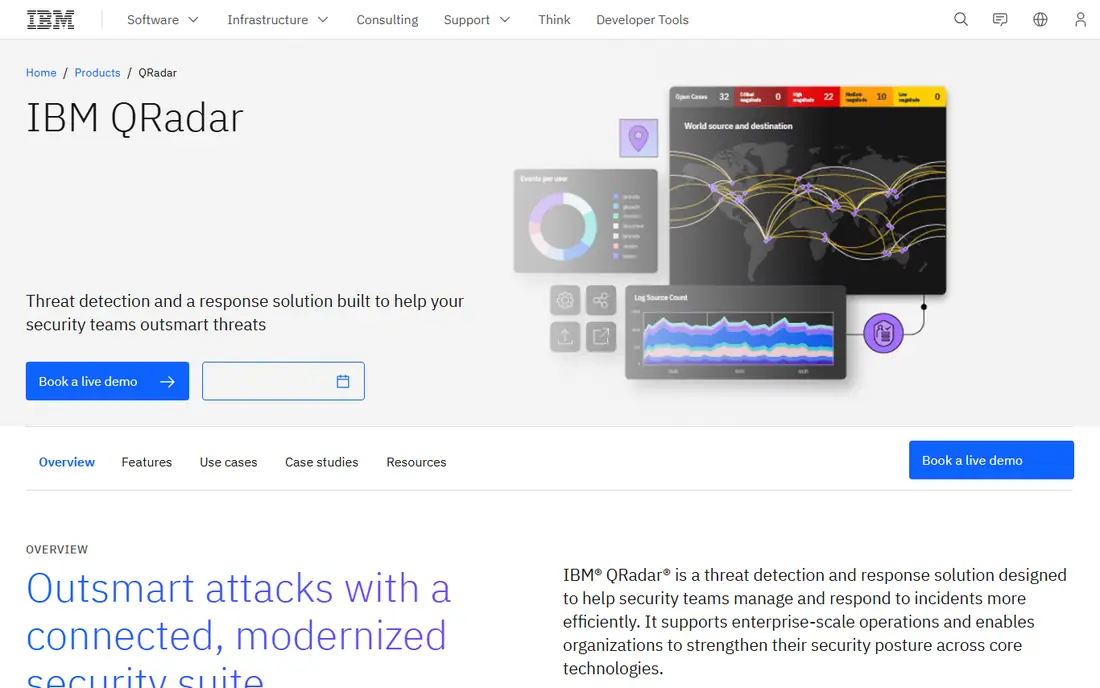
IBM QRadar has served regulated industries and network-heavy environments for years, with deep flow analysis that helps analysts see lateral movement and data movement across the network. Correlation rules group related events into offences, which gives analysts a single case to work rather than a flood of separate alerts. Compliance reporting for common frameworks is built in, which helps teams facing regular audits.
QRadar pricing is quoted, based on event throughput and deployment size, and on-premises setups need careful hardware planning. The community is smaller than those around Splunk and Sentinel, so finding public detections and guides takes more effort. For regulated firms and network-centric security teams, QRadar remains a solid and proven choice.
- Strong network flow analysis
- Out-of-box compliance reporting
- Mature correlation and offence workflow
- Quote-only pricing
- Hardware planning for on-premises use
- Smaller community than Splunk or Sentinel
Elastic Security builds on the Elastic search platform, giving engineering-led teams a flexible SIEM they can shape to their needs. Detection rules are open and version-controlled, dashboards are highly customisable, and teams can run Elastic self-hosted or as a managed cloud service. For threat hunting and custom analysis, that openness is a real advantage over closed platforms.
The trade-off is effort. Out-of-box alert quality needs tuning, and self-managed clusters need engineers who understand Elastic operations. Cloud pricing depends on resources consumed, so costs vary with data volume and retention. Teams with Elastic skills and a hunting mindset will get great value here, while teams wanting a fully managed experience should look at Sentinel or Sumo Logic.
- Open detection rules and flexible search
- Self-hosted or cloud options
- Strong for threat hunting
- Alert quality needs tuning out of the box
- Cluster management takes engineering time
- Pricing depends on resources used
CrowdStrike Falcon Next-Gen SIEM
Who it suits: CrowdStrike endpoint customers
CrowdStrike Falcon Next-Gen SIEM extends the Falcon platform beyond endpoint detection into full log management and correlation. Existing Falcon customers benefit most, since endpoint data flows in natively and analysts can pivot from an alert to endpoint context without switching tools. Search performance on large datasets is strong, and third-party logs can be ingested alongside Falcon data.
Full SIEM pricing is quoted, and the value case is weakest for organisations that do not already use Falcon. Check retention periods, third-party data allowances, and any free data tiers for Falcon customers before comparing prices. If CrowdStrike already anchors your endpoint security, its SIEM is a natural and powerful extension.
- Tight link to Falcon endpoint data
- Fast search on large datasets
- Third-party log ingestion included in tiers
- Quote-only pricing for full SIEM
- Best value for existing Falcon customers
- Retention and volume terms need checking
Palo Alto Cortex XSIAM aims to replace separate SIEM, endpoint, and automation tools with one AI-driven security operations platform. It ingests logs, correlates alerts, and automates response steps through playbooks, reducing the manual triage load on analysts. Organisations already using Palo Alto firewalls and endpoint products get the tightest integration, with shared data and policy context.
Pricing is quoted, and XSIAM suits larger teams that can commit to a platform consolidation project rather than a simple tool swap. Smaller teams may find the scope and cost more than they need. If your goal is to cut tool sprawl and automate more of the response cycle, XSIAM is one of the most ambitious options available.
- Combines SIEM, endpoint, and automation in one platform
- Strong automation playbooks
- Broad Palo Alto integrations
- Quote-only pricing
- Works best inside Palo Alto estates
- Migration from another SIEM takes planning
Exabeam is known for behaviour analytics that spot unusual user and machine activity, such as odd login patterns or abnormal data access, even when no single event looks malicious. Incident timelines pull related activity into a clear story, which helps analysts understand what happened and in what order. Cloud and hybrid deployments suit teams that want managed delivery without giving up on-premises log sources.
Behaviour models need time to learn normal activity before they become reliable, so expect a baselining period after deployment. Pricing is quoted, and the full platform includes several components that should be scoped carefully on a demo. For teams focused on insider threats and compromised accounts, Exabeam behaviour analytics are a genuine differentiator.
- Strong user and entity behaviour analytics
- Clear incident timelines
- Cloud and hybrid deployment options
- Quote-only pricing
- Behaviour models need baselining time
- Some SIEM features come via the wider platform
Securonix Unified Defense SIEM targets large enterprises with a focus on insider threats, behaviour analytics, and scalable cloud delivery. It correlates logs from many sources, applies risk scoring to users and entities, and gives analysts a prioritised view of the riskiest activity. That risk-based approach helps large teams focus limited analyst time on the cases that matter most.
As with other enterprise SIEMs, pricing is quoted and deployment needs planning and tuning. Smaller teams may find the platform more than they need, both in cost and complexity. Large enterprises with insider threat concerns, complex estates, and a mature security operations centre will find Securonix a credible and powerful contender.
- Strong insider threat and behaviour analytics
- Scalable cloud platform
- Broad data source coverage
- Quote-only pricing
- Deployment and tuning take time
- Best suited to larger security teams
Sumo Logic Cloud SIEM suits cloud-native companies and mid-market teams that want a SIEM up and running quickly without managing infrastructure. The cloud platform ingests logs from cloud services, applications, and infrastructure, applies detection rules, and gives analysts search and dashboards in a single console. A trial helps teams test ingestion and detections before committing.
Credit-based pricing needs careful tracking, since data scanned and retained drives consumption, and some advanced features sit on higher tiers. On-premises estates may find other tools a better fit. For a cloud-first team that wants fast deployment and a manageable learning curve, Sumo Logic is a practical and well-regarded choice.
- Fast cloud deployment
- Credit-based pricing with trial options
- Good for cloud-native and mid-market teams
- Credit consumption needs careful tracking
- Some advanced features need higher tiers
- Smaller on-premises focus
How we picked these
We compared official product pages, pricing pages, and public documentation for SIEM platforms that are live and supported in October 2026. We checked ingestion models, detection libraries, behaviour analytics, investigation tools, automation options, and deployment choices. We favoured platforms with clear documentation and a track record in production security operations, and we noted where pricing is quoted or consumption-based rather than publishing a fixed price we could not verify.
How to choose the right SIEM
Start with your log volume and retention needs, not with the feature list. Measure thirty days of real log volume by source, check how long regulators or auditors require you to keep data, and model each candidate pricing scheme against those numbers. The same estate can cost several times more on one pricing model than another, so a sizing exercise before demos saves painful surprises after signing. Also check which of your critical sources have ready-made connectors, since custom parsing work adds time and cost.
Pilot with real incidents
Run a pilot with your five most common detections and one real historical incident. Check whether the platform can express each detection clearly, how fast investigation reconstructs the incident timeline, and how noisy the alerts are in daily use. Involve the analysts who will live in the tool, not just the buyers, since their verdict on search speed and alert quality matters more than a polished sales demo. Budget for tuning time, parser maintenance, and a named owner for cost governance on consumption-priced platforms.
Frequently asked questions
What is the best SIEM tool?
Microsoft Sentinel is the best choice for Microsoft-centred estates, Splunk Enterprise Security leads for large hybrid operations with Splunk skills, and Elastic Security suits engineering-led teams that want open detection. There is no single best SIEM for every company, so match the platform to your cloud mix, log volume, and team skills before deciding.
What is the best SIEM software for small teams?
Smaller teams often do best with a managed cloud SIEM such as Microsoft Sentinel or Sumo Logic, which avoid infrastructure management and offer trials. Elastic Security also works for small engineering-led teams that can manage a cluster. Start with a trial, ingest your most important sources first, and expand only when alert quality is under control.
How much does a SIEM cost?
SIEM costs vary widely by pricing model. Sentinel charges per gigabyte ingested with commitment discounts, Splunk and QRadar are largely quote-based, and Elastic charges by resources used. Model costs on your real log volume, growth rate, and retention period, and include staffing and tuning time in the total, not just the licence or consumption bill.
What is the difference between SIEM and XDR?
A SIEM collects and correlates logs from across the estate, including network, cloud, identity, and applications, to detect and investigate incidents. Extended detection and response, or XDR, focuses more narrowly on endpoint, network, and cloud telemetry with built-in response actions. Many modern platforms, such as Cortex XSIAM and Falcon Next-Gen SIEM, blend both approaches in one product.
Do I need a SIEM if I already have endpoint detection?
Endpoint detection covers devices well, but it does not see cloud logs, identity events, firewall data, or application logs in one correlated view. A SIEM adds that breadth, which matters for detecting lateral movement, compromised accounts, and cloud attacks. Smaller firms may start with endpoint detection and add a SIEM as their cloud and identity footprint grows.
How long does SIEM deployment take?
Deployment time ranges from days for a cloud SIEM with a few sources to months for a large enterprise rollout with many sources, custom parsers, and tuned detections. Plan for a pilot phase, a tuning phase, and ongoing detection maintenance, rather than treating go-live as the finish line. The tuning phase often matters more than the initial install for alert quality.
Sources we checked (9)

Online Jobs is an independent blog about careers, online work, learning new skills and the tools that help people earn. More about us.
Keep reading
All posts
Surfshark Alternatives
Looking for Surfshark alternatives? We compare 8 VPN services on price, privacy, streaming, and device limits to help you find a VPN that fits your needs.

NordPass Alternatives
We compared NordPass alternatives for families, solo users and teams, checking pricing, free plans, passkeys and sharing, so you can switch safely today.
Best background check app
We compared the best background check app options in 2026 for employers, landlords and individuals, with published prices, coverage and compliance notes.