Best Selling Apps in 2026: 10 Products Compared

How we put this together: we compare official feature and pricing pages, app store listings, privacy policies and public user reviews. Prices change, so check the provider's site before you pay.
Key takeaways
- eBay is the best all round selling app for almost anything, especially collectibles, electronics and niche items buyers search for by name.
- Facebook Marketplace, OfferUp and Craigslist are best for local sales, since bulky items sell free locally without shipping.
- Poshmark, Depop and Vinted lead for fashion, with different fee models that change the net on each sale.
- Mercari suits casual sellers who want simple shipped sales across many categories, while Etsy leads for handmade and vintage goods.
Quick comparison
| Name | Who it suits | Starting price | Free option | |
|---|---|---|---|---|
 eBay | Almost anything shipped | Free | Yes | Visit |
 Facebook Marketplace | Local and shipped general sales | Free | Yes | Visit |
 Mercari | Casual shipped sales | Free | Yes | Visit |
 Poshmark | Brand name fashion | Free | Yes | Visit |
 Depop | Vintage and streetwear fashion | Free | Yes | Visit |
 Vinted | Everyday clothes at low cost | Free | Yes | Visit |
 Etsy | Handmade and vintage goods | Free | Yes | Visit |
 OfferUp | Fast local sales | Free | Yes | Visit |
 Craigslist | Bulky local cash sales | Free | Yes | Visit |
 Whatnot | Livestream selling for collectibles | Free | Yes | Visit |
The best selling apps
The best selling app depends on what you are selling, not on a single ranking. A sofa, a vintage jacket, a phone and a handmade mug need different buyers, fees and shipping. The apps below are grouped by that fit, with fees explained in plain terms so you can work out what you keep from a sale before you list.
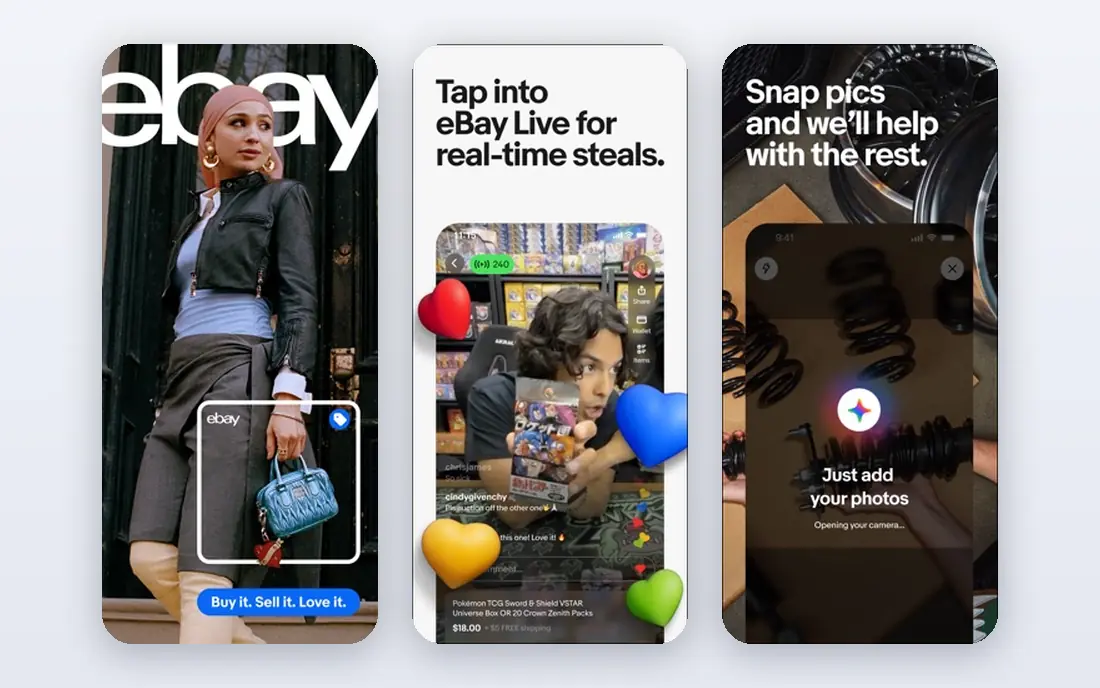
eBay remains the most versatile selling app because buyers search it for almost anything, from collectibles and electronics to clothing, parts and home goods. Sellers can list at a fixed price or by auction, offer 24 photos, and reach buyers far beyond a local area. That search driven model suits items with a specific name, model or condition that a buyer is actively looking for.
Fees are the main cost to model. Most categories charge a final value fee plus a per order amount, with rates varying by category, so check the fee for your item before pricing. Returns and seller performance rules also need attention, especially for new sellers. For a seller with varied items or niche goods, eBay is usually the first app to try, and often the one that sells an unusual item fastest.
- Huge buyer audience
- Search driven sales
- Auctions and fixed price options
- Final value fees on most categories
- Seller rules and returns need care
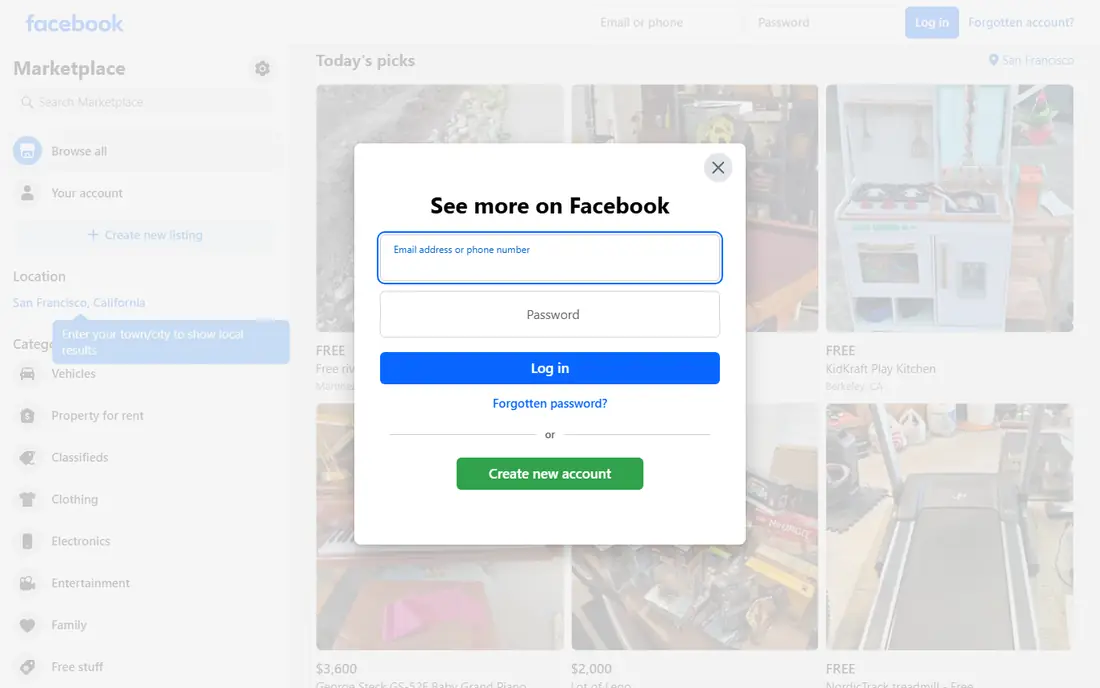
Facebook Marketplace is the best starting point for local sales, especially furniture, appliances, gym equipment and other bulky items that are costly to ship. Local listings are free, buyers are nearby, and a seller can list from a phone in minutes with photos and a description. The local audience also means a buyer can collect the same day, which suits a quick clearout.
Shipped sales through Marketplace carry a selling fee, so local and shipped sales should be priced differently. Sellers should also filter messages carefully, meet in a safe public place for local deals, and confirm payment before handing over an item. For a house clearout or a single bulky item, Marketplace is hard to beat on cost and speed.
- Free for local sales
- Huge local audience
- Easy listing from a phone
- Shipped sales carry a fee
- Buyer messages need filtering
- Less protection for local cash deals
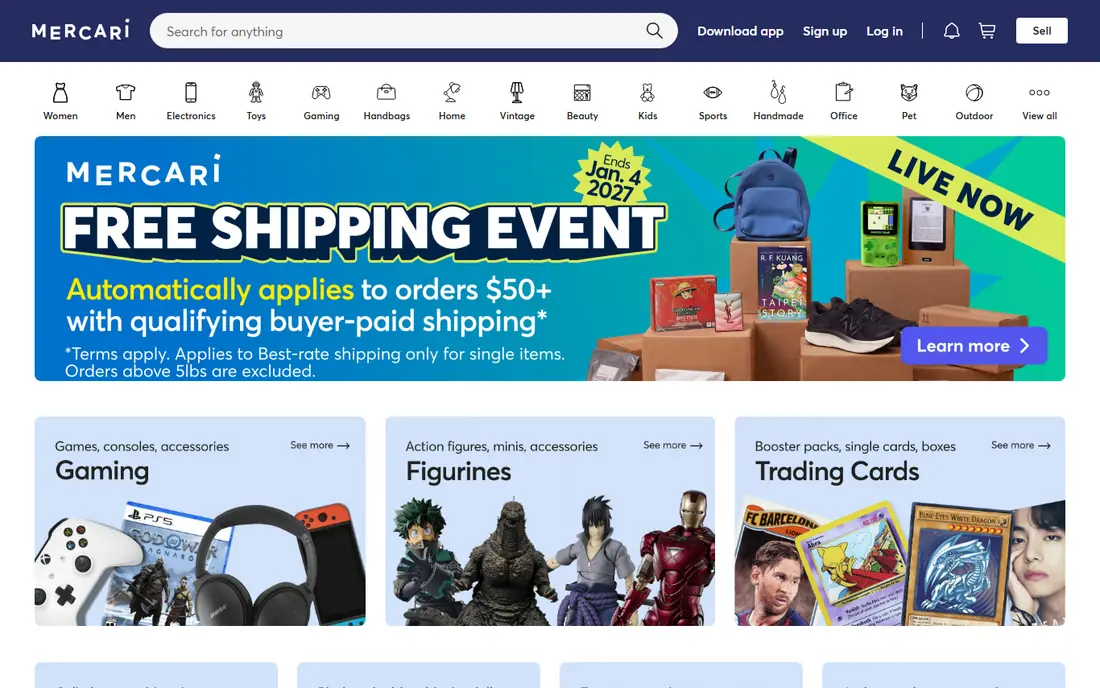
Mercari suits casual sellers who want to ship everyday items without learning a complex seller system. Listing is simple, categories cover clothing, toys, electronics and home goods, and shipping labels and options are built into the app. That simplicity makes Mercari a good second app after a local sale, when an item is better shipped than collected.
Mercari charges a seller fee on sales, so the net on a low price item needs checking before listing. It also has less fashion community energy than Poshmark or Depop, so a trendy fashion item may sell faster there. For a mixed box of household items, electronics and clothes, Mercari is a practical, low friction choice.
- Simple listing and shipping
- Broad general categories
- Buyer paid shipping options
- Seller fee on sales
- Less fashion focus than Poshmark or Depop
Poshmark is built for fashion selling, with a social feed, sharing, offers and a large audience for brand name clothes, shoes and accessories. Sellers list fashion items, share them to followers and parties, and respond to offers, which can move items that would sit unsold on a general marketplace. The buyer normally pays for the prepaid shipping label, which simplifies shipping for sellers.
The fee is the trade. Poshmark charges a flat fee on small sales and a percentage on larger sales, which is higher than Depop or Vinted for many items. That fee buys fashion traffic and a simple shipping flow, but sellers should price with it in mind. For brand name fashion in good condition, Poshmark is often worth the fee. For everyday clothes, Vinted may keep more of the sale.
- Large fashion buyer audience
- Social sharing features
- Prepaid shipping label for buyers
- Higher seller fee on larger sales
- Fashion focused, less general
Depop leads for vintage, Y2K, streetwear and trend driven fashion, with a social explore feed that helps unique items get discovered. US sellers currently pay no selling fee, though a payment processing fee applies per sale, which makes Depop cheaper than Poshmark for many fashion items. That cost advantage, plus a younger fashion audience, makes Depop a strong choice for thrifted and vintage stock.
Depop is fashion only, so general household items belong elsewhere. The audience is also trend driven, so an item that is out of fashion may sit longer than on eBay. For a seller with vintage or streetwear stock, Depop should be one of the first apps to try, alongside Poshmark for brand name pieces.
- Low seller cost in the US
- Strong Gen Z and vintage audience
- Social explore feed
- Fashion only
- Payment processing fee applies
- Audience is younger and trend driven
Vinted is built for clearing everyday clothes at low cost to the seller. Sellers list items, buyers pay a buyer protection fee, and sellers keep the item price in many markets, which makes Vinted attractive for a closet clearout where each item is modestly priced. The flow is simple, and shipping options are built into the app.
Prices on Vinted tend to be lower than on Poshmark or Depop, since buyers expect bargains on everyday clothes. High value designer pieces may sell better on Poshmark, The RealReal or eBay. For a seller who wants to move many everyday items without losing a large fee on each sale, Vinted is a strong pick, provided it is available in your country.
- No seller fee in many markets
- Simple closet clearout flow
- Buyer protection fees are buyer paid
- Lower prices for everyday items
- Less suited to high value fashion
Etsy is the leading app for handmade, craft and vintage goods, where buyers search for unique items rather than mass produced stock. Sellers can build a shop with branding, policies and listings, and Etsy search helps buyers find items by style, material and occasion. That shop model suits makers who sell repeatedly, not only a one off clearout.
Fees include a listing fee per item, a transaction fee on the sale, and a payment processing fee, so sellers should price with all three in mind. Competition is also high in popular categories such as jewellery and home decor, so photos, titles and tags matter. For a maker or vintage seller, Etsy remains the best audience for unique goods, despite the fees.
- Large handmade and vintage audience
- Shop branding tools
- Search driven discovery
- Listing and transaction fees plus processing
- Competition is high in popular categories
OfferUp is a local selling app similar to Facebook Marketplace, focused on fast sales in a nearby area. Furniture, electronics, vehicles and household items sell well locally, and listings are free for local sales within listing limits. The mobile first design makes it easy to list from a phone with photos taken on the spot.
Shipped sales carry fees, and local sales need the same care as Marketplace: safe meeting places, payment confirmation and clear condition photos. OfferUp is a good second local channel alongside Marketplace, since a different local audience may see the item. For a quick local sale, listing on both Marketplace and OfferUp increases the chance of a fast buyer.
- Free for local sales within limits
- Fast local buyer reach
- Simple mobile listing
- Shipped sales carry fees
- Local only for free sales
- Message filtering needed
Craigslist remains useful for bulky local items, vehicles and household goods, where a buyer collects in person and pays in cash. Most posts are free, listings are simple text and photos, and local buyers search by city and category. For a sofa, a car or a large appliance, Craigslist can still bring a local buyer quickly.
Craigslist offers no built in payment protection, and sellers must filter scam messages and meet safely. It is not a good choice for shipped sales or for items that need buyer protection. Use Craigslist for local, in person sales where cash on collection works, and use a marketplace app with protection for shipped items.
- Free for most posts
- Simple listings
- Good for furniture, cars and local services
- No built in payments or protection
- Older interface
- Scams need careful filtering
Whatnot is a livestream shopping app where sellers host live shows, auction items and sell to an audience in real time. It is strongest for trading cards, collectibles, sneakers, vinyl and similar categories where live excitement and community drive sales. Sellers can run scheduled shows, build a following and sell many items in one session.
Livestream selling takes time and practice, including show planning, presentation and handling live questions. Fees include commission plus payment processing, so net per item needs checking. Whatnot suits sellers with collectible stock and time to host shows, rather than a casual seller with one item to list. For collectibles, it can move stock faster than a static listing.
- Livestream shopping audience
- Strong for trading cards and collectibles
- Auction and buy now formats
- Commission plus processing fees
- Livestream selling takes practice and time
How we picked these
We compared apps that are live in October 2026, available as mobile apps, and used by individual sellers as well as small resellers. We weighed audience size and fit by item type, seller fees, shipping model, payout method, listing ease and buyer protection. Apps that only serve professional dealers or only serve one country were excluded unless they cover a major selling job.
We treated fees as changeable, since several apps changed fee models in recent years. A fee quoted here should be confirmed in the app before listing, especially for shipped sales where buyer fees and processing fees also affect the total. The ranking by item type matters more than a single fee number, since the app with the right buyers often nets more even with a higher fee.
How to choose a selling app and price your items
Start with the item, not the app. Bulky items go local on Marketplace, OfferUp or Craigslist. Fashion goes to Poshmark, Depop or Vinted depending on brand and price. Handmade and vintage go to Etsy. Niche and collectible items go to eBay or Whatnot. Everyday shipped items go to Mercari or eBay. Listing the same item on the wrong app wastes time even if the fee is low.
Next, work out your net before you list. Subtract seller fees, processing fees and any shipping cost you pay from the sale price, and compare that net across two or three suitable apps. Then invest in photos and an honest description. Natural light, a neutral background, all available photo slots and clear photos of flaws prevent disputes and returns. Price competitively by checking sold listings for the same item in similar condition, not only current asking prices.
Frequently asked questions
What is the best app to sell stuff on?
eBay is the best all round app for shipped sales, while Facebook Marketplace is best for local sales. For fashion, Poshmark, Depop and Vinted lead, and for handmade goods, Etsy leads. The best app depends on the item, so match the app to what you are selling rather than using one app for everything.
Which selling app is the best for clothes?
Poshmark is best for brand name fashion, Depop for vintage and streetwear, and Vinted for everyday clothes at low seller cost. Check the fee and the audience for your price range before listing, since a higher fee app can still net more if it sells faster or at a higher price.
Which app is best for selling locally?
Facebook Marketplace and OfferUp are best for local sales, with Craigslist useful for bulky items and vehicles. Local sales are usually free, and buyers collect in person, which avoids shipping costs. Meet in a safe public place and confirm payment before handing over the item.
What fees do selling apps charge?
Fees vary by app and by local versus shipped sale. Local sales on Marketplace and OfferUp are usually free, while shipped sales carry a percentage fee. Poshmark, Mercari and eBay charge seller fees on shipped sales, Depop charges mainly a processing fee in the US, and Etsy charges listing, transaction and processing fees. Always check the fee in the app before listing.
How do I get paid on selling apps?
Most shipped selling apps pay by bank deposit after delivery and any return window, usually within a few days. Local sales are usually paid in person by cash or a payment app agreed with the buyer. Check payout timing and method in each app, since it affects cash flow for resellers.
Is it better to sell on eBay or Facebook Marketplace?
eBay is better for shipped, searchable and niche items, since its buyer audience is national and search driven. Facebook Marketplace is better for local, bulky and everyday items, since local sales are free and collection is fast. Many sellers use both: Marketplace for local items and eBay for items that need a wider buyer pool.
Sources we checked (10)

Online Jobs is an independent blog about careers, online work, learning new skills and the tools that help people earn. More about us.
Keep reading
All posts
n8n Alternatives
n8n alternatives compared for 2026, with Zapier, Make, Activepieces, and more, covering visual builders, code steps, self-hosting, and pricing models.
eBay Alternatives
Looking for ebay alternatives? We compared 9 marketplaces for sellers on fees, buyer reach, categories and ease of listing, to help you sell with confidence.

ZoomInfo Alternatives
The best ZoomInfo alternatives in 2026, compared on price, free plans, data coverage, and which tool fits small teams or large sales teams best in detail.