Best Sales Funnel Software in 2026: 9 Tools Compared


All-in-one funnels for sellers and coaches · Starting price: $97 per month
How we put this together: we compare official feature and pricing pages, app store listings, privacy policies and public user reviews. Prices change, so check the provider's site before you pay.
Key takeaways
- ClickFunnels is our pick for sellers who want pages, checkout, and follow-up in one place, while HubSpot suits teams that need a fuller CRM behind the funnel.
- Systeme.io is the strongest low-cost starting point, because its free plan covers the basics without forcing an early upgrade.
- The best sales funnel software for small business is usually the one your team will actually finish building, not the one with the longest feature list.
- Check contact limits, email limits, and checkout fees before you buy, since those limits decide the real monthly cost.
- Leadpages, Unbounce, and GetResponse suit page-led funnels, while Kartra, Kajabi, and ActiveCampaign suit funnels tied to courses, email, or automation.
Quick comparison
| Name | Who it suits | Starting price | Free option | |
|---|---|---|---|---|
| ClickFunnels | All-in-one funnels for sellers and coaches | $97 per month | Free trial | Visit |
 HubSpot | Teams that want a CRM behind the funnel | Free | Yes | Visit |
 Kartra | All-in-one marketing for digital sellers | See website | Free trial | Visit |
 Leadpages | Fast landing pages for lead generation | See website | Free trial | Visit |
 Systeme.io | Low-cost funnels for new sellers | Free | Yes | Visit |
 Kajabi | Course and coaching funnels | See website | Free trial | Visit |
 GetResponse | Email-led funnels for small teams | See website | Free trial | Visit |
 ActiveCampaign | Automation-led funnels and lifecycle email | See website | Free trial | Visit |
 Unbounce | High-converting landing pages for paid traffic | See website | Free trial | Visit |
The best sales funnel software
A sales funnel is a planned path from first visit to purchase, with pages, offers, and follow-up messages in a set order. The tools below cover that path in different ways. Some bundle everything into one subscription. Others focus on pages or email and connect to the rest of your stack. We weighed ease of building, checkout, email follow-up, and total cost.
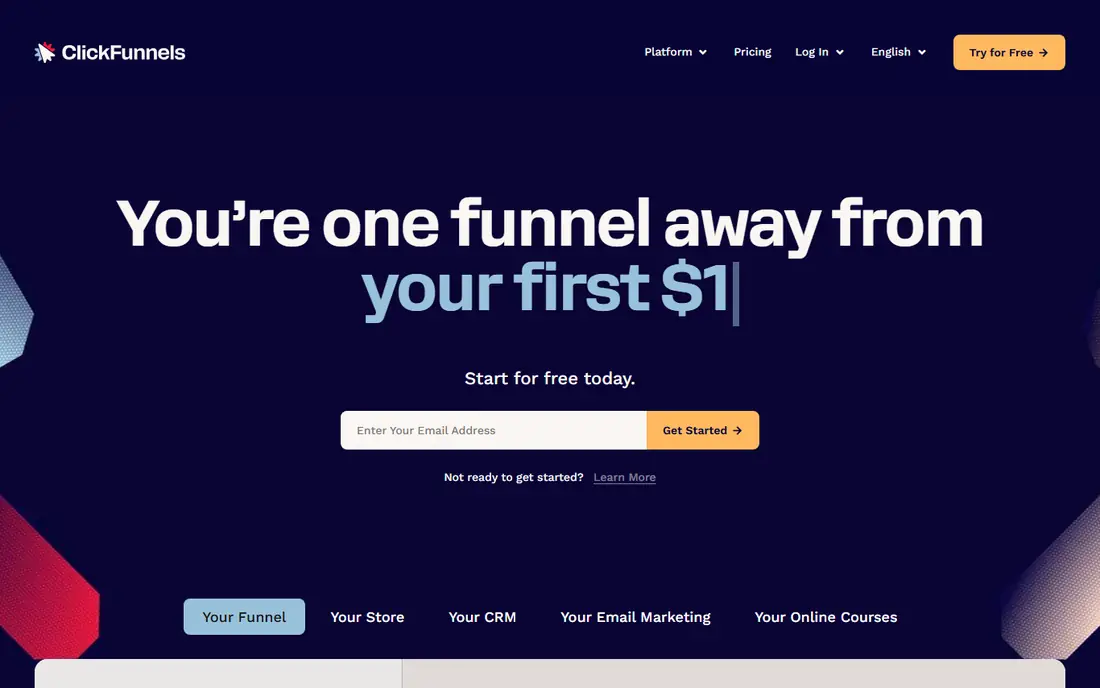
ClickFunnels is built around one idea: every page belongs to a step in a funnel. That focus helps when you sell a course, a service package, or a physical product with upsells. You pick a funnel type, edit the pages, connect a payment provider, and add follow-up emails without stitching several tools together. For a solo seller, that single workflow saves time and avoids integration work.
The trade is cost and scope. The monthly price is higher than a page-only tool, and limits on contacts and emails matter as you grow. It is also not the best choice for a large content site or a complex store. We rank it first for sellers who want one tool to run the whole funnel, and who will use its checkout and email features rather than only its pages.
- Funnel templates and checkout in one place
- Built-in email and courses
- Clear funnel-first workflow
- Monthly cost rises with contacts and email volume
- Less flexible for a full website than a general builder
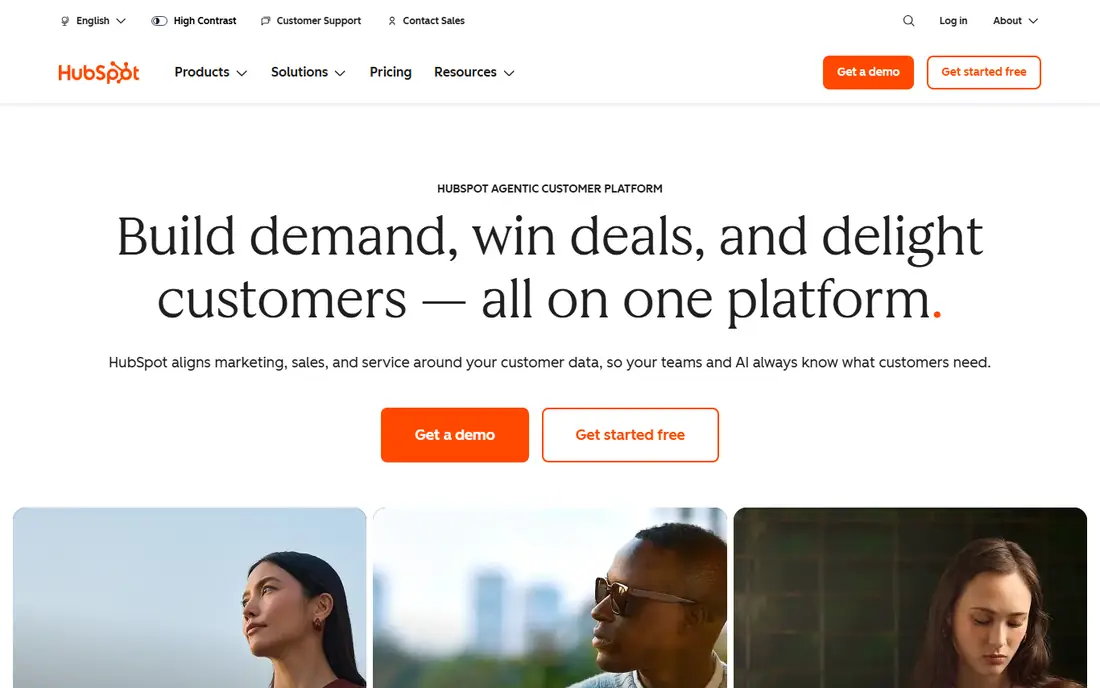
HubSpot suits a business that thinks in contacts and deals, not only in pages. A visitor fills in a form, becomes a contact, and moves through stages that sales and marketing can both see. That shared record is useful when leads need calls, quotes, or a longer sales cycle. The free tools give a small team a real starting point for forms, email, and chat.
The catch is that HubSpot is a platform, not a single funnel builder. Landing pages, email, workflows, and reporting sit in different hubs, and the paid tiers can add up fast. If you need a simple checkout funnel for one product, HubSpot may feel heavy. If you need a CRM-led process with reporting across the team, it is a strong and flexible pick.
- Free CRM with forms and live chat
- Strong contact records and reporting
- Wide integration library
- Paid hubs get costly at higher tiers
- Funnel building is spread across several hubs
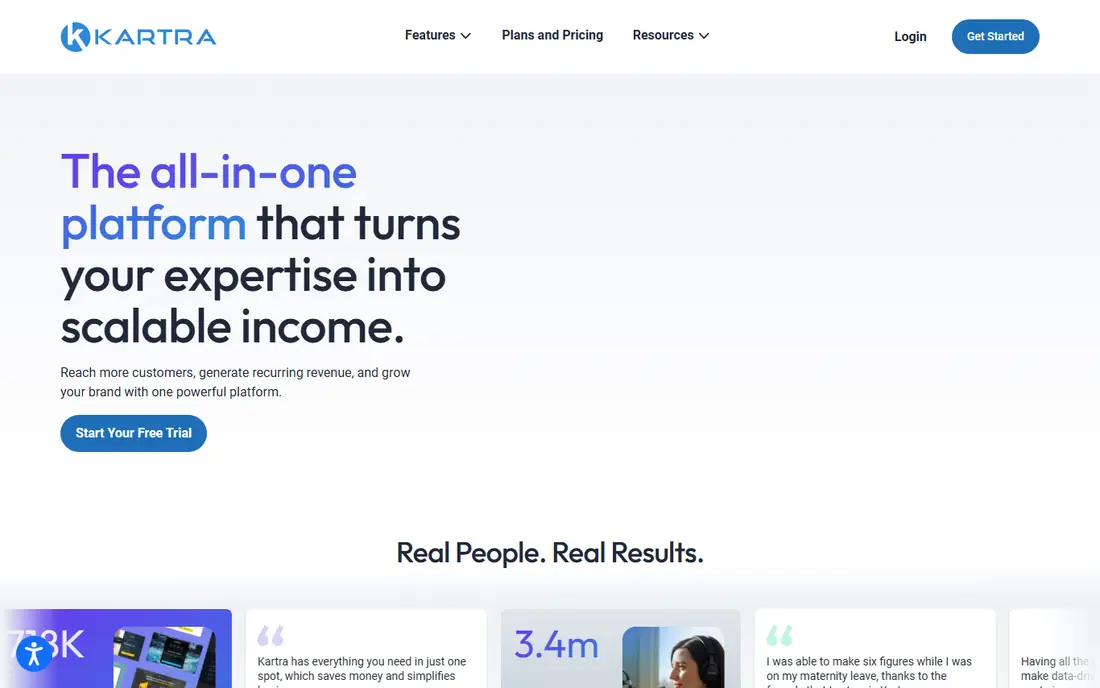
Kartra aims to replace a stack of separate tools. You can build pages, run email sequences, host a membership area, sell products, and answer support tickets from one login. That breadth suits course sellers and agencies that want one bill and one set of records. Its templates give a clear starting point for common funnels, such as lead magnets, webinars, and product launches.
The downside is learning time. With so many tools in one place, the menus take a while to master, and new users can feel lost at first. Lead-based pricing also means you should check your list size before choosing a plan. We like Kartra for sellers who will use several of its tools each week. If you only need pages, a simpler tool will cost less and feel faster.
- Pages, email, memberships, and checkout in one account
- Built-in helpdesk and video hosting
- Funnel templates included
- Interface takes time to learn
- Pricing is based on leads, so growth raises cost
Leadpages is a page-first tool, and that focus is its strength. You can publish a clean landing page, connect a form to your email tool, and start collecting leads in an afternoon. The template library covers webinars, free guides, waitlists, and local services, so you rarely start from a blank page. For a small business that runs ads to a single offer, speed matters more than extra features.
The limit is scope. Leadpages does not try to be a full funnel platform with checkout, memberships, and deep automation. You will pair it with an email tool and a payment tool for a complete funnel. That is fine if you already have those tools and only need better pages. If you want one subscription for the whole path, look at ClickFunnels or Kartra instead.
- Quick page building with many templates
- Built-in lead alerts and forms
- Simple A/B testing on higher plans
- No full checkout or course system built in
- Advanced testing sits on higher tiers
Systeme.io is the pick we suggest most often to new sellers on a tight budget. The free plan lets you build funnels, send emails, and sell products without paying first, which makes it easy to test an offer before you commit. The interface is plain and direct, with fewer menus than larger platforms. That simplicity helps a first-time builder finish a funnel instead of stalling on setup.
The trade is polish and depth. Design options are more limited, and some advanced integrations need workarounds. A growing business may outgrow it and move to a larger platform later. That is not a failure. Starting free, learning what your funnel needs, and upgrading only when sales justify it is a sensible path for a small business.
- Free plan covers funnels, email, and products
- Simple interface for beginners
- One account for pages and automation
- Fewer advanced design options
- Smaller template and integration range than larger rivals
Kajabi fits creators who sell knowledge. A funnel can lead to a course, a coaching program, or a community, and the whole student experience stays inside one platform. Pages look polished without much design skill, and course delivery, payments, and email follow-up connect cleanly. That cohesion matters when the product itself is the course, not just a checkout page.
The cost is the main barrier. Kajabi charges more than a simple page builder, so it only makes sense when course or coaching revenue covers it. It is also a weaker fit for physical products, large stores, or businesses that need deep CRM features. If your funnel ends in a course, Kajabi is one of the cleanest options. If it ends in a service booking, a cheaper funnel tool may serve you better.
- Courses, coaching, podcasts, and email in one place
- Polished page and course design
- Built-in payments
- Higher monthly cost than page-only tools
- Less suited to physical products or complex stores
GetResponse starts from email and builds outward, which suits businesses that already value their list. You can create a landing page, capture a subscriber, run a welcome sequence, and send webinar invites from one account. The visual automation builder makes it easy to set rules such as sending a different message to people who opened an email versus those who did not.
The funnel side is solid but not as deep as a funnel-first platform. Page design and checkout options are more limited, and complex funnels may need extra tools. Still, for a small team that runs regular email campaigns and wants pages and webinars included, GetResponse offers good value. It is a practical middle ground between a page tool and a full funnel suite.
- Email, automation, pages, and webinars in one tool
- Visual automation builder
- Useful list and segment tools
- Funnel templates are less deep than ClickFunnels
- Design freedom is more limited than Unbounce
ActiveCampaign is the strongest pick here for automation. You can tag contacts by behavior, move them between sequences, score leads, and hand warm leads to a sales pipeline. That depth suits businesses with repeat purchases, onboarding sequences, or a sales team that needs clear lead stages. The automation builder is visual, but it rewards careful planning.
The weakness is pages. ActiveCampaign includes landing pages, but they are not as flexible as Leadpages or Unbounce, and many users pair it with a dedicated page tool. Setup also takes longer than a template-led funnel builder. Choose ActiveCampaign when follow-up logic is the heart of your funnel. Choose a funnel-first tool when the page and checkout matter most.
- Strong automation and tagging
- Good CRM and sales pipeline tools
- Detailed contact behavior tracking
- Learning curve for complex automations
- Page building is not its main strength
Unbounce is a specialist. It builds landing pages for paid traffic, with testing tools that help you compare versions and learn what converts. That focus suits agencies and advertisers who send ad clicks to a dedicated page and need clean data on each variant. Integrations with ad platforms and CRMs make it easy to pass leads onward.
The limit is that Unbounce is only one part of a funnel. You still need email, checkout, and follow-up tools, so the total stack costs more than an all-in-one price suggests. If your funnel is page-led and traffic is paid, that trade is worth it. If you want one tool for pages, checkout, and email, an all-in-one platform will be simpler and often cheaper overall.
- Strong page builder with A/B testing
- Smart traffic features on higher plans
- Many integrations with ad and CRM tools
- No built-in email or checkout system
- Cost rises with visitors and domains
How we picked these
We compared official product and pricing pages for each tool, and we focused on funnel building, checkout, email follow-up, and cost at small-business scale. We included all-in-one platforms, page specialists, and email-led tools, because the best sales funnel tools differ by business type. We left out tools with no clear current funnel or landing page product, and we used "See website" where a vendor does not publish a simple starting price or where pricing depends on contacts, visitors, or plan choices. We did not claim hands-on testing, and we avoided claims about conversion rates, since results vary by offer, traffic, and page quality.
How to choose the right sales funnel software
Start with the end of the funnel, not the front page. A course sale, a service booking, and a physical product need different checkout, delivery, and follow-up steps. A tool that looks good for pages may fail at checkout, and a tool that excels at email may lack the page design you need. Map your funnel on paper first, then match the tool to the steps you cannot skip.
Match the tool to your offer
For a single digital product with upsells, an all-in-one tool such as ClickFunnels or Kartra keeps the path in one place. For a course, Kajabi keeps teaching and selling together. For lead generation with paid ads, Leadpages or Unbounce plus an email tool gives you sharper pages and cleaner tests. For a sales-led business, HubSpot or ActiveCampaign gives you contact records and follow-up logic that a page tool cannot match.
Check the limits that drive cost
Headline prices hide the real cost. Check how many contacts, emails, visitors, funnels, and domains each plan allows, and what happens when you exceed them. A cheap plan can become costly once your list grows, while a higher plan can be cheaper than buying several separate tools. Also check checkout fees and payment provider support, since a small fee on every sale adds up fast.
Test the build before you commit
Use a free plan or trial to build one real funnel, not a demo page. Connect a form, send a test email, run a test checkout, and check the result on a phone. That short test reveals setup friction, design limits, and reporting gaps that a feature list hides. If the build feels slow or confusing in the trial, it will feel worse when a launch deadline arrives.
Frequently asked questions
What is the best sales funnel software for small business?
The best sales funnel software for small business depends on your offer. Systeme.io is a strong free starting point, ClickFunnels suits all-in-one sellers, and HubSpot suits teams that need a CRM. Pick the tool that covers your checkout and follow-up needs, then test it with one real funnel before you commit.
What are the best sales funnel tools for a course seller?
Kajabi is a strong pick for course funnels, because it combines pages, courses, coaching, and email in one place. Kartra is a good alternative when you also need memberships and a helpdesk. If you already host courses elsewhere, ClickFunnels or Systeme.io can handle the sales funnel alone.
Is there top sales funnel software with a free plan?
Yes. HubSpot and Systeme.io both offer free plans that cover core funnel steps, though paid features and limits apply. Free plans are useful for testing an offer and learning the tool. Check contact, email, and page limits on the vendor pricing page before you rely on a free plan for a launch.
What is the best software for sales funnel building on a budget?
Systeme.io is our budget pick, because its free plan covers funnels, email, and products. Leadpages is another low-friction option when you only need pages and already use an email tool. Avoid paying for an all-in-one suite until your sales cover the monthly cost.
How do the best sales funnel software tools differ from a website builder?
A website builder makes general pages for a whole site, while funnel software guides a visitor through a set order of steps toward one action, such as a purchase or booking. Funnel tools add checkout, upsells, and follow-up sequences to that path. A business with a simple brochure site may only need a builder, while a business that sells online usually benefits from funnel tools.
Sources we checked (9)

Online Jobs is an independent blog about careers, online work, learning new skills and the tools that help people earn. More about us.
Keep reading
All posts
Moz Pro Alternatives
Compare Moz Pro alternatives for SEO, from free tools to full suites, including Semrush, Ahrefs, SE Ranking, and budget options for small teams today.
Constant Contact Alternatives
Compare the best constant contact alternatives for small businesses, creators and nonprofits, with free plans and automation notes to guide your switch.
Brevo Alternatives
Searching for Brevo alternatives? We compare 8 email marketing tools, from Mailchimp and MailerLite to Klaviyo and ActiveCampaign, on price and features.