Best Roadmap Tool in 2026: 10 Tools Compared


enterprise strategy and roadmaps · Starting price: See website
How we put this together: we compare official feature and pricing pages, app store listings, privacy policies and public user reviews. Prices change, so check the provider's site before you pay.
Key takeaways
- Productboard and Aha Roadmaps suit teams that need feedback, prioritisation, and strategy in one product system.
- Jira Product Discovery suits teams already delivering in Jira, since ideas link directly to delivery work.
- Canny and similar feedback tools suit public roadmaps where customer voting guides decisions.
- Pick the view your stakeholders trust, since a roadmap that no one reads will not guide decisions.
Quick comparison
| Name | Who it suits | Starting price | Free option | |
|---|---|---|---|---|
| Aha Roadmaps | enterprise strategy and roadmaps | See website | Free trial | Visit |
 Productboard | feedback led prioritisation | See website | Yes | Visit |
 Roadmunk by Tempo | timeline focused visual roadmaps | See website | Free trial | Visit |
 Jira Product Discovery | Jira teams linking ideas to delivery | See website | Yes | Visit |
 ProductPlan | simple visual roadmaps for teams | See website | Free trial | Visit |
 Craft.io | product management with feedback and planning | See website | No | Visit |
 airfocus | flexible prioritisation and roadmap views | See website | No | Visit |
 Canny | public roadmaps with customer voting | See website | Yes | Visit |
 Notion | roadmaps inside docs teams already use | See website | Yes | Visit |
 Linear | fast moving teams linking roadmap to delivery | See website | Yes | Visit |
The best roadmap tools
We compared roadmap tools on feedback capture, prioritisation, timeline views, and how roadmaps link to delivery work. Some tools are built for public roadmaps and voting, while others are built for strategy and planning across large product teams.
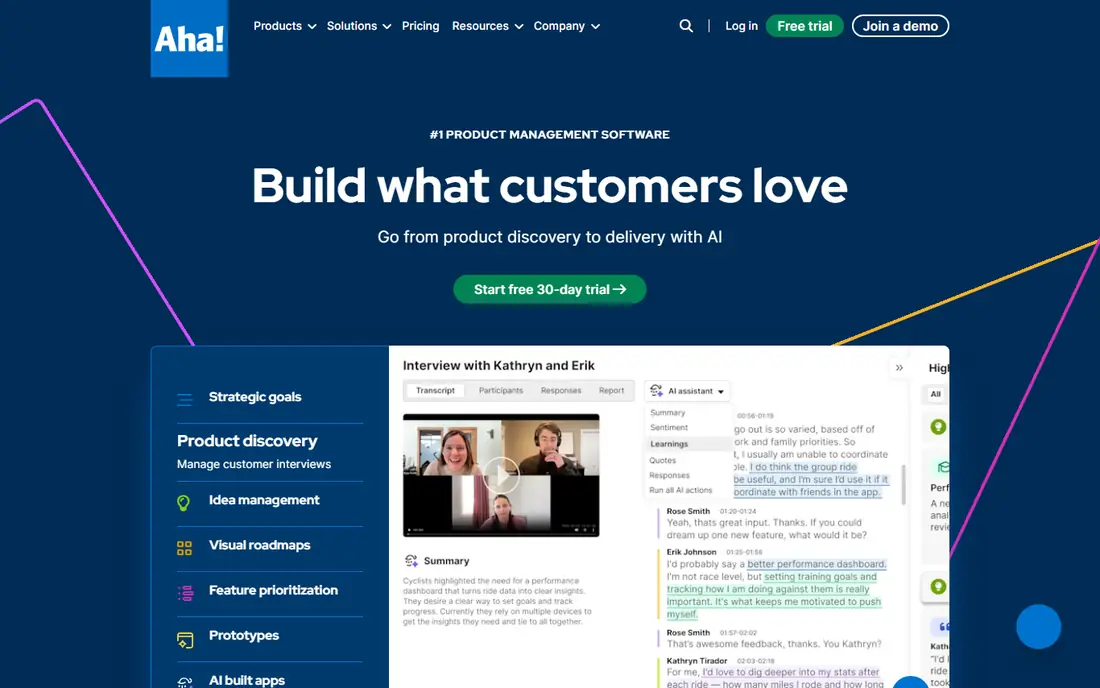
For teams that want a proven route to both app stores, Aha Roadmaps combines strategy, goals, ideas, and roadmaps so product teams can show why work matters, not just when it ships. It suits larger product teams that need several roadmap views for different audiences. The trade is cost and learning, since the depth that helps enterprises can slow a small team that only needs a simple timeline. Check the current pricing page and the free tier limits before you commit, since plan details change and the entry tier may cap builds, seats, or usage.
- Strategy, goals, and roadmap views in one system
- Strong planning and reporting
- Whiteboards included
- Per user pricing is high
- Learning curve for new teams
- Smaller teams may find it heavy
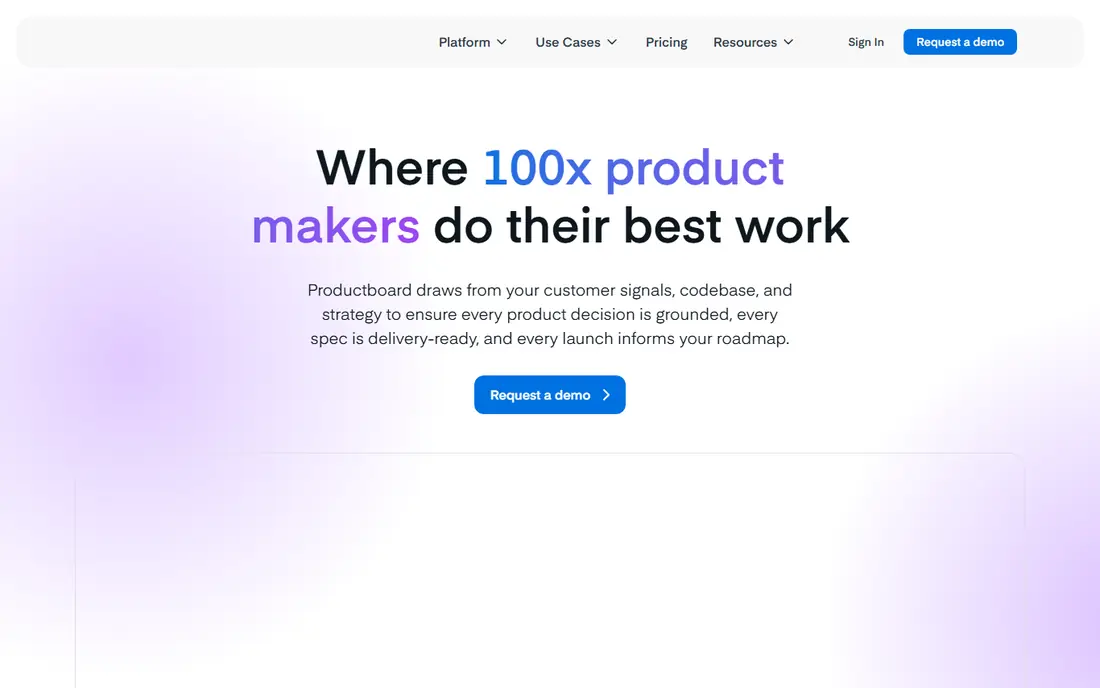
If your team already works in a matching language or stack, Productboard centres product work on customer feedback, letting teams capture requests, score them, and build roadmaps from that evidence. It suits product teams that need to explain why one feature outranks another. The trade is pricing, since maker seats and add-ons drive cost, so count makers before quoting. Run a small pilot with a real feature from your backlog, and judge it on build time, store submission, and how easy fixes are after release.
- Feedback capture and prioritisation
- Roadmap views
- Insights linked to features
- Paid AI features are an add-on
- Pricing grows with makers
- Delivery linking needs setup
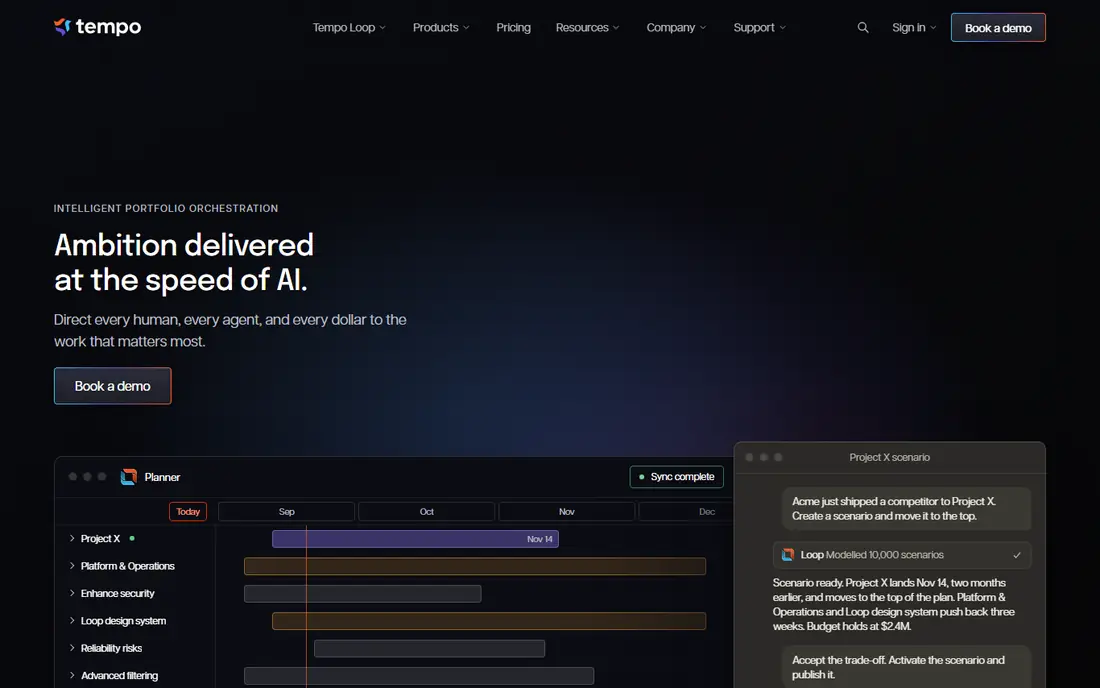
When a single shared codebase matters more than a native look, Roadmunk by Tempo focuses on visual timeline roadmaps that stakeholders can read at a glance, with templates for product, marketing, and leadership views. It suits teams that present roadmaps often and need a clean visual story. The trade is feedback depth, since customer insight tools are lighter than in Productboard or Aha, so check that need first. Ask who will maintain the project in six months, and pick the option your current team can support without hiring for a new language.
- Visual timeline roadmaps
- Custom templates
- Portfolio views
- Pricing is quoted on current pages
- Feedback features are lighter
- Smaller teams may find it pricey
Jira Product Discovery
Who it suits: Jira teams linking ideas to delivery
As a practical choice for a first release, Jira Product Discovery lets Jira teams capture ideas, score them, and link them to delivery work without leaving Atlassian. It suits product teams already running delivery in Jira who want one flow from idea to shipped work. The trade is platform fit, since teams outside Atlassian will get less value from the delivery link. Check the current pricing page and the free tier limits before you commit, since plan details change and the entry tier may cap builds, seats, or usage.
- Idea capture and prioritisation
- Direct Jira delivery link
- Views for product teams
- Best value inside Atlassian
- Advanced features need paid tiers
- Non Jira teams gain less
For projects where design control is the main concern, ProductPlan offers clean visual roadmaps that teams can share with stakeholders without heavy setup. It suits product and marketing teams that want a clear timeline view and simple collaboration. The trade is depth, since feedback and delivery linking are lighter, so check those needs during a trial. Run a small pilot with a real feature from your backlog, and judge it on build time, store submission, and how easy fixes are after release.
- Clean visual roadmaps
- Planning and collaboration views
- Simple sharing
- Pricing is quoted
- Feedback tools are lighter
- Integrations are narrower than leaders
Where speed of setup beats depth of customisation, Craft.io combines feedback, prioritisation, roadmaps, and capacity planning in one product system. It suits mid-size product teams that want planning and delivery context together. The trade is setup, since the full system takes time to configure, so start with one product area first. Ask who will maintain the project in six months, and pick the option your current team can support without hiring for a new language.
- Feedback, planning, and roadmaps in one system
- Prioritisation frameworks
- Capacity views
- No free tier on current pages
- Pricing needs a quote check
- Learning curve for full setup
If you need to reuse web skills for a mobile release, airfocus gives teams flexible scoring and several roadmap views, so prioritisation can match a chosen framework rather than a fixed formula. It suits teams that debate priorities often and want the reasoning visible. The trade is setup, since scoring models need agreement before the tool adds value, so align the team first. Check the current pricing page and the free tier limits before you commit, since plan details change and the entry tier may cap builds, seats, or usage.
- Scoring frameworks
- Multiple roadmap views
- Feedback and portal options
- No free tier on current pages
- Pricing is quoted
- Smaller teams may find scoring setup heavy
For a smaller team that wants to keep maintenance simple, Canny lets customers vote on requests and follow a public roadmap, with a changelog that closes the loop when work ships. It suits SaaS teams that want customer input visible and public trust in their direction. The trade is strategy depth, since internal planning and portfolio views are lighter than in Aha or Productboard. Run a small pilot with a real feature from your backlog, and judge it on build time, store submission, and how easy fixes are after release.
- Public roadmap and voting
- Feedback boards
- Changelog for shipped work
- Free tier caps tracked users
- Roadmap depth is lighter than strategy tools
- Enterprise features are paid
When the app must reach several device types at once, Notion lets teams build roadmaps as databases and boards inside a workspace they already use for docs. It suits small product teams that want a roadmap without buying and learning a dedicated tool. The trade is specialisation, since feedback, scoring, and delivery linking need manual work or integrations. Ask who will maintain the project in six months, and pick the option your current team can support without hiring for a new language.
- Docs, databases, and boards in one workspace
- Flexible roadmap views
- Low entry cost
- Not built as a dedicated roadmap tool
- Feedback and scoring need manual setup
- Scale needs care
As an option for teams with a clear existing workflow, Linear is built for fast software teams, with issues, projects, and roadmap views that stay close to delivery work. It suits engineering led startups that want a roadmap that reflects real progress, not a separate slide deck. The trade is audience, since feedback capture and executive strategy views are lighter than in dedicated roadmap tools. Check the current pricing page and the free tier limits before you commit, since plan details change and the entry tier may cap builds, seats, or usage.
- Fast issue tracking
- Roadmap and project views
- Strong developer experience
- Roadmap features suit delivery led teams
- Feedback tools are light
- Non engineering stakeholders may need guidance
How we picked these
We compared official feature pages, pricing pages, app store listings, and public reviews for each product, and we kept only products that exist and fit the topic today. Where a price or free tier could not be confirmed on a vendor page, we wrote See website rather than guessing a number. We also weighed fit for different team sizes, since a tool that suits a large enterprise may be a poor fit for a small team, and the reverse is also true. Products that needed a workaround for the core job, or that had closed or changed focus, were left out.
How to choose a roadmap tool
Decide who reads the roadmap
A public roadmap needs voting, changelogs, and simple views. An internal strategy roadmap needs goals, timelines, and capacity views. A board roadmap needs outcome and progress views. Pick for the main reader first.
Check how feedback becomes a decision
Trace a customer request from capture through prioritisation to a planned item during a trial. If feedback sits in a separate inbox, the roadmap will drift from what customers actually asked for.
Link roadmap items to delivery
Check whether roadmap items connect to Jira, Linear, or your delivery tool, and whether progress updates flow back. A roadmap that needs manual updates will fall out of date within a month.
Frequently asked questions
What is the best product roadmap tool for a small team?
Productboard, Canny, and Notion all suit small teams, for different reasons. Productboard suits feedback led teams, Canny suits public voting, and Notion suits teams that already live in docs.
What is the difference between a roadmap and a project plan?
A roadmap shows direction, themes, and timing at a high level. A project plan shows tasks, owners, and dates for delivery. Roadmaps should stay at outcome level, not task level.
Do roadmap tools include customer feedback?
Many do, including Productboard, Canny, and Aha Ideas. Check whether feedback capture, voting, and prioritisation are included in the tier you plan to buy.
Is there a best free roadmap tool?
Free tiers exist at Productboard, Jira Product Discovery, Notion, Linear, and Canny, with limits on users, items, or features. A free tier can suit a pilot, but check limits before rolling out to a full team.
How often should a roadmap change?
Review it at least monthly, and update it when goals, customer evidence, or capacity change. A roadmap that never changes is a guess, while one that changes daily is not a plan.
Sources we checked (10)

Online Jobs is an independent blog about careers, online work, learning new skills and the tools that help people earn. More about us.
Keep reading
All posts
n8n Alternatives
n8n alternatives compared for 2026, with Zapier, Make, Activepieces, and more, covering visual builders, code steps, self-hosting, and pricing models.

iPhone Alternatives
Looking for iPhone alternatives in 2026? Compare 9 Android phones from Samsung, Google, OnePlus, and more, with cameras, battery life, and honest trade-offs.

eBay Alternatives
Looking for ebay alternatives? We compared 9 marketplaces for sellers on fees, buyer reach, categories and ease of listing, to help you sell with confidence.