Best Retirement Investment Companies in 2026: 8 Companies Compared

How we put this together: we compare official feature and pricing pages, app store listings, privacy policies and public user reviews. Prices change, so check the provider's site before you pay.
Key takeaways
- Fidelity and Charles Schwab suit self-directed savers who want broad fund choice and no account minimum in many cases.
- Vanguard suits long-term index investors who want low-cost funds and a simple, steady approach.
- Betterment and Wealthfront suit savers who want a managed portfolio without picking funds themselves.
- Always check fund fees and advice fees separately, since a low account fee can sit beside a higher fund or advice cost.
Quick comparison
| Name | Who it suits | Starting price | Free option | |
|---|---|---|---|---|
 Fidelity | self-directed retirement savers | Free | Yes | Visit |
 Vanguard | low-cost index investors | See website | Yes | Visit |
 Charles Schwab | savers who want banking plus investing | Free | Yes | Visit |
 Betterment | hands-off retirement savers | See website | Yes | Visit |
 Wealthfront | automated retirement investing | See website | Yes | Visit |
 T. Rowe Price | target-date and active fund savers | See website | Yes | Visit |
 Edward Jones | savers who want adviser support | See website | Yes | Visit |
 SoFi | new savers who want a simple start | See website | Yes | Visit |
The best retirement investment companies
This is not financial advice. Retirement accounts last for decades, so fees, fund choice and the help you get when markets fall matter more than a slick app. We compared large brokerages and managed providers on account types, costs and the support on offer, and we list only firms with a clear, public product range.
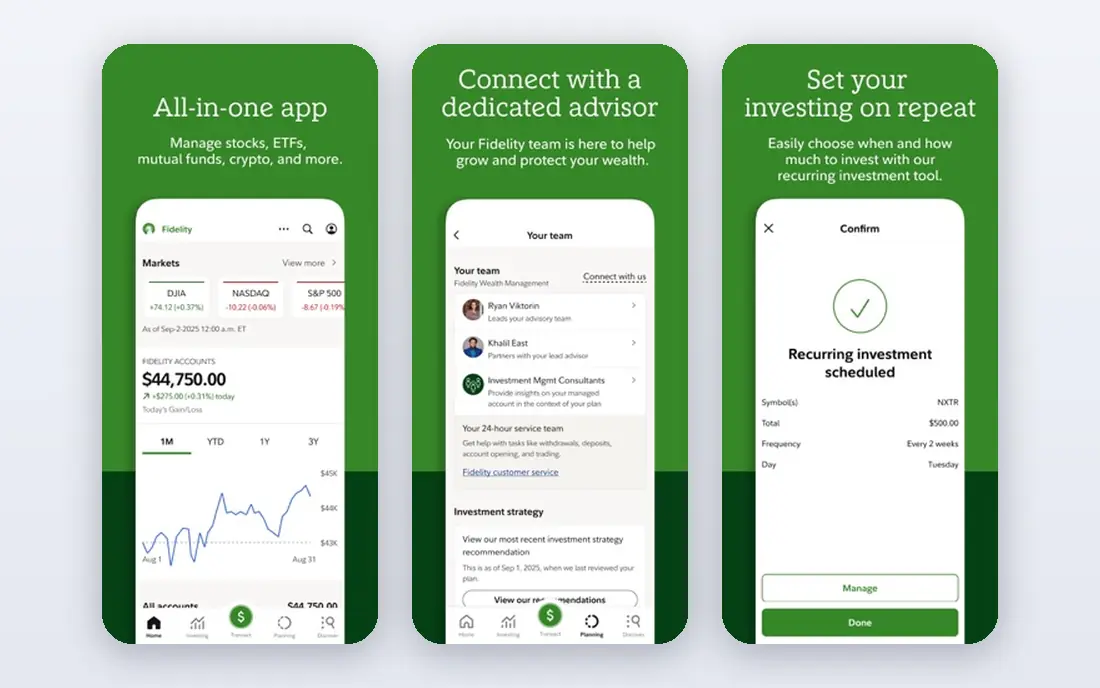
For readers who want self-directed retirement savers, Fidelity is a name worth checking first. Its strengths include broad fund and etf choice; no account fee in many cases; strong research and planning tools and that mix shapes who will get the most from it. We compared its official feature and pricing pages against the other tools in this list, and we looked at what it does well, what it limits, and who should look elsewhere before paying. Fidelity covers traditional, Roth, rollover, SEP and SIMPLE IRAs, plus a wide range of low-cost index funds and ETFs. Its planning tools help you model retirement income, and fractional shares let small contributions buy into funds and stocks without waiting to save a full share price. For a saver who wants choice without a high account fee, it is a strong starting point. The breadth that helps experienced investors can overwhelm a new saver, and managed advice is a separate, paid service. If you want a portfolio chosen for you, compare Fidelity Go or a robo-adviser against the cost of picking funds yourself before you decide.
- Broad fund and ETF choice
- No account fee in many cases
- Strong research and planning tools
- Advice and managed options cost extra
- Range can overwhelm new savers
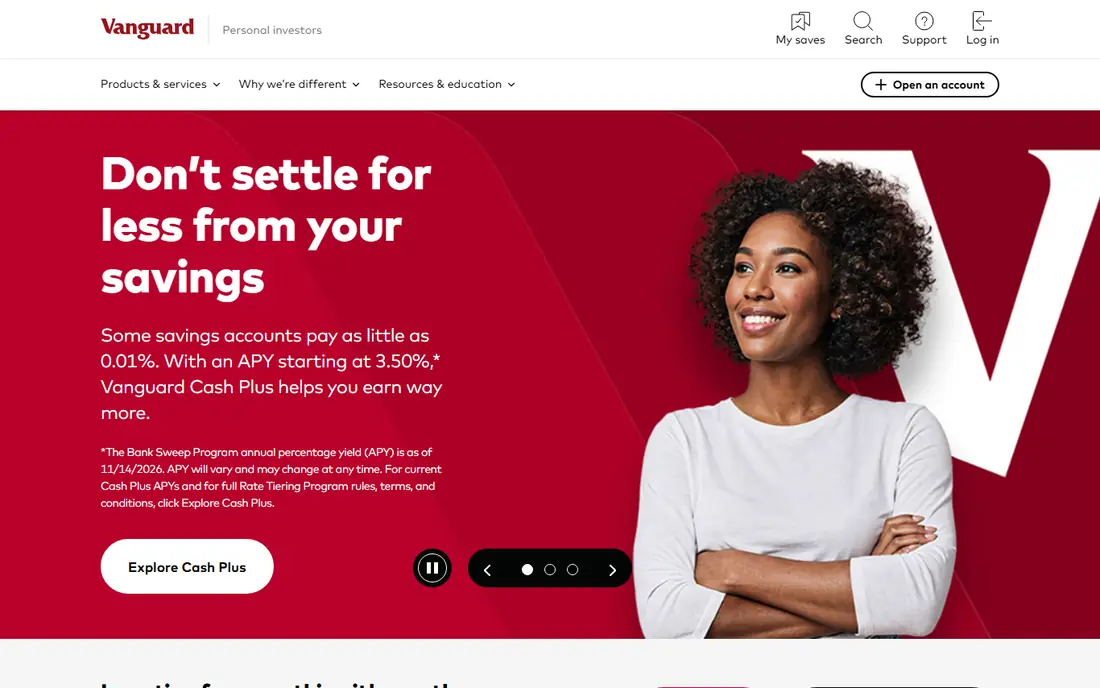
For readers who want low-cost index investors, Vanguard is a name worth checking first. Its strengths include low-cost index funds; target-date funds; long-term focus and that mix shapes who will get the most from it. We compared its official feature and pricing pages against the other tools in this list, and we looked at what it does well, what it limits, and who should look elsewhere before paying. Vanguard is known for low-cost index funds and target-date funds that suit a buy-and-hold retirement plan. Its approach is deliberately plain: diversified funds, steady contributions and low fees, rather than frequent trading or complex products. For savers who want a simple portfolio they can hold for decades, that focus is a strength. Its trading platform and app are more basic than Fidelity or Schwab, and some advice services need a minimum balance. If you trade often or want advanced tools, another firm may fit better. If you want low-cost funds and a steady plan, Vanguard remains a clear choice.
- Low-cost index funds
- Target-date funds
- Long-term focus
- Trading tools are basic
- Advice needs a minimum in some cases
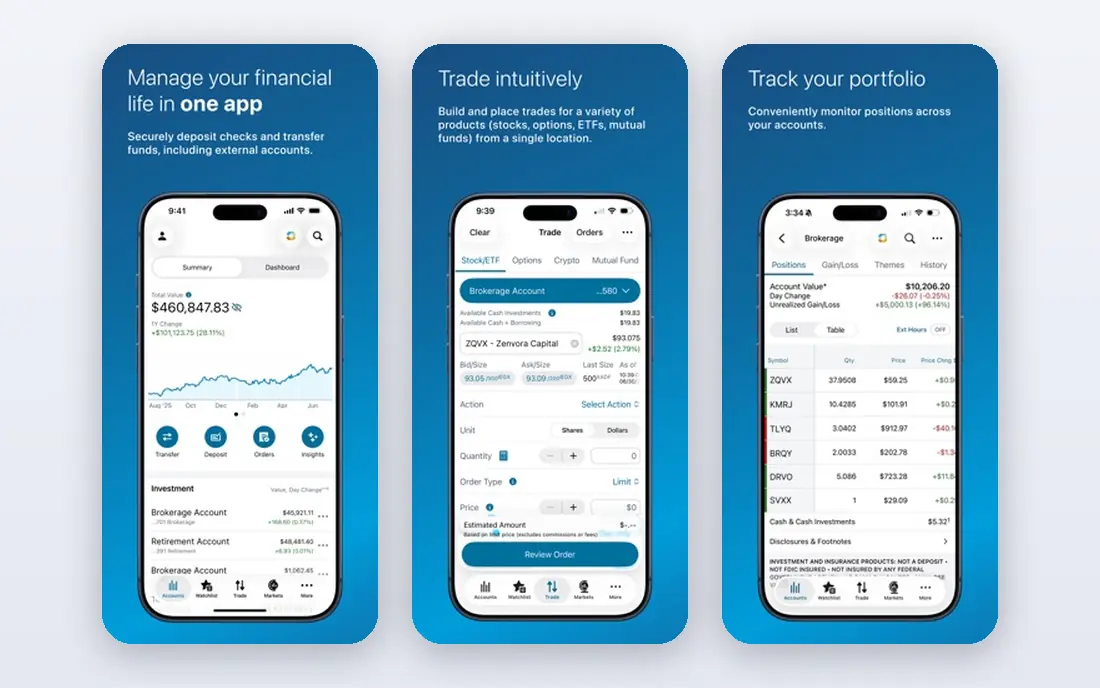
For readers who want savers who want banking plus investing, Charles Schwab is a name worth checking first. Its strengths include broad ira choice; banking features; managed portfolios available and that mix shapes who will get the most from it. We compared its official feature and pricing pages against the other tools in this list, and we looked at what it does well, what it limits, and who should look elsewhere before paying. Schwab pairs IRA accounts with banking, research and managed options, which suits savers who want investing and everyday money in one place. Its index funds are low cost, its retirement planning tools cover income and withdrawal planning, and its managed portfolios offer a hands-off route for savers who do not want to pick funds. Managed advice and some fund choices carry fees beyond a basic account, so check the total cost for the service you actually use. Schwab is strongest for savers who value its combined banking and investing setup; a pure index investor may find Vanguard simpler.
- Broad IRA choice
- Banking features
- Managed portfolios available
- Some funds and advice options carry extra fees
- App depth varies by product
For readers who want hands-off retirement savers, Betterment is a name worth checking first. Its strengths include managed diversified portfolios; automatic rebalancing; retirement planning tools and that mix shapes who will get the most from it. We compared its official feature and pricing pages against the other tools in this list, and we looked at what it does well, what it limits, and who should look elsewhere before paying. Betterment builds and manages a diversified portfolio based on your retirement goal, then rebalances it and reinvests dividends for you. Its planning tools help you set a target, see a projected path and adjust contributions, which suits savers who want investing handled without daily decisions. You pay a management fee for that service, and you give up picking individual funds. If you enjoy choosing funds or want the lowest possible cost, a self-directed index portfolio may be cheaper. If you would otherwise delay investing, the managed fee can be worth it.
- Managed diversified portfolios
- Automatic rebalancing
- Retirement planning tools
- Advice fee applies
- Less control over individual funds
For readers who want automated retirement investing, Wealthfront is a name worth checking first. Its strengths include automated portfolios; tax-loss harvesting features; clear planning tools and that mix shapes who will get the most from it. We compared its official feature and pricing pages against the other tools in this list, and we looked at what it does well, what it limits, and who should look elsewhere before paying. Wealthfront offers automated, diversified portfolios with rebalancing and tax-aware features for taxable accounts, plus retirement planning tools that link goals to a savings plan. The experience is clean and largely hands-off, which helps savers who want a set plan and regular contributions. A management fee applies, and some accounts need a minimum balance, so check the current terms on its site. It is less suited to savers who want to pick individual stocks or funds. For a hands-off retirement saver, it is a well-designed option.
- Automated portfolios
- Tax-loss harvesting features
- Clear planning tools
- Managed fee applies
- Minimum applies to some accounts
For readers who want target-date and active fund savers, T. Rowe Price is a name worth checking first. Its strengths include established target-date funds; active fund range; retirement guidance and that mix shapes who will get the most from it. We compared its official feature and pricing pages against the other tools in this list, and we looked at what it does well, what it limits, and who should look elsewhere before paying. T. Rowe Price is a long-established fund firm with target-date retirement funds, active funds and retirement planning support. Its target-date range suits savers who want one fund that adjusts over time, while its active funds suit savers who prefer professional stock selection over index tracking. Active funds cost more than index funds, and that extra cost needs to justify itself over time. Check fund minimums, since they vary, and compare a target-date fund fee with a low-cost index alternative before you commit.
- Established target-date funds
- Active fund range
- Retirement guidance
- Active fund fees are higher than index funds
- Minimums vary by fund
For readers who want savers who want adviser support, Edward Jones is a name worth checking first. Its strengths include personal adviser support; retirement planning; branch and online access and that mix shapes who will get the most from it. We compared its official feature and pricing pages against the other tools in this list, and we looked at what it does well, what it limits, and who should look elsewhere before paying. Edward Jones pairs personal adviser support with retirement planning, which suits savers who want a person to talk to about retirement timing, contributions and withdrawals. Its advisers help build a plan around your goals, and its branch network plus online access gives a mix of face-to-face and digital service. Advice fees apply, and fund choice is guided rather than fully self-directed, so hands-on investors may find it restrictive. If you want an adviser relationship and a guided plan, Edward Jones is worth considering. If you want the lowest cost and full control, Fidelity or Vanguard may suit better.
- Personal adviser support
- Retirement planning
- Branch and online access
- Advice fees apply
- Fund choice is guided rather than fully self-directed
For readers who want new savers who want a simple start, SoFi is a name worth checking first. Its strengths include simple ira setup; low-cost etfs; banking and planning in one app and that mix shapes who will get the most from it. We compared its official feature and pricing pages against the other tools in this list, and we looked at what it does well, what it limits, and who should look elsewhere before paying. SoFi suits new retirement savers who want a simple setup, low-cost ETFs and a single app for banking and investing. Its IRA options cover the main account types, and its planning tools help a first-time saver set a contribution habit without a complex fund menu. The fund range and advice depth are lighter than at Fidelity, Schwab or Vanguard, so experienced investors may find it narrow. For a first IRA or a simple rollover, that simplicity is a strength, not a weakness, as long as you check fees before you invest.
- Simple IRA setup
- Low-cost ETFs
- Banking and planning in one app
- Fund range is narrower
- Advice depth is lighter than large brokerages
How we picked these
We compared official feature pages, pricing pages, app store listings and public documentation for each product, and we checked that each official homepage belongs to the product named. We did not claim hands-on testing that did not happen, and we did not invent prices, awards, user counts or ratings. Where a price could not be confirmed from the vendor site, we wrote See website rather than guessing. We also weighed fit over fame. A well-known tool that does not match the topic was left out, while a smaller tool that matches the job well was kept in. That is why each list mixes leaders with smaller options, and why the best choice for one reader may not be the best choice for another.
How to choose a retirement investment company
Start with how much help you want. A self-directed account gives you full control and lower costs, but you must pick funds, set contributions and rebalance. A managed account or robo-adviser does that work for a yearly fee, which can be worth it if you would otherwise leave money in cash or avoid investing. Next, compare the total cost: account fees, fund expense ratios and any advice fee. Small yearly differences compound over decades, so a fund that costs much more than a similar index fund needs a clear reason to earn its place. Check the account types you need, such as a traditional IRA, Roth IRA, rollover IRA or SEP IRA, and whether employer plan rollovers are supported. Finally, read the withdrawal and support terms, and speak to a qualified adviser about tax and retirement timing if your situation is complex. This article is general information only, not personal financial advice.
Check the free plan before you pay
Open the pricing page and read the free plan limits in full, including export quality, storage, minutes, seats and any watermark. A free plan that looks generous can still limit the exact feature you need, such as high-resolution export, CRM sync or team seats. Trial the paid feature you care about most during any trial period, and set a reminder before the trial ends.
Compare the total cost, not just the headline price
Add up the monthly or yearly fee, any per-seat or per-minute cost, payment processing where it applies, and the cost of add-ons you will actually use. A low headline price with expensive add-ons can cost more than a higher plan that includes them. If pricing is quote only, ask for the full cost in writing, including setup, support and renewal terms, before you compare vendors.
Frequently asked questions
What is the best investment company for retirement?
There is no single winner. Fidelity and Schwab suit hands-on savers, Vanguard suits low-cost index investors, and Betterment or Wealthfront suit savers who want a managed portfolio. The best choice depends on how much help you want and what you are willing to pay for it.
What is the best retirement management company for hands-off savers?
Betterment and Wealthfront are strong managed options, with diversified portfolios, automatic rebalancing and retirement planning tools. Fidelity and Schwab also offer managed options, so compare advice fees and minimums before you commit.
Are retirement accounts free to open?
Many large firms charge no account fee and no minimum for a basic IRA, but fund fees and advice fees still apply. Check the fund expense ratio and any managed fee, and read the fee schedule on the firm's own site before you open an account.
Should I pick a target-date fund or build my own portfolio?
A target-date fund is a simple choice that adjusts its mix as you near retirement, while building your own portfolio gives more control and can cost less. If you are unsure, a target-date fund or a managed account is often easier to stick with over time.
Can I move an old 401(k) into an IRA?
In many cases, yes, through a rollover IRA, but tax rules and employer plan terms vary. Check whether a direct rollover is available, ask about fees and investment options, and get tax advice if the rollover is large or complex.
Sources we checked (8)

Online Jobs is an independent blog about careers, online work, learning new skills and the tools that help people earn. More about us.
Keep reading
All posts
Top AI Financial Software
Searching for top AI financial software? We compared 9 AI finance tools for AP, spend, close, forecasting and bookkeeping to help teams choose wisely.
Quicken Alternatives
Compare the best quicken alternatives for Mac, Windows, and small business owners, from Monarch Money and YNAB to Copilot, Tiller, and Banktivity in 2026.
QuickBooks Online Alternatives
Looking for quickbooks online alternatives? We compared 8 accounting tools on invoicing, bank feeds, payroll, pricing and fit for small businesses today.