Best Remote Companies to Work in 2026: 8 Companies Compared

How we put this together: we compare official feature and pricing pages, app store listings, privacy policies and public user reviews. Prices change, so check the provider's site before you pay.
Key takeaways
- GitLab, Automattic, Buffer, Zapier and Doist run fully remote teams by design, not as a temporary perk.
- Larger companies such as Shopify, HubSpot and Dropbox offer remote roles, but policies vary by team and location.
- Async-first cultures suit self-directed workers, while companies with more live meetings suit people who like real-time collaboration.
- Always check the current careers page, since remote policies and hiring locations change often.
- Entry-level remote roles remain competitive, so support, sales and operations roles are often easier entry points than engineering alone.
Quick comparison
| Name | Who it suits | Starting price | Free option | |
|---|---|---|---|---|
 GitLab | Fully remote engineering | See website | No | Visit |
 Automattic | Distributed content and support | See website | No | Visit |
 Buffer | Transparent remote culture | See website | No | Visit |
 Zapier | Async remote work | See website | No | Visit |
 Doist | Calm async work | See website | No | Visit |
 Shopify | Remote-first commerce | See website | No | Visit |
 HubSpot | Remote sales and marketing | See website | No | Visit |
 Dropbox | Virtual-first product work | See website | No | Visit |
The best remote companies to work for
We compared official careers pages, public handbooks, remote policy descriptions and public reviews, and we favoured companies with a stated remote-first model and active hiring in 2026. Prices do not apply to employers, so starting prices show "See website" and readers should check each careers page for current roles.
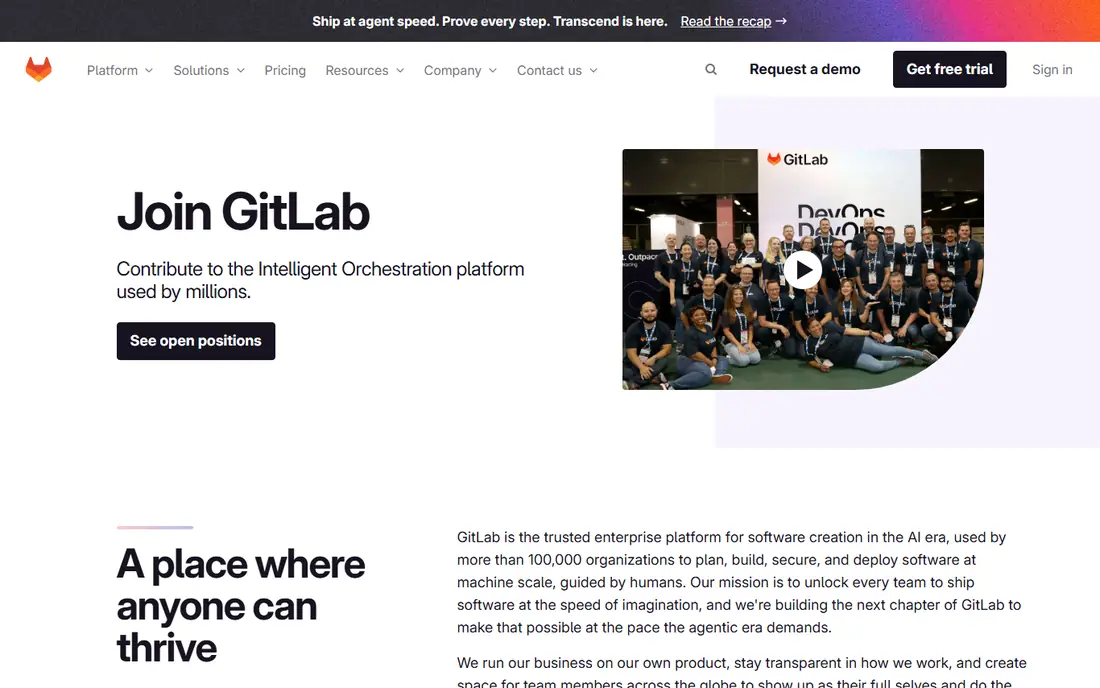
GitLab is the clearest example of a company built for remote work from the start. It has no headquarters office requirement, publishes a detailed public handbook, and hires across many countries for engineering, product, customer success and other roles. That transparency helps a candidate judge the culture before applying, since the handbook shows how decisions, reviews and communication actually work.
The catch is the written culture itself. GitLab leans heavily on documents and async updates, so people who prefer quick live chats may find the pace slow at first. Strong written communication is a core skill here, not a nice extra. For self-directed workers who like clarity in writing, GitLab is a strong target.
- Fully remote with no central office
- Public handbook explains how work happens
- Global hiring
- Async written culture demands strong writing
- Time zones can delay answers
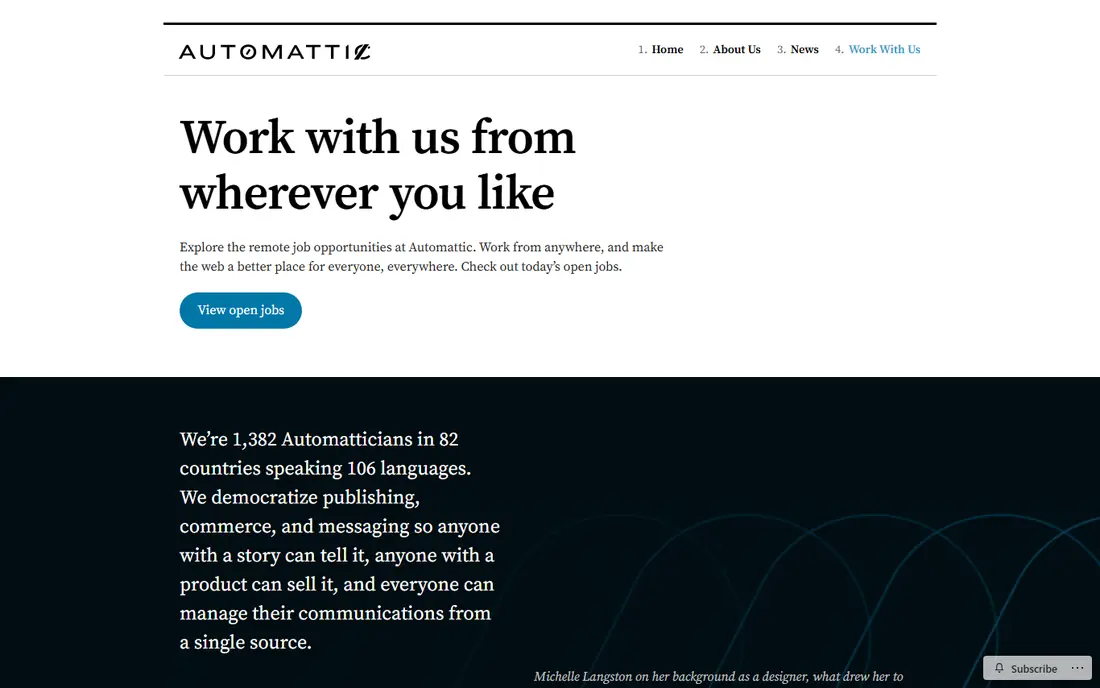
Automattic, the company behind WordPress.com, has run a distributed team for nearly two decades. Roles span customer support, engineering, design, marketing and content, and staff work from many countries without a central office. That long history means remote systems, from onboarding to benefits, are mature rather than improvised.
The catch is the hiring process. Candidates often complete a trial project over several weeks, which is thorough but slow. Global time zones also mean some collaboration happens async by necessity. For people who value autonomy and a long-proven remote model, Automattic remains a top choice.
- Distributed since founding
- Roles in support, design, engineering and content
- Flexible locations
- Hiring process includes a paid trial project that takes time
- Time zones span the globe
Buffer suits a worker who values transparency and a calm pace. The company publishes salary ranges and shares much of its operating information openly, and its culture stresses deep work and mindful communication over constant meetings. Roles cover product, engineering, marketing, customer support and content, though the team is smaller than the giants in this list.
The catch is scale. Fewer roles open each year, and career growth inside a small company looks different from growth at a large firm. If you want a small, transparent team and you can wait for the right opening, Buffer is worth watching closely.
- Fully remote team
- Public salary and transparency practices
- Mindful communication culture
- Small team, so openings are fewer
- Growth paths are narrower than at large firms
Zapier has operated fully remotely since 2011, with staff across dozens of countries. Its async-first style favours written updates and recorded videos over live meetings, which gives staff more control over their day. Hiring spans customer support, sales, marketing and engineering, so non-engineers have real entry points.
The catch is self-management. Async work rewards people who plan their own day and write clearly, and it can feel isolating for people who thrive on live teamwork. Some support roles also involve shifts to cover global customers. For disciplined remote workers, Zapier offers a proven model.
- Fully remote across many countries
- Async-first working style
- Roles in support, sales and engineering
- Async work needs self-management
- Support roles can involve shift patterns
Doist, maker of Todoist and Twist, is a strong pick for workers who want calm, async work. The company avoids meetings where possible, uses its own threaded discussion tool for async conversation, and offers generous paid time off. That combination suits experienced remote workers who produce good work without close supervision.
The catch is rarity. Doist is a small team, so openings are infrequent and competition is high. Product and engineering roles dominate hiring, with fewer openings in other functions. If a role opens in your area, it is worth a serious application, but do not rely on Doist alone in a job search.
- Async-first culture with few meetings
- Generous time off
- Small focused team
- Very small team with rare openings
- Product roles dominate hiring
Shopify suits a worker who wants remote work at scale. The company describes itself as digital by default, hires remotely for engineering, design, support, sales and operations, and offers the career paths of a large firm. Commerce experience gained at Shopify also transfers well to other retail and software roles.
The catch is variation. Remote flexibility can differ by team, role and location, so a job post matters more than a company slogan. The pace during major launches can also be intense. Check the specific role page for location rules and team expectations before applying.
- Remote-first model
- Large hiring range
- Commerce product depth
- Policies vary by team and role
- Pace can be intense during product launches
HubSpot fits workers in sales, marketing, customer success and product who want remote options inside a large company. Many roles are remote or flex, with office hubs for those who want them, and career paths are well defined. Marketing and sales professionals often find more remote openings here than at engineering-led remote firms.
The catch is that not every role is fully remote. Some positions are tied to a hub city or a region, so the job post is the truth, not the company headline. Sales roles also carry targets, which suits some workers and stresses others. Read the location line on each posting carefully.
- Remote and hub options
- Strong sales, marketing and product hiring
- Clear career paths
- Some roles are hub-based rather than fully remote
- Sales targets bring pressure
Dropbox suits product, design and engineering workers who want a virtual-first model with occasional in-person collaboration. Staff work remotely by default, with studio spaces for team weeks and collaborative sessions rather than daily office attendance. That balance helps workers who like remote days but also value face-to-face project work.
The catch is that virtual-first still includes in-person moments, and hiring leans toward product and engineering. Support and operations roles exist but are fewer. If you want mostly remote work with periodic team time, Dropbox offers a thoughtful middle path.
- Virtual-first model
- Product, design and engineering depth
- Studio spaces for collaboration
- Some roles need occasional in-person collaboration
- Hiring is concentrated in product areas
How we picked these
We compared official careers pages, public handbooks and remote policy descriptions, plus public reviews of remote culture. We favoured companies with a stated remote-first or virtual-first model, a history of distributed hiring, and roles beyond engineering alone. Because policies change, we urge readers to verify the current posting for each role, including location rules and time zone expectations.
How to judge a remote company before you apply
A remote label on a job board tells you little, so check the details that shape daily life.
Remote-first or remote-allowed
Ask whether remote work is the default design or an exception for some roles. Remote-first firms build hiring, pay, promotion and communication around distributed staff, while remote-allowed firms may still favour office staff for visibility. Public handbooks, such as GitLab, make this easy to judge.
Async or meeting-heavy
Check how much work happens in live meetings versus written updates. Async cultures suit self-directed workers and parents with varied schedules, while meeting-heavy cultures suit people who think out loud. Neither is better in general, but the fit matters for daily satisfaction.
Location, pay and time zones
Confirm which countries and states the company hires in, how pay is set by location, and which time zones you must overlap. A role that looks remote can still require a specific region or a 6 a.m. overlap. Get those facts from the posting or recruiter before investing hours in an application.
Frequently asked questions
What are the best remote work companies for beginners?
Support, sales and operations roles at Zapier, Automattic, Shopify and HubSpot are often more accessible entry points than senior engineering roles. Entry-level remote jobs remain competitive, so a portfolio, a support certification or freelance work can help. Apply broadly, and treat each application as practice for the next.
Which companies are best to work for remotely in tech?
GitLab, Automattic, Zapier, Doist and Buffer lead for fully remote tech work, with public handbooks and async cultures that suit experienced remote workers. Shopify, HubSpot and Dropbox offer remote roles at larger scale, with more career paths but more variation by team. The best fit depends on whether you prefer a small async team or a large company.
What are the best companies with remote jobs outside tech?
Support, customer success, marketing, operations and content roles exist at most companies in this list, not just engineering teams. Automattic hires support and content staff remotely, Buffer hires marketing and support staff, and HubSpot hires sales and customer success staff remotely. Search careers pages by function, not just by company name.
Are remote jobs at these companies fully remote?
Fully remote firms such as GitLab, Automattic, Buffer, Zapier and Doist have no central office requirement, while larger firms may tie some roles to a hub or region. Always read the location line on the specific job posting, since company headlines describe the general model, not every role. Ask the recruiter about travel and in-person expectations early.
How do I get hired by a remote-first company?
Strong written communication, a clear portfolio or work samples, and evidence of self-directed work matter more than office experience. Tailor each application to the role, show async work habits in your cover note, and prepare for trial projects or async interviews. A public portfolio or writing samples can set you apart in a large applicant pool.
Do remote companies pay less than office companies?
Pay varies by company, role and location, and some firms adjust pay by region while others pay by role alone. Transparent firms such as Buffer publish salary ranges, which makes comparison easier. Compare total pay, benefits, time off and growth prospects, not just a headline salary, and ask how location affects pay before accepting an offer.
Sources we checked (8)

Online Jobs is an independent blog about careers, online work, learning new skills and the tools that help people earn. More about us.
Keep reading
All posts
Best Web Scraping Tools
Compare the best web scraping tools in 2026, from no-code Octoparse and Browse AI to Apify, Firecrawl, Bright Data, Zyte, ScraperAPI and free Scrapy, with prices.
Best Web Hosting Services
Find the best web hosting services for your site in 2026. We compare prices, speed, support and ease of use across eight leading hosting providers today.

Best Video Conferencing Software
Looking for the best video conferencing software? We compare 8 meeting apps on price, meeting limits, features, security and ease of use. Read the guide.