Best Referral Program Software Platforms in 2026: 9 Platforms Compared

How we put this together: we compare official feature and pricing pages, app store listings, privacy policies and public user reviews. Prices change, so check the provider's site before you pay.
Key takeaways
- Referral software works best when the reward is simple, the share step is easy, and tracking is automatic.
- Ecommerce, SaaS, and mobile apps need different tools, because purchase tracking and subscription tracking differ.
- Fraud controls matter as soon as rewards have cash value, so check referral limits and verification options.
- Most platforms charge by usage or contacts, so model cost against expected referral volume, not just the headline price.
- Start with one clear offer, test it with existing customers, and only then expand to tiers and partner programs.
Quick comparison
| Name | Who it suits | Starting price | Free option | |
|---|---|---|---|---|
 ReferralCandy | Ecommerce referrals | See website | Free trial | Visit |
 Yotpo | Ecommerce loyalty and referrals | See website | Free trial | Visit |
 Friendbuy | Referral and loyalty for brands | See website | No | Visit |
 Mention Me | Referral for ecommerce and services | See website | No | Visit |
 Referral Factory | Quick referral campaigns | See website | Free trial | Visit |
 Viral Loops | Viral and referral campaigns | See website | Free trial | Visit |
 GrowSurf | SaaS and B2B referrals | See website | Free trial | Visit |
 Ambassador | Enterprise referral programs | See website | No | Visit |
 Impact | Partner and affiliate referrals | See website | No | Visit |
The best referral program software platforms
We compared these platforms by tracking, reward options, integrations, fraud controls, and fit for ecommerce, SaaS, and apps. Pricing is usage based on many of these tools, so the field lines use See website where a single monthly figure would mislead. Confirm current pricing and trial terms on the vendor site before you choose.
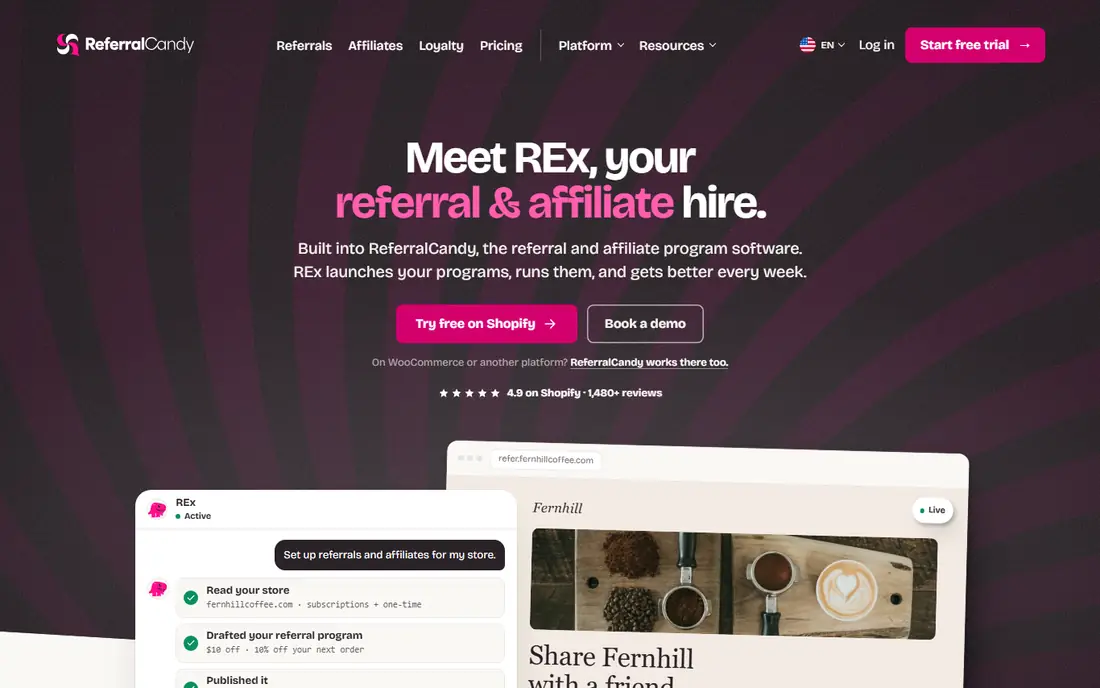
ReferralCandy is our pick for small and mid-size online stores that want referrals running quickly. It connects to common store platforms, tracks when a referred friend buys, and issues coupons automatically, so store owners do not need to manage rewards by hand. Advocates get a personal link and dashboard, which makes sharing easy. The catch is scope. It is designed for ecommerce purchases, so SaaS teams that need subscription tracking or B2B referrals will find Friendbuy, GrowSurf, or Impact a better fit. Model the cost against referral sales, because pricing rises with volume.
- Built for Shopify and WooCommerce stores
- Automatic coupon rewards
- Simple advocate dashboard
- Ecommerce focused, so SaaS fit is weaker
- Pricing scales with referral sales
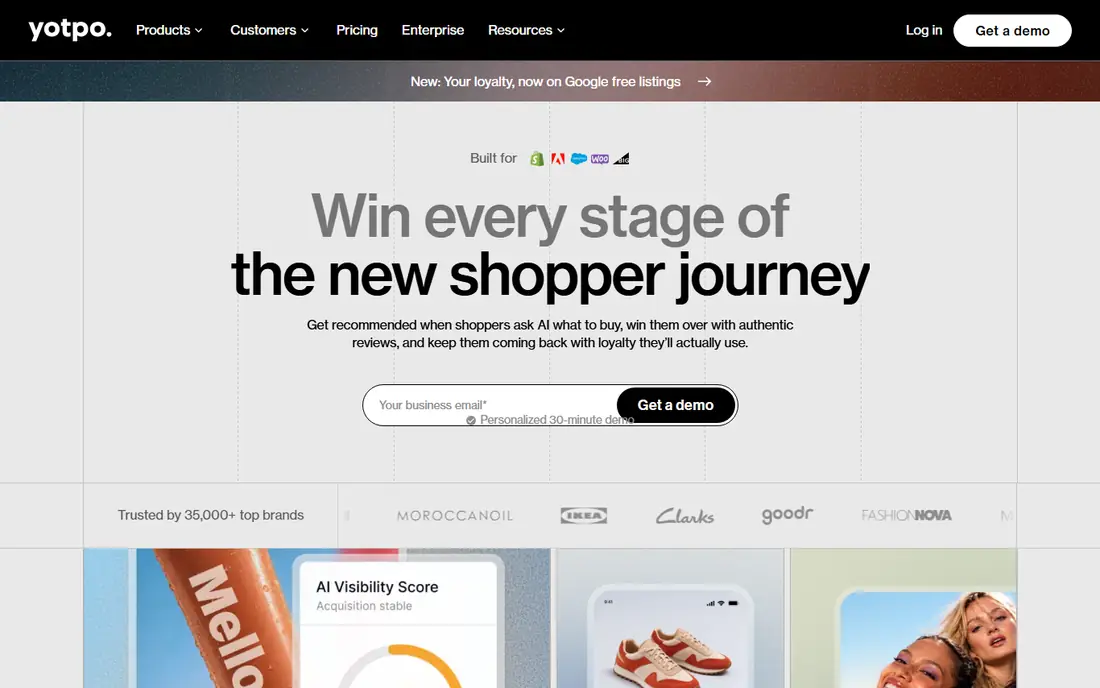
Yotpo suits ecommerce brands that want referrals inside a wider loyalty and reviews system, rather than as a standalone tool. Customers can earn points, leave reviews, and refer friends in one account, which helps brands that already use Yotpo for retention. That breadth is useful for larger stores with a loyalty strategy. The trade-off is weight. If you only need a simple refer-a-friend offer, Yotpo may be more platform than you need, and pricing will reflect the wider feature set. Choose it when loyalty and reviews are part of the same plan.
- Combines reviews, loyalty, and referrals
- Strong Shopify ecosystem
- Detailed customer profiles
- Broader platform can feel heavy for referrals alone
- Pricing depends on plan and usage
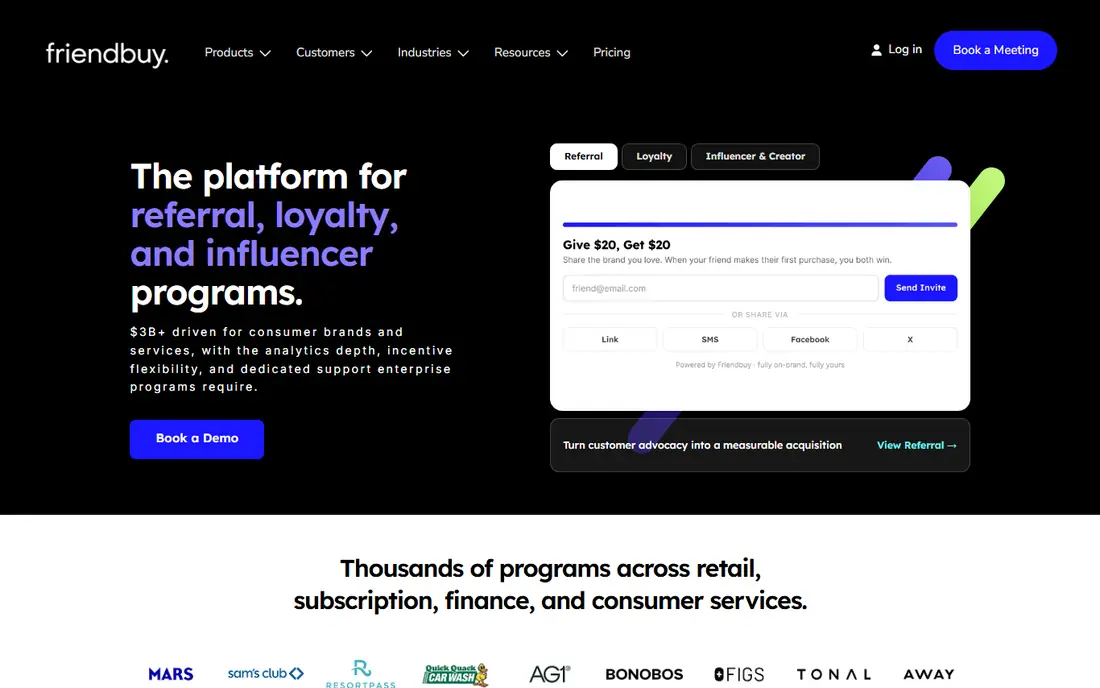
Friendbuy fits brands that want control over how referrals look and how offers are tested. You can build referral widgets, landing pages, and emails that match your brand, run A/B tests on rewards, and track performance in detail. Fraud controls and reporting help once rewards have real value. The limitation is entry cost. There is no free plan, so it suits brands that already have traffic and can justify a paid tool. Smaller stores may prefer ReferralCandy or Referral Factory to start, then move to Friendbuy when testing and scale matter more.
- Flexible referral widgets and pages
- A/B testing for offers
- Fraud controls and reporting
- No free plan
- Pricing suits brands with steady referral volume
Mention Me suits ecommerce and service businesses that want referral journeys tailored by customer type, channel, or product. It supports experimentation, so teams can test different rewards and messages for new versus loyal customers, and it handles service and subscription referrals as well as one-off purchases. That flexibility helps larger brands with varied customers. The catch is effort and cost. Setup is more involved than a plug-and-play store app, and pricing leans enterprise, so it fits teams with a dedicated growth or marketing owner rather than a solo store owner.
- Referral journeys by customer segment
- Strong for services and subscriptions
- Experimentation tools
- Enterprise leaning pricing
- Setup takes more time than simple tools
Referral Factory is a good starting point if you want a referral campaign live quickly without developer help. Templates cover common offers, and the no-code builder lets you launch a share page, set rewards, and track referrals in a day. That speed suits startups, agencies, and small businesses testing referrals for the first time. The weakness is depth. Template campaigns can look generic, and more advanced tracking or integrations may sit on higher plans. Use it to prove referrals work for your business, then move to a deeper platform if you need custom journeys.
- Fast campaign builder with templates
- No-code setup
- Works for many business types
- Template look can feel generic without custom work
- Advanced tracking may need a higher plan
Viral Loops suits pre-launch waitlists, giveaways, and referral campaigns where sharing earns a reward or a better place in line. Its templates make it easy to build a campaign where each referral moves a user up a list or enters them in a draw, which can drive fast sign-ups. That campaign focus is its strength for launches and promotions. The limit is longevity. Viral Loops is less suited as a permanent loyalty and referral system for an established store, where ReferralCandy or Yotpo may fit better. Use it for campaigns, and a loyalty tool for ongoing referrals.
- Templates for waitlists, giveaways, and referrals
- Viral loop mechanics
- Easy embeds
- Campaign focused, so long-term loyalty features are limited
- Pricing scales with participants
GrowSurf fits SaaS and B2B companies that want to reward sign-ups, trials, and paid conversions. It offers embeds, referral links, and API options so product teams can place referral prompts inside the app, not just on a marketing page. That in-product placement matters for SaaS, where users refer from inside the product. The trade-off is ecommerce depth. If you need coupon rewards tied to store purchases, an ecommerce tool will be stronger. For SaaS, GrowSurf is a clean, focused choice that does not carry retail features you will not use.
- Built for SaaS sign-ups and trials
- Embeds and API options
- Fraud detection basics
- Less ecommerce depth than ReferralCandy
- Reward options suit SaaS better than retail
Ambassador suits larger companies that run referral, affiliate, and partner programs together and need one system to track them. It supports custom rewards, partner tiers, and detailed reporting, which helps teams managing many advocates and partners at once. That scale is its main advantage. The catch is cost and complexity. Ambassador is built for enterprise use, with pricing and setup to match, so small businesses will find simpler tools faster and cheaper. Choose it when you have multiple program types and a team to run them.
- Enterprise referral, affiliate, and partner tracking
- Custom rewards
- Strong reporting
- Enterprise pricing and setup
- Overkill for small businesses
Impact is best for companies that want referrals as part of a wider partnership strategy, including affiliates, influencers, and business partners. It tracks clicks, conversions, and payouts across partner types, and it includes contract and payment tools that simple referral apps lack. That breadth helps brands scaling partnerships beyond customer referrals. The weakness is simplicity. A small store that only needs a refer-a-friend coupon will find Impact heavy and expensive. Use Impact when partnerships are a core growth channel, not just a side experiment.
- Large partner network
- Tracking for affiliates, influencers, and referrals
- Contract and payout tools
- Complex for simple refer-a-friend offers
- Pricing is enterprise leaning
How we picked these
We compared official vendor pages for tracking methods, reward types, integrations, fraud controls, and pricing models, and we grouped tools by their strongest fit: ecommerce, SaaS, campaign, or enterprise. We favoured platforms with current documentation, clear reward automation, and real use by brands in their target segment, and we left out tools that only offer a share button without tracking or rewards. Pricing is often usage based, so we did not invent a single monthly figure where the vendor prices by volume.
How to set up a referral program that works
Start with one offer that is easy to explain in a sentence, such as a discount for the friend and a discount for the referrer. Complex tiers, points, and conditions may look clever, but they confuse customers and reduce sharing. Put the share step where customers already are: after purchase for ecommerce, inside the product for SaaS, and in account settings for services. Test the full flow yourself, from link to reward, before you launch, because a broken reward will damage trust faster than no program at all.
Next, protect the program from abuse without punishing honest customers. Set limits on self-referrals, require a completed purchase or paid subscription before a reward is issued, and watch for spikes from a single source. Most platforms in this list offer basic fraud controls, so turn them on from day one. Finally, measure referrals as a channel, not just as a count. Track referred customers separately, compare their retention and order value with other channels, and keep the program only if referred customers are worth the reward cost. Pause or change the offer if they are not.
Frequently asked questions
What is the best referral program software for ecommerce?
ReferralCandy is a strong ecommerce starting point, with Yotpo and Friendbuy as options when loyalty or testing matter more. Choose ReferralCandy for simple store referrals, Yotpo for loyalty plus referrals, and Friendbuy for brand control and A/B testing.
What are the best referral software programs for SaaS?
GrowSurf suits SaaS sign-ups and trials, while Impact and Ambassador suit larger SaaS firms with partner programs. For a simple SaaS referral offer, GrowSurf is usually faster to set up than an enterprise partner platform.
What is the best referral app for a small business?
Referral Factory and ReferralCandy are good small business picks, because they launch quickly and do not need developer help. Referral Factory suits campaigns and services, while ReferralCandy suits online stores.
What are the top referral software options for enterprises?
Ambassador, Impact, and Mention Me lead for enterprises, because they handle multiple program types, custom rewards, and detailed reporting. The best choice depends on whether you need partner tracking, customer referral journeys, or both.
How do the best referral program platforms track referrals?
Most platforms use a personal link or code for each advocate, track the referred visit and purchase or sign-up, and issue the reward automatically once the required action is complete. Check whether tracking covers your store, app, or subscription system before you choose.
What is the best referral platform for mobile apps?
GrowSurf and Referral Factory both support app referrals through links and embeds, while Viral Loops suits app waitlists and launches. For in-app SaaS referrals, GrowSurf is the cleaner fit, and for a launch campaign, Viral Loops may drive faster sign-ups.
Sources we checked (9)

Online Jobs is an independent blog about careers, online work, learning new skills and the tools that help people earn. More about us.
Keep reading
All posts
n8n Alternatives
n8n alternatives compared for 2026, with Zapier, Make, Activepieces, and more, covering visual builders, code steps, self-hosting, and pricing models.

ZoomInfo Alternatives
The best ZoomInfo alternatives in 2026, compared on price, free plans, data coverage, and which tool fits small teams or large sales teams best in detail.

Yotpo Alternatives
Find cheaper alternatives to Yotpo for reviews and loyalty, with Judge.me, Loox, Stamped, and more compared for Shopify stores in 2026, all in one guide.