Best Rank Tracker Tool in 2026: 8 Tools Compared

How we put this together: we compare official feature and pricing pages, app store listings, privacy policies and public user reviews. Prices change, so check the provider's site before you pay.
Key takeaways
- SE Ranking offers the best value for most teams, with daily tracking for a large keyword set inside a full SEO platform.
- AccuRanker suits agencies with large keyword sets that need fast, on demand checks and strong reporting.
- Google Search Console is the free baseline every site should use, even if you also pay for a tracker.
- Keyword counting differs between vendors, so compare keyword slots, locations and devices, not just headline price.
Quick comparison
| Name | Who it suits | Starting price | Free option | |
|---|---|---|---|---|
 SE Ranking | Best overall value | $103 per month | Free trial | Visit |
 AccuRanker | Large agencies | $224 per month | No | Visit |
 Semrush | Full SEO suite tracking | $117 per month | Free trial | Visit |
 Ahrefs | Backlink led SEO teams | $129 per month | No | Visit |
 Nightwatch | Local and AI tracking | $79 per month | Free trial | Visit |
 Wincher | Simple low cost tracking | $49 per month | Free trial | Visit |
 Mangools SERPWatcher | Beginners and freelancers | $18 per month | Free trial | Visit |
 Google Search Console | Free first party data | Free | Yes | Visit |
The best rank tracker tools
We compared official feature pages, pricing pages, app store listings and public reviews to find rank trackers that give accurate, usable position data without confusing limits. The eight tools below cover dedicated trackers, full SEO suites and the free Google baseline, so you can choose by keyword volume, update speed and reporting needs.
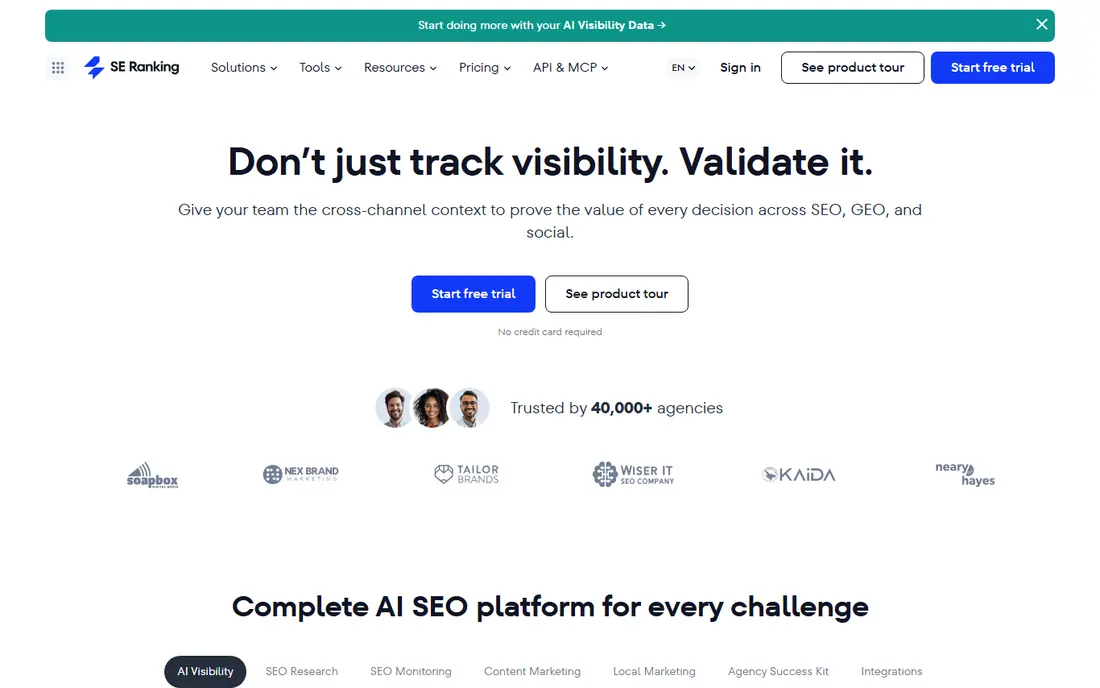
SE Ranking is the best rank tracker tool for most teams because it pairs daily tracking with a full SEO platform at a fair price. The Core plan tracks a large keyword set daily, with desktop and mobile positions, local tracking, SERP feature data and competitor comparison. That volume suits agencies and growing sites that track many pages across several locations.
Beyond rankings, SE Ranking adds site audits, keyword research, backlink checks and AI visibility tools, so you can move from a ranking drop to a likely cause without switching tools. Reports can be branded for clients, and data can be pulled into dashboards through integrations and API access on suitable plans. For teams that report monthly, that combination saves time.
The main watch point is keyword accounting. A keyword tracked in two locations and on two devices uses more slots than a single check, so work out your real total before buying. AI visibility may also need an add on in some plans. Within those limits, SE Ranking offers strong value and daily data most teams can rely on.
- Daily tracking for 2,000 keywords on Core annual plan
- Full SEO tools in the same account
- White label reports for agencies
- Keyword limits still apply by location and device
- AI features may need an add on
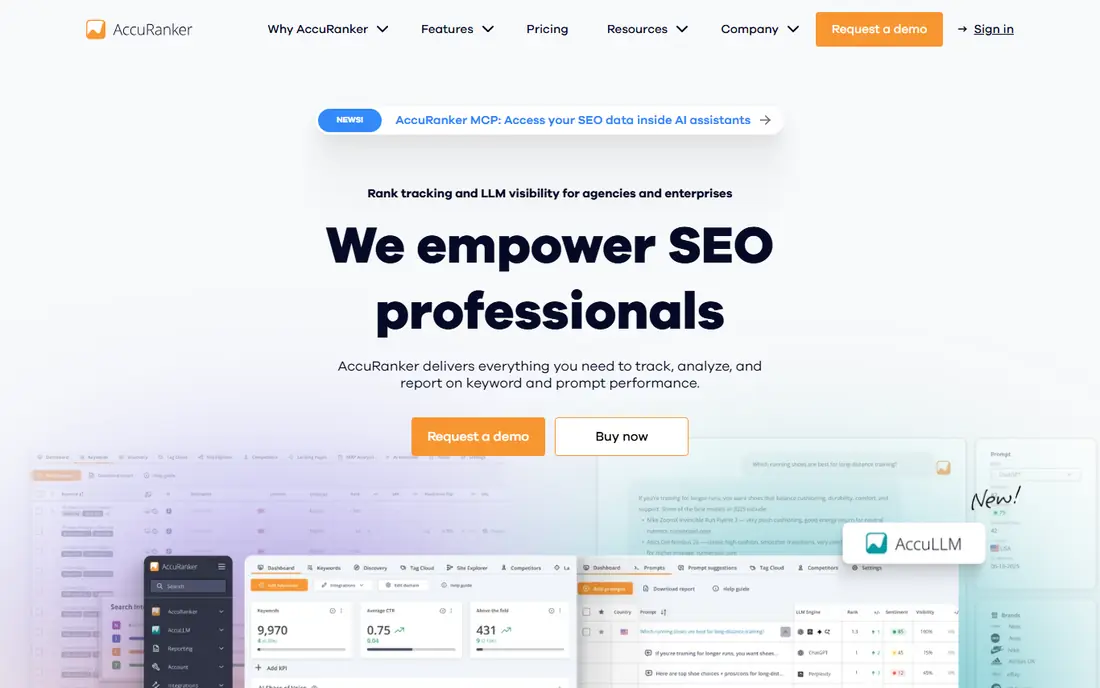
AccuRanker suits agencies and large in house teams that need speed and scale. It updates rankings daily and allows on demand rechecks, so you can verify a change right after a site update, rather than waiting for the next daily run. Tagging, segments and filters help large teams organise thousands of keywords by client, location, page or intent.
Unlimited users is a major advantage for agencies, because account managers, analysts and clients can all access reports without per seat fees. API access and integrations support custom dashboards, and white label reporting helps agencies present data under their own brand. For high volume work, that workflow matters as much as accuracy.
Price is the barrier for small sites. The starting plan is costly, and smaller teams will get better value from SE Ranking, Wincher or Mangools. If you track thousands of keywords, need instant checks and share reports widely, AccuRanker is built for that workload.
- Fast on demand ranking checks
- Unlimited users on plans
- Strong tagging, segments and API access
- High starting price for small sites
- No free plan, only a refund policy in some cases
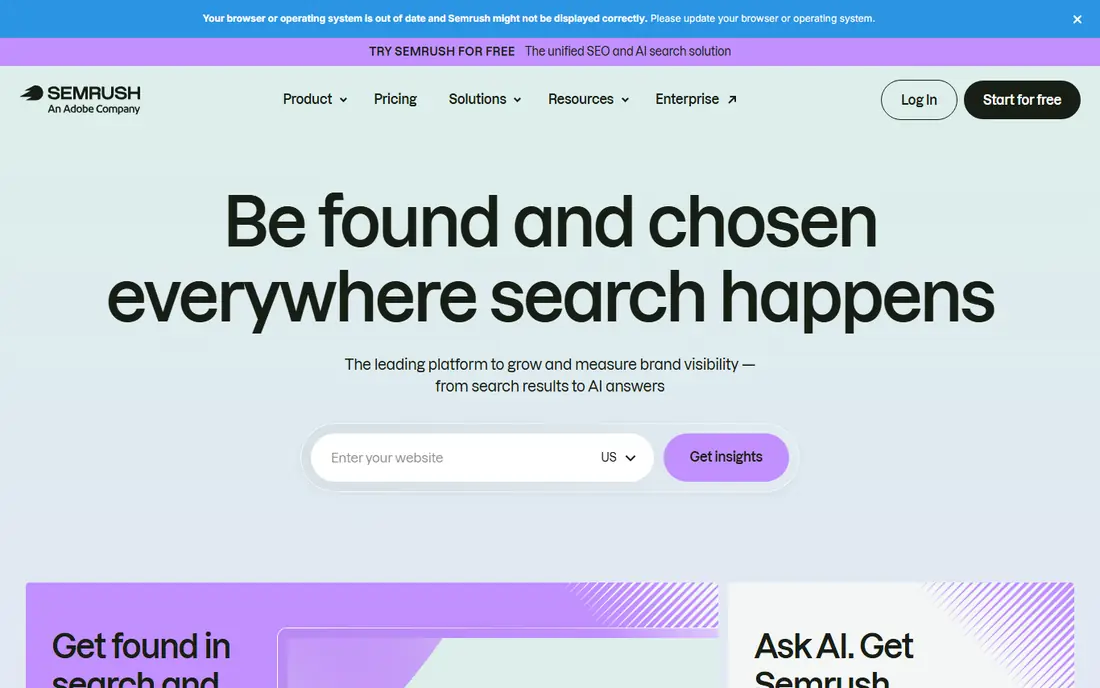
Semrush suits teams that already use it for keyword research, audits and content work, and want rank tracking in the same account. Position Tracking updates daily, covers desktop and mobile, and shows SERP features, competitor positions and visibility trends. That context helps you see whether a drop is a single page issue or a wider search change.
The suite advantage is real. You can move from a ranking report to a content gap, a backlink check or a site audit without exporting data. Agencies also benefit from scheduled reports and client dashboards, and the AI visibility toolkit adds AI surface data for teams tracking AI Overviews and AI Mode alongside classic rankings.
If you only need rankings, Semrush is expensive for its entry keyword allowance. Dedicated trackers give more keywords for less money. For teams that use the full suite daily, position tracking is a natural and well integrated part of the package.
- Daily position tracking inside a full suite
- Competitor and SERP feature data
- Strong reporting and integrations
- Entry plan covers only 500 keywords for position tracking
- Full suite cost is high if you only need rankings
Ahrefs suits SEO teams that centre their work on backlinks, content and competitor analysis, with rank tracking as a supporting view. Its Rank Tracker shows position history, SERP features and competitor movement, and it sits beside one of the strongest backlink databases in SEO. That pairing helps teams link a ranking change to a link gain, a content update or a competitor move.
For content teams, Ahrefs also offers keyword research, content gap and site audit tools, so ranking data feeds directly into the next content decision. The interface is clear, and historical data helps you show progress over months, not just a single week snapshot.
Update frequency is the main limit. Standard plans update weekly, which is fine for long term tracking but less useful for fast moving campaigns or post launch checks. Teams that need daily data should check the cost of daily updates before committing. For weekly, link led tracking, Ahrefs is a strong choice.
- Rank history beside strong backlink data
- Competitor tracking and SERP data
- Useful for link led SEO work
- Weekly updates on standard plans
- Daily tracking may need an add on or higher plan
Nightwatch suits teams that track local rankings and AI surfaces together. It offers daily rank tracking, on demand checks, local tracking down to ZIP level in supported areas, and AI search tracking for ChatGPT and Google AI surfaces. That mix helps local agencies and multi location brands that need both map style precision and a view of AI answers.
Unlimited seats is a welcome feature for agencies, because clients and team members can access reports without extra seat fees. Reporting, segments and integrations support client dashboards, and the interface is clear for teams that manage many locations. For local SEO work, the location detail is more useful than a national average position.
The entry keyword allowance is modest for the price, and euro pricing means the dollar total will vary. Teams with large national keyword sets may get better value from SE Ranking or AccuRanker. For local plus AI tracking in one account, Nightwatch is a focused and practical pick.
- Daily tracking plus on demand checks
- Unlimited seats
- Local and AI search tracking in one tool
- Entry plan covers 500 keywords
- Prices in euros, so totals vary by exchange rate
Wincher suits small teams that want daily rankings without a full SEO suite. You add keywords, choose locations and devices, and get daily positions, competitors and simple reports. Unlimited websites on plans helps freelancers and small agencies that manage many small sites, without paying per site.
The interface is easy to learn, which matters for small businesses that do not have a dedicated SEO analyst. You can see gains, losses and SERP features at a glance, and share reports without complex setup. Wincher also flags AI Overviews in some views, giving a basic AI signal beside classic rankings.
Suite depth is limited. If you need audits, backlink analysis and content tools, you will need another tool beside Wincher. For lean daily tracking at a fair price, Wincher is one of the best rank tracker tools for small sites.
- Simple daily tracking for small teams
- Unlimited websites on plans
- Clear interface for beginners
- Fewer suite features than Semrush or SE Ranking
- Advanced reporting needs higher plans
Mangools SERPWatcher, part of the Mangools suite, suits freelancers and beginners who want simple rank tracking at a low price. It shows a visibility score, daily or weekly positions depending on plan, and dominant SERP features, in a clean interface that is easy to read. The wider Mangools suite adds keyword research, SERP analysis and backlink checks for small sites.
The low starting price makes it easy to start tracking a personal site or a first client without a large commitment. Reports are clear enough to share with a non technical client, and setup takes minutes. For a small keyword set, SERPWatcher covers the basics well.
Update frequency is the main limit. The Basic plan updates weekly, so fast moving changes will not show until the next check. Daily updates sit on the higher Agency plan, which raises the cost. If you track a small set and can wait a week for updates, SERPWatcher is excellent value.
- Lowest cost paid option on this list
- Clean visibility score and simple reports
- Part of a beginner friendly SEO suite
- Weekly updates on Basic plan
- Daily updates need a higher Agency plan
Google Search Console is the free baseline every site owner should use, whether or not you pay for a tracker. It shows the queries that bring clicks, average position, impressions and click through rate, plus indexing status and technical issues. Because the data comes directly from Google, it is a useful check against any paid tracker.
Search Console stores up to 16 months of performance data, and it reports AI Overviews and AI Mode traffic inside the web search type, with a separate generative AI report rolling out to sites. That makes it a helpful first party view of how AI surfaces affect traffic, even though it does not track competitor positions or give a daily rank for a fixed keyword list.
The limits are averaging and delay. Positions are averages, not a single snapshot at a set time and location, and data lags by about two days. For precise daily tracking, pair Search Console with a paid tool. As a free, trustworthy baseline, it is essential.
- Free first party data from Google
- Shows queries, clicks and average position
- Indexing and technical issue reports
- Data is averaged and delayed by about two days
- No competitor tracking or daily rank snapshots
How we picked these
We compared official feature pages, pricing pages, app store listings, privacy policies and public reviews for each tool. We gave weight to update frequency, keyword allowances, location and device coverage, SERP feature data, reporting quality and price per keyword slot. We also checked that each homepage loaded and matched the product named, and we used vendor pricing where it was clear, with annual billing noted where it changed the monthly rate.
We did not claim hands on testing for every keyword set. Instead, we focused on published limits, update cadence and reviewer reports about accuracy, support and report usability. Rank data varies by location, device and personalisation, so treat any tracker as a consistent measurement tool, not as an exact Google result for every user.
What to check before you buy
Count your real keyword slots first. Multiply keywords by locations, devices and search engines, because vendors count those combinations differently. A plan that looks generous for 500 keywords may cover far fewer once you add mobile, local and competitor tracking. Also check update frequency: daily, weekly and on demand checks suit different campaign speeds.
Next, test reporting with a real client or manager in mind. Can you segment by location, tag keywords by intent, schedule a branded report and export data for a dashboard? If reporting takes manual work each month, the tool will cost more in time than its subscription suggests.
Free baseline plus paid tracking
Use Google Search Console alongside any paid tracker. Search Console gives first party clicks and queries, while a paid tracker gives consistent daily positions and competitor data. Together, they give a fuller picture than either tool alone, and they help you spot tracking errors.
Local, mobile and AI surfaces
If you serve local customers, check ZIP or city level tracking and map related SERP features. If most traffic is mobile, make sure mobile tracking is included, not an extra. If AI answers matter to your niche, check whether the tool flags AI Overviews, AI Mode or chatbot mentions, and how it defines those metrics.
Frequently asked questions
What is the best rank tracker tool for small businesses?
SE Ranking offers the best balance for most small businesses, with daily tracking and a full SEO suite. Wincher and Mangools SERPWatcher are cheaper for smaller keyword sets. Start with Google Search Console for free, then add a paid tracker when you need daily positions and competitor data.
What is the best free rank tracker tool?
Google Search Console is the best free rank tracker tool, because it gives first party query, click and average position data at no cost. It does not replace a daily tracker for competitor or location snapshots, but it is the most trustworthy free baseline. Some paid tools also offer limited free plans or trials for testing.
How many keywords do I need to track?
Track the keywords that drive revenue, plus a smaller set of informational and competitor terms. Most small sites need 100 to 500 keywords, while agencies may need thousands across clients. Count locations and devices too, because those multiply the slots you use.
What is the best rank checker tool for daily updates?
SE Ranking, AccuRanker, Nightwatch and Wincher offer daily updates on their main plans. AccuRanker adds on demand checks for instant verification. Ahrefs and Mangools update weekly on standard plans, so they suit long term tracking rather than fast campaigns.
Is SE Ranking or Semrush better for rank tracking?
SE Ranking offers more keywords for less money on its Core plan, which suits value focused teams and agencies. Semrush offers a wider SEO suite and stronger content and PPC data, which suits teams that use the full platform daily. Choose SE Ranking for tracking value, and Semrush for suite breadth.
Do rank trackers show AI search results?
Some do, but they measure different things. SE Ranking, Nightwatch, Semrush and Ahrefs Brand Radar flag AI Overviews, AI Mode or chatbot mentions in various ways. Check how each vendor defines an AI mention or citation, and use Search Console to cross check traffic from AI surfaces where Google reports it.
Sources we checked (8)

Online Jobs is an independent blog about careers, online work, learning new skills and the tools that help people earn. More about us.
Keep reading
All posts
Best Web Scraping Tools
Compare the best web scraping tools in 2026, from no-code Octoparse and Browse AI to Apify, Firecrawl, Bright Data, Zyte, ScraperAPI and free Scrapy, with prices.
Best Web Hosting Services
Find the best web hosting services for your site in 2026. We compare prices, speed, support and ease of use across eight leading hosting providers today.
Best Video Conferencing Software
Looking for the best video conferencing software? We compare 8 meeting apps on price, meeting limits, features, security and ease of use. Read the guide.