Best Property Management Software for Small Landlords in 2026: 8 Tools Compared

How we put this together: we compare official feature and pricing pages, app store listings, privacy policies and public user reviews. Prices change, so check the provider's site before you pay.
Key takeaways
- Small landlords should start with a free or low-cost tool that covers rent collection, listings and screening, not a full enterprise platform.
- Flat monthly pricing beats per-unit pricing as you add doors, while per-unit pricing can be cheaper for one or two units.
- Free plans often charge tenants for screening or card payments, so check who pays each fee before you compare headline prices.
- Good accounting and tax reports matter as much as rent collection, because clean books save time and money at year end.
Quick comparison
| Name | Who it suits | Starting price | Free option | |
|---|---|---|---|---|
 Stessa | Accounting and tax reports | Free | Yes | Visit |
 RentRedi | Flat-rate full management | $12 per month | No | Visit |
 Avail | Listings and tenant placement | Free | Yes | Visit |
 TurboTenant | First-time DIY landlords | Free | Yes | Visit |
 Innago | Free management software | Free | Yes | Visit |
 TenantCloud | Accounting with management | $15 per month | No | Visit |
 DoorLoop | Growing portfolios | $62 per month | No | Visit |
 Buildium | Scaling to many units | $62 per month | Free trial | Visit |
The best property management software for small landlords
Small landlords need a different tool from a management company. You need rent in on time, a lease that fits your state, a way to screen tenants, and books you can hand to an accountant. The tools below cover that range, from free accounting to full management.
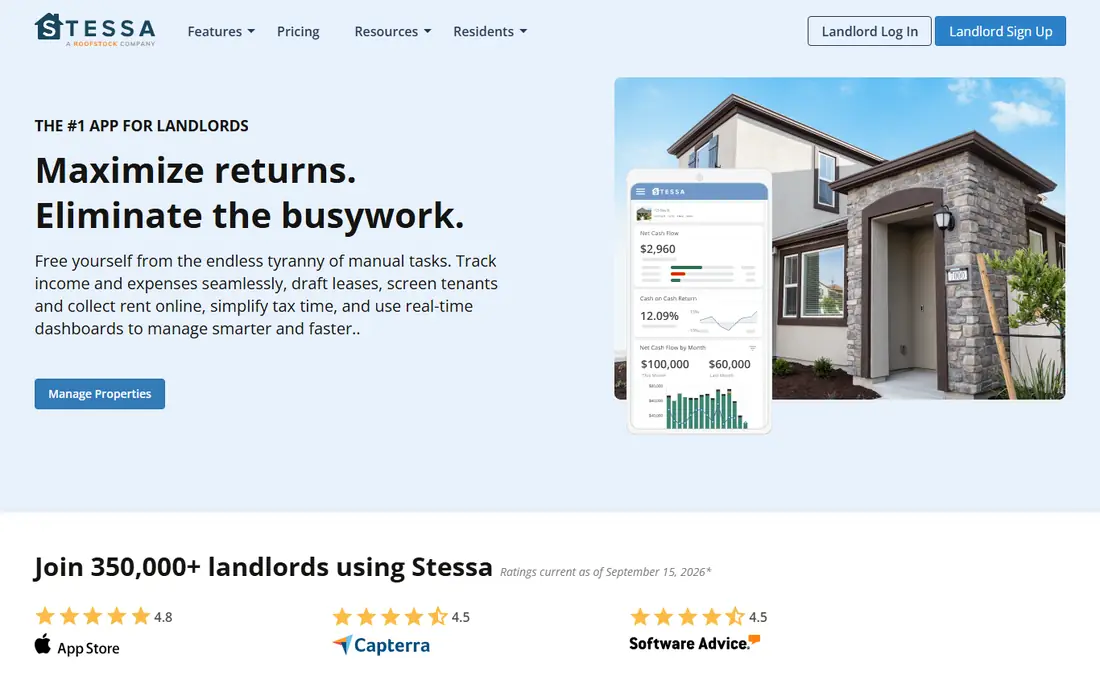
Stessa is the accounting-first pick. It tracks income and expenses by property, captures receipts, shows property performance, and produces tax-ready reports that help at year end. The core platform is free, which makes it an easy companion tool even if you use another system for rent collection or listings.
The limit is scope. Stessa is not a full property management platform, so leases, e-signatures and detailed maintenance workflows are lighter than in RentRedi or DoorLoop. Use Stessa when clean books are your main pain, or pair it with a management tool if you need both. For landlords who dread tax season, it is the best starting point on this list.
- Free core accounting
- Income and expense tracking
- Tax reports and dashboards
- Not a full management platform
- Lease and maintenance tools are limited
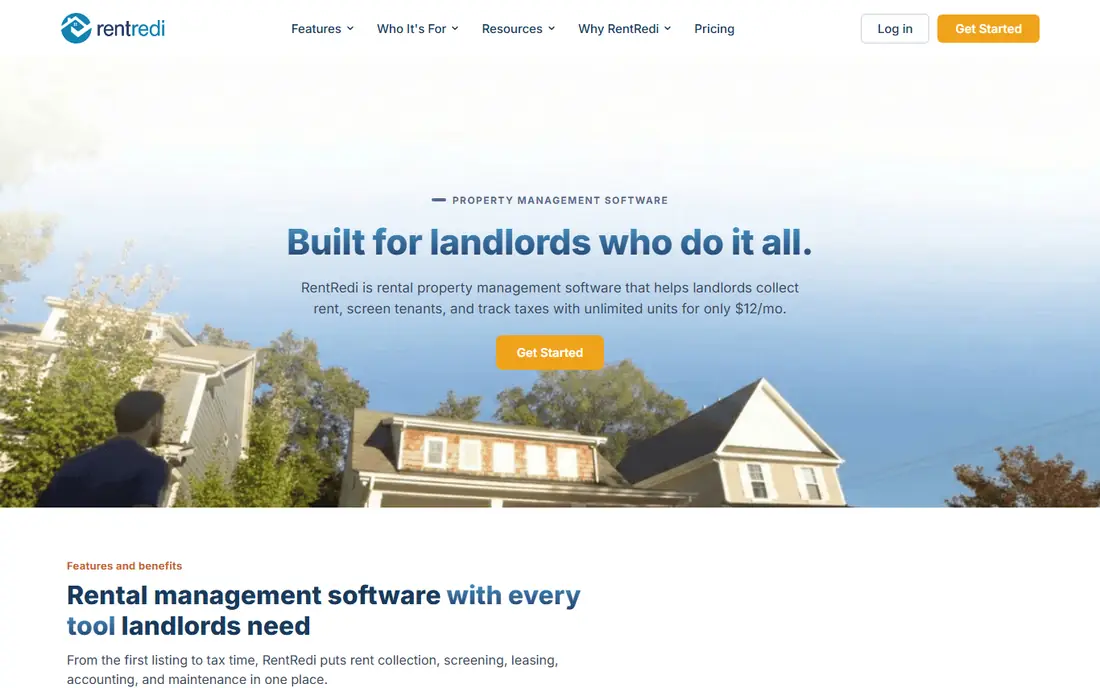
RentRedi is the value pick for landlords who want everything in one plan. It covers listings, applications, tenant screening, rent collection, maintenance requests, late fees and team accounts, with a flat monthly price and unlimited units on its annual plan. That flat rate is a major advantage as you grow, because per-unit tools get more expensive with every door you add.
There is no free plan, so it costs money from day one, and the lowest monthly figure usually requires annual billing. If you own a few units and want one system without per-unit maths, RentRedi is hard to beat. If you own one unit and only need rent collection, a free tool may be enough for now.
- Flat rate with unlimited units
- Listings, screening and rent collection
- Maintenance and team accounts
- No free plan
- Annual billing gives the best monthly price
Avail, now linked to Realtor.com, suits landlords focused on finding and placing good tenants. It syndicates listings, handles applications and screening, offers state-specific lease templates, and collects rent, with a free basic plan for core use. That placement strength matters, because a bad tenant costs far more than a month of software.
The paid Unlimited plan is priced per unit, so costs rise as you add doors, and some features such as faster payments or advanced tools need that tier. For one to five units, Avail is a strong free start. For larger portfolios, compare its per-unit total with RentRedi's flat rate before committing.
- Free basic plan
- Listing syndication
- State-specific lease templates
- Rent collection
- Per-unit paid plan can grow with portfolio
- Some features need the paid tier
TurboTenant is the beginner-friendly pick. It walks a new landlord through listings, rental applications, screening, leases and rent collection in one place, with a free plan for core features. That guided flow helps if this is your first rental and you are unsure what documents or steps you need.
As with other free tools, some features sit behind paid tiers, and applicants often pay screening costs. The free plan is still useful for a first property, and you can upgrade when you need leases, e-signatures or faster payments. If you want a simple, guided start without a monthly bill, TurboTenant is a good first test.
- Free plan
- Listings, applications and screening
- Rent collection and leases
- Some features need paid tiers
- Screening fees are often tenant-paid
Innago is the free management pick. Landlords pay nothing for the core software, which covers listings, applications, leases, rent collection, maintenance requests and basic accounting. Payment fees apply, and you can choose whether you or the tenant pays some of them, which makes the true cost depend on your payment setup.
The trade-off is that a free tool must earn money somewhere, so check ACH and card fees, payout timing and support options before you rely on it for many units. For a small landlord who wants full management without a subscription, Innago is the most complete free option on this list, and it is worth testing with one property first.
- Free for landlords
- Listings, leases and rent collection
- Maintenance requests
- Revenue comes from payment fees
- Support and features vary by plan
TenantCloud suits landlords who want accounting inside the management tool, not as a separate system. It covers listings, leases, rent collection, maintenance, tenant portals and accounting, with automatic late fees and reports. That combination helps when you manage several units and need to see profit by property without exporting data to another app.
There is no free plan, and pricing starts around $15 per month on an annual plan, so it costs more than a free tool from day one. If your main pain is messy books across several units, TenantCloud's accounting may justify that cost. If you only need rent collection, start free and upgrade later.
- Built-in accounting
- Rent collection
- Maintenance and listings
- Landlord and tenant portals
- No free plan
- Interface can feel dated to some users
DoorLoop is the growth pick. It offers full property management with real accounting, listings, leasing, maintenance, owner portals and reporting, and it suits landlords moving from a handful of units toward dozens. The accounting depth is a step above free tools, which matters when you manage for partners or need owner statements.
The starting price is higher, and pricing can include minimums and per-unit elements, so a small landlord with two units may find it expensive. Choose DoorLoop when your portfolio, accounting needs or owner reporting have outgrown a free or flat-rate tool, not as your first tool for a single rental.
- Full accounting
- Listings, leasing and maintenance
- Owner portals
- Good reporting
- Higher starting price
- Minimums and per-unit pricing can add up
Buildium is the scale pick for landlords and small management firms heading toward many units. It covers leasing, rent collection, accounting, maintenance, inspections and reporting, with resident and owner portals that help as the portfolio grows. Its accounting and trust accounting features suit firms that handle other owners' money.
For a small landlord with one or two units, Buildium is more than you need, and the price reflects that. It belongs on the shortlist when you plan to manage dozens of units, work with owners, or need stronger accounting controls than a free tool offers. Start with a cheaper tool, and move to Buildium when scale makes the extra cost worthwhile.
- Scalable management
- Accounting and reporting
- Resident and owner portals
- Higher price for small landlords
- Setup takes time
How we picked these
We compared official feature pages, pricing pages and public reviews for property management software, and we favoured tools with current small-landlord use, a clear rent collection and leasing workflow, and published or widely listed pricing. We checked listings, screening, leases, maintenance, accounting and who pays screening and payment fees, because those fees change the true cost. We did not claim hands-on testing, and where pricing varies by billing period we noted the annual figure where stated.
How to choose the right property management software
Start by counting your units and your time. For one to three units, a free tool such as Avail, TurboTenant or Innago, plus Stessa for books, often covers the job. For five or more units, a flat-rate tool such as RentRedi or an accounting tool such as TenantCloud may save time and money. For dozens of units, DoorLoop or Buildium become worth their higher price.
Next, test the full tenant cycle on a trial: list a property, run an application, sign a lease, collect rent, log a maintenance request and pull a profit report. That cycle reveals gaps that a feature list hides. Check lease templates for your state, payout timing, late fee rules, and whether tenants can pay by ACH without a large card fee. Finally, confirm data export. If you outgrow a tool, you should be able to take tenant, lease and payment history with you without a painful rebuild.
Frequently asked questions
What is the best property management software for small landlords?
Stessa is best for accounting, RentRedi is best for flat-rate full management, Avail and TurboTenant are best free starts for placement, and Innago is best for free full management. The best leasing software for a small landlord depends on unit count, accounting needs and whether you prefer free or flat-rate pricing.
Is there free property management software for landlords?
Yes, Stessa, Avail, TurboTenant and Innago all offer free plans for core features. Free usually means screening or card fees are paid by applicants or tenants, and some features such as e-signatures or faster payouts need a paid tier.
What is the best lease administration software for small landlords?
Avail, TurboTenant, RentRedi and Innago all offer lease templates and e-signatures on some plans, with Avail noted for state-specific templates. Check that templates fit your state and local rules, and have a local adviser review a lease before you use it for a real tenancy.
How much does property management software cost?
Free tools cost nothing for core use plus payment and screening fees, flat-rate tools such as RentRedi start around $12 per month, and fuller platforms such as DoorLoop and Buildium start around $62 per month. Compare total cost for your unit count, not just the headline price.
Can small landlords collect rent online for free?
Yes, several tools offer free ACH rent collection on free plans, though payout timing and card fees vary. Check whether ACH is free for you or the tenant, how long payouts take, and whether partial payments or late fees are supported.
Should I use separate tools for accounting and management?
Many small landlords do, using Stessa for books plus a management tool for listings and rent. That split works if the two tools do not duplicate data entry. If bookkeeping becomes a monthly chore, a single tool with built-in accounting, such as TenantCloud or DoorLoop, may save more time than the split setup.
Sources we checked (8)

Online Jobs is an independent blog about careers, online work, learning new skills and the tools that help people earn. More about us.
Keep reading
All posts
Top AI Financial Software
Searching for top AI financial software? We compared 9 AI finance tools for AP, spend, close, forecasting and bookkeeping to help teams choose wisely.
Quicken Alternatives
Compare the best quicken alternatives for Mac, Windows, and small business owners, from Monarch Money and YNAB to Copilot, Tiller, and Banktivity in 2026.
QuickBooks Online Alternatives
Looking for quickbooks online alternatives? We compared 8 accounting tools on invoicing, bank feeds, payroll, pricing and fit for small businesses today.