9 Best Platforms for Influencers and Brands

How we put this together: we compare official feature and pricing pages, app store listings, privacy policies and public user reviews. Prices change, so check the provider's site before you pay.
Key takeaways
- GRIN is our first pick for ecommerce brands that run many creator partnerships, while Aspire suits brands that want a large creator marketplace.
- Upfluence suits brands that want to turn existing customers into creators, and Modash suits teams that need discovery and vetting first.
- Collabstr and creator marketplaces suit individual creators looking for brand deals without an agency.
- Most brand platforms use quote or yearly pricing, so ask for a written price for your creator count and campaign volume before you sign.
Quick comparison
| Name | Who it suits | Starting price | Free option | |
|---|---|---|---|---|
 GRIN | ecommerce creator programs | See website | No | Visit |
 Aspire | creator marketplace campaigns | See website | No | Visit |
 Upfluence | customer to creator discovery | See website | Free trial | Visit |
 CreatorIQ | enterprise influencer programs | See website | No | Visit |
 Later Influence | visual campaign management | See website | No | Visit |
 Traackr | ROI and benchmarking | See website | No | Visit |
 Modash | creator discovery and vetting | See website | Free trial | Visit |
 HypeAuditor | audience quality checks | See website | Free trial | Visit |
 Collabstr | creators finding brand deals | See website | Yes | Visit |
The best platforms for influencers
We compared influencer marketing platforms on discovery, campaign management, payments, reporting, and price. The best influencer marketing platform for a brand depends on creator count, sales channel, and team size, while the best platform for influencers depends on finding paid work and getting paid on time.
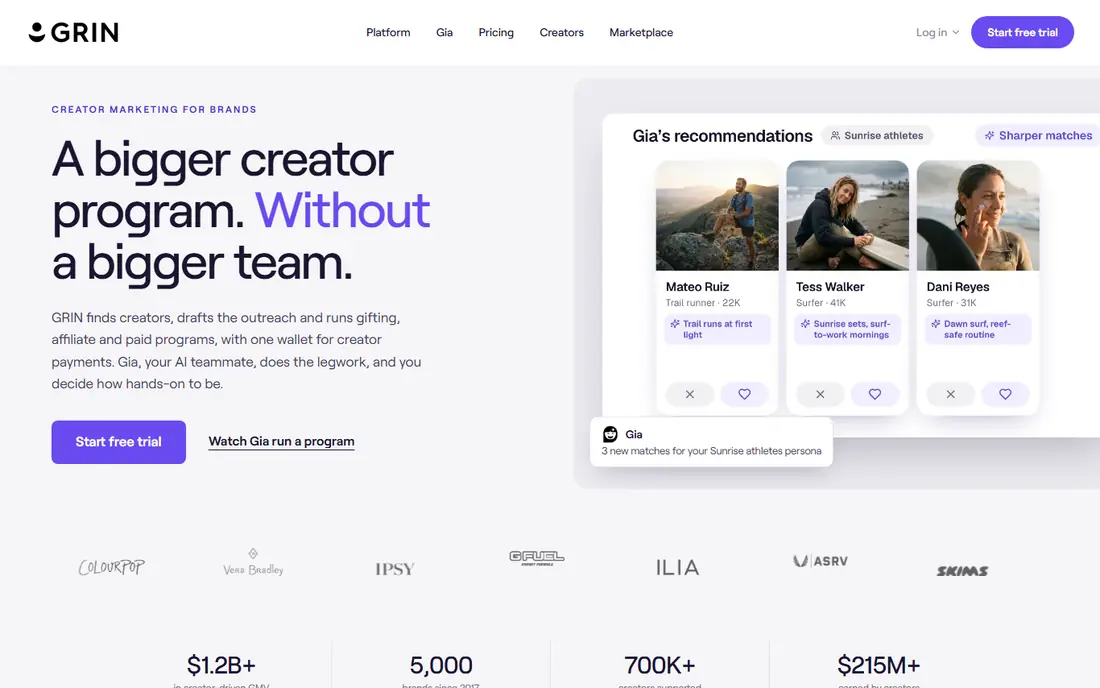
GRIN is a leading influencer marketing software choice for ecommerce brands that manage many creators. It covers discovery, outreach, gifting, affiliate tracking, content approval, and payments in one system, with a strong link to Shopify stores. Brands that run 50 or more creator partnerships will get the most from its CRM-style workflow.
Pricing is by quote and the platform is aimed at larger teams, so small brands may find it costly. If you run a growing ecommerce program and need to track sales from creators, GRIN is a strong first demo. If you run only a few partnerships, a smaller marketplace may be enough.
- Full discovery to payment workflow
- Strong Shopify link
- Creator CRM for large programs
- Quote pricing
- Best suited to larger ecommerce teams
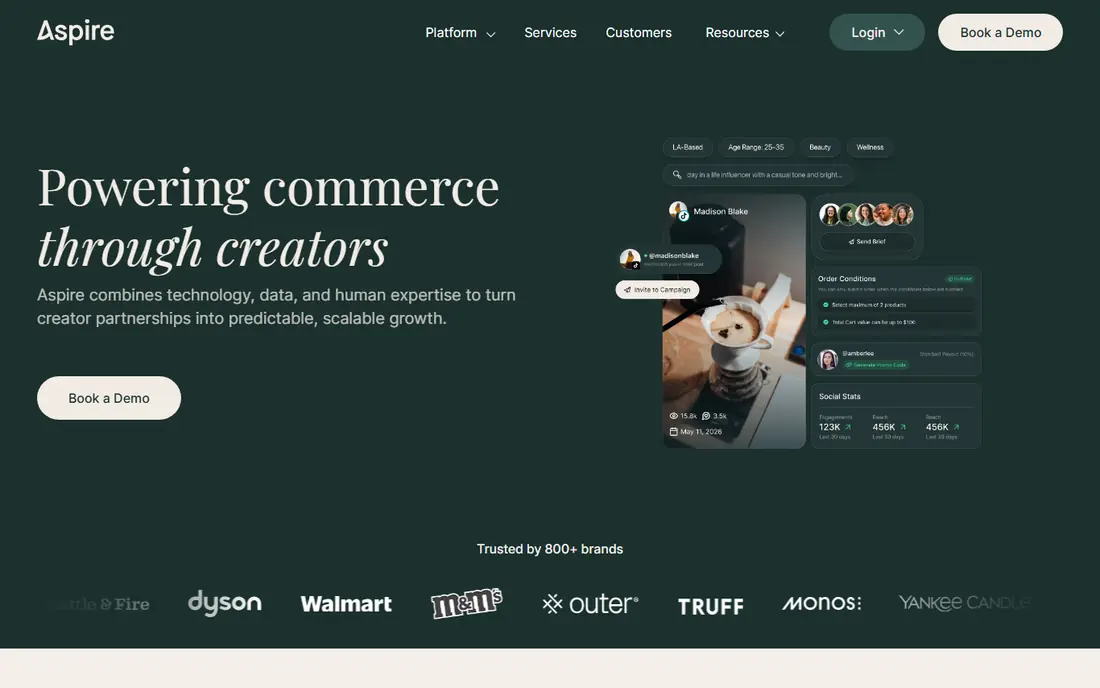
Aspire suits brands that want to find creators through a marketplace and manage campaigns in one place. Creators apply to campaigns, brands review content, and teams track posts, codes, and sales. It works well for ambassador programs and for brands that value content quality as well as reach.
Pricing is often custom, so ask for a quote based on your creator count and campaign volume. Smaller brands should check if a marketplace or a discovery-only tool would cover their needs at lower cost before signing a yearly deal.
- Large creator marketplace
- Campaign workflow and content approval
- Shopify gifting tools
- Pricing not always published
- Implementation takes time for large programs
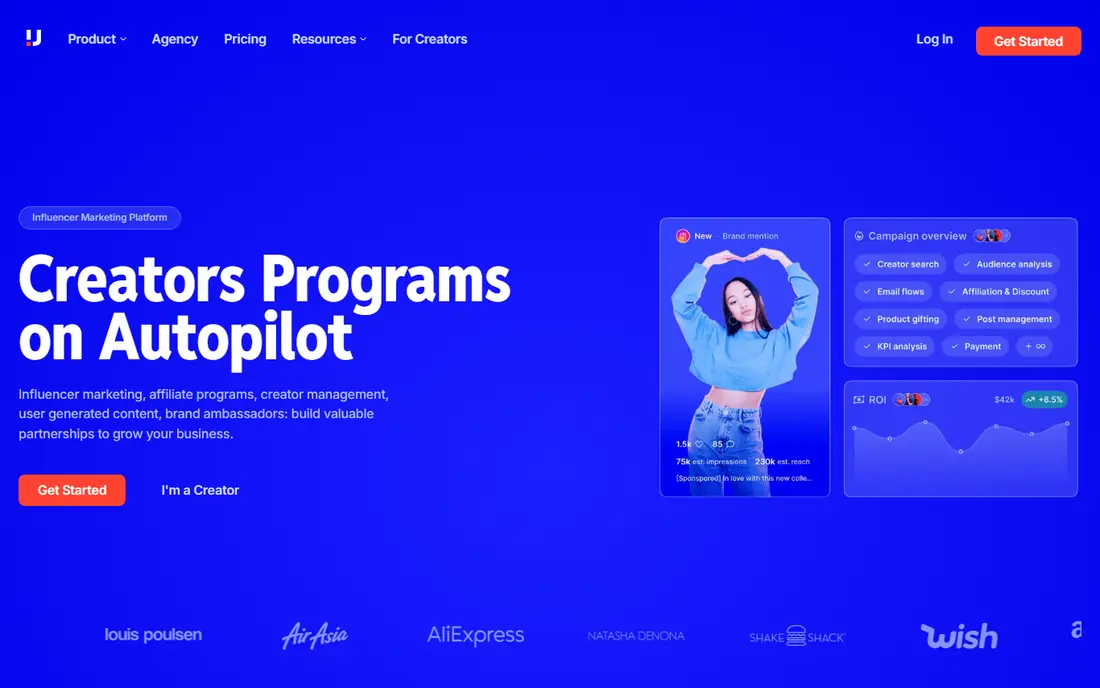
Upfluence stands out for customer-to-creator discovery. It can scan your customer base and social followers to find people who already buy from you and also create content, which often leads to more authentic partnerships. It also covers discovery, campaign management, and payments, with Shopify and WooCommerce links.
Pricing varies by module and plan, so check which features are included in the quote you receive. For ecommerce brands that want to grow from their own customer base, Upfluence offers a useful and distinct starting point.
- Finds creators among existing customers
- Ecommerce integrations
- Built-in creator payments on some plans
- Pricing varies by module
- Full features need higher plans
CreatorIQ is built for global enterprise brands and agencies that run large, compliance-heavy influencer programs. It offers discovery, campaign management, approvals, payments, and reporting at scale, with tools for brand safety and stakeholder sign-off. Large teams with many markets will value its structure.
Pricing is enterprise level and the setup takes time, so it is not a fit for small brands. If you run a large program with strict approval needs, CreatorIQ is a strong enterprise pick. If you run a small program, a mid-market platform will be simpler and cheaper.
- Large creator database
- Enterprise reporting and compliance
- Global team workflows
- Enterprise pricing
- Implementation can take weeks
Later Influence, formerly Mavrck, suits visual-first brands that plan campaigns around images, video, and user-generated content. It covers discovery, campaign management, Shopify gifting, and reporting in a visual workflow that many social teams find easy to follow. It also helps manage content rights for reuse in ads and product pages.
Pricing is often enterprise level, so smaller brands should ask for a clear quote and check if a smaller tool covers their campaign count. For visual brands with regular creator campaigns, Later Influence is a polished option.
- Visual campaign planning
- Creator discovery and gifting
- User-generated content management
- Enterprise pricing in many cases
- Best for visual-first brands
Traackr suits brands that need to prove influencer ROI and compare creators fairly. It offers benchmarking, budget tracking, and performance history that help managers decide where to spend next. Agencies and large brands that report to leaders will find its analytics useful.
It is priced for enterprise teams, so small brands may find it costly for simple discovery. If reporting and ROI proof are your main needs, Traackr is worth a demo. If you only need to find creators, a discovery tool may be enough.
- Strong benchmarking and ROI reporting
- Budget tracking
- Creator performance history
- Enterprise pricing
- Less suited to small discovery-only needs
Modash is a discovery-first platform for teams that need to find and vet creators at scale. It covers Instagram, TikTok, and YouTube with filters for audience, location, and engagement, plus checks for fake followers and audience quality. Brands and agencies that research many creators before outreach will find it efficient.
Campaign management is thinner than on GRIN or Aspire, so teams may still need spreadsheets or a second tool for full campaign work. If discovery and vetting are your bottleneck, Modash is a strong and more affordable starting point.
- Large creator database
- Strong vetting and audience checks
- Self-serve signup in many cases
- Campaign management is thinner than full platforms
- Pricing rises with usage
HypeAuditor is best known for audience quality analysis and fraud detection. It helps brands check if a creator audience is real, engaged, and in the right location before paying for a post. That vetting step can save money, especially for brands that work with many new creators.
It is not a full campaign management platform, so larger programs may pair it with a tool such as GRIN or Aspire. For vetting, discovery, and reporting, HypeAuditor is a practical and trusted choice.
- Audience quality and fraud checks
- Discovery and reporting
- Useful for vetting before payment
- Campaign management is limited
- Pricing varies by plan
Collabstr is a marketplace where creators list their services and brands search for creators by platform, niche, and price. It suits individual influencers who want brand deals without an agency, and small brands that want to buy a single post or package. Setup is simple, and creators can set their own rates.
Deal quality varies, and platform fees apply, so creators should price their work with fees in mind. For large enterprise programs, a full platform such as GRIN or CreatorIQ will offer more control. For creators starting out, Collabstr is an accessible place to find paid work.
- Marketplace for creators and brands
- Simple deal setup
- Useful for creators starting out
- Deal quality varies
- Platform fees apply
- Less suited to large enterprise programs
How we picked these
We checked official feature pages, pricing pages, and marketplace listings for each platform, and we read public reviews about discovery quality, campaign tools, and payment handling. We favoured platforms with clear discovery, campaign, and reporting features, plus a trial or demo path where available. We did not claim hands-on testing, and where a price could not be confirmed on the vendor site, we wrote See website rather than guess.
How to choose an influencer platform
Start with your side of the market. Brands should pick based on creator count, sales channel, and reporting needs. Creators should pick based on finding paid work, setting rates, and getting paid on time. A platform that is great for a large brand may be a poor fit for a single creator, and the reverse is also true.
For brands and ecommerce teams
If you sell on Shopify and run many partnerships, GRIN and Aspire are strong first demos. If you want to find creators among customers, try Upfluence. If discovery is the main problem, try Modash or HypeAuditor first and add campaign tools later. Always ask for pricing for your creator count, and trial with a small campaign before a yearly deal.
For influencers and creators
Creators should build a clear profile with niche, audience size, past work, and rates, then list on marketplaces such as Collabstr while also pitching brands directly. Check payment terms, content rights, and revision limits before accepting a deal. A platform that helps you get paid on time and reuse content fairly is worth more than a platform with a large but low-quality deal list.
Frequently asked questions
What is the best influencer marketing platform for ecommerce?
GRIN and Aspire are strong ecommerce picks, with Shopify gifting, affiliate tracking, and creator management. Upfluence also suits ecommerce brands that want customer-to-creator discovery. Trial with a small campaign and compare sales tracking, payment handling, and content approval before you sign a yearly deal.
What is the best platform for influencers to find brand deals?
Collabstr is a useful marketplace for creators starting out, since brands can search by niche and price. Aspire and other brand platforms also run creator marketplaces where creators apply to campaigns. Creators should also pitch brands directly, since many deals still come from direct outreach and past client work.
What is the best influencer marketing software for small businesses?
Small businesses often do better with a discovery tool such as Modash or HypeAuditor, or a marketplace such as Collabstr, rather than an enterprise platform. Those tools cost less and cover finding and vetting creators. Move to a full platform only when creator count and campaign volume make manual management slow.
How much does influencer marketing software cost?
Costs vary widely, from free marketplace listings for creators to enterprise platforms that cost tens of thousands per year for brands. Many brand platforms use quote pricing based on creator count and features. Ask for a written quote, check contract length, and trial with a small campaign before committing.
How do brands measure influencer ROI?
Brands track sales from codes and affiliate links, traffic from creator posts, content reuse value, and audience growth. Platforms such as Traackr, GRIN, and CreatorIQ help link posts to sales and report ROI. Set a clear goal for each campaign, such as sales, signups, or content, before you measure results.
What should creators check before accepting a brand deal?
Creators should check payment amount and timing, content rights, revision limits, exclusivity, and posting deadlines. Ask if the brand wants whitelisting or paid ad use, since that should cost more than an organic post. Get the deal terms in writing through the platform or by contract before you create content.
Sources we checked (9)

Online Jobs is an independent blog about careers, online work, learning new skills and the tools that help people earn. More about us.
Keep reading
All posts
Zoom Alternatives
Zoom alternatives compared for 2026: Google Meet, Microsoft Teams, Webex, Jitsi and more for free calls, large meetings and webinars for teams and classrooms.

Workday Alternatives
We compared the best workday alternatives for HR, payroll, and global hiring, from BambooHR and Gusto to Rippling, Deel, and HiBob for growing teams in 2026.
WordPress Alternatives
WordPress alternatives guide: we compare 8 platforms for builders, designers, stores, and publishers to leave WordPress without losing your full site content.