Best Platform to Sell Online Courses in 2026: 8 Platforms Compared

How we put this together: we compare official feature and pricing pages, app store listings, privacy policies and public user reviews. Prices change, so check the provider's site before you pay.
Key takeaways
- Teachable suits a first paid course, with a simple checkout and a free tier to test demand.
- Thinkific suits structured teaching, with strong assessments and no platform fee on its own payments.
- Kajabi suits creators who want courses, email and funnels in one system and can cover its higher price.
- Podia and Systeme.io suit simpler or lower-cost starts, but check transaction fees on entry plans.
Quick comparison
| Name | Who it suits | Starting price | Free option | |
|---|---|---|---|---|
 Teachable | First paid course | $39 per month | Yes | Visit |
 Thinkific | Structured teaching | $54 per month | Yes | Visit |
 Kajabi | All-in-one creator business | $179 per month | Free trial | Visit |
 Podia | Simple all-in-one start | $49 per month | Free trial | Visit |
 LearnWorlds | Interactive assessments | $29 per month | Free trial | Visit |
 Systeme.io | Low-cost validation | Free | Yes | Visit |
 Mighty Networks | Course plus community | $95 per month | Free trial | Visit |
 Udemy | Built-in student audience | Free | Yes | Visit |
The best platforms to sell online courses
Selling a course is not only about hosting videos. You need a checkout, a student area, payment handling and a way to reach buyers. Some platforms give you a storefront and an audience, while others give you tools to sell on your own site. The eight below cover both routes, with clear notes on fees.
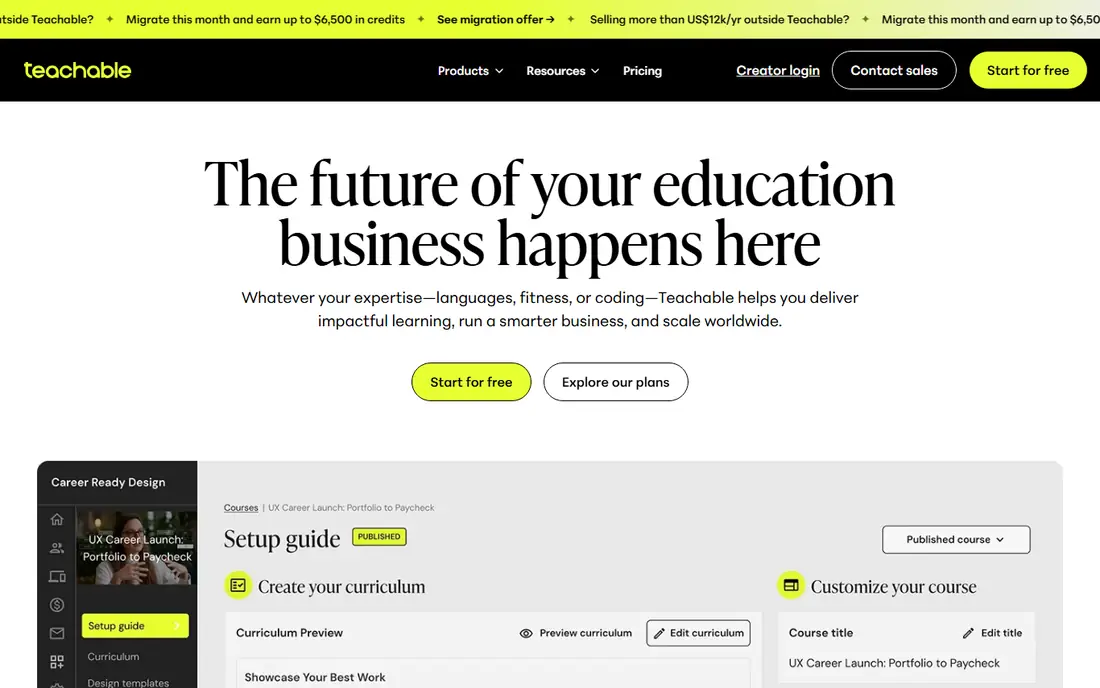
Teachable is the easiest route from an idea to a paid course. You upload lessons, set a price, and get a checkout and student dashboard without building a site. The free tier lets you publish and sell before you commit to a paid plan, which helps when you are testing demand.
The catch is fees and design. Lower plans charge a transaction fee on each sale, and design options are more limited than a full website builder. A branded mobile app also costs extra. For a first course, those limits are acceptable. For a larger business, a higher plan or a different platform may save more in fees.
- Simple course setup and checkout
- Free tier to test demand
- Certificates and student tools
- Transaction fee on lower plans
- Design control is limited
- Branded app costs extra
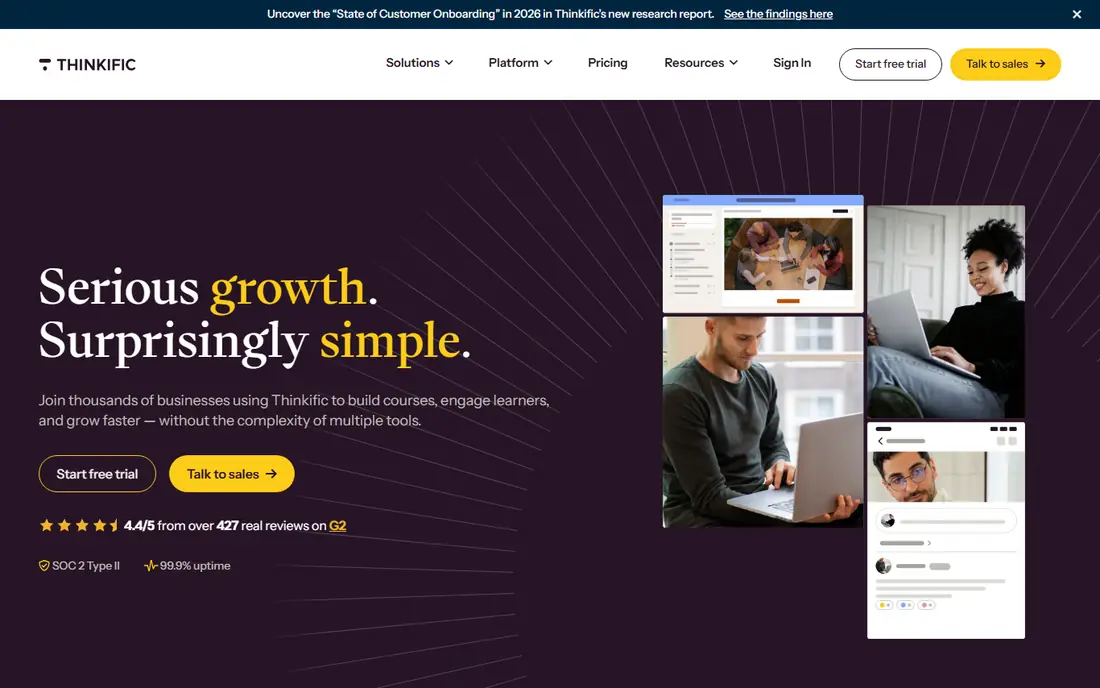
Thinkific suits educators who care about structure. You can build lessons, quizzes, assignments and certificates in a clear order, which helps for training and professional courses. With Thinkific Payments, the platform does not take a fee on sales, although payment processing fees still apply.
Marketing tools are thinner than Kajabi, so you may need email or funnel tools alongside it. The entry price is also higher than Teachable or LearnWorlds. For a teaching-first course, especially one with assessments, Thinkific gives a polished student experience that justifies the cost.
- Strong course structure and assessments
- No platform fee with Thinkific Payments
- Good student experience
- Higher entry price than some rivals
- Marketing tools are thinner than Kajabi
- App costs extra
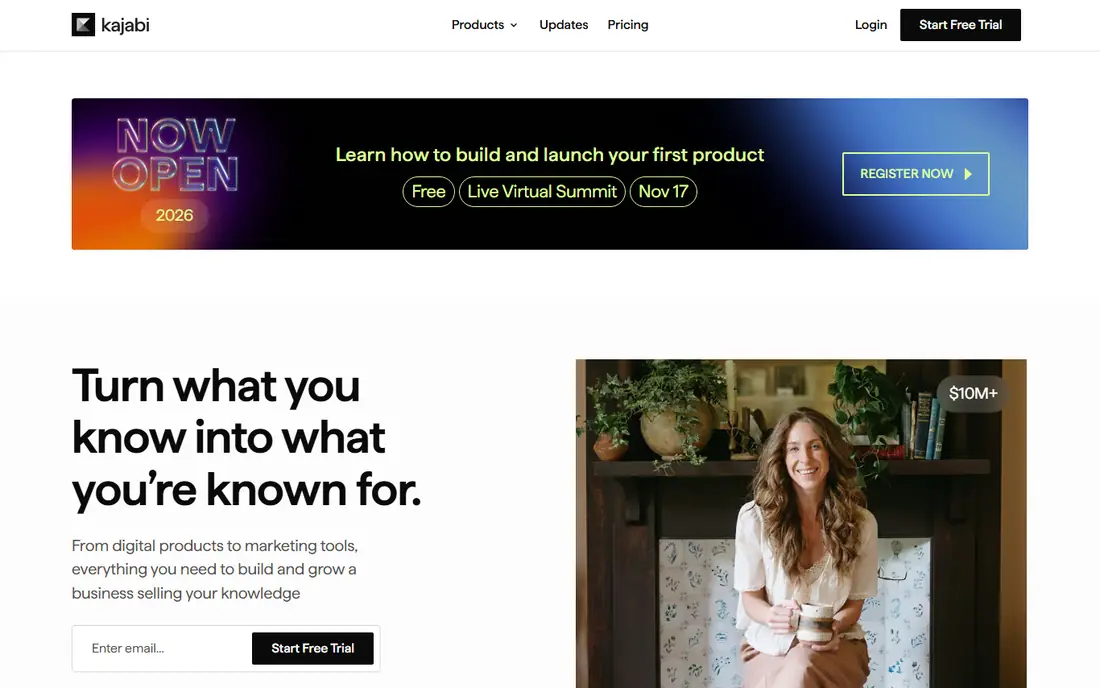
Kajabi is for creators who want to replace several tools at once. Courses, email, landing pages, funnels and a CRM sit in one system, with templates that look polished from the start. That unity saves time when you run a course business with regular launches and email campaigns.
The price is the barrier. At $179 per month for the entry plan, a course needs to earn enough to cover it before you see profit. Contact limits also matter on lower plans. Kajabi suits established creators with steady sales, rather than a first course with untested demand.
- Courses, email, funnels and CRM in one
- Polished templates
- No platform fee with Kajabi Payments
- High monthly price
- Contact limits on lower plans
- Email depth is less than a dedicated email tool
Podia keeps selling simple. You can sell courses, digital downloads and memberships from one dashboard, with a checkout that does not need technical setup. That simplicity suits solo creators who want to sell more than one kind of product without learning a complex platform.
The entry plan charges a transaction fee, so check the higher plan if sales grow. Design control is basic, and community features are lighter than a dedicated community platform. For a creator who values a calm dashboard over deep customisation, Podia is a friendly and practical choice.
- Simple dashboard
- Courses, downloads and memberships together
- Easy checkout
- Transaction fee on the entry plan
- Design options are basic
- Community tools are lighter than Mighty Networks
LearnWorlds suits courses that need interaction, not just video playback. You can add quizzes, interactive video elements and assessments, plus SCORM support for corporate training. The entry price is lower than Teachable or Thinkific, which helps for a first interactive course.
The starter plan charges a fee per sale, so the true cost depends on volume. Setup also takes more time than Podia or Teachable, because there are more options to configure. For training providers and educators who need assessments, LearnWorlds offers strong tools at a fair entry price.
- Interactive video and assessments
- SCORM support
- Lower entry price than many rivals
- Starter plan charges a fee per sale
- Setup takes more time
- Some features sit in higher plans
Systeme.io is the best low-cost route to test a course idea. The free tier lets you build a course, a funnel and email follow-up without paying, and paid plans stay low while charging no platform fee on sales. That model suits creators who want to prove demand before spending on a premium platform.
The trade-off is polish and depth. Course design is basic, assessments are limited, and there is no strong student app. If your course sells well, you may move to Teachable, Thinkific or Kajabi for a better student experience. As a validation tool, Systeme.io is hard to beat on cost.
- Free tier for validating an idea
- Courses, funnels and email in one
- No platform fee on sales
- Course design is basic
- Student app and assessments are limited
- Support is thinner than larger platforms
Mighty Networks suits creators whose course is part of an ongoing community. Members can discuss lessons, join live events and access courses in one app, which helps completion and retention. That community focus sets it apart from course-only platforms.
Course tools alone are lighter than Thinkific or LearnWorlds, and lower plans charge a transaction fee. The price is also high if you only need a course with no community. For a cohort, membership or community-led course, Mighty Networks offers a combined space that a course platform plus a separate forum cannot match easily.
- Community and courses together
- Native mobile app
- Live events and member spaces
- Transaction fee on lower plans
- Course tools are lighter than Thinkific
- Price is high for courses alone
Udemy is a marketplace, not a storefront you own. You list a course for free, and Udemy brings students who search its catalogue. That audience is valuable for a new teacher with no email list, and Udemy handles hosting, payments and student access.
The cost is control and revenue share. Udemy takes a large share of marketplace sales, and it controls pricing and promotions. Your course also sits under the Udemy brand, not your own. Use Udemy to reach new students and build a reputation, and use a platform such as Teachable or Thinkific when you want to sell on your own terms.
- Large built-in audience
- Free to list a course
- Handles hosting and payments
- Large revenue share on marketplace sales
- Little control over pricing
- Brand is Udemy, not yours
How we picked these
We looked for platforms that are live in October 2026 and that let a creator sell a course as a core job, not as a side feature. We checked vendor pricing pages for entry prices, free tiers, trials and transaction fees, and we marked fees clearly where they apply. Where pricing varies by billing cycle, we used the monthly figure and noted the annual option in the text where relevant.
We also kept the routes distinct. A list of eight hosted course platforms would miss the marketplace route and the low-cost validation route. That is why this list includes Udemy for audience, Systeme.io for low-cost testing, and Mighty Networks for community, alongside the main hosted platforms.
Choosing the right course platform
Decide whether you own the audience
If you have an email list or a following, a hosted platform such as Teachable, Thinkific or Podia gives you more control and a better revenue share. If you have no audience, Udemy can bring students, but at a high revenue share. Many teachers use both: Udemy for discovery, and their own platform for full-price sales.
Model fees at real sales volume
A low monthly price with a transaction fee can cost more than a higher monthly price with no fee once sales grow. Multiply the fee by your expected sales, add the monthly price, and compare platforms at that total. Also add payment processing fees, which apply on most platforms regardless of the plan.
Check the student experience on a phone
Most students watch on a phone, so test the student app or mobile site during a trial. Check video playback, quiz handling and offline options where offered. A course that is hard to use on a phone will see lower completion, even if the content is strong.
Start small, then move if needed
Launch with a short course on a low-cost or free tier, gather student feedback, and move platforms only when sales justify it. Moving a course takes time, so a simple start is better than a long setup for an untested idea. Keep your email list separate, so a platform move does not lose your audience.
Frequently asked questions
What is the best platform to sell online courses?
Teachable suits a first course, Thinkific suits structured teaching, Kajabi suits an all-in-one business, and Podia suits a simple start. Systeme.io suits low-cost validation, Mighty Networks suits community courses, and Udemy suits reaching a built-in audience. The best pick depends on your audience, fees and teaching style.
What are the best platforms to sell online courses for beginners?
Teachable and Podia suit beginners, because setup is simple and checkout is built in. Systeme.io suits beginners on a tight budget, with a free tier for testing. Start with a short course, test demand, and move to a higher plan only when sales cover the cost.
What is the best platform for selling online courses without fees?
Thinkific charges no platform fee when you use Thinkific Payments, and Systeme.io charges no platform fee on sales, although payment processing fees still apply on both. Kajabi also charges no platform fee with Kajabi Payments. Always check the plan terms, since fees vary by payment method.
Should I sell on Udemy or my own platform?
Udemy suits discovery, because it brings students to your course, but it takes a large revenue share and controls pricing. Your own platform suits full-price sales and brand control, but you must bring your own audience. Many teachers use Udemy for reach and their own platform for direct sales.
How much does it cost to sell online courses?
Entry prices in this list range from free on Systeme.io and Udemy to $179 per month for Kajabi, with most hosted platforms starting between $29 and $54 per month. Add transaction fees where they apply, plus payment processing fees. Model the total at your expected sales volume, not just the monthly headline.
Do I need a website to sell a course?
No, hosted platforms such as Teachable, Thinkific and Podia provide a course site and checkout, so you can sell without building a website. A separate website helps for branding and email capture, but it is not required to start. Keep your email list independent, so you can move platforms later if needed.
Sources we checked (8)

Online Jobs is an independent blog about careers, online work, learning new skills and the tools that help people earn. More about us.
Keep reading
All posts
n8n Alternatives
n8n alternatives compared for 2026, with Zapier, Make, Activepieces, and more, covering visual builders, code steps, self-hosting, and pricing models.

ZoomInfo Alternatives
The best ZoomInfo alternatives in 2026, compared on price, free plans, data coverage, and which tool fits small teams or large sales teams best in detail.
Yotpo Alternatives
Find cheaper alternatives to Yotpo for reviews and loyalty, with Judge.me, Loox, Stamped, and more compared for Shopify stores in 2026, all in one guide.