Best PIM Software in 2026: 8 Tools Compared

How we put this together: we compare official feature and pricing pages, app store listings, privacy policies and public user reviews. Prices change, so check the provider's site before you pay.
Key takeaways
- Plytix, Akeneo, and Pimcore are the clearest starting points when budget is tight, because each offers a free edition or free plan.
- Salsify, Syndigo, and inRiver suit larger teams whose main problem is getting clean product data to many retailers on time.
- A PIM pays off only when one team owns the data model, the approval steps, and the channel rules, not when data is copied by hand.
- Quote-based pricing is normal in this category, so ask for a written quote tied to SKU count, users, and channels before you compare totals.
Quick comparison
| Name | Who it suits | Starting price | Free option | |
|---|---|---|---|---|
 Akeneo | Flexible product enrichment | Free | Yes | Visit |
 Salsify | Retailer syndication | See website | No | Visit |
 Plytix | Small and mid-size catalogs | Free | Yes | Visit |
 Pimcore | Developer-led customization | Free | Yes | Visit |
 inRiver | Complex B2B catalogs | See website | No | Visit |
 Syndigo | Content syndication | See website | No | Visit |
 Sales Layer | Easy PIM for manufacturers | See website | No | Visit |
 Catsy | Mid-market catalogs with DAM | See website | No | Visit |
The best PIM software
A product information management system holds product names, specs, images, prices, and translations in one place, then sends that data to your store, marketplaces, and retailers. The tools below differ mainly in who they serve: small catalog teams, manufacturers, or large brands with hundreds of channels.
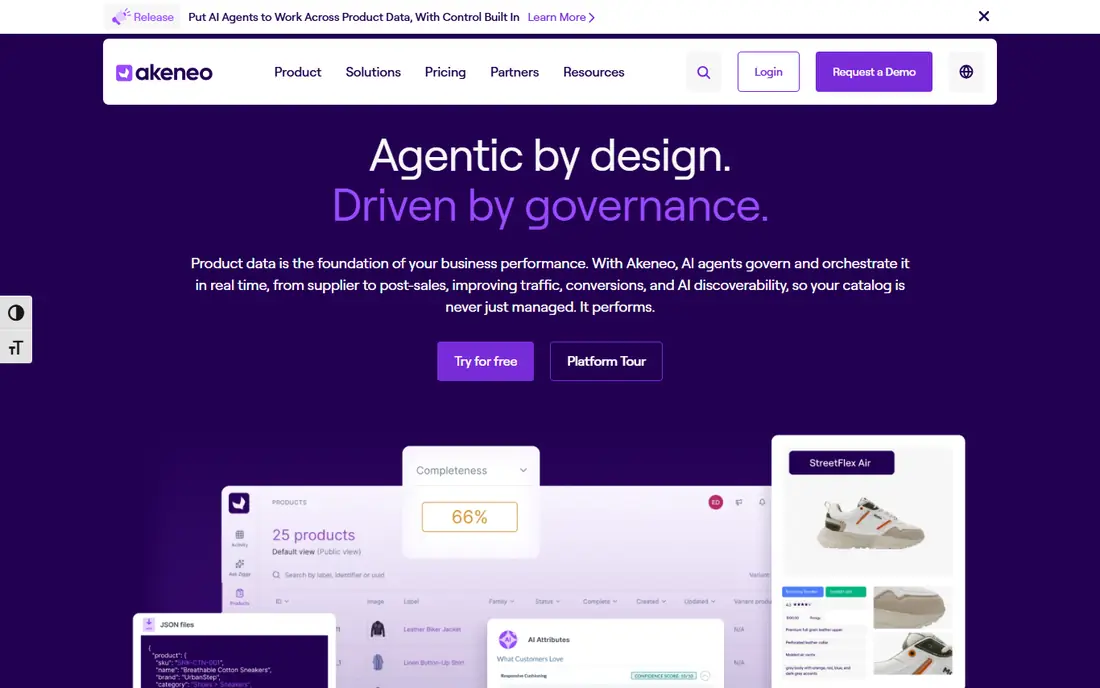
Akeneo suits a team that needs to shape messy product data into clean, complete listings. You define attributes, families, and completeness rules, then enrichment teams fill gaps, add translations, and send products for approval. That structure helps when products have many variants, options, and technical specs. The Community Edition is free to self-host, which makes Akeneo a low-risk way to test a PIM model. Commercial cloud plans are quoted, and published guidance puts the Growth package in the tens of thousands per year, so treat that as a budget range to confirm in writing, not a list price. The catch is effort. A PIM with flexible modeling still needs someone to design the model and keep it tidy.
- Strong product modeling and enrichment workflows
- Open-source Community Edition
- Large connector ecosystem
- Commercial plans are quote based
- Implementation can take time on large catalogs

Salsify fits a brand that sells through many retailers and struggles to keep each listing correct. You enrich product content once, check it against each retailer requirement, then publish it to those channels from the same record. Digital shelf views show how listings look in the wild, so gaps get fixed before they cost sales. Pricing is quoted per organization, and serious deployments are typically enterprise priced. That makes Salsify a poor fit for a shop with one store and fifty products. It makes sense when retailer compliance, speed to shelf, and listing accuracy drive revenue, and when a team can name the channels that matter most.
- Broad retailer and channel syndication
- Digital shelf views
- Strong validation for retailer requirements
- Quote-based enterprise pricing
- More than a small catalog team needs
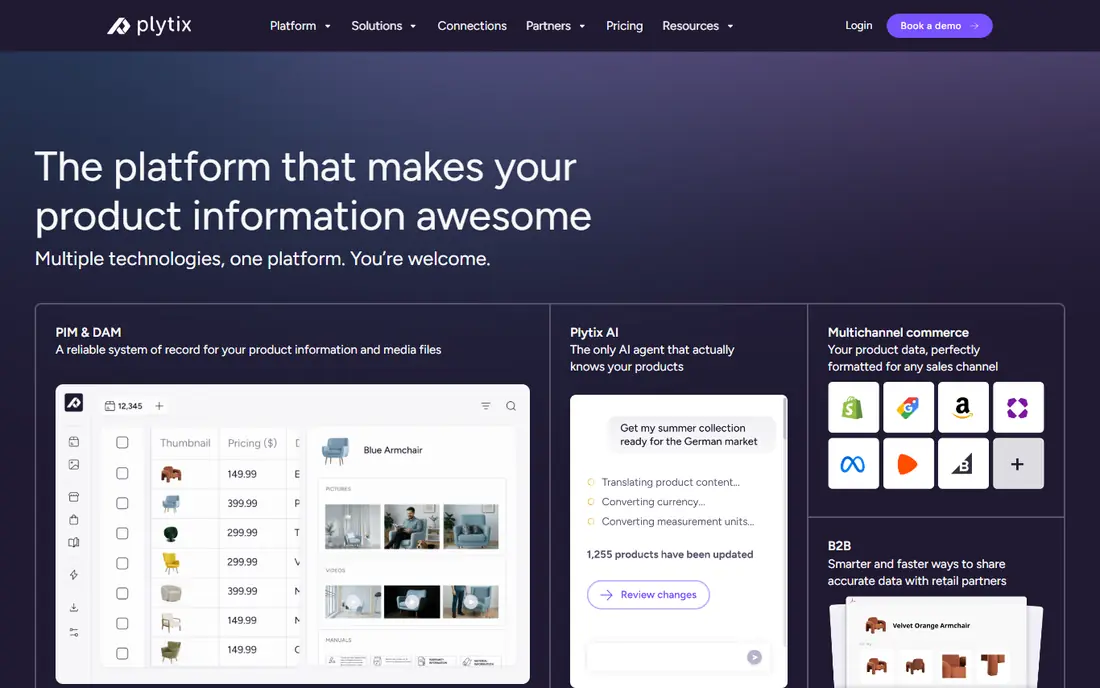
Plytix is the friendliest entry point in this list for a growing e-commerce team. The interface is plain, product data and images live together, and imports from spreadsheets are simple enough for a non-technical catalog manager. That matters, because many small teams abandon a PIM that only an engineer can run. The free Standard plan covers up to 500 SKUs in published pricing checks, and Pro is listed at $499 per month for larger catalogs. Check the current SKU limits and add-on prices on the pricing page before you migrate, because add-ons for feeds and portals add cost. The honest catch is scale. Plytix grows well into the mid-market, but a very large enterprise catalog with strict governance may need a heavier platform.
- Free plan for small catalogs
- Built-in digital asset handling
- Clear published paid plans
- Paid Pro plan is $499 per month at the published tier
- Advanced enterprise needs may outgrow it
Pimcore suits a team with developers who want to build product data around their own systems, not fit into a fixed template. It combines PIM with digital asset management, customer data, and content tools, so a single platform can serve a store, a portal, and internal tools. That breadth is useful for manufacturers and distributors with unusual data. The Community Edition is free for eligible use, and the Professional Edition is published at $9,900 per year in recent pricing checks. Those figures do not include hosting, implementation, or ongoing engineering, which often dominate the total cost. Pick Pimcore when you have the engineering capacity to own it, not when you want a tool that runs itself.
- Open-core platform with PIM, DAM, and data tools in one
- Full control over data models
- Self-hosting option
- Needs developer time
- Professional Edition is $9,900 per year where published
- Total cost includes hosting and build work
inRiver fits manufacturers and B2B brands with complex products, many variants, and strict approval steps. Teams onboard product data, enrich it with guided workflows, and distribute it to commerce channels and retailers. Built-in AI tools help with validation and enrichment, which speeds work on large catalogs. Pricing is quoted, so ask for scope tied to SKU count, channels, and users. The platform was named a Leader in the 2026 Gartner Magic Quadrant for PIM, which gives buyers a useful reference point, but it does not replace a pilot. Test inRiver with a real slice of your catalog, including your hardest products, before you sign.
- Strong workflow and syndication for B2B
- AI enrichment features
- Broad connector coverage
- Quote-based pricing
- Implementation needs planning for complex catalogs
Syndigo suits a brand whose main pain is distribution, not just storage. You prepare product content once, validate it against retailer rules, and syndicate it across retail and marketplace networks. That workflow cuts the manual rework that happens when each retailer asks for data in a different format. The trade-off is that Syndigo is an enterprise purchase with quoted pricing and a setup project. A small team with one channel will not see the return. A brand with many retail partners, frequent assortment changes, and strict content rules will see it in fewer rejected listings and faster time to shelf.
- Deep retailer network and content validation
- Product data plus digital shelf tools
- Suits large brand teams
- Quote-based pricing
- Setup is heavier than a basic catalog tool
Sales Layer is often praised for ease of use, and that praise matters in a category where adoption fails when teams avoid the tool. Product managers can centralize specs, images, and translations, set who can edit and approve each field, and publish to channels without waiting on IT for every change. Pricing is quote based, so request a quote that lists users, catalog size, and channels. Before you buy, test the exact channel exports you need, such as your store platform and your top two marketplaces. A PIM that is easy to use but misses a key channel still leaves manual work in place.
- Simple interface for product teams
- Strong access controls
- Built-in digital asset handling
- Pricing is quote based
- Channel coverage should be checked against your list
Catsy suits a mid-market e-commerce team that needs product data and product images managed together. Keeping images, specs, and descriptions in the same controlled system cuts the version errors that happen when images live in one tool and specs live in another. Workflow controls help teams approve changes before they reach a live listing. Pricing is quote based, so compare it against Plytix and other published-price tools on total cost, not headline price alone. Ask about user limits, catalog size, and DAM storage, because those three items drive most quotes. Catsy earns its place when a team values that combined PIM and DAM setup over a lower starting price.
- PIM plus digital asset management in one system
- Good fit for e-commerce teams
- Clear workflow controls
- Pricing is quote based
- Smaller teams may find published-price rivals easier to budget
How we picked these
We compared official feature pages, pricing pages, and public reviews, and we checked that each homepage loads and matches the product named. We kept tools that cover distinct buyer needs, from free self-hosted PIMs to enterprise syndication, and we left out generic database tools that do not handle product enrichment and channel publishing. Where pricing is quote based, we wrote See website rather than repeating an unverified estimate as a list price.
What to check before you buy a PIM
Start with a sample of your hardest products, not your easiest ones. Include variants, translations, and products with missing data. If a PIM handles that sample cleanly, it will handle the rest of your catalog.
Map your channels first
List every destination that must receive product data, from your own store to each marketplace and retailer. Ask each vendor to demo publishing to those exact destinations, with error handling when a listing is rejected. Channel coverage is where many PIM projects fail.
Count the real cost
Add licence or subscription cost, implementation, hosting where relevant, and staff time for data cleanup. A free edition still costs staff time, and a quote-based enterprise tool still needs a data owner. Budget for cleanup, because a PIM organizes data, it does not create clean data on its own.
Test governance early
Set up approval steps, field permissions, and completeness rules in the pilot. If only one person can approve changes and that person is away, publishing stalls. Good governance keeps data clean without blocking the team that sells.
Frequently asked questions
What is the best pim software for a small business?
Plytix is a strong starting point for a small catalog team, because it offers a free plan and clear paid tiers. Akeneo Community Edition and Pimcore Community Edition also work when a team can self-host. Pick Plytix when you want a hosted tool that a catalog manager can run.
What is the best product information management software for enterprise teams?
Salsify, inRiver, and Syndigo suit enterprise teams with many channels and strict retailer rules. Each is quote based, so run a pilot with your hardest products and get a written quote tied to SKUs, users, and channels before you choose.
Which are the top rated pim software options with a free plan?
Plytix offers a free plan for small catalogs, and Akeneo and Pimcore offer free community editions for self-hosting. Those three give a team a real way to test a PIM model before paying. Check SKU limits and hosting duties before you rely on a free edition in production.
What is the best pim platform for manufacturers?
Sales Layer and inRiver suit manufacturers with complex specs, variants, and approval steps. Sales Layer is often the easier tool to adopt, while inRiver suits larger B2B catalogs with broad syndication needs. Test both with your technical products.
How much does PIM software cost?
Costs range from free community editions to enterprise quotes that run into five or six figures per year. Published-price examples include Plytix Pro at $499 per month and Pimcore Professional at $9,900 per year in recent checks. Always confirm the current price and what it includes.
Do I need DAM with my PIM?
Many teams do, because product images and specs change together. Catsy and Plytix bundle DAM with PIM, and Pimcore includes DAM in its platform. If your DAM already works well, a PIM without DAM may be enough, but keep image and spec versions in sync.
Sources we checked (8)

Online Jobs is an independent blog about careers, online work, learning new skills and the tools that help people earn. More about us.
Keep reading
All posts
n8n Alternatives
n8n alternatives compared for 2026, with Zapier, Make, Activepieces, and more, covering visual builders, code steps, self-hosting, and pricing models.

ZoomInfo Alternatives
The best ZoomInfo alternatives in 2026, compared on price, free plans, data coverage, and which tool fits small teams or large sales teams best in detail.

Yotpo Alternatives
Find cheaper alternatives to Yotpo for reviews and loyalty, with Judge.me, Loox, Stamped, and more compared for Shopify stores in 2026, all in one guide.