Best Phone Service in 2026: 8 Carriers Compared

How we put this together: we compare official feature and pricing pages, app store listings, privacy policies and public user reviews. Prices change, so check the provider's site before you pay.
Key takeaways
- Verizon, AT and T, and T-Mobile lead on nationwide coverage, while Mint Mobile, Visible, and US Mobile often cost less for similar day-to-day use.
- Coverage at your home, workplace, and commute matters more than a national map, so check coverage where you actually spend time.
- Low-cost carriers often use a major network, but data speeds may slow during busy times, so read the plan terms before switching.
- Check phone compatibility, number porting, and trial options before you leave a carrier, since switching costs time even when it saves money.
Quick comparison
| Name | Who it suits | Starting price | Free option | |
|---|---|---|---|---|
 Verizon | Broad coverage and dependable service | See website | No | Visit |
 AT and T | Coverage with entertainment and family options | See website | No | Visit |
 T-Mobile | 5G coverage and travel-friendly plans | See website | No | Visit |
 Mint Mobile | Low-cost prepaid plans for light to moderate users | See website | Free trial | Visit |
 Visible | Simple unlimited plans without a store visit | See website | No | Visit |
 Google Fi Wireless | Flexible data and international travel | See website | No | Visit |
 Cricket Wireless | Prepaid plans with store support | See website | No | Visit |
 US Mobile | Custom plans and network choice | See website | No | Visit |
The best phone service providers
Phone service is local in practice, even when a carrier advertises nationwide coverage. A plan that works well in a city may struggle in a rural town, and a cheap plan may slow down at a stadium or during a commute. We compared the providers below on coverage, plan simplicity, data terms, and value, using official plan pages and coverage information.
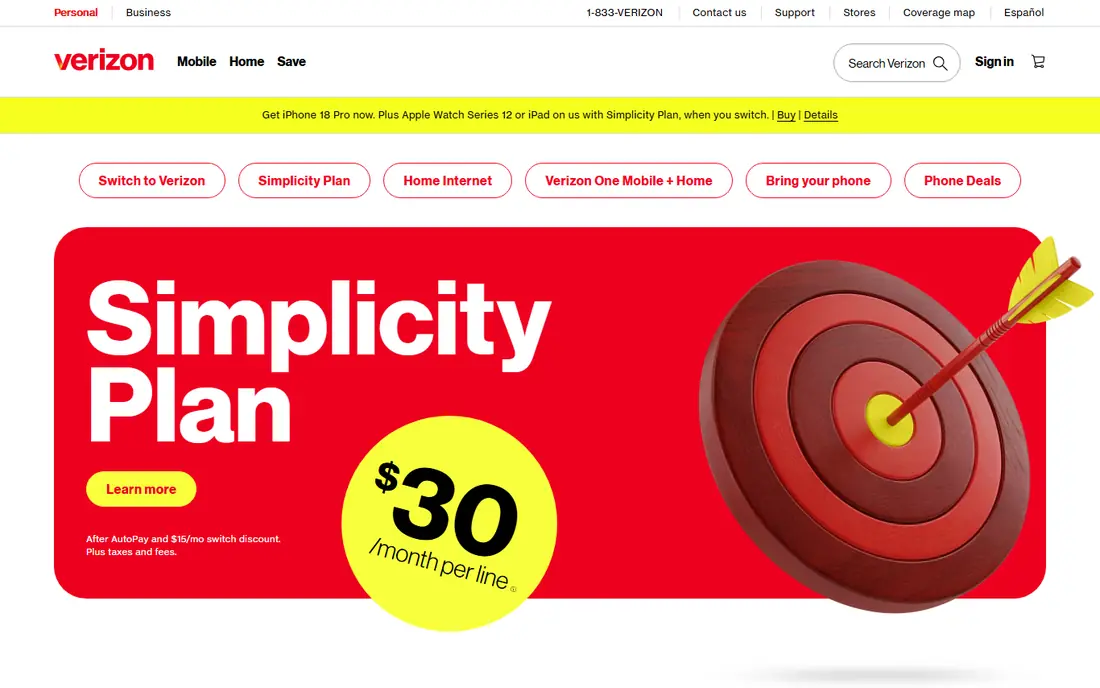
Verizon is our pick for readers who want coverage first and price second. Its network reaches a large share of the US population, and rural coverage is often stronger than with smaller providers. Unlimited plans vary in hotspot data, video quality, and perks, so the cheapest unlimited plan is not always the best match for a household that streams or works from a hotspot.
The main drawback is price. Verizon plans cost more than most prepaid options, and add-ons can push the monthly bill higher. For families, workers who travel through rural areas, and people who need a phone that simply works in more places, that extra cost can be justified. Check the current plan page for your line count, since multi-line pricing changes the total a lot.
- Wide nationwide coverage
- Strong rural reach in many areas
- Range of unlimited plans
- Higher prices than low-cost carriers
- Plan names and perks can be confusing
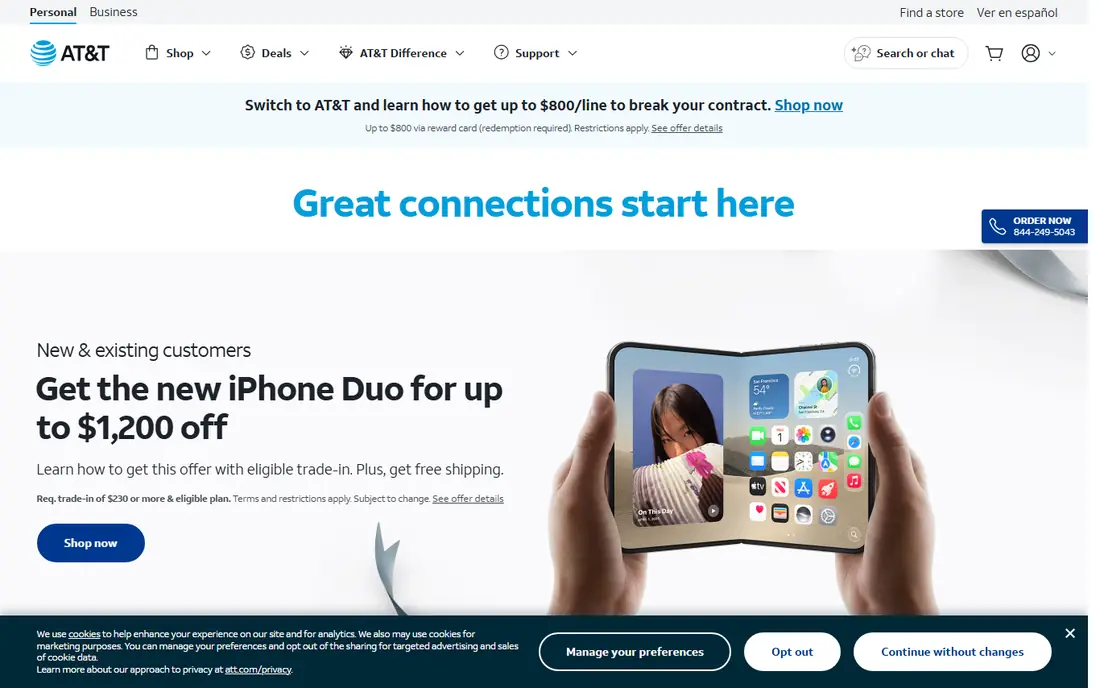
AT and T offers broad coverage and a familiar range of unlimited plans for individuals and families. Higher plans add hotspot data and perks that some households value, while lower plans keep the monthly cost down at the cost of slower hotspot speeds or fewer extras. International day passes and roaming options also suit travelers who want a simple way to use a phone abroad.
AT and T is not the cheapest option, and comparing plans takes care because perks differ by tier. For households that already use AT and T services, or that want a major carrier with strong coverage, it is a solid choice. Check coverage at your address and read the hotspot terms before choosing a tier.
- Wide coverage
- Family plan options
- Bundled perks on higher plans
- Higher prices
- Some perks require higher-tier plans
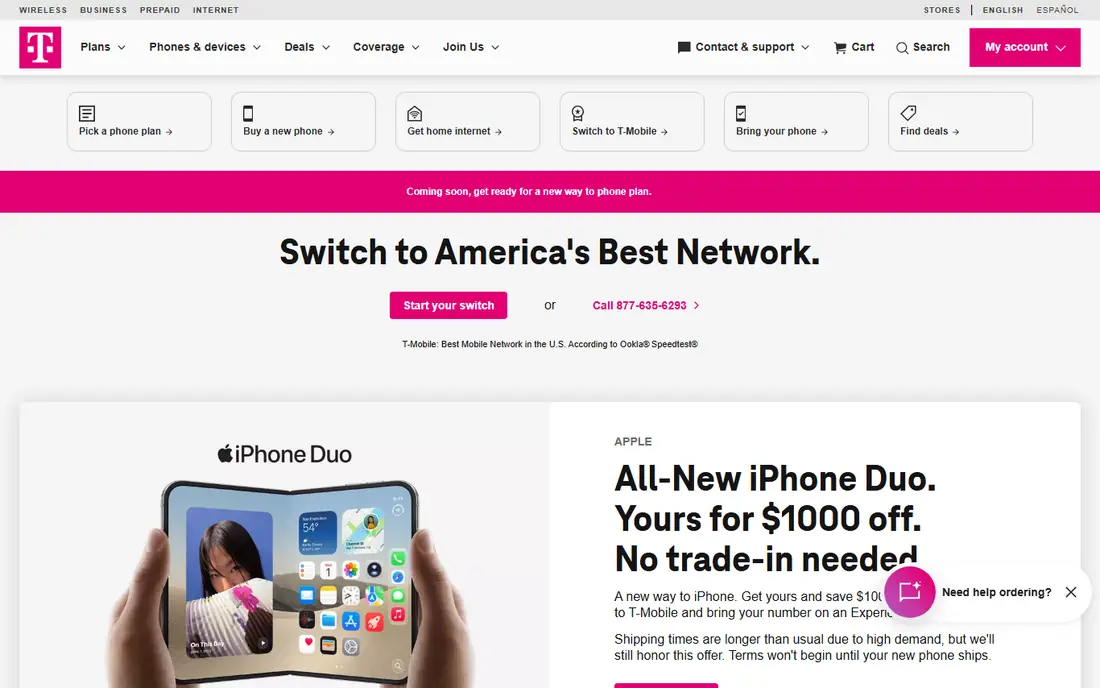
T-Mobile has built a strong 5G network and a plan lineup that is easier to compare than some rivals. Many plans include travel perks, streaming benefits, and hotspot data, which can add value for households that travel or stream often. Price-lock and promotion terms vary, so read the current offer carefully, especially for multi-line deals.
Coverage in very rural areas can still vary, and a national map does not guarantee a strong signal at a specific farm, cabin, or work site. For city and suburban users, and for travelers who value 5G and roaming perks, T-Mobile is a strong major-carrier pick. Test coverage with a trial or a short-term plan if your area is on the edge of coverage.
- Strong 5G footprint
- Travel and streaming perks on many plans
- Simple plan structure
- Rural coverage can vary by area
- Perks differ by plan tier
Mint Mobile sells prepaid plans in multi-month blocks, which keeps prices low for people who are comfortable paying upfront. The service runs on the T-Mobile network, so coverage matches T-Mobile in most places, though data speeds may slow during busy times because prepaid traffic can be deprioritized. A short trial lets new users test coverage before committing to a longer term.
Mint suits users who know their data use and do not need in-store support or many perks. Heavy data users, hotspot-heavy workers, and people who want monthly billing may prefer another provider. For a second line, a teen line, or a budget-conscious single line, Mint is one of the best value options here.
- Lower prices than major carriers
- Prepaid plans with clear terms
- Uses T-Mobile network
- Multi-month payment for best prices
- Data may slow during congestion
Visible keeps the choice simple: a small set of unlimited plans, online signup, and service on the Verizon network. That simplicity appeals to users who are tired of comparing dozens of plan variants. The base plan covers unlimited data, talk, and text, while the higher plan adds faster hotspot and other benefits. There is no annual contract, which makes switching less risky.
Because Visible is a prepaid-style brand, data may slow during congestion compared with direct Verizon plans. Users who need top priority data at all times, or who want in-store support, may prefer Verizon itself. For most everyday users who want Verizon coverage at a lower price, Visible is a strong pick.
- Simple unlimited plan structure
- Runs on Verizon network
- No annual contract
- Data may slow during congestion
- Fewer plan tiers and perks
Google Fi Wireless suits travelers and flexible users. Plans include a flexible option that charges for data used, plus unlimited options for heavier users. International coverage is a key strength, with service in many countries without a separate roaming plan, though speeds and terms vary by destination. Switching plans is simple, which helps households whose data use changes month to month.
The experience is smoothest on phones designed for Fi, though many phones not locked to a carrier work. Coverage depends on partner networks, so check Fi coverage at your home and work addresses. For frequent travelers and for people who want a plan that adapts to their data use, Google Fi is a distinctive and useful choice.
- Flexible and unlimited plan options
- International coverage in many countries
- Easy plan switching
- Best experience on compatible phones
- Coverage depends on partner networks
Cricket Wireless offers prepaid plans on the AT and T network, with the added benefit of physical stores for users who prefer in-person help. Plans are straightforward, with no annual contract and a range of data options for individuals and families. Multi-line discounts can bring the per-line cost down for households.
Some Cricket plans cap data speeds, so heavy streamers should read the plan details before choosing the cheapest option. Cricket suits users who want predictable prepaid billing, AT and T coverage, and the option to walk into a store. It is less suited to users who want top priority data or many bundled perks.
- Prepaid plans with no annual contract
- Runs on AT and T network
- Stores for in-person help
- Data speeds may be capped on some plans
- Fewer premium perks
US Mobile lets users build a plan around their actual use, choosing data, talk, and text amounts and, in many cases, a network. That flexibility helps households with mixed needs, such as one heavy data user and one light user on the same account. Multi-line savings and a clear online account make it easy to manage several lines without a store visit.
The plan builder can feel complex at first, and priority data terms vary by plan and network. Users who want a single simple unlimited plan may prefer Visible or Mint. For households that want to pay only for what they use, and that are willing to compare network options, US Mobile offers control that major carriers do not.
- Custom data and talk options
- Choice of networks
- Multi-line savings
- Plan builder takes time to learn
- Priority data terms vary by plan
How we picked these
We compared official plan pages, coverage pages, and plan terms for major carriers and low-cost providers that serve US customers in October 2026. We favored providers with nationwide service, clear plan structures, and a track record of operating in the US, and we mixed major carriers with prepaid and flexible brands. We did not claim hands-on testing that did not happen, and we wrote See website for starting prices because carrier pricing changes with promotions, line counts, and plan tiers. Readers should confirm coverage and current pricing at their address before switching.
Choosing the right phone service for your household
Start with coverage, then price. Ask friends and neighbors which carrier works at your home, and check coverage maps for your work address and commute. A cheap plan that drops calls at home is not a bargain. Then count lines, data use, and hotspot needs honestly, since those three numbers drive most of the monthly cost.
What to check before you switch
Confirm that your phone is not locked to a carrier and is compatible with the new carrier, and ask about number porting steps and timing. Check whether data slows during congestion, whether hotspot data is separate, and whether video streaming is capped. Look for a trial, a money-back period, or a short-term plan so you can test real coverage. Keep your old service active until the new line is working and your number has moved.
Saving money without losing coverage
Multi-line discounts, prepaid multi-month plans, and autopay discounts can cut the bill, but read the terms for each discount. A family plan on a major carrier can cost less per line than separate prepaid lines, while a single light user often saves more on Mint, Visible, or US Mobile. Review your plan once a year, since data use and promotions change, and a plan that was best last year may no longer be the best fit.
Frequently asked questions
Who has the best cell phone service in the US?
There is no single winner for every location, since coverage varies by town and by building. Verizon, AT and T, and T-Mobile lead on nationwide coverage, while low-cost providers offer strong value on those same networks. Check coverage at your home and workplace, and test with a trial where possible.
What is the best phone service provider for families?
Major carriers often give the best family value through multi-line discounts, while US Mobile and Cricket can also cut per-line costs for households. Count total lines, data use, and hotspot needs, then compare the full family total rather than a single-line price. A family plan with shared perks may beat separate cheap lines.
What is the best mobile phone service for rural areas?
Verizon and AT and T often perform better in rural areas, but results vary by county and terrain. Check coverage maps, ask local users, and test a trial line if you can. A carrier that is best nationally may still have a weak spot at a specific rural address.
Is Mint Mobile or Visible better?
Mint Mobile suits users who are comfortable paying for several months upfront for a lower price, while Visible suits users who want a simple monthly unlimited plan on the Verizon network. Mint runs on T-Mobile, Visible runs on Verizon, so coverage at your address should decide between them. Both may slow data during congestion.
What phone service is the best for international travel?
Google Fi Wireless and T-Mobile plans are strong for international travel, with roaming and data options in many countries. Check the destination list, roaming speeds, and daily pass costs on the official plan page before you travel. A local SIM or eSIM can still be cheaper for a long stay in one country.
Can I keep my number when I switch carriers?
In most cases, yes, if your number is active and your account is in good standing. Start the port with the new carrier, keep the old line active until the move completes, and do not cancel the old account first. Porting usually takes minutes to a day, though some cases take longer.
Sources we checked (8)

Online Jobs is an independent blog about careers, online work, learning new skills and the tools that help people earn. More about us.
Keep reading
All posts
Best Web Scraping Tools
Compare the best web scraping tools in 2026, from no-code Octoparse and Browse AI to Apify, Firecrawl, Bright Data, Zyte, ScraperAPI and free Scrapy, with prices.

Best Web Hosting Services
Find the best web hosting services for your site in 2026. We compare prices, speed, support and ease of use across eight leading hosting providers today.

Best Video Conferencing Software
Looking for the best video conferencing software? We compare 8 meeting apps on price, meeting limits, features, security and ease of use. Read the guide.