Best Ovulation and Period Tracking Apps in 2026: 8 Apps Compared

How we put this together: we compare official feature and pricing pages, app store listings, privacy policies and public user reviews. Prices change, so check the provider's site before you pay.
Key takeaways
- Clue and Flo suit most people who want simple period and symptom logging with a free plan to start.
- Natural Cycles is the distinct choice here because it uses temperature data and is cleared for contraception use, but it needs daily input and a subscription.
- Premom suits people who use ovulation test strips, while Ovia and Glow add pregnancy and community features.
- Predictions are estimates based on past cycles, not guarantees, and irregular cycles make predictions less reliable.
Quick comparison
| Name | Who it suits | Starting price | Free option | |
|---|---|---|---|---|
 Clue | detailed symptom tracking | Free | Yes | Visit |
 Flo | health content and community | Free | Yes | Visit |
 Natural Cycles | temperature-based cycle method | $21.99 per month | No | Visit |
 Premom | ovulation test strip users | Free | Yes | Visit |
 Ovia | pregnancy and family tracking | Free | Yes | Visit |
 Glow | fertility community support | Free | Yes | Visit |
 Stardust | simple tracking with a friendly design | Free | Yes | Visit |
 WomanLog | detailed calendar and symptom records | Free | Yes | Visit |
The best ovulation and period tracking apps
Short plain disclaimer: these apps track cycles and estimate fertile windows. They do not diagnose conditions, and they are not a substitute for advice from a clinician. If you are trying to avoid pregnancy, trying to conceive, or worried about irregular cycles, talk to a clinician about the method that fits you.
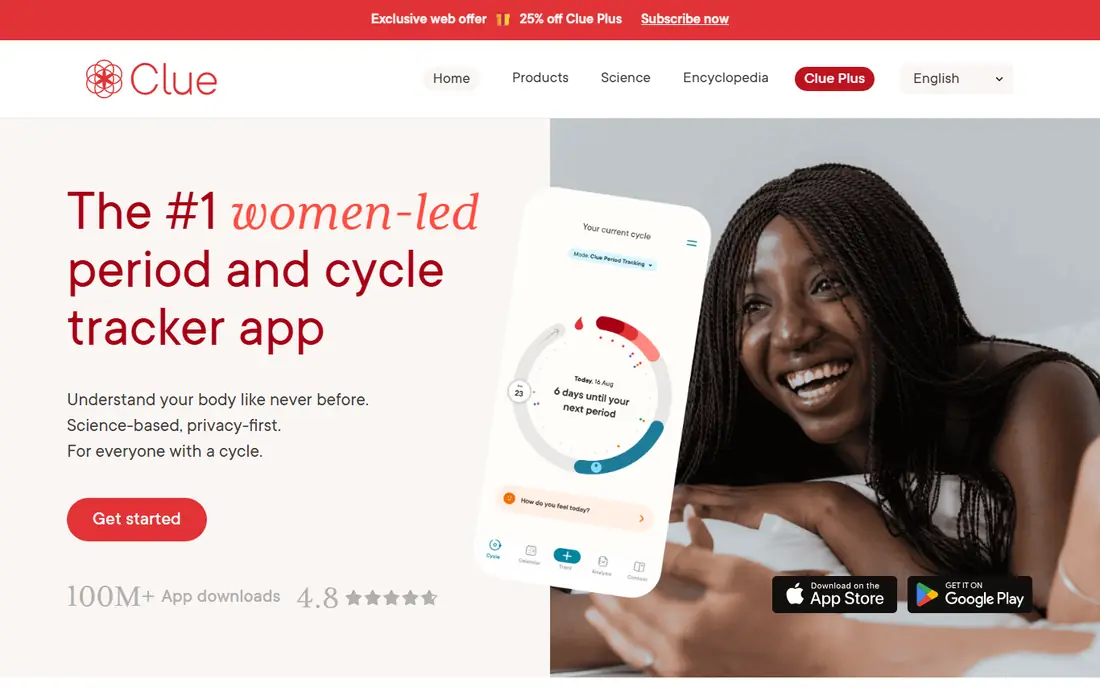
Clue suits people who want to log more than period dates. You can track flow, pain, mood, sleep, and other symptoms, then look back for patterns across months. That record can also be useful to show a clinician, because it is based on what you actually logged rather than a single average cycle length.
The free plan covers core tracking, while Clue Plus adds extra predictions and features for about $39.99 per year on app store listings. The honest limit applies to every app here: if your cycles vary a lot, predictions will vary too. Clue works best when you log consistently for a few months and treat early predictions as rough guides.
- Wide symptom and mood tracking options
- Clean calendar view
- Optional paid Clue Plus
- Predictions are less reliable with irregular cycles
- Some features sit behind Clue Plus
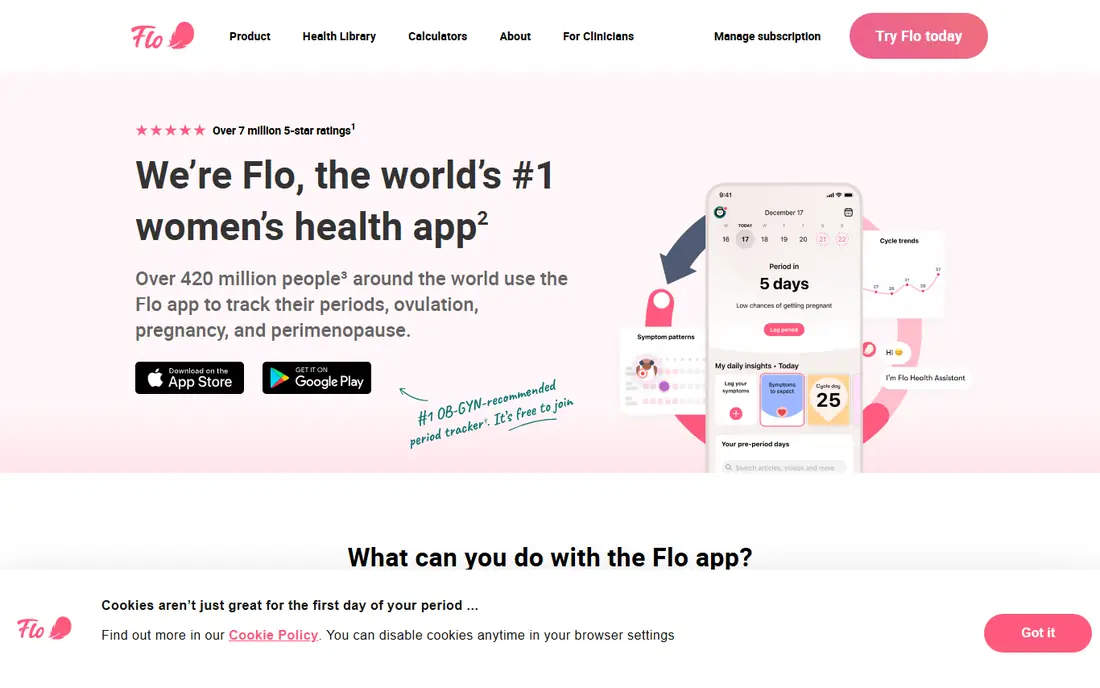
Flo is the most content-heavy app in this list. Alongside period and ovulation estimates, it offers articles, a pregnancy mode, and community spaces where users discuss health topics. For people who want reading material next to their calendar, that extra content is the main reason to pick Flo over a simpler tracker.
Price needs care here, because app store listings have shown different annual premium prices. Start free, check the premium price inside the app before you pay, and read the privacy settings first. Flo has faced past criticism over data sharing, and it now describes an anonymous mode. If privacy is your top concern, compare its current policy with Clue before you choose.
- Large library of health articles
- Pregnancy mode
- Anonymous mode option described on its site
- Premium features cost extra
- Past privacy concerns mean you should read its current policy
Natural Cycles is different from a simple calendar app, because it asks for basal body temperature readings and uses an algorithm to estimate fertile days. It is cleared by regulators for contraception use when used as directed, which sets it apart from general trackers that only estimate ovulation. Annual plans have been listed at about $149.99 per year, which works out cheaper than paying monthly.
That method only works if you can measure temperature regularly, ideally at a similar time each morning, and follow its instructions closely. Shift work, illness, and broken sleep can affect readings, and the app itself notes that correct use matters. If you want a low-effort tracker, this is not it. If you want a temperature-based method and accept the daily routine and cost, it is the clear specialist here.
- Uses temperature data rather than calendar averages alone
- Cleared for contraception use
- Clear fertile and non-fertile day view
- Subscription cost is high
- Needs regular temperature readings
- Not a good fit for very irregular routines
Premom is built around ovulation testing. You can photograph a test strip in the app, and it reads the result and plots it on your chart, which removes some of the guesswork of comparing faint lines by eye. For people who are actively tracking ovulation, that strip reading is a real practical benefit.
For simple period logging, Premom can feel crowded, because its home screen is aimed at fertility tracking rather than a minimal calendar. The free plan covers core tracking and strip reading, with premium options for extra features. If you do not use test strips, Clue or Flo will feel simpler. If you do, Premom is the natural first try.
- Scans and reads ovulation test strips
- Fertility-focused charts
- Free core tracking
- Interface is busy for casual period tracking
- Premium features add cost
Ovia covers a longer journey than most trackers. It offers fertility tracking, then pregnancy tracking with week-by-week information, and later parenting tools, so you do not need to switch apps as your needs change. That continuity is useful if you plan to keep one record across stages.
The trade-off is focus. Ovia lists no in-app purchases on some store listings, which keeps the core app free, but the experience can feel broader and busier than a period-only app. If you only want a quiet calendar, a simpler app may suit you better. If you want one free app that follows you from trying to conceive into pregnancy, Ovia is a strong pick.
- Free core app
- Covers fertility, pregnancy, and parenting stages
- Health and symptom content
- Ad-supported feel in places
- Less focused if you only want period tracking
Glow pairs cycle and fertility tracking with a large community, which some people value when trying to conceive. You can log periods, symptoms, and ovulation signs, read articles, and join forums where other users share experiences. Partner sharing is also available, so a partner can follow the same calendar.
Community content is a mixed benefit. It can be reassuring, but forum advice is not medical advice, and it can also be stressful to read other people's stories. Keep that in mind, and check the premium price in the app before upgrading, because the free plan already covers core tracking. Glow suits people who want peer support next to their charts.
- Large community forums
- Fertility and pregnancy tracking
- Partner sharing options
- Free version includes ads
- Premium features cost extra
Stardust is a lighter, more playful tracker. It covers period dates, symptoms, and ovulation estimates, and adds daily content that some users enjoy opening each morning. Partner sharing lets someone else see your cycle dates if you want them to.
We would not pick Stardust for deep fertility charting, because Premom and Natural Cycles offer more specialised tools. We would pick it if you want a simple app you will actually open every day, and you like its tone. Check the paid plan price in your app store before subscribing, since listings have shown different monthly prices.
- Easy period and symptom logging
- Friendly daily horoscope-style content
- Partner sharing
- Smaller feature set than Clue or Flo
- Paid plans vary by store listing
WomanLog is a long-running tracker that focuses on detailed records rather than a polished social feed. You can log periods, symptoms, weight, mood, and other notes, and keep a calendar that is easy to review month by month. For people who value a complete personal record, that depth matters more than a modern look.
The design is less fresh than Clue or Stardust, and some features sit behind a paid plan, so check the price in the app store before you commit. Still, WomanLog earns its place for users who want thorough logging without community features or a heavy content feed. It is a quiet, practical choice.
- Long-running app with detailed logs
- Weight, mood, and symptom tracking
- Backup options
- Design feels dated next to newer apps
- Some advanced features need a paid plan
How we picked these
We compared official product pages, app store listings, and privacy pages for apps that track periods, ovulation, or both, and are still available on iOS or Android. We kept a mix of free and paid options, calendar trackers, a temperature-based method, and a test-strip reader, and we noted where prices vary by store listing. We did not claim hands-on testing, and we did not present predictions as medical facts.
What to check before you choose a tracking app
Start with your main job. A simple period calendar, a fertility chart, and a temperature-based contraception method are different jobs, and the best app changes with each one. Next, read the privacy policy before you log sensitive data, because these apps hold health information. Look for what data is stored, whether it is shared, and how you can delete it.
Privacy and predictions deserve a second look
Turn on any anonymous or private mode the app offers, and avoid linking accounts you do not need. On predictions, give any app two or three cycles to learn your pattern, and remember that stress, illness, travel, and medication can shift a cycle. If your cycles are often very short, very long, or unpredictable, treat predictions with extra caution and seek clinical advice if you are concerned.
Cost and platform checks
Most apps here are free to start, but premium prices change, so confirm the price in the app itself before paying. Also check whether the app works on both iOS and Android if you may switch phones, and whether you can export your history. An export option matters if you change apps later, because re-entering months of history by hand is slow.
Frequently asked questions
What is the best app for tracking periods and ovulation?
Clue suits detailed symptom tracking, Flo suits content and community, and Premom suits test strip users. There is no single best app, because the right pick depends on whether you want a simple calendar, fertility charts, or a temperature-based method.
Are period tracker predictions accurate?
Predictions are estimates based on your past cycles, and they are more reliable when cycles are regular and logging is consistent. Irregular cycles, missed logs, illness, and stress can all reduce accuracy, so treat fertile window dates as guides rather than certainties.
Can I use a period app as birth control?
Only Natural Cycles in this list is cleared for contraception use, and only when used exactly as directed with regular temperature readings. Other apps in this list are trackers, not contraception methods, so do not rely on them alone to avoid pregnancy.
Is my data private in period tracking apps?
Privacy varies by app, so read the current privacy policy and settings before you start logging. Look for data deletion options, anonymous modes, and clear statements about sharing, and avoid apps whose policy you cannot understand or accept.
What is the best free period tracking app?
Clue, Flo, Ovia, and WomanLog all offer free core tracking, so start with the one whose layout you like best. Upgrade only if a paid feature, such as deeper predictions or extra content, is something you will actually use each month.
Sources we checked (8)

Online Jobs is an independent blog about careers, online work, learning new skills and the tools that help people earn. More about us.
Keep reading
All posts
Best workout apps for women
Compare the best workout apps for women in 2026, from free guided classes to structured strength plans, with current prices, free plans and honest trade-offs.
Best Yoga App
Find the best yoga app for home practice in 2026, with verified prices, free options, class styles, trials and honest limits for 10 yoga apps compared.
Best Workout Tracker App
We compared the best workout tracker app options for gym, home, and running training, checking prices, free plans, and logging tools in detail. See inside.