Best Order Management Software in 2026: 9 Tools Compared


Shipping-heavy fulfilment · Starting price: $14.99 per month
How we put this together: we compare official feature and pricing pages, app store listings, privacy policies and public user reviews. Prices change, so check the provider's site before you pay.
Key takeaways
- ShipStation suits shipping-heavy sellers who want automation rules and carrier choice in one dashboard.
- Cin7 and Brightpearl suit larger sellers with inventory across warehouses, while Zoho Inventory and inFlow suit smaller teams on a tighter budget.
- Linnworks and Veeqo suit marketplace sellers who need strong Amazon and eBay sync, while Ordoro suits sellers with dropshipping in the mix.
- The main split is shipping-first versus inventory-first, so pick the category first and the brand second.
Quick comparison
| Name | Who it suits | Starting price | Free option | |
|---|---|---|---|---|
| ShipStation | Shipping-heavy fulfilment | $14.99 per month | Free trial | Visit |
 Cin7 | Inventory-led multichannel selling | See website | Free trial | Visit |
 Zoho Inventory | Small teams on a budget | Free | Yes | Visit |
 Linnworks | Marketplace automation | See website | No | Visit |
 Brightpearl | High-volume retail operations | See website | No | Visit |
 Ordoro | Shipping plus dropshipping | See website | No | Visit |
 inFlow Inventory | Simple wholesale and stock control | See website | Free trial | Visit |
 Veeqo | Amazon and multichannel sellers | See website | Yes | Visit |
 Extensiv Order Manager | High-volume multichannel orders | See website | No | Visit |
The best order management software
Order management covers two different jobs. One job is getting orders out the door: labels, carrier rates, and tracking. The other job is knowing what you have, where it is, and what to reorder. The tools below were compared on channel connections, inventory depth, automation rules, pricing, and how much setup each one needs.
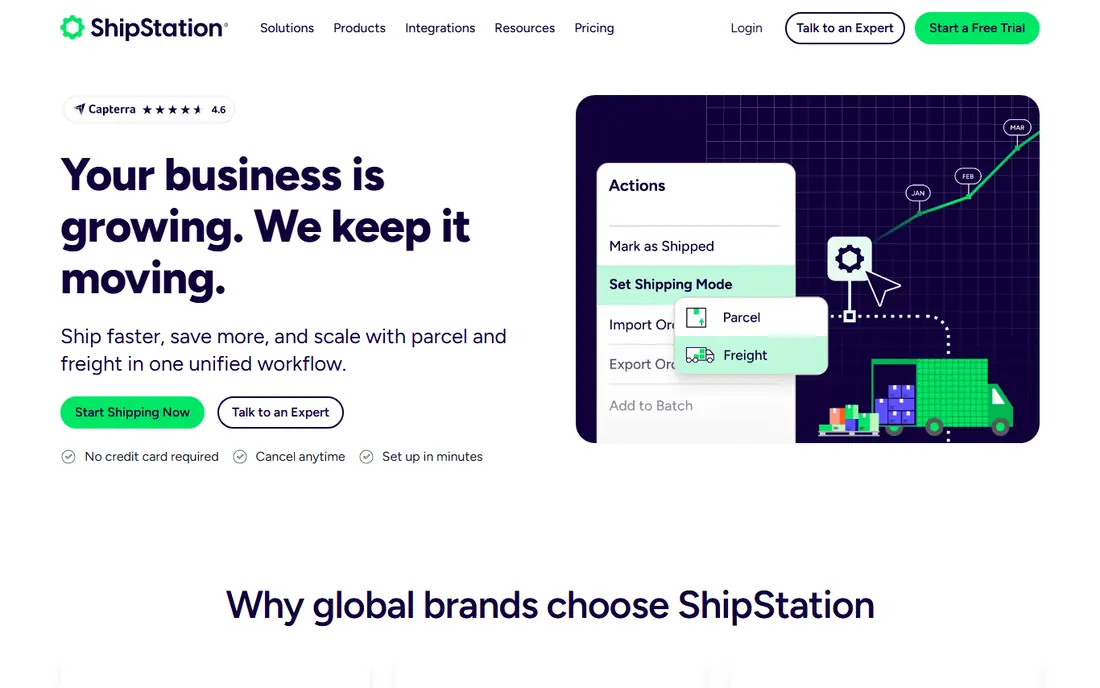
ShipStation is the default choice for sellers whose main problem is shipping. Orders from Shopify, Amazon, eBay, Etsy, WooCommerce, Walmart, and many other channels flow into one dashboard, where automation rules can pick a carrier by weight, destination, or warehouse. Labels, packing slips, and tracking updates then follow without manual work for each order. That speed matters most during sales peaks, when a small delay in labelling can turn into a backlog.
The limit is inventory. ShipStation tracks stock, but it is not a full warehouse system for complex manufacturing, purchase order depth, or multi-warehouse allocation at Cin7 level. Sellers with simple stock and high shipment counts will be happy here. Sellers who need deep inventory, production, or wholesale pricing should compare Cin7 or Brightpearl before committing to a shipping-first tool.
- Wide channel and carrier connections
- Automation rules for carriers and warehouses
- Branded packing slips and tracking
- Inventory depth is lighter than Cin7
- Costs rise with shipment volume and features
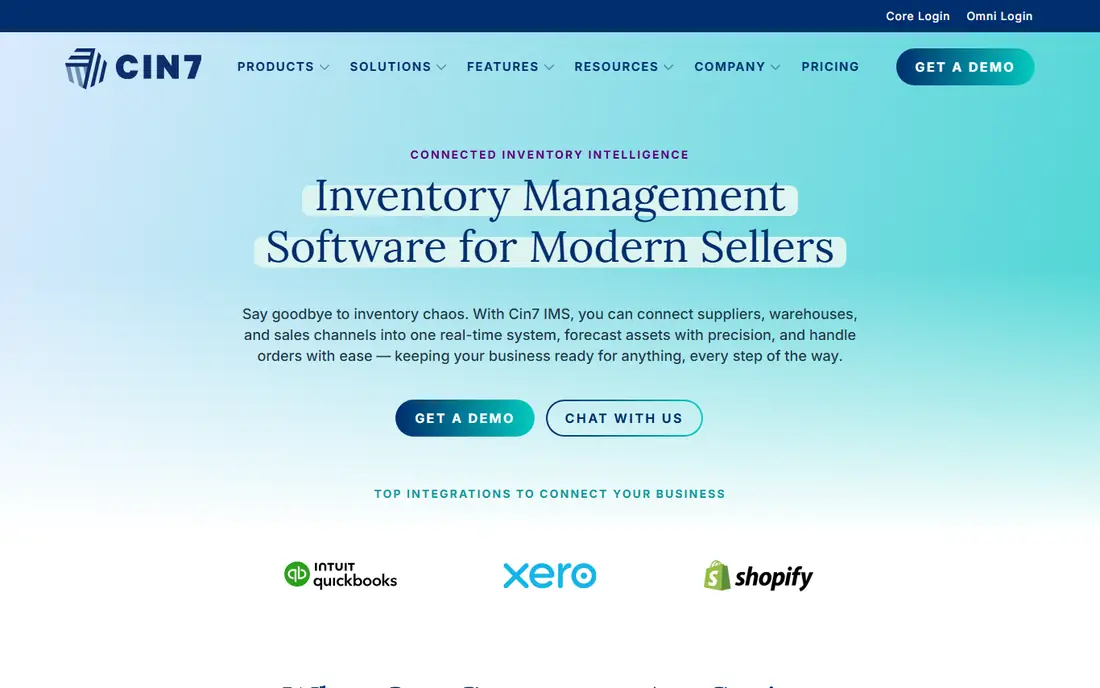
Cin7 suits sellers whose main problem is inventory accuracy across channels and warehouses. One sale on Amazon should update stock on your website at once, and Cin7 is built for that sync, plus purchase orders, warehouse transfers, and manufacturing for sellers who make products. Its integration range covers major stores, marketplaces, accounting tools, and shipping carriers, which helps a growing business avoid a patchwork of spreadsheets.
Setup is the honest trade-off. Cin7 needs a demo, a plan for data migration, and time to map warehouses, locations, and channels correctly. A seller with one store and a small stockroom will find it heavy and costly. A distributor, wholesaler, or multichannel brand with real inventory complexity will find the depth worth the effort, because oversells and stockouts cost more than the subscription.
- Strong inventory across locations
- Wide integration range
- Forecasting and manufacturing features
- Higher price and longer setup than shipping tools
- More than a one-channel seller needs
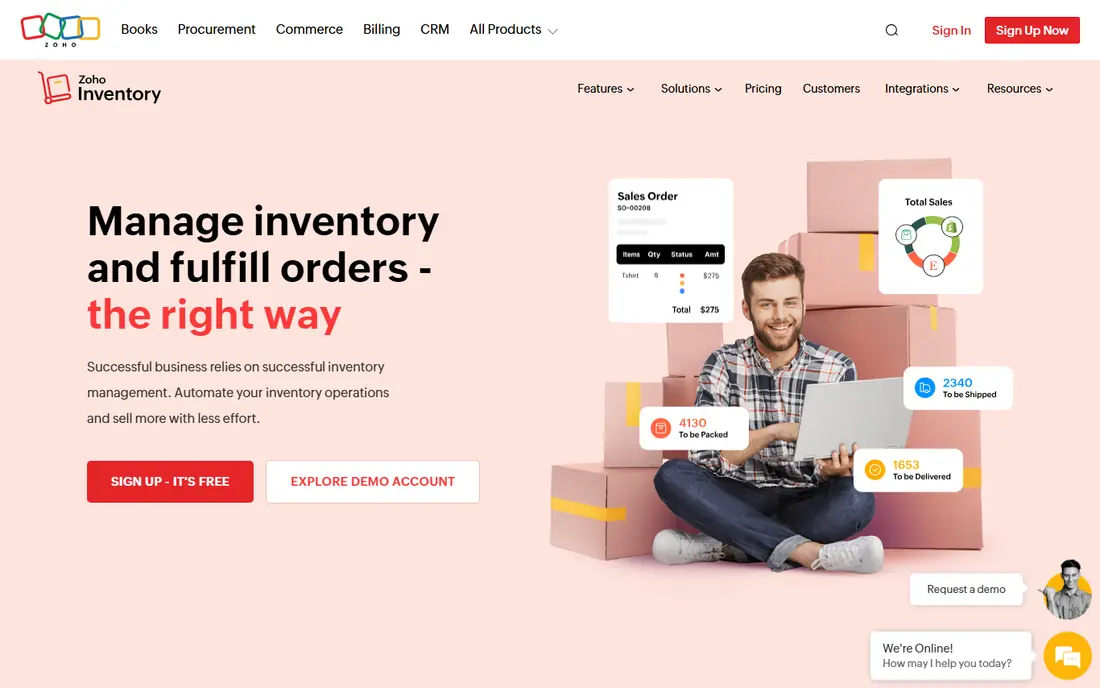
Zoho Inventory is the budget pick for small sellers who need real order and stock tracking without an enterprise price. The free plan covers a limited number of orders per month, which is enough for a new store to test the system, and paid plans add more orders, users, and warehouses. Connections to Amazon, Shopify, eBay, and other channels keep stock counts in sync, and purchase orders help small teams reorder before they run out.
The free plan cap is the point to watch. A store that grows past the monthly order limit will need to upgrade, and that upgrade should be budgeted as growth, not as a surprise. Zoho Inventory also lacks some of the deep warehouse workflows found in Cin7 or Brightpearl. For a small team, especially one already using Zoho Books or Zoho CRM, it is a practical and low-risk starting point.
- Free plan for low order volume
- Good marketplace connections
- Fits well with other Zoho apps
- Free plan caps monthly orders
- Advanced warehouse features are limited
Linnworks is built for sellers who live on marketplaces. It syncs listings, stock, and orders across Amazon, eBay, and other channels, and automation rules can route orders, update listings, and manage pricing changes without manual work for each sale. That automation matters when the same product is listed in several places and a stock error on one channel can cause cancellations on another.
Pricing and setup need attention. Linnworks plans are often quoted based on order volume and features, so get a clear quote for your actual volume before comparing it with ShipStation or Zoho. Setup also takes care, because channel rules, tax settings, and warehouse mapping must match how you actually sell. For a marketplace-heavy seller, that effort pays off in fewer oversells and faster fulfilment.
- Strong Amazon and eBay sync
- Automation rules for orders and listings
- Cross-border selling support
- Pricing is not always published clearly
- Setup needs care for many channels
Brightpearl, now part of Sage, suits high-volume retail and wholesale sellers who need order management, inventory, accounting, and reporting in one system. It handles multichannel orders, purchase orders, warehouse stock, and financial reporting with a retail focus, which helps larger teams replace several separate tools. Demand forecasting and replenishment features also help buyers plan stock for seasonal peaks.
This is not a tool for a new store. Pricing is custom, implementation takes planning, and the team needs to commit to training and data cleanup. A seller with a few dozen orders a month will find Brightpearl heavy and costly. A retail operation with hundreds of orders a day, multiple warehouses, and accounting complexity will find the joined-up system worth the project.
- Retail-focused order and inventory system
- Demand forecasting
- Accounting and reporting depth
- Custom pricing
- Implementation is a project, not a quick signup
Ordoro covers shipping, inventory, and dropshipping together, which suits Shopify sellers who mix stocked products with supplier-shipped products. Dropshipping automation can send orders to suppliers, track supplier stock, and update customers without manual emails for each order. That mix is hard to manage in a shipping-only tool, and Ordoro keeps both models in one dashboard.
The trade-off is depth in other areas. Ordoro is not a manufacturing system, and very large warehouse operations may need Cin7 or Brightpearl instead. Pricing also varies by features and volume, so check the plan that includes the dropshipping and inventory features you actually need, not just the entry plan. For a seller with a real dropshipping mix, Ordoro is a focused and practical pick.
- Shipping, inventory, and dropshipping in one tool
- Supplier automation
- Good Shopify fit
- Pricing varies by plan and volume
- Less depth than Cin7 for manufacturing
inFlow Inventory suits small distributors and wholesalers who want stock control without a complex system. Barcode scanning, purchase orders, sales orders, and stock tracking are presented in a clean interface that a small team can learn quickly. That simplicity helps in a warehouse where staff need to pick, pack, and count without fighting the software.
Marketplace sellers should check channel depth before choosing inFlow. It handles orders and stock well, but marketplace automation and listing management are not its main strength compared with Linnworks or Veeqo. For a B2B seller, a small wholesaler, or a team that sells mainly through its own store and direct orders, inFlow is a calm and reliable choice.
- Clean interface
- Barcode scanning
- Good for wholesale and B2B stock control
- Marketplace automation is less deep than Linnworks
- Some features need higher plans
Veeqo, from Amazon, offers free shipping and order tools for multichannel sellers, with paid plans for deeper inventory and reporting. Orders from Amazon, eBay, Shopify, and other channels flow into one place, and shipping labels, tracking, and stock updates follow. For an Amazon seller who also sells elsewhere, that free starting point is attractive, and the Amazon link helps with fulfilment data.
The free tier is shipping-focused, so sellers who need full inventory, purchasing, and warehouse depth should check what the paid plans add. Veeqo's Amazon roots also mean its strengths lean toward marketplace selling rather than wholesale or manufacturing. For a marketplace seller who wants a low-cost start with room to upgrade, Veeqo is worth testing alongside ShipStation.
- Free shipping tools for sellers
- Strong Amazon and marketplace sync
- Reporting for multichannel sales
- Some advanced inventory features sit behind paid plans
- Amazon focus may not suit every seller
Extensiv Order Manager, formerly Skubana, is built for high-volume sellers and brands that work with third-party logistics providers. It routes orders across warehouses and 3PL partners, syncs stock across channels, and automates order flows that would break in a spreadsheet at scale. For a brand shipping thousands of orders a month through several fulfilment partners, that routing is the core value.
Small sellers should not start here. Pricing is custom, setup needs planning, and the feature depth will feel heavy for a single store. Larger sellers, especially those using 3PL warehouses or planning to add them, will find Extensiv a strong rival to Cin7 and Brightpearl. Get a demo based on your actual order volume and fulfilment partners before comparing prices.
- Built for high-volume multichannel orders
- 3PL and warehouse routing
- Strong automation for large sellers
- Custom pricing
- Too much system for a small store
How we picked these
We compared official feature pages, pricing pages, documentation, and public reviews for tools that manage orders across channels, not just tools that print labels or track stock alone. We kept tools that are available now, that connect to at least one major store or marketplace, and that handle order flow from sale to fulfilment. Prices change with order volume and plan, so check the vendor pricing page for your volume before budgeting.
What to check before you choose
Decide shipping-first or inventory-first
If most of your pain is labels, carriers, and tracking, start with ShipStation or Veeqo. If most of your pain is stock accuracy, purchase orders, and warehouses, start with Cin7, Brightpearl, or Extensiv. A tool from the wrong category will feel wrong even if the brand is well known.
Test with your real channels
Connect your actual stores and marketplaces on a trial, import real products, and run a full order from sale to label to tracking update. A demo with sample data hides mapping problems with variants, bundles, and tax settings.
Check the cost at your volume
Entry prices often cover a limited number of orders, shipments, or users. Estimate your monthly orders for a peak month, not an average month, and ask what happens when you pass a tier. That peak-month price is the price you will actually pay.
Frequently asked questions
What is the best order management system software for small businesses?
Zoho Inventory and inFlow Inventory suit many small businesses, with ShipStation as the pick if shipping is the main job. Zoho is best on a tight budget, inFlow is best for simple wholesale stock, and ShipStation is best for shipping-heavy stores.
What is the best order management app for Amazon sellers?
Veeqo and Linnworks both suit Amazon sellers. Veeqo offers a low-cost start with strong Amazon sync, while Linnworks offers deeper marketplace automation for sellers on several marketplaces at once.
What are the top order management software options for multichannel sellers?
ShipStation, Cin7, Linnworks, Veeqo, and Extensiv Order Manager all suit multichannel sellers. ShipStation leads on shipping, Cin7 leads on inventory, Linnworks leads on marketplace automation, and Extensiv leads on high-volume 3PL routing.
What is the best order management platform for dropshipping?
Ordoro suits sellers with a real dropshipping mix, because it combines shipping, inventory, and supplier automation. Check that your suppliers and channels are supported before committing.
What is the best order management tool for a growing brand?
Cin7 or Brightpearl suit growing brands with inventory complexity, while Extensiv suits brands moving to 3PL fulfilment. Start with a demo based on your warehouse count, channel count, and peak order volume.
Do I need separate shipping software if I buy an order management system?
Not always. ShipStation and Veeqo combine order flow with shipping, while Cin7 and Brightpearl often pair with a shipping tool or carrier integration. Check whether labels, carrier rates, and tracking are included in the plan you are buying.
Sources we checked (9)

Online Jobs is an independent blog about careers, online work, learning new skills and the tools that help people earn. More about us.
Keep reading
All posts
n8n Alternatives
n8n alternatives compared for 2026, with Zapier, Make, Activepieces, and more, covering visual builders, code steps, self-hosting, and pricing models.

ZoomInfo Alternatives
The best ZoomInfo alternatives in 2026, compared on price, free plans, data coverage, and which tool fits small teams or large sales teams best in detail.

Yotpo Alternatives
Find cheaper alternatives to Yotpo for reviews and loyalty, with Judge.me, Loox, Stamped, and more compared for Shopify stores in 2026, all in one guide.