Best Options Trading Platforms in 2026: 9 Platforms Compared

How we put this together: we compare official feature and pricing pages, app store listings, privacy policies and public user reviews. Prices change, so check the provider's site before you pay.
Key takeaways
- tastytrade is our pick for active options traders, with $1 per contract to open, $0 to close and a $10 cap per leg.
- Robinhood and Webull charge $0 per contract on stock options, which makes them the cheapest starting point for beginners.
- thinkorswim from Charles Schwab is the best all-round platform, with paper trading, backtesting and deep options analysis.
- Most brokers still charge $0.65 per contract, so active traders should compare caps, index surcharges and closing fees, not just the headline rate.
- Options can lose their full value quickly, so practice in a paper account and size positions before trading real money.
Quick comparison
| Name | Who it suits | Starting price | Free option | |
|---|---|---|---|---|
 tastytrade | Active options traders | Free | Yes | Visit |
 Charles Schwab thinkorswim | All-round analysis and practice | Free | Yes | Visit |
 Interactive Brokers | Professional and global traders | Free | Yes | Visit |
 Fidelity | Options inside a full investing account | Free | Yes | Visit |
 E*TRADE Power E*TRADE | Visual strategy tools | Free | Yes | Visit |
 Webull | Commission-free options with analytics | Free | Yes | Visit |
 Robinhood | Simple mobile options trading | Free | Yes | Visit |
 TradeStation | Technical traders | Free | Yes | Visit |
 Ally Invest | Low-cost options at a bank broker | Free | Yes | Visit |
The best options trading platforms
Options trading rewards preparation and punishes guesswork. The difference between platforms is not just the per-contract fee, though that matters for active traders. It is the quality of the options chain, the strategy builder, the risk analysis and the practice account. A beginner needs education and a forgiving interface. An active trader needs fast multi-leg orders and capped fees. We compared nine platforms on contract fees, tools, paper trading and account costs, using published fee schedules. This is not financial advice, and options trading carries risk, including the risk of losing your entire premium on a bought option.
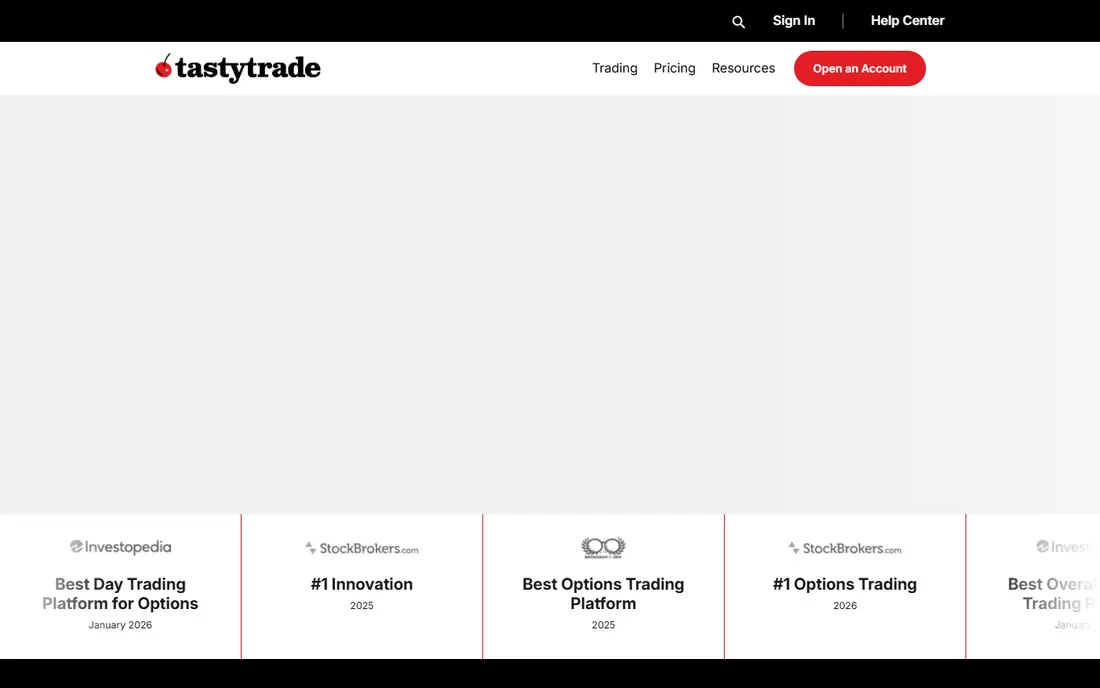
tastytrade is built by options traders for options traders, and it shows. Stock and ETF options cost $1 per contract to open and $0 to close, with the opening commission capped at $10 per leg, which makes large multi-leg strategies dramatically cheaper than at a $0.65-per-contract broker. The chain views, probability of profit, IV rank and backtesting tools are all designed around selling premium and managing positions by probability.
The trade-offs are real. Charting is more basic than thinkorswim, and there is no paper trading account on the main platform, so new traders must learn with small real positions or elsewhere. Broad-based index options are not covered by the $10 cap. For an active options trader running spreads and iron condors, tastytrade is the best platform on this list.
- $1 per contract to open, $0 to close, capped at $10 per leg
- Options-first workflow
- Probability of profit and IV rank built in
- Charting is simpler than thinkorswim
- No paper trading on the main platform
- Index options are not covered by the cap
Charles Schwab thinkorswim
Who it suits: All-round analysis and practice
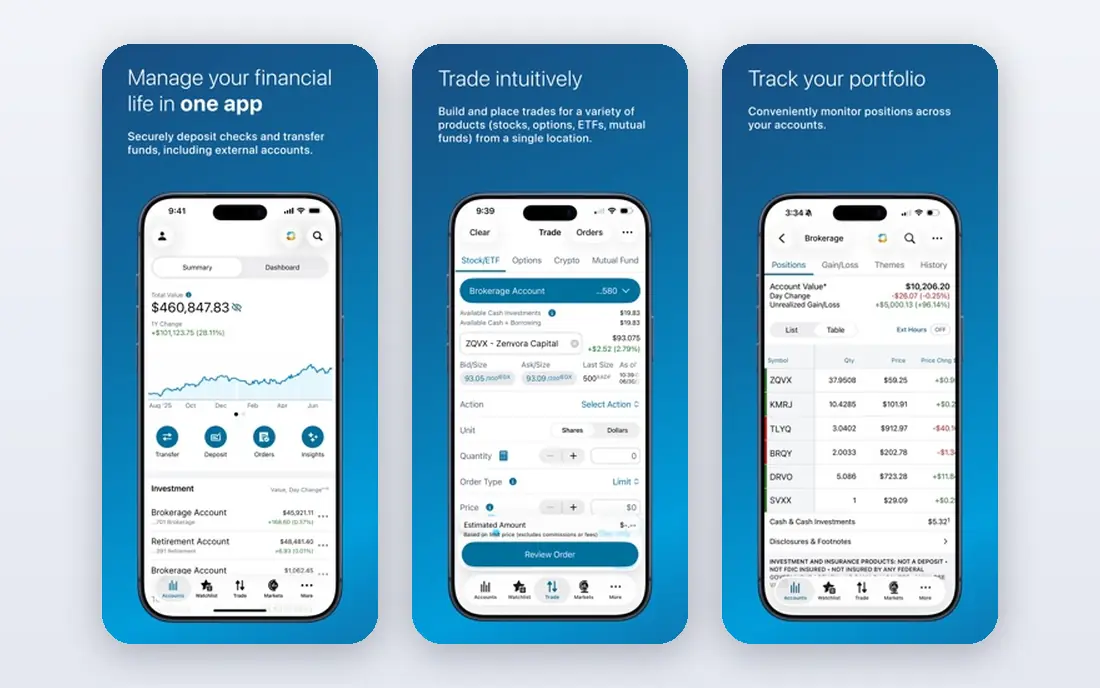
thinkorswim, now part of Charles Schwab, is the most complete options analysis platform available to retail traders. The options chain shows live Greeks, the Option Hacker and Spread Hacker find strategies that match your outlook, and the P and L simulator models a position before you place it. paperMoney lets you practice with virtual money on real market data, which is the safest way to learn.
The cost is $0.65 per contract on both opening and closing trades, with no cap, so a large multi-leg trade costs more here than at tastytrade. The platform's depth can also overwhelm a beginner, though Schwab's education library helps. For a trader who wants the deepest analysis and a practice account, thinkorswim is the best all-round choice.
- PaperMoney paper trading
- Option Hacker and Spread Hacker
- P and L simulator and backtesting
- Strong education
- $0.65 per contract on both sides
- Platform depth can overwhelm beginners
- Futures options cost $2.25 per contract
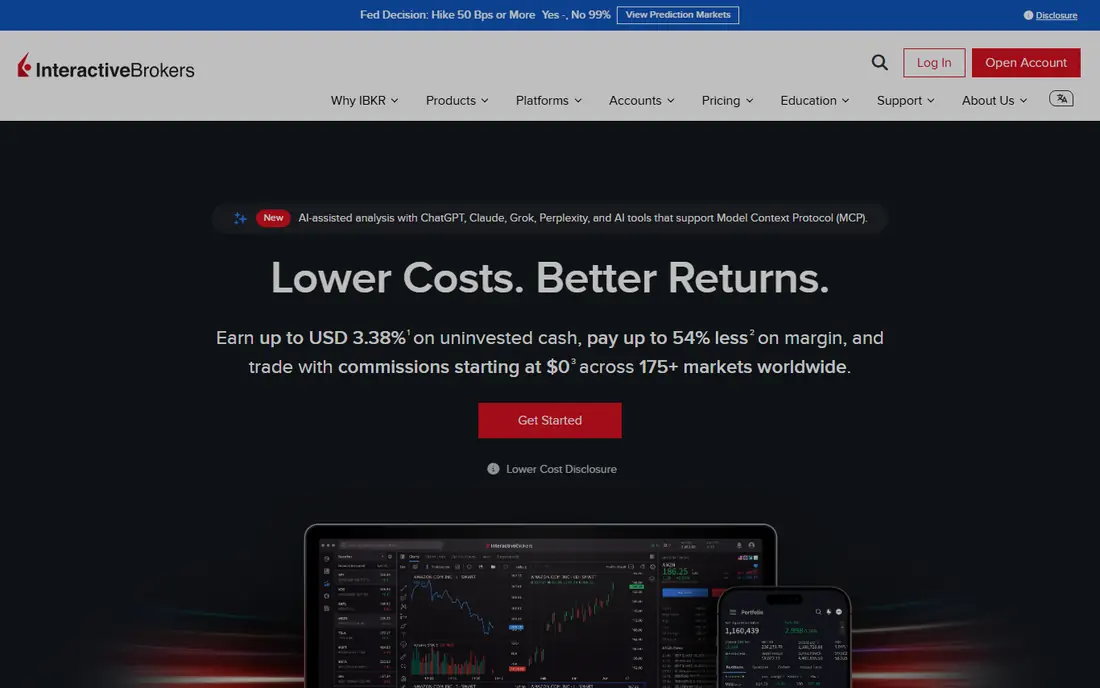
Interactive Brokers is the professional's choice. On IBKR Pro, US options pricing is tiered by volume and premium, falling as low as $0.15 per contract at high volume, with a $1 minimum per order. IBKR Lite offers $0.65 per contract for simpler accounts. The platform covers global markets, options on futures and complex multi-leg orders, with portfolio Greeks, a Probability Lab and a Volatility Lab for risk analysis.
The cost of that power is complexity. Trader Workstation has a steep learning curve, and market data subscriptions can add monthly fees. For a professional or high-volume trader, or anyone trading options outside the US, Interactive Brokers is unmatched. For a casual trader, it is more than you need.
- Tiered pricing down to $0.15 per contract at volume
- Global markets and options on futures
- Advanced risk tools
- Platform complexity is high
- $1 minimum per order
- Data subscriptions add cost
Fidelity is the best choice for an investor who also trades options. You get $0.65 per contract, no account minimum, strong research, an options strategy builder and a probability calculator, all inside an account that also handles stocks, ETFs, mutual funds and retirement accounts. Fidelity charges no fee to transfer your account out, which is a genuine advantage.
Fidelity has no paper trading account, which is a real gap for beginners, and its options tools, while good, are less deep than thinkorswim's. For a long-term investor who trades options occasionally, especially in an IRA, Fidelity is a strong, low-friction choice.
- $0.65 per contract
- Strong research and strategy builder
- No account minimum
- No transfer-out fee
- No paper trading
- Options tools are less deep than thinkorswim
- Index option fees are not itemized clearly
ETRADE's Power ETRADE platform is built for options traders who think visually. Spectral Analysis, StrategySEEK and an options income backtester help you compare strategies before placing them, and paper trading is included. Standard pricing is $0.65 per contract, falling to $0.50 for clients who make at least 30 stock, ETF or options trades per quarter.
The active-trader discount is a real saving for frequent traders, though the 30-trade threshold excludes casual users. The $75 full transfer-out fee is also worth noting. For a trader who wants visual strategy tools and a practice account in a mainstream broker, Power E*TRADE is a solid pick.
- Power E*TRADE visual analysis tools
- Paper trading included
- $0.50 per contract for active traders
- Standard $0.65 per contract
- $75 full transfer-out fee
- Active discount needs 30 trades per quarter
Webull is the best free option for a trader who wants real analytics. Stock and ETF options carry $0 commission and $0 contract fee, with regulatory fees still applying, and the platform includes advanced charting, options analytics and a paper trading simulator. Extended-hours trading and fractional shares are included in the same app.
The exceptions matter. Certain index options cost $0.50 per contract, and oversized orders add $0.10 per contract. Customer support is thinner than at Schwab or Fidelity, and the $75 transfer-out fee is on the high side. For a cost-conscious trader who wants more than a bare-bones app, Webull is the best free choice.
- $0 commission and $0 contract fee on stock options
- Paper trading included
- Advanced charting and analytics
- $0.50 per contract on certain index options
- $75 transfer-out fee
- Customer support is thinner than Schwab or Fidelity
Robinhood is the simplest way to start trading options. Stock and ETF options carry $0 commission and $0 contract fee, with only regulatory pass-through fees, and the mobile app is the easiest to use on this list. There is no account minimum, and the interface makes a basic call or put purchase straightforward.
The simplicity has limits. There is no paper trading, multi-leg strategies are harder to manage, and analysis tools are basic compared with thinkorswim or Webull. The $100 transfer-out fee is the highest on this list. Robinhood suits a beginner making simple options trades on a phone, not an active trader running spreads.
- $0 per contract on stock options
- Simplest mobile interface
- No account minimum
- No paper trading
- Limited multi-leg and analysis tools
- $100 transfer-out fee, the highest here
TradeStation is built for technical traders who live in charts. Its desktop platform offers deep charting, custom indicators and strategy testing, and its options pricing is competitive with the mainstream brokers. For a trader whose edge comes from technical analysis, TradeStation's charting depth is a real advantage.
The platform is less options-focused than tastytrade or thinkorswim, and the learning curve is steep. Pricing tiers can also confuse, so check the current schedule before comparing. For a chart-driven trader who also trades options, TradeStation earns its place.
- Strong charting and technical analysis
- Competitive per-contract pricing
- Desktop platform for active traders
- Options tools are less options-focused than tastytrade
- Platform learning curve
- Pricing tiers can confuse
Ally Invest is the quiet value pick. Options cost $0.50 per contract, below the $0.65 standard at Schwab, Fidelity and E*TRADE, with $0 stock and ETF commissions and no account minimum. If you already bank with Ally, the integration is convenient, and the platform covers the basics well.
The tools are basic. There is no paper trading, and research and analysis are thinner than at the larger brokers. For a cost-conscious trader who does not need advanced analysis, Ally Invest saves money on every contract without giving up a mainstream broker's reliability.
- $0.50 per contract, below the $0.65 standard
- No account minimum
- Integrates with Ally Bank accounts
- Options tools are basic
- No paper trading
- Research is thinner than Schwab or Fidelity
How we picked these
We compared published per-contract fees, closing fees, caps and index surcharges, plus the quality of the options chain, strategy builders, risk analysis and paper trading. We included free and paid-fee brokers, options-first platforms and mainstream brokers, because the best platform depends on how often you trade and how complex your strategies are. We left out brokers that do not offer listed options or that lack published fee schedules.
Which platform fits your trading
If you trade options actively, start with tastytrade for its capped fees or Interactive Brokers for volume pricing. If you are learning, use thinkorswim's paperMoney or Webull's paper trading before risking real money. If you trade occasionally inside a broader portfolio, Fidelity or E*TRADE will serve you well. And if cost is the main concern, Robinhood and Webull charge $0 per contract on stock options.
Frequently asked questions
What is the best options trading platform for beginners?
thinkorswim is the best for learning, thanks to paperMoney paper trading and strong education. Webull is a good free alternative with paper trading. Robinhood is the simplest, but it has no paper trading, so practice elsewhere first.
How much does options trading cost per contract?
It ranges from $0 at Robinhood and Webull on stock options to $0.65 at Schwab, Fidelity and E*TRADE, and $1 to open at tastytrade with a $10 cap per leg. Regulatory and exchange fees apply on top at every broker.
Do I need approval to trade options?
Yes. Every broker requires an options approval questionnaire covering your experience, income and risk tolerance. Higher levels allow more complex strategies, including spreads and uncovered positions.
What is the cheapest options trading platform?
For stock options, Robinhood and Webull charge $0 per contract. For active traders running large multi-leg strategies, tastytrade's $10 cap per leg can be cheaper in practice than $0.65 per contract.
Can I practice options trading without real money?
Yes, at thinkorswim through paperMoney, at Webull and E*TRADE through their paper trading tools, and at Interactive Brokers through a paper account. tastytrade, Fidelity and Robinhood do not offer paper trading on their main platforms.
Are options risky?
Yes. A bought option can lose its entire value if the underlying stock does not move as expected before expiry. Sold options can carry larger losses. Size positions so that a single trade cannot damage your account, and learn the mechanics before trading.
Sources we checked (9)

Online Jobs is an independent blog about careers, online work, learning new skills and the tools that help people earn. More about us.
Keep reading
All posts
Best Trading Apps for Beginners
Compare the best trading app for beginners, with $0 stock commissions, fractional shares, education, paper trading and account types explained in 2026 now.
Best Trading App
We compared the best trading apps for beginners and active traders on fees, tools, accounts and ease of use, so you can pick a platform that fits your plan.
Best Tax Software
Compare the best tax software in 2026 for simple returns, investors, freelancers, and preparers, with free options, state fees, and honest limits for filing.