8 Best Online Therapy Services for Video, Messaging, and Support


Fast matching and flexible formats · Starting price: $70 per week
How we put this together: we compare official feature and pricing pages, app store listings, privacy policies and public user reviews. Prices change, so check the provider's site before you pay.
Key takeaways
- BetterHelp suits people who want fast matching and a choice of video, phone, chat, and messaging.
- Talkspace suits people who want messaging plus video and who plan to use insurance.
- Grow Therapy and Alma suit people who want to pick an in-network therapist and pay a copay.
- Brightside and Cerebral suit people who want therapy plus medication management in one place.
- Prices vary by location, plan, and insurance, so confirm your exact cost during signup.
Quick comparison
| Name | Who it suits | Starting price | Free option | |
|---|---|---|---|---|
| BetterHelp | Fast matching and flexible formats | $70 per week | No | Visit |
 Talkspace | Messaging plus video, with insurance | $69 per week | No | Visit |
 Brightside Health | Therapy plus medication care | See website | No | Visit |
 Grow Therapy | Widest insurance coverage | See website | No | Visit |
 Cerebral | Therapy plus medication management | See website | No | Visit |
 Online-Therapy.com | Structured CBT tools and worksheets | $50 per week | No | Visit |
 Calmerry | Lower-cost messaging and video therapy | $57 per week | No | Visit |
 Amwell | Pay-per-session video therapy | $109 per session | No | Visit |
The best online therapy services
Online therapy services connect you with a licensed therapist by video, phone, chat, or messaging, without travel to an office. The best choice depends on insurance, budget, session style, and whether you also need medication support. Please note this plain disclaimer: online therapy is not a substitute for emergency care. If you are in crisis or feel you may act on harmful thoughts, contact local emergency services or a crisis line in your country right away, and seek in-person urgent help.
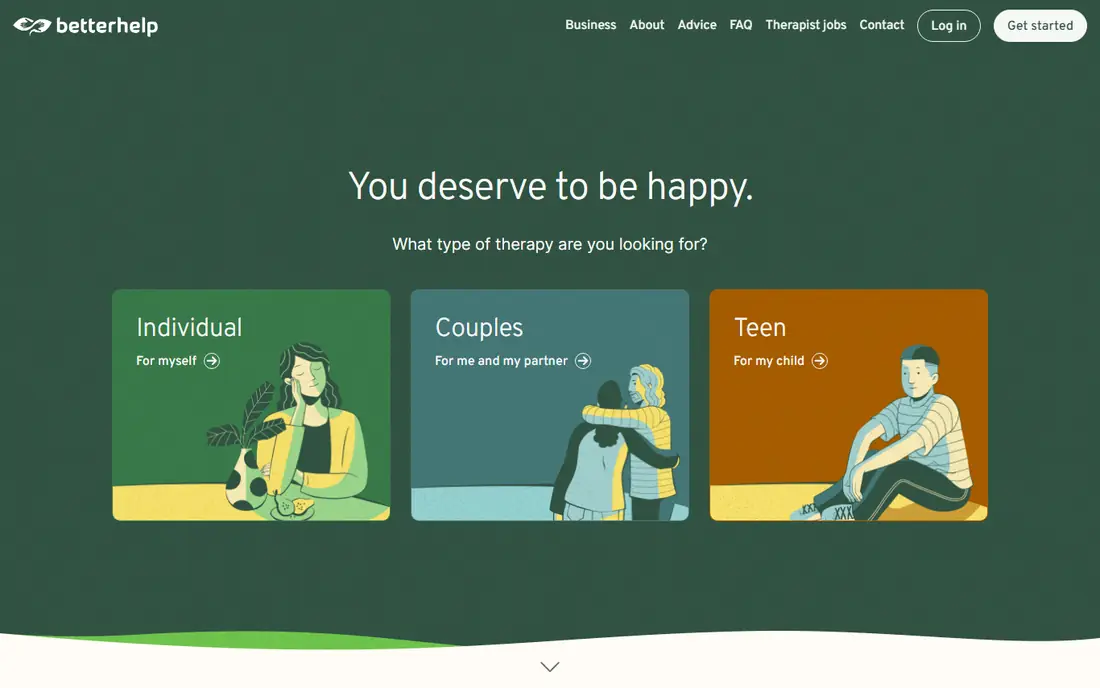
BetterHelp is the largest online therapy service in this list, and its main strength is speed and choice. After a short questionnaire, most people are matched with a licensed therapist quickly, and sessions can happen by video, phone, or live chat, with messaging between sessions. If the first match does not feel right, switching to another therapist is straightforward. Pricing for self-pay members ranges from $70 to $100 per week, based on location, preferences, therapist availability, and discounts, and some members may now use insurance with copays as low as $15 where eligible. The catch is that cost and insurance availability vary, so your exact price only becomes clear during signup. BetterHelp also does not replace in-person care for every need, and it is not suited to urgent crisis care. For general therapy with flexible formats, it is a solid first option.
- Large therapist network
- Video, phone, chat, and messaging options
- Easy therapist switching
- Self-pay pricing varies by location and preferences
- Medication prescribing is limited
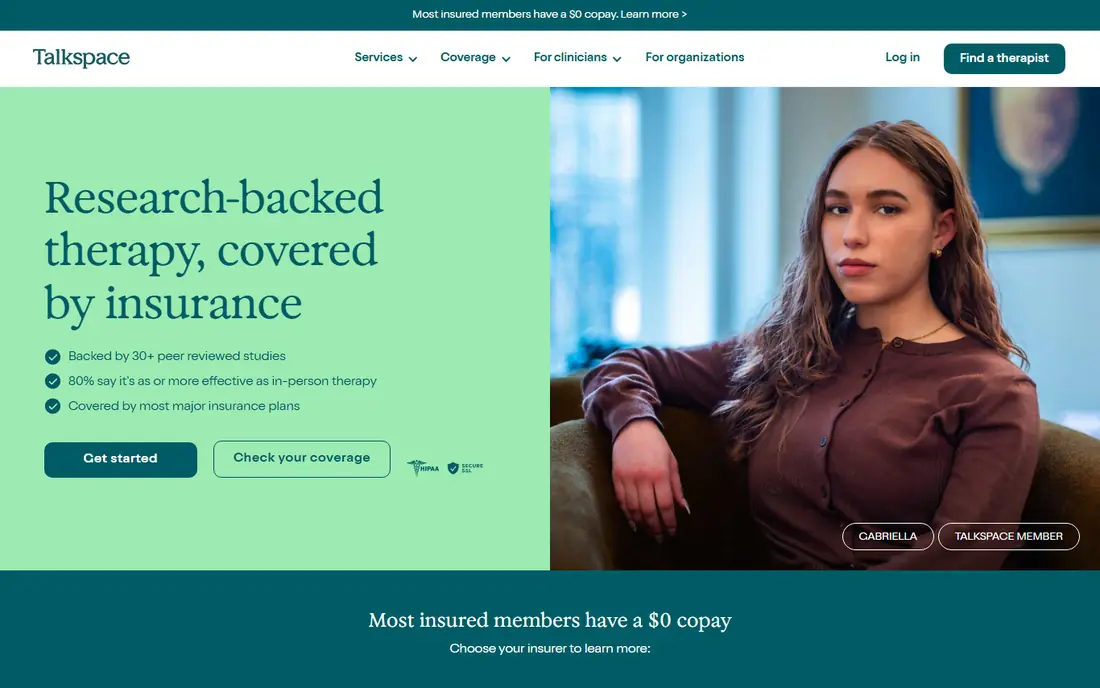
Talkspace pairs messaging therapy with live video sessions, which suits people who want to write to a therapist between appointments rather than waiting a full week to talk. Plans range from messaging-focused options to plans with regular live sessions, and the service accepts many insurance plans, with copays that vary by plan. Self-pay prices start around $69 per week and rise with more live sessions, so check the plan that matches how often you want to meet live. Psychiatry services are available for medication needs, though availability varies by state. The main limit is pace: messaging therapy feels slower than a weekly video call for some people, and the fit still depends on the individual therapist. For insurance users who like messaging, Talkspace is a strong pick.
- Accepts many insurance plans
- Messaging plus live video plans
- Psychiatry options available
- Self-pay weekly prices vary by plan
- Messaging response times depend on the therapist
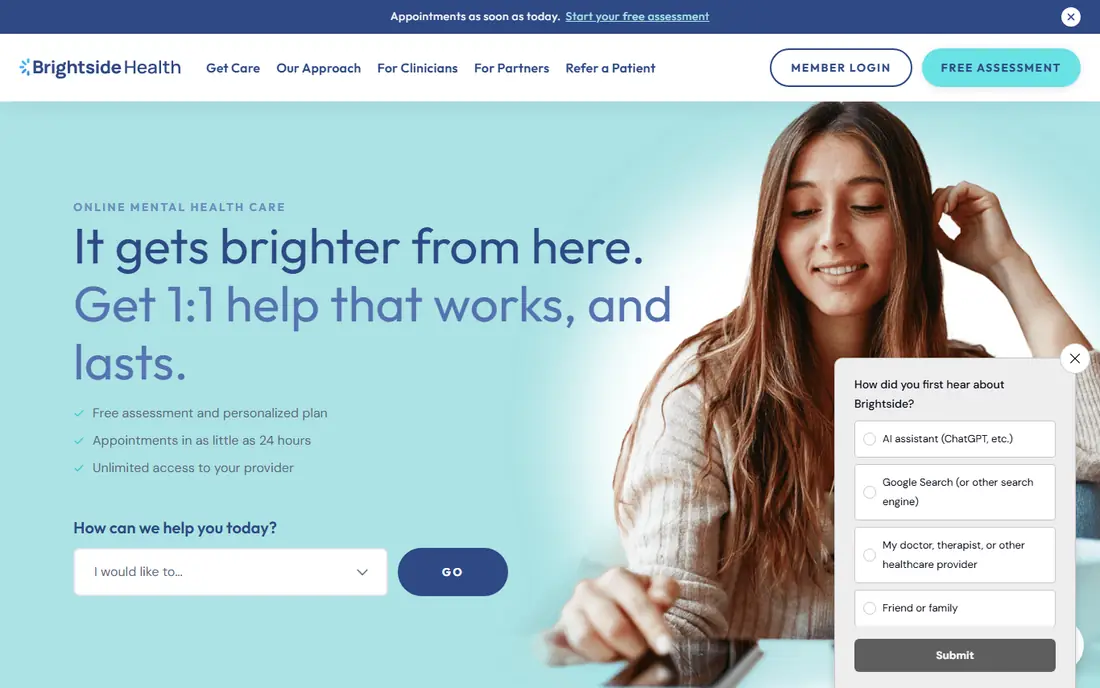
Brightside Health is built for people whose main concerns are anxiety and depression, and who may need both therapy and medication. Plans can bundle therapy sessions with medication management, and providers can adjust treatment as symptoms change. The service accepts many insurance plans, and self-pay plans are priced by the type of care chosen. That focus is both a strength and a limit. If your needs sit outside anxiety and depression care, a broader platform may fit better. Brightside also uses a structured care model, which suits people who like clear plans and progress tracking, but may feel less open-ended than traditional weekly therapy. For combined care in one place, it is one of the clearest options.
- Combined therapy and medication plans
- Accepts many insurance plans
- Structured care for anxiety and depression
- Focus is narrower than general therapy platforms
- Pricing depends on plan and insurance
Grow Therapy works differently from subscription platforms: you browse therapists in your state, check which insurance plans they accept, and book sessions that are billed per session rather than as a weekly subscription. That model suits people who already have insurance and want to keep the copay model they know from in-person care. The service is known for broad insurance acceptance, which can make therapy far cheaper than self-pay subscription prices for covered members. Without insurance, you will need to check the self-pay rate for your chosen therapist, since there is no single published price. Availability also varies by state and therapist. If insurance is your starting point, Grow Therapy is the first place to check.
- Accepts a wide range of insurance plans, including some Medicare and Medicaid plans
- You pick your own therapist
- Pay per session
- Cost without insurance is not published as a single price
- Availability varies by state
Cerebral offers therapy, medication management, or both, with video sessions and messaging support. That combined model suits people who want one team handling both sides of care, rather than coordinating a separate therapist and prescriber. The service accepts select insurance plans, and self-pay plans are priced by the level of care. Prices vary a lot because a medication-only plan, a therapy plan, and a combined plan are different products, so compare the plan that matches your needs rather than the headline price. Medication rules also vary by state and by condition, and not every need can be handled online. For people who want therapy plus medication in one account, Cerebral is worth comparing with Brightside.
- Therapy and medication plans in one service
- Accepts select insurance plans
- Video sessions with messaging
- Plan prices vary widely by care type
- Medication availability varies by state and condition
Online-Therapy.com is built around cognitive behavioural therapy tools, not just live sessions. Members get worksheets, a journal, activity plans, and yoga and meditation resources alongside video, voice, or messaging sessions with a therapist. That structured toolkit suits people who like homework and exercises between sessions. Starting prices are lower than the largest subscription platforms, which helps self-pay users on a budget. The service does not accept insurance, so members pay out of pocket and may need to seek reimbursement on their own. The therapist network is also smaller than BetterHelp or Talkspace, which can affect matching speed in some areas. For self-guided CBT work plus therapist support, it is a good value option.
- CBT worksheets, journal, and activity plans alongside sessions
- Lower starting price
- Video, voice, and messaging options
- Does not accept insurance
- Smaller therapist network than the largest platforms
Calmerry offers online therapy by video, chat, voice, and messaging at a lower starting price than several larger platforms. The signup process is short, matching is based on your stated needs and preferences, and you can message your therapist between live sessions. For self-pay users who want a straightforward service without insurance paperwork, the price point is appealing. The main limits are insurance and scale. Calmerry does not accept insurance, so the full cost sits with the member, and therapist availability can vary by area and specialism. Check the plan that includes the session frequency you want, since lower-priced plans may include fewer live sessions. For budget-conscious self-pay therapy, Calmerry is a practical choice.
- Lower starting price than many rivals
- Video, chat, voice, and messaging
- Easy signup and matching
- Does not accept insurance
- Plan details and therapist availability vary
Amwell suits people who want therapy without a subscription. You book and pay for each video or phone session, which works well for occasional support or for trying therapy before committing to a weekly plan. The service accepts many insurance plans, which can bring the per-session cost down sharply for covered members. Without insurance, the per-session price is higher than the weekly subscription equivalent on other platforms, so regular weekly users may pay more over a month. Amwell also focuses on live sessions rather than ongoing messaging therapy, which suits people who prefer a scheduled conversation. If you want flexibility without a monthly commitment, Amwell is the clearest pay-per-session option here.
- Pay per session with no subscription
- Accepts many insurance plans
- Video and phone sessions
- Per-session price is high without insurance
- No messaging therapy model
How we picked these
We compared services on session formats, insurance acceptance, pricing models, and whether medication support was available. We checked each vendor's own feature pages and pricing pages, app store listings, privacy policies, and public reviews for how matching works, what each plan includes, and where costs vary. Services stayed on the list only when they offered licensed therapists and a clear pricing or insurance model. Prices for therapy vary by location, plan, and insurance, so we show starting points and note where you must confirm your exact cost.
How to choose an online therapy service
Start with insurance or budget
If you have insurance, check Grow Therapy, Talkspace, Brightside, Cerebral, or Amwell first, since a copay can cost far less than self-pay. If you pay yourself, compare weekly subscription prices with per-session prices for the session frequency you actually want.
Pick your session style
Video suits people who want a conversation close to in-person therapy. Messaging suits people who prefer to write and reflect between sessions. Some services offer both, so pick a plan that includes the format you will actually use.
Check therapist fit early
Ask about specialisms, availability, and how switching therapists works before you commit to a long plan. A good fit matters more than any feature list, and easy switching is a real advantage.
Confirm medication needs separately
If you may need medication, confirm that the service prescribes in your state and for your condition. Therapy-only platforms will need a separate prescriber, which adds cost and coordination.
Frequently asked questions
What is the best online therapy service overall?
BetterHelp is a good default for fast matching and flexible formats, while Talkspace suits insurance users who like messaging. If you have insurance, Grow Therapy is worth checking first, since its broad coverage can lower your cost the most.
What are the best online therapy services reviews saying about cost?
Reviews often focus on the gap between subscription prices and insurance copays. Self-pay weekly prices in this list start around $50 to $70 per week, while insured members often pay a copay per session. Always confirm your exact cost during signup, since location and plan change the price.
Which online therapy app is best for messaging?
Talkspace is the strongest messaging-first option, with plans built around text, audio, and video messages plus live sessions. BetterHelp and Calmerry also include messaging between sessions, so compare how quickly therapists reply and how many live sessions each plan includes.
Do online therapy platforms accept insurance?
Some do and some do not. Talkspace, Brightside, Grow Therapy, Cerebral, and Amwell accept many insurance plans, while BetterHelp, Online-Therapy.com, and Calmerry are mainly self-pay, with limited insurance options in some cases. Check your plan coverage before you sign up.
What is the best online therapy platform for anxiety and depression?
Brightside Health is built specifically around anxiety and depression care, with therapy plus medication options. Cerebral also covers combined care, while BetterHelp and Talkspace offer broader therapy for anxiety, depression, relationships, stress, and other concerns.
Is online therapy as good as in-person therapy?
For many common concerns, online therapy with a licensed therapist can be effective, and research and public reviews support video and messaging formats for ongoing care. It is not a fit for every need, and it is not a substitute for emergency care. If you need urgent help, contact local emergency services or a crisis line right away.
Sources we checked (8)

Online Jobs is an independent blog about careers, online work, learning new skills and the tools that help people earn. More about us.
Keep reading
All posts
Zoom Alternatives
Zoom alternatives compared for 2026: Google Meet, Microsoft Teams, Webex, Jitsi and more for free calls, large meetings and webinars for teams and classrooms.

Workday Alternatives
We compared the best workday alternatives for HR, payroll, and global hiring, from BambooHR and Gusto to Rippling, Deel, and HiBob for growing teams in 2026.
WordPress Alternatives
WordPress alternatives guide: we compare 8 platforms for builders, designers, stores, and publishers to leave WordPress without losing your full site content.