Best Online Course Platforms in 2026: 9 Platforms Compared

How we put this together: we compare official feature and pricing pages, app store listings, privacy policies and public user reviews. Prices change, so check the provider's site before you pay.
Key takeaways
- Coursera suits learners who want university and company courses with certificates.
- Udemy suits bargain hunters who want a huge catalog of practical courses.
- edX suits academic learners, with university courses and degree pathways.
- Skillshare suits creative learners, while MasterClass suits inspiration from famous teachers.
- Khan Academy is the best free option for school and foundational subjects, while LinkedIn Learning suits workplace skills.
Quick comparison
| Name | Who it suits | Starting price | Free option | |
|---|---|---|---|---|
 Coursera | University certificates | See website | Yes | Visit |
 Udemy | Huge practical catalog | See website | Yes | Visit |
 edX | Academic courses | See website | Yes | Visit |
 Skillshare | Creative skills | See website | Free trial | Visit |
 MasterClass | Famous instructors | See website | No | Visit |
 LinkedIn Learning | Workplace skills | See website | Free trial | Visit |
 Khan Academy | Free foundational learning | Free | Yes | Visit |
 Udacity | Tech nanodegrees | See website | Free trial | Visit |
 FutureLearn | University short courses | See website | Yes | Visit |
The best online course platforms
Online course platforms cover university subjects, creative skills, tech careers, and workplace training. The options below serve students, professionals, and hobbyists. We compared official pricing pages, course catalogs, and documentation to sort them by learning goal and budget.
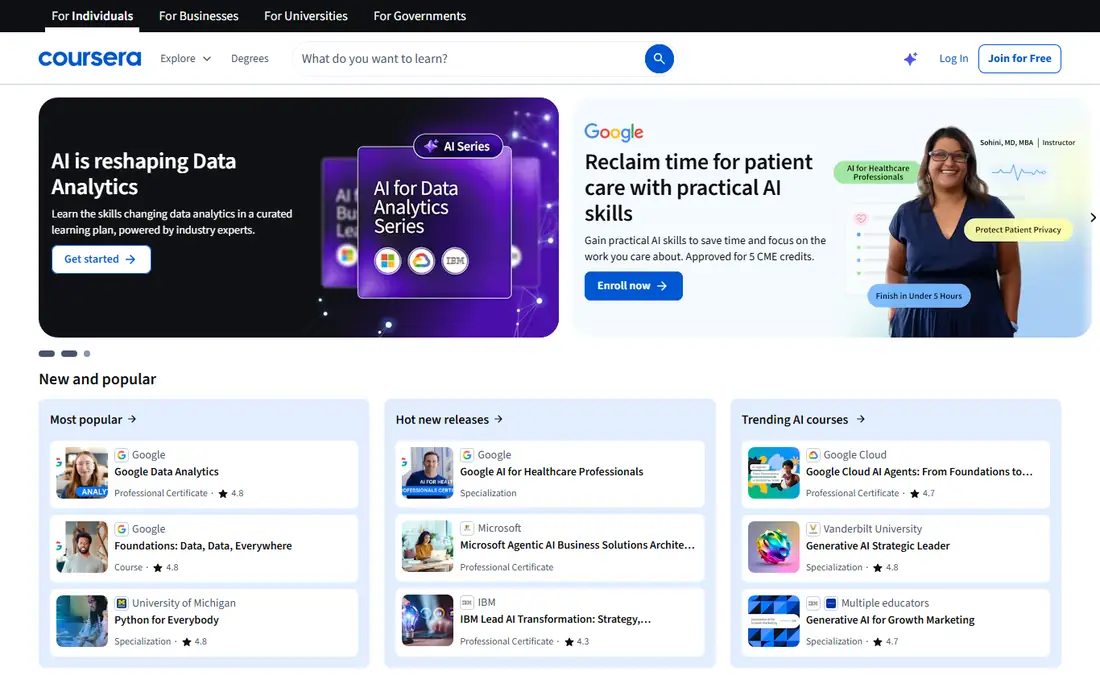
Coursera partners with universities and companies to offer courses, professional certificates, and degrees in subjects from data science to business. Many courses allow free auditing, with paid certificates and graded work, priced on Coursera's site. Its guided projects add hands-on practice.
Certificates and degrees cost extra, and quality varies by provider. For a learner who wants recognized credentials from known institutions, Coursera is the strongest platform here.
- University and company courses
- Certificates and degrees
- Free auditing on many courses
- Certificates and degrees cost extra
- Course quality varies by provider
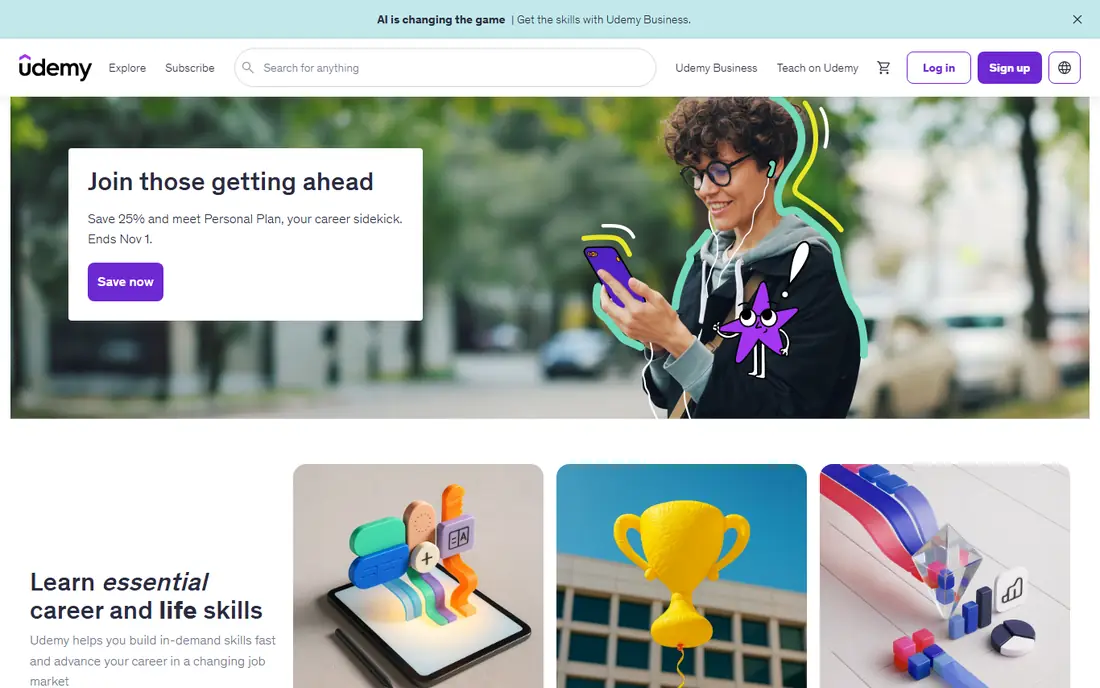
Udemy offers a huge catalog of practical courses, from programming and design to music and cooking, with frequent sales that drop prices sharply. Purchased courses include lifetime access, and free courses cover many topics. Pricing is listed on Udemy's site, with sales changing prices often.
Quality varies widely, since anyone can publish, so reviews and preview lessons matter. For a learner who wants a specific practical skill at a low price, Udemy's catalog is unmatched.
- Huge catalog of practical courses
- Frequent sales
- Lifetime access to purchased courses
- Quality varies widely
- Certificates carry less weight than university ones
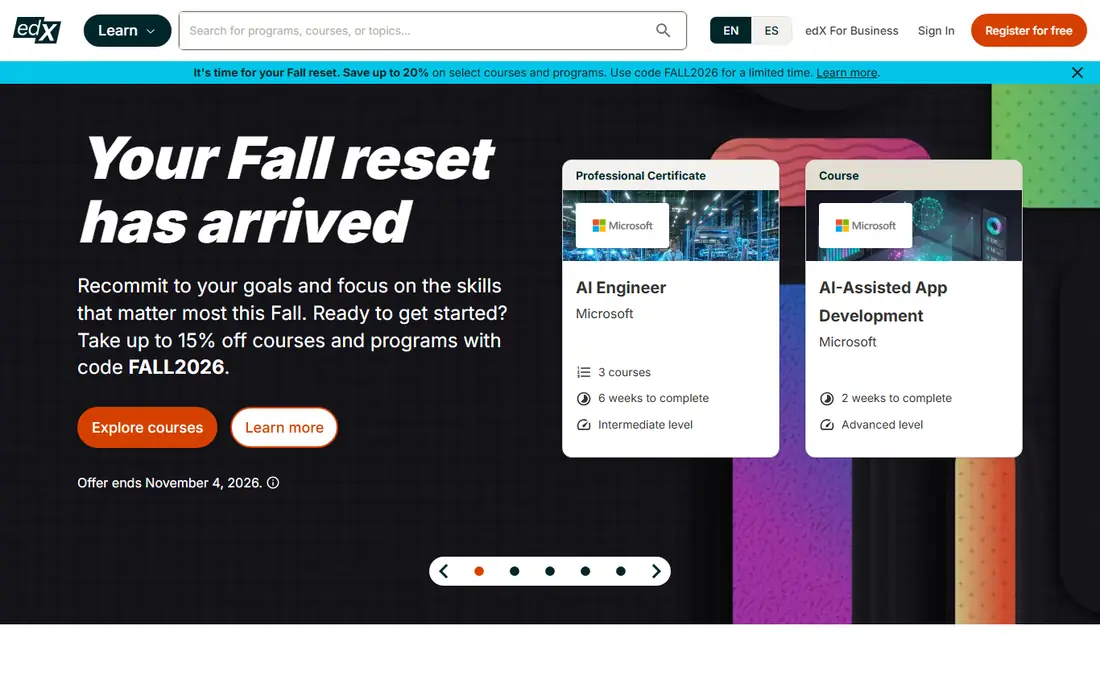
edX offers university courses from top schools, with free auditing on many courses and paid certificates, MicroMasters, and degree pathways for deeper study. Its academic rigor suits learners who want university-level material without enrolling. Pricing is listed on edX's site.
Certificates cost extra, and the platform feels less polished than Coursera's. For an academic learner who values university content and degree routes, edX is a strong choice.
- University courses from top schools
- Degree pathways
- Free auditing
- Certificates cost extra
- Platform is less polished than Coursera
Skillshare focuses on creative skills, with project-based classes in illustration, design, photography, writing, and crafts. Its community features let learners share projects and get feedback, and a free trial covers evaluation, with subscription pricing listed on Skillshare's site.
No accredited certificates are offered, and full access needs a subscription. For a creative learner who learns by making, Skillshare's project approach beats lecture-heavy platforms.
- Strong creative catalog
- Project-based classes
- Community feedback
- No accredited certificates
- Subscription needed after trial
MasterClass offers lessons from famous instructors, from writers and chefs to athletes and musicians, with high production quality and inspiring storytelling. Its classes suit learners who want insight and motivation from masters of their craft. Pricing is listed on MasterClass' site, with subscription-only access.
Depth trails dedicated skill platforms, and there is no free tier. For a learner who wants inspiration and big-picture lessons from renowned teachers, MasterClass is unique.
- Famous instructors
- High production quality
- Inspiring lessons
- Subscription only
- Less depth than dedicated skill platforms
LinkedIn Learning covers workplace skills, from leadership and project management to software and data, with courses from expert instructors and certificates that appear on LinkedIn profiles. A free trial covers evaluation, with subscription pricing listed on LinkedIn's site.
Full access needs a subscription, and creative depth trails Skillshare. For a professional building workplace skills with visible credentials, LinkedIn Learning is the most career-focused option.
- Workplace and tech skills
- Certificates on LinkedIn profile
- Expert instructors
- Subscription needed
- Creative depth trails Skillshare
Khan Academy offers completely free learning in math, science, computing, history, and test prep, with videos, practice exercises, and progress tracking. Its nonprofit model keeps everything free, and its school-level coverage is excellent for students and adult refreshers alike.
Career and creative courses are limited, and no certificates are offered. For free foundational learning, Khan Academy is the best platform available at any price.
- Completely free
- Strong math, science, and school subjects
- Practice exercises
- Limited career and creative courses
- No certificates
Udacity offers tech nanodegrees in data, programming, AI, and cloud, with project-based learning, mentor support, and career services. Its programs suit career changers who want job-ready tech skills with portfolio projects. A free trial covers evaluation, with pricing listed on Udacity's site.
Prices run higher than Udemy's, and the catalog is narrower. For a learner targeting a tech career with structured projects and mentoring, Udacity's nanodegrees are the most job-focused option here.
- Tech nanodegrees with projects
- Mentor support
- Career services
- Higher prices than Udemy
- Narrower catalog
FutureLearn offers university short courses with social learning features, letting learners discuss lessons with peers and educators. Many courses allow free access for a limited period, with paid upgrades for certificates and unlimited access, priced on FutureLearn's site.
Certificates cost extra, and the catalog is smaller than Coursera's. For a learner who enjoys discussion-based university short courses, FutureLearn's social approach is a good fit.
- University short courses
- Social learning features
- Free access to many courses
- Certificates cost extra
- Catalog smaller than Coursera
How we picked these
We compared official pricing pages, course catalogs, and documentation for online course platforms that operate today. We favored platforms with real courses and active learners, and we included academic, creative, tech, workplace, and free options rather than only one style. Prices are the standard published rates from each vendor's own site, and where pricing varies by course we say so rather than guessing.
What to check before you choose
Start with the learning goal. A credential seeker needs Coursera or edX, a practical skill seeker needs Udemy, a creative learner needs Skillshare, and a career changer needs Udacity or LinkedIn Learning. Goal decides the platform faster than any catalog size.
Check certificates and recognition
Certificates vary in weight, from university credentials on Coursera and edX to completion certificates on Udemy and Skillshare. Check whether employers or schools in your field recognize the credential before paying. A cheap certificate nobody values wastes both money and time.
Preview lessons and read reviews
Course quality varies, especially on open marketplaces like Udemy. Watch preview lessons, read recent reviews, and check instructor backgrounds before buying. A course updated recently matters more than a high rating from years ago.
Plan study time honestly
Most learners overestimate available study time. Check course length, weekly hours, and deadlines before enrolling, and pick a pace you can sustain. A short course finished beats a long course abandoned, so start small and build the habit.
Learning with a friend or a study group also helps, since shared deadlines and discussion keep motivation up when a course gets hard. Many platforms include discussion forums, peer-reviewed assignments, and study groups, so use them rather than studying entirely alone. A course finished with support beats a harder course abandoned in isolation, and the connections made along the way often outlast the certificate itself.
Frequently asked questions
What is the best online course platform?
Coursera is our pick for university certificates, Udemy for practical skills at low prices, and edX for academic depth. Skillshare suits creatives, MasterClass suits inspiration, and Khan Academy suits free foundational learning. The best platform follows your learning goal.
What is the best free online course platform?
Khan Academy is the best completely free platform, covering math, science, computing, and test prep. Coursera, edX, and FutureLearn also offer free auditing on many courses, with paid certificates optional. For free career skills, audit university courses before paying for certificates.
Is Coursera or Udemy better?
Coursera suits learners who want university courses and recognized certificates, while Udemy suits learners who want a specific practical skill cheaply. Choose Coursera for credentials and academic depth, and Udemy for affordable, practical, single-topic courses.
Are online course certificates worth it?
Certificates from known universities and companies on Coursera, edX, and LinkedIn Learning carry weight with employers, while marketplace certificates matter less. Skills and portfolio projects often matter more than the certificate itself. Check your field's norms before paying for a credential.
How much do online courses cost?
Costs range from free on Khan Academy to per-course sales on Udemy, subscriptions on Skillshare, MasterClass, and LinkedIn Learning, and higher program fees on Coursera, edX, and Udacity. Audit free where possible, and compare total program cost, not just monthly price.
Can I learn a new career through online courses?
Yes, platforms like Udacity, Coursera, and LinkedIn Learning offer career-focused programs with projects and certificates that support job changes, especially in tech. Combine courses with portfolio projects and practical experience, since employers value demonstrated skill over certificates alone.
Sources we checked (9)

Online Jobs is an independent blog about careers, online work, learning new skills and the tools that help people earn. More about us.
Keep reading
All posts
Best Tools for Virtual Tutoring
Compare the best tools for virtual tutoring, from one-to-one tutor marketplaces to free self-paced learning, with pricing, subjects and honest limits.
Best Study Apps for Young Children
Compare the best study apps for young children in 2026, from Khan Academy Kids and ABCmouse to Reading Eggs, Starfall, Duolingo ABC and PBS Kids, with prices.
Best Study Apps for Kids
Looking for the best study apps for kids? We compare Khan Academy Kids, ABCmouse, Prodigy, IXL and more on age, safety, price and subjects for home learning.