Best Music Distribution Services in 2026: 8 Services Compared

How we put this together: we compare official feature and pricing pages, app store listings, privacy policies and public user reviews. Prices change, so check the provider's site before you pay.
Key takeaways
- DistroKid and TuneCore suit artists who release often, with unlimited uploads for a yearly fee and full royalties kept.
- CD Baby suits artists who release rarely, with a one-time fee per release and music that stays live without a yearly renewal.
- Free tiers from Amuse and others are useful for a first release, but check the royalty share before you commit.
- Read the exit terms before you upload, since some services take music down when a subscription lapses.
Quick comparison
| Name | Who it suits | Starting price | Free option | |
|---|---|---|---|---|
 DistroKid | Frequent releases | $24.99 per year | No | Visit |
 TuneCore | Unlimited releases with extras | $24.99 per year | No | Visit |
 CD Baby | Rare releases, no renewal | $9.99 per single | No | Visit |
 Amuse | First releases on a budget | Free | Yes | Visit |
 UnitedMasters | Brand and sync opportunities | See website | Yes | Visit |
 Ditto Music | Low-cost yearly distribution | See website | No | Visit |
 LANDR | Distribution plus mastering | $24 per year | No | Visit |
 Symphonic | Growing artists and labels | $19.99 per year | No | Visit |
The best music distribution services
A distributor puts your music on Spotify, Apple Music, and other stores, collects royalties, and handles the metadata that makes those royalties traceable. The right choice depends on how often you release, how much you earn, and whether you want extra help with publishing or promotion. Our pick for most independent artists is DistroKid for frequent releases, with CD Baby as the better choice for a single or an album you want to leave live for years.
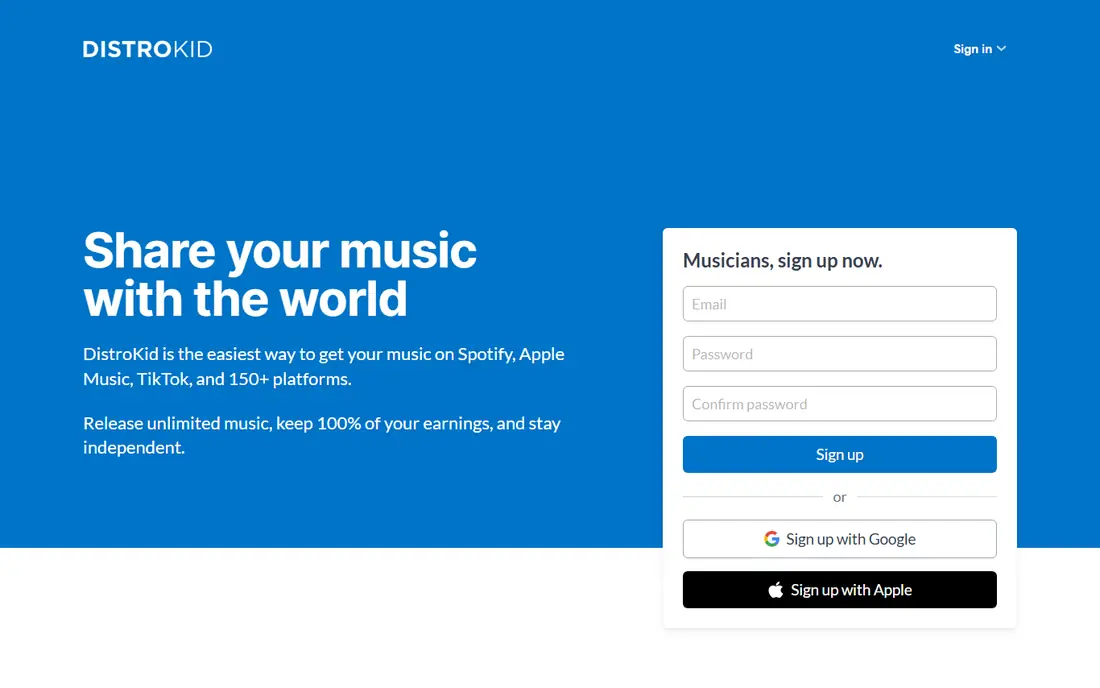
DistroKid is the default pick for artists who release several songs or albums a year. One yearly fee covers unlimited uploads for one artist, and you keep all streaming royalties. That flat model makes the math simple: release often, and the cost per release falls fast. Higher tiers add more artists, custom labels, and extra features.
The catch is renewal. If you stop paying and have not bought the Leave a Legacy add-on, your releases can be taken down. That is a fair trade for frequent releasers, but it is a poor fit for an artist with one song who never wants to think about renewals again. Check the legacy price for your releases before you upload a song you plan to keep live for a decade.
- Unlimited uploads for a yearly fee
- You keep 100 percent of royalties
- Fast delivery to stores
- Music can come down if you stop paying, unless you buy a legacy add-on
- Support is mainly through a help center

TuneCore matches DistroKid on its entry yearly plan, with unlimited uploads and full royalties. Where it differs is in the extras. Publishing administration, YouTube Content ID, and social platform tools are more central to the TuneCore offer, which suits artists who want those services from the same company rather than from separate providers.
The downside is similar to DistroKid: this is a subscription model, so releases depend on renewal. Higher tiers add features, but they also raise the yearly cost, so compare the tier list against what you will actually use. For artists who release often and want publishing help in the same account, TuneCore is a strong alternative to DistroKid.
- Unlimited uploads on yearly plans
- You keep 100 percent of royalties
- Publishing and Content ID options in one place
- Higher tiers cost more for extra tools
- Releases can come down when a plan expires
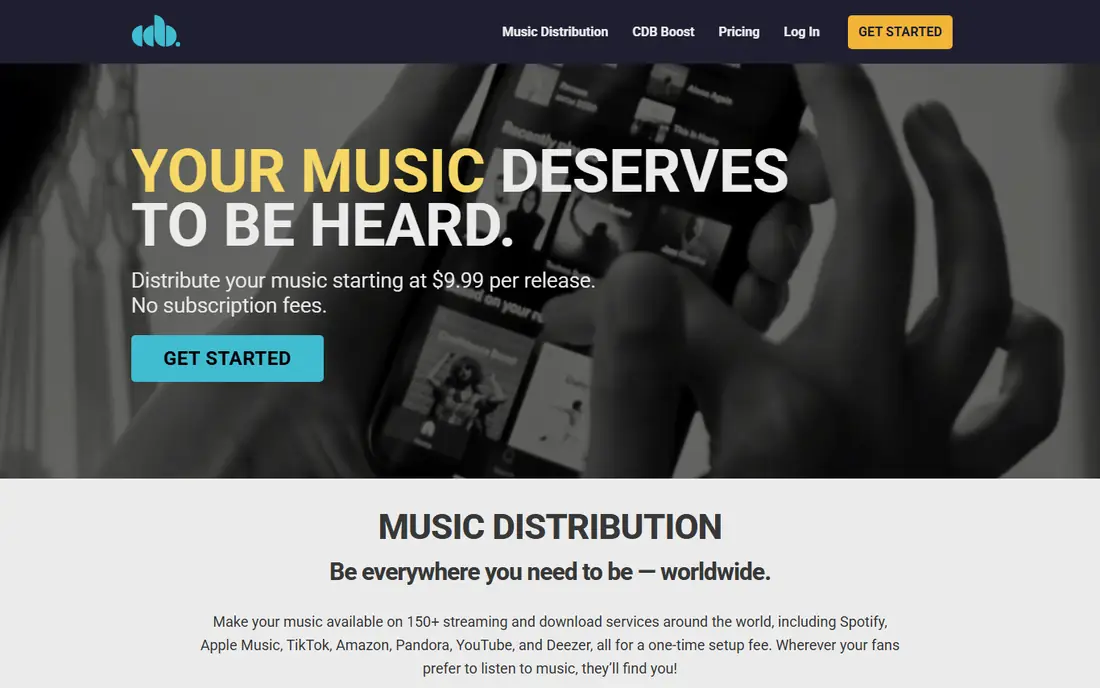
CD Baby is the best choice for artists who release once or twice a year and do not want a yearly bill. You pay once per single or album, and the release stays live without renewal. That permanence is valuable for a debut single, a back catalog, or a side project you do not plan to promote every year.
The trade is the royalty share. CD Baby keeps 9 percent of streaming royalties, so a song that earns a lot over time will cost more through CD Baby than through a flat-fee service. Do the math on your expected earnings: for low earners, the one-time fee wins, while for high earners, a yearly plan usually wins. CD Baby also offers extra services, including a boost add-on, but the core appeal is simple and permanent.
- One-time fee per release
- Music stays live with no yearly renewal
- Simple model for low-volume artists
- CD Baby keeps 9 percent of streaming royalties
- No unlimited upload plan
Amuse is a useful starting point for a first release. Its free tier lets new artists get music onto stores without paying upfront, and its app-based workflow suits phone-first artists. Paid tiers raise the royalty share to 100 percent and add faster features, so there is a clear upgrade path if your music gains traction.
Read the free tier terms closely before you upload, since free plans in this market often take a royalty share or limit features. Also check delivery times, since a free release may take longer to reach stores than a paid one. For a low-stakes first single, Amuse is a fair trial, and you can move to a paid distributor later if you release more often.
- Free tier for getting started
- App-based uploads
- Paid tiers keep 100 percent of royalties
- Free tier terms and royalty share need careful checking
- Delivery can be slower than paid rivals
UnitedMasters appeals to artists who want more than store delivery. Its pitch includes brand partnerships, sync opportunities, and tools that help independent artists get heard beyond streaming. That makes it interesting for artists with a strong visual identity or a song that could suit advertising or film.
The pricing structure has changed over time, with free and paid tiers offering different royalty shares, so check the current plan page rather than relying on an old review. UnitedMasters is not the cheapest unlimited option, and artists who simply want cheap, frequent uploads may prefer DistroKid. Artists who value partnership access may find the extra cost worthwhile.
- Access to brand partnership and sync opportunities
- A free entry tier
- Tools for independent artists
- Pricing and royalty terms vary by tier
- Not the cheapest route for unlimited uploads
Ditto Music has long pitched itself as a low-cost distributor, with yearly plans that cover unlimited releases and higher tiers that add publishing help. For artists on a tight budget who release regularly, that low entry price is attractive, and the service covers the major stores.
The caution is that Ditto plan details have shifted, so do not trust a price from an older article. Open the current pricing page, confirm the yearly fee, the royalty share, and what happens if you cancel. If the current entry price is still low, Ditto remains a good budget alternative to DistroKid and TuneCore.
- Low yearly entry price in past plans
- Unlimited releases on paid plans
- Publishing options on higher tiers
- Plan names and prices have changed over time
- Check current terms before you sign up
LANDR suits artists who also need mastering. Its distribution plans sit alongside AI mastering, samples, and studio tools, so an artist who already masters with LANDR gets distribution as part of a workflow they use anyway. You keep full royalties on distribution, and releases are described as staying live, which is a useful contrast to subscription services that take music down.
If you only need distribution, LANDR is not the cheapest choice, and a plain distributor will save money. But if you master every track before release, bundling the two services in one account can save time and keep your release process in one place. Check which studio bundle includes distribution before you buy, since plans are tiered.
- Distribution bundled with mastering tools
- You keep 100 percent of royalties on distribution plans
- Samples and plugins in higher bundles
- Best value only if you use the mastering and studio tools
- Distribution alone is not the cheapest
Symphonic offers a starter plan aimed at independent artists, with unlimited releases and full royalties, plus a partner tier for more established artists and labels. That two-level structure suits artists who are growing: start cheap, then move to a tier with more support when your catalog and earnings justify it.
The partner tier is not a simple self-serve signup, so expect an application or discussion before you move up. For a casual artist with one song, CD Baby may still be simpler. For an artist building a catalog and thinking about label services, Symphonic is worth a close look, and its starter price makes the first step low risk.
- Low-cost starter plan with unlimited releases
- 100 percent royalties on the starter plan
- Label-style support on higher tiers
- Higher tiers are application based
- Less suited to a single casual release
How we picked these
We compared official pricing pages and recent distributor comparisons, and we focused on three questions: what you pay, what share of royalties you keep, and what happens if you stop paying. We favored services that are still operating, that distribute to the major stores, and that cover different artist needs, from free first releases to label-style support. We did not rank services on claimed user counts or marketing awards.
How to choose a distributor without regret
Count your releases for the next year. If you plan to release monthly, a flat yearly fee beats a per-release fee quickly. If you plan one single, a one-time fee with no renewal is usually cheaper and simpler. Then check royalties: a 9 or 15 percent share sounds small, but it grows with every stream, so high earners should favor a 100 percent plan.
Also check the extras you will actually use. Publishing administration, Content ID, and sync help are valuable, but only if your music needs them. Finally, read the cancellation terms. A service that takes music down on cancellation is fine if you plan to renew, but it is a risk for a catalog you want to leave live. When in doubt, start with one release, test delivery speed and royalty reporting, and only then move your full catalog.
Frequently asked questions
What is the best music distribution service for independent artists?
DistroKid is the best default for artists who release often, thanks to unlimited uploads and full royalties. CD Baby is better for artists who release rarely and want music to stay live without a yearly fee.
What are the best music distribution platforms for beginners?
Amuse for a free first release, and DistroKid or TuneCore once you release regularly. Start with one song, check delivery and reporting, and upgrade only when you need more features.
What is the best distribution service for music on Spotify and Apple Music?
All services on this list distribute to Spotify, Apple Music, and other major stores. The difference is price, royalty share, and extra services, not basic store coverage.
Are TuneCore alternatives cheaper than TuneCore?
DistroKid matches TuneCore on entry price, CD Baby can be cheaper for one release, and Ditto and Symphonic compete on low yearly fees. Compare the current plan pages, since prices change.
Do I keep my royalties with a distributor?
With DistroKid, TuneCore, LANDR, and Symphonic starter plans, you keep 100 percent of streaming royalties. CD Baby keeps 9 percent, and free tiers from other services may take a share, so check the plan terms.
What happens if I stop paying my distributor?
It depends on the service. Subscription services may take music down when a plan lapses, unless you buy a legacy option. CD Baby releases stay live because there is no yearly renewal to lapse.
Sources we checked (8)

Online Jobs is an independent blog about careers, online work, learning new skills and the tools that help people earn. More about us.
Keep reading
All posts
Spotify Alternatives
Looking for Spotify alternatives? We compare 8 music services on price, sound quality, free tiers, and catalogs to help you find a good alternative to Spotify.

Best Offline Music App
Find the best offline music app for your phone in 2026. We compare 8 apps on downloads, sound quality, playlists, device support, and offline limits in detail.

Best Karaoke Apps
Looking for the best karaoke app for a party or solo practice? We compare 8 karaoke apps on song choice, sound tools, price, and social features for you.