Home / App Development Agencies
Best Mobile Apps Developers in 2026: 8 Tools Compared


Enterprise apps with complex needs · Starting price: See website
How we put this together: we compare official feature and pricing pages, app store listings, privacy policies and public user reviews. Prices change, so check the provider's site before you pay.
Key takeaways
- Agency pricing is almost always quoted per project, so a short discovery call tells you more than a published rate card.
- Enterprise teams tend to fit WillowTree and Intellectsoft, while startups often get more attention from Goji Labs and Chop Dawg.
- The best app development companies in USA listings agree on one point: check recent work in your industry before you check hourly rates.
- A strong partner covers design, engineering, testing, and post-launch support, not just the first build.
- Ask who will actually work on your app, how often you will see progress, and what happens after launch.
Quick comparison
| Name | Who it suits | Starting price | Free option | |
|---|---|---|---|---|
| WillowTree | Enterprise apps with complex needs | See website | No | Visit |
 Fueled | Brand-led product design | See website | No | Visit |
 Utility | Mid-market custom builds | See website | No | Visit |
 Goji Labs | Startups and MVPs | See website | No | Visit |
 Chop Dawg | Product-focused startups | See website | No | Visit |
 Mercury Development | Long-term engineering support | See website | No | Visit |
 Intellectsoft | Large-scale digital transformation | See website | No | Visit |
 Y Media Labs | Large brands and product innovation | See website | No | Visit |
The best mobile apps developers
Hiring an agency is a product decision, not just a procurement decision. The team you choose shapes how your app feels, how fast it ships, and how easy it is to maintain. This guide compares eight firms that build mobile apps for clients in the United States and beyond, with a focus on fit rather than hype.

WillowTree is a natural first call for a company that needs a mobile app to work inside a larger system. Its teams handle product strategy, design, native iOS and Android development, and ongoing optimisation, which matters when an app must connect to internal tools, payment systems, or customer data. That breadth makes it a good fit for banks, retailers, healthcare providers, and other organisations where reliability and compliance sit beside good design.
The trade-off is scale. A firm of this size is set up for substantial engagements, and a very early-stage founder may find the process heavier than needed. If you have a validated product, a real budget, and stakeholders who need regular reporting, that structure becomes a strength. Ask for case studies in your sector and for the team who would lead your project, not just the sales team.
- Deep experience with large brands
- Strong design and engineering under one roof
- Clear focus on long-term product work
- Likely too costly for a small MVP
- Best suited to teams with a defined budget and timeline
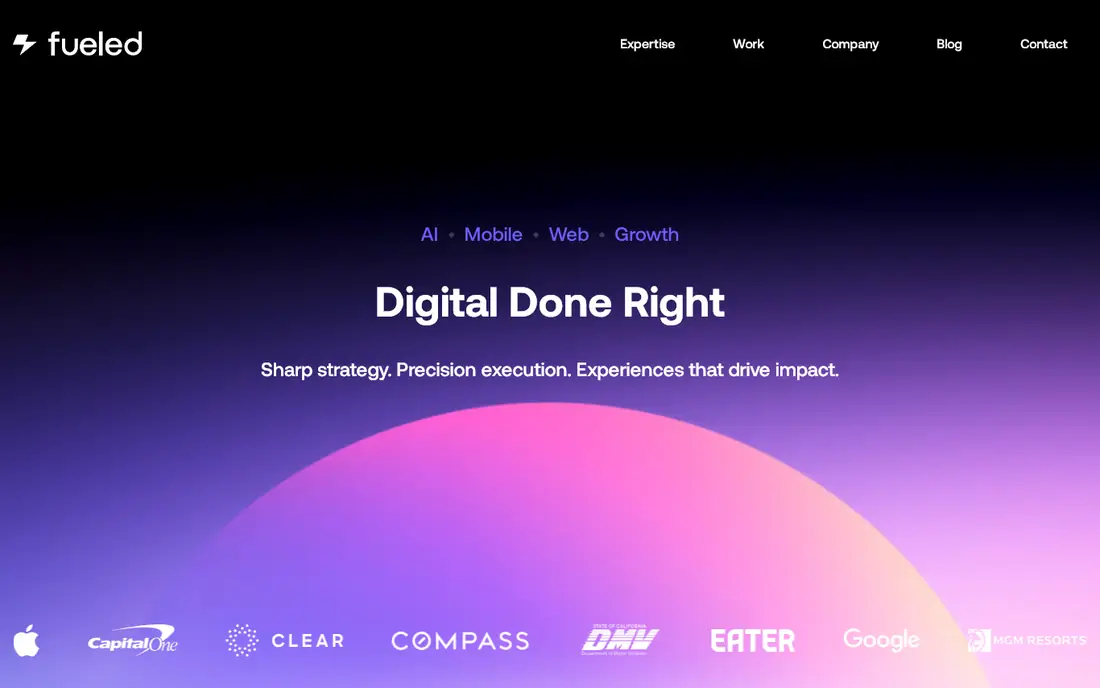
Fueled appeals to founders and marketing-led teams who want an app that looks and feels distinctive from the first screen. Its work leans toward polished consumer products, with careful attention to branding, onboarding, and the small interactions that keep people coming back. For a company launching a customer-facing app where perception matters, that design-first approach can be worth the premium.
The honest catch is cost and fit. If your app is mainly an internal tool, or if you already have a design team and only need engineers, you may pay for services you do not need. Fueled works best when design, strategy, and development move together. Come with a clear view of your audience and your business goal, and use the first conversation to test whether the team challenges your assumptions in a useful way.
- Strong design reputation
- Experience with consumer brands
- Product strategy alongside development
- Premium positioning
- May not suit a purely technical build with no design needs
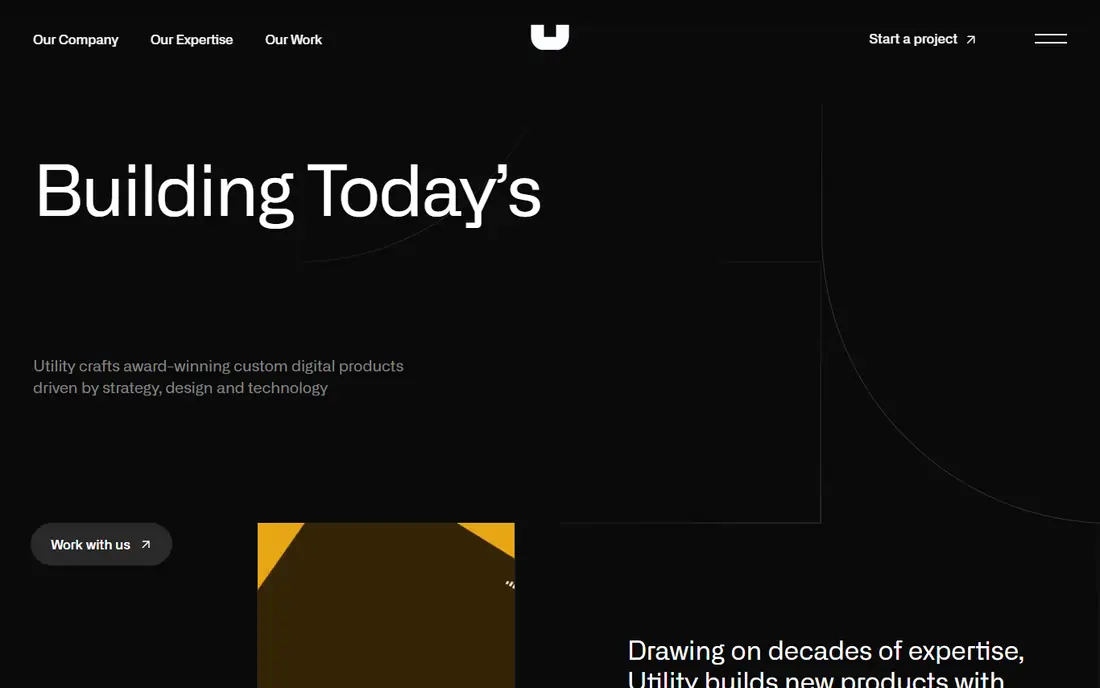
Utility describes itself as a mobile design and development agency, and its portfolio covers both startups and larger companies. That middle ground is useful: the team is large enough to handle a serious build, but small enough that a mid-market client is not a minor account. Its services include strategy, user experience design, native and cross-platform development, and API work, which covers most of what a typical product launch needs.
The main question to ask is about scope control. Custom builds can grow quickly once features are added, so agree on a phased plan with a clear first release. Utility fits teams that want a custom product rather than a template, and who are ready to invest in design and testing. If your budget is very tight, a smaller studio or a phased MVP may be a better starting point.
- Custom iOS, Android, and cross-platform work
- Experience across healthcare, finance, and retail
- Agile delivery
- Project minimums may exclude very small budgets
- Timelines vary with scope
Goji Labs is often mentioned among the best app development firms for startups because its process is built around getting a first version into users hands without overbuilding. The team works on product strategy, design, and development, and it has a track record with founders who need to test an idea, raise funding, or prove demand before committing to a larger build. That focus makes early conversations practical rather than abstract.
The limitation is the same as the strength. A startup-focused studio may not be the right choice for a global platform with strict enterprise requirements on day one. For most founders, though, that is not the problem they need to solve first. Goji Labs fits best when you want a thoughtful MVP, honest advice on what to leave out, and a team that understands the pressure of a launch deadline.
- Startup-friendly process
- Product strategy included
- Experience with early-stage launches
- Smaller team than enterprise firms
- May need extra support for very large platforms
Chop Dawg has been building apps for startups and growing companies for many years, and that history shows in its process. The team emphasises product thinking, which means it asks about your users, your business model, and your measures of success before it talks about screens. For a founder who has an idea but not yet a fully formed product plan, that guidance can prevent expensive rework later.
The catch is expectations. Chop Dawg is a United States based studio, so it will not compete on price with the cheapest global options, and it should not be judged on that basis. Judge it on whether its team understands your product and whether its past work looks like the app you want to build. If you need a partner who will push back on weak features and help you prioritise, this is a strong shortlist candidate.
- Long-running product studio
- Design and development in one team
- Experience with funded startups
- Pricing varies by project
- Not a low-cost offshore option
Mercury Development suits companies that need dependable engineering capacity over months or years, not just a single launch. Its team covers mobile, web, and emerging platforms, and it works with clients who need ongoing releases, maintenance, and support. That makes it a practical choice for a business with an existing product that needs new features, performance work, or a rebuild.
The honest trade-off is style. Mercury Development is an engineering-led firm, so a client who wants a highly distinctive consumer brand experience may need to bring strong design direction or pair it with a design partner. For a product team that values delivery, documentation, and long-term stability, that focus is a plus. Ask about team continuity, because keeping the same engineers on your product over time saves repeated onboarding.
- Large engineering team
- Long company history
- Broad platform coverage
- Less design-led than some rivals
- Enterprise process may feel formal for small teams
Intellectsoft is one of the best mobile app development agencies for large organisations that need mobile work as part of a wider digital change. Its services span mobile development, enterprise software, cloud, and emerging technologies, which helps when an app must sit inside a complex stack. Companies in finance, healthcare, logistics, and retail often need that kind of breadth, along with security and compliance experience.
For a small startup, that breadth can feel like overkill. The sales and discovery process may be longer, and the minimum engagement is likely higher than a boutique studio. Intellectsoft earns its place here for scale, not for speed on a shoestring budget. If your project touches multiple systems and needs a partner who has done similar integrations before, it deserves a conversation.
- Enterprise experience
- Wide technology coverage
- Global delivery team
- Broad scope can mean a longer sales process
- Not ideal for a tiny MVP
Y Media Labs works with large brands on product innovation, which often means rethinking an existing service for mobile rather than simply copying a website into an app. Its teams combine strategy, design, and engineering, and its client work tends to involve well-known consumer and enterprise names. That background is reassuring if your app will be judged by millions of users and by internal stakeholders at the same time.
The catch, again, is fit and budget. Y Media Labs is built for substantial programmes, so a founder with a first MVP and a limited budget will likely find better value elsewhere. For a larger company that needs a partner to lead a flagship mobile product, the experience and process depth justify a closer look. Shortlist it alongside WillowTree and Intellectsoft if scale and brand quality are your main criteria.
- Experience with major brands
- Product innovation focus
- Design and engineering combined
- Enterprise pricing
- Longer timelines for large programmes
How we picked these
We compared official agency websites, service pages, and public client work, along with directory listings that summarise hourly bands and minimum project sizes. We favoured firms with a clear mobile focus, a published portfolio, and services that cover the full product journey from strategy to post-launch support. We also mixed large enterprise firms with smaller studios so readers at different stages can find a realistic fit.
We did not claim hands-on testing of these agencies, and we did not invent prices, ratings, or client counts. Agency pricing is usually quoted after a scoping conversation, so we list starting price as See website where a vendor does not publish a fixed rate. Readers should treat this list as a shortlist for discovery calls, not as a ranking based on a single metric.
Choosing the right agency for your budget and stage
Start with scope, not with a vendor list. Write down the single problem your app solves, the first three features it must have, and the platforms it must support at launch. That short brief makes every agency conversation more useful, because a good partner will respond with questions, risks, and a phased plan rather than a generic quote.
Ask about the team and the process
Ask who leads design and engineering, how often you will see working software, and how feedback is handled. A weekly demo, a shared backlog, and a named product lead are practical signs of a healthy process. Also ask how testing is done, including device coverage and accessibility checks, because those details decide whether launch week is calm or chaotic.
Compare total cost, not hourly rates
A lower hourly rate can still produce a higher total if the team is larger or the timeline is longer. Ask for an estimated range for your first release, what is included, and what would trigger extra cost. Clarify ownership of code and design files, post-launch support terms, and how you can move to another team later if needed. Those answers matter as much as the headline price.
Frequently asked questions
What is the best mobile app development agency for a startup?
For most startups, a studio like Goji Labs or Chop Dawg is a strong starting point because their process is built around MVPs and product validation. Enterprise firms can also work, but they tend to suit larger budgets and more complex requirements. Shortlist two or three firms, share the same brief with each, and compare their questions as much as their quotes.
How much does it cost to hire the best app development companies in USA?
Costs vary widely by scope, team location, and complexity. Simple apps can cost far less than complex platforms with integrations, payments, and compliance needs. Most agencies in this guide quote per project after discovery, so treat any published hourly band as a rough guide and ask for a range tied to your specific first release.
What makes a best app developer company different from a freelancer?
An agency usually offers design, engineering, testing, and project management in one team, which helps when a product needs several skills at once. A freelancer can be excellent for a narrow task or a small build. Choose an agency when you need continuity, coverage if someone is away, and a team that can scale as the product grows.
Should I choose native or cross-platform development?
Native development often gives the best performance and access to platform features, while cross-platform tools like React Native or Flutter can reduce cost when one codebase serves both iOS and Android. The right choice depends on your performance needs, your team, and your long-term maintenance plan. Ask each agency to explain the trade-off for your specific app.
What should I check before signing with a best company for app development?
Check recent work in your industry, speak to past clients if possible, and confirm who owns the code. Review the contract for scope, timelines, support terms, and exit options. Also confirm how the agency handles app store submissions, analytics, and updates after launch, since those tasks continue long after the first release.
Do the best mobile app developers also help after launch?
Most established agencies offer post-launch support, monitoring, and iterative releases, though the terms vary. Some include a short support period in the build price, while others charge a monthly retainer. Agree on support scope before launch, including bug fixes, operating system updates, and small feature work, so you are not negotiating under pressure later.
Sources we checked (8)

Online Jobs is an independent blog about careers, online work, learning new skills and the tools that help people earn. More about us.
Keep reading
All posts
n8n Alternatives
n8n alternatives compared for 2026, with Zapier, Make, Activepieces, and more, covering visual builders, code steps, self-hosting, and pricing models.
eBay Alternatives
Looking for ebay alternatives? We compared 9 marketplaces for sellers on fees, buyer reach, categories and ease of listing, to help you sell with confidence.

ZoomInfo Alternatives
The best ZoomInfo alternatives in 2026, compared on price, free plans, data coverage, and which tool fits small teams or large sales teams best in detail.