Best Meditation App for Kids in 2026: 8 Apps Compared


Free, age-grouped mindfulness programs · Starting price: Free
How we put this together: we compare official feature and pricing pages, app store listings, privacy policies and public user reviews. Prices change, so check the provider's site before you pay.
Key takeaways
- Smiling Mind is the best free starting point, with age-grouped mindfulness programs and no subscription needed.
- Headspace and Calm suit families who already pay for a meditation app, because their kids sections sit inside the main subscription.
- Moshi is the strongest bedtime pick, with stories, sleep sounds, and calming audio built around characters children enjoy.
- Short sessions work best for children: two to five minutes for younger kids, and up to ten minutes for older children who ask for more.
- Parents should check age ratings, privacy settings, and whether an app shows ads before handing a phone or tablet to a child.
Quick comparison
| Name | Who it suits | Starting price | Free option | |
|---|---|---|---|---|
| Smiling Mind | Free, age-grouped mindfulness programs | Free | Yes | Visit |
 Headspace | Structured meditation for the whole family | $12.99 per month | Free trial (7 days) | Visit |
 Calm | Sleep stories and calming audio for kids | $14.99 per month | Yes | Visit |
 Moshi | Bedtime stories and calming audio adventures | See website | Free trial | Visit |
 Insight Timer | A large free library parents can curate | Free | Yes | Visit |
 GoNoodle | Movement breaks and classroom calm | Free | Yes | Visit |
 Cosmic Kids Yoga | Yoga adventures and mindfulness stories | See website | Yes | Visit |
 Mindful Powers | Breathing games for younger children | See website | Free trial | Visit |
The best meditation app for kids
Children do not need long silent sits. They need short, guided, playful sessions that fit into a morning routine or a bedtime wind-down, and parents need apps without ads, surprise purchases, or chat features aimed at adults. We compared official app pages, pricing, and public reviews for apps with dedicated children's content, and we favored apps that state their age range clearly and keep children's sessions short.
A note for parents: check the age rating and privacy settings on each app before your child uses it, and keep the app on an adult device where you can control purchases and screen time. These apps support calm routines and sleep habits, but they are not medical treatment, and a child who is struggling with anxiety or sleep should be seen by a clinician.
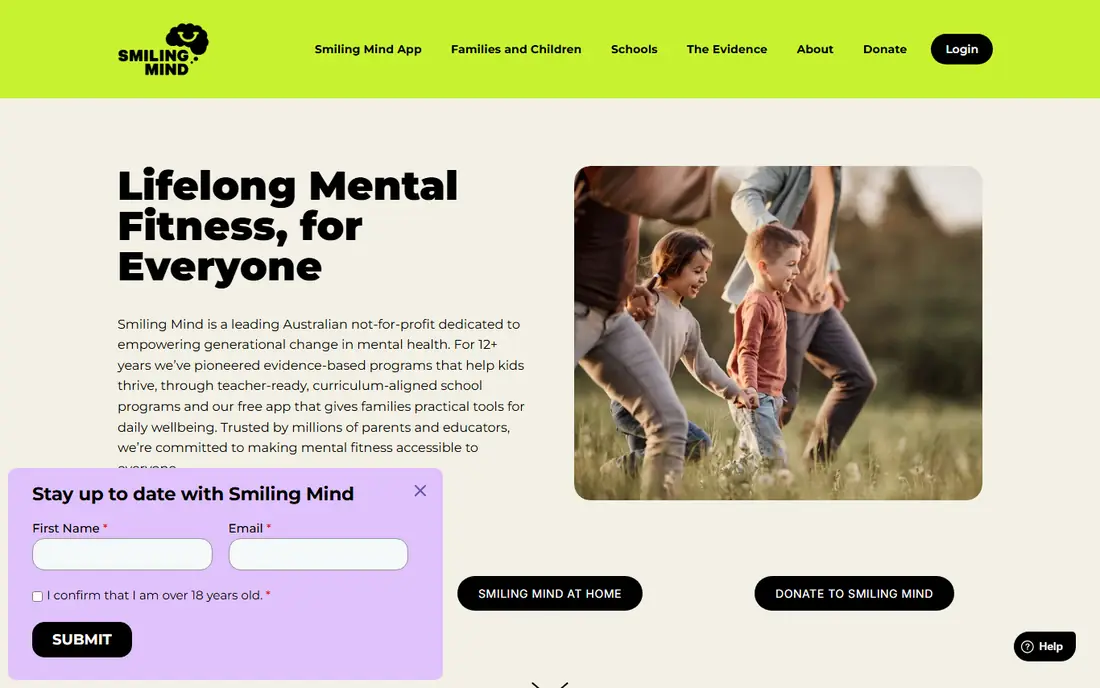
Smiling Mind is our first recommendation for most families, because it removes the price question entirely. The Australian nonprofit app offers mindfulness programs for children, teens, families, and schools, with sessions grouped by age so a seven-year-old and a teenager are not given the same script. Sessions are short, plain, and easy to repeat daily, which suits school mornings and classroom use.
The trade-off is production style. Smiling Mind is calmer and simpler than story-driven apps, so a child who wants characters and adventures may prefer Moshi for bedtime. But for building a regular habit, especially in a classroom or at no cost, it is hard to beat, and parents can try it without entering payment details.
- Free with no subscription
- Programs grouped by age
- Developed with psychologists and educators
- Less polished audio drama than paid story apps
- Smaller sleep-story library than Moshi or Calm
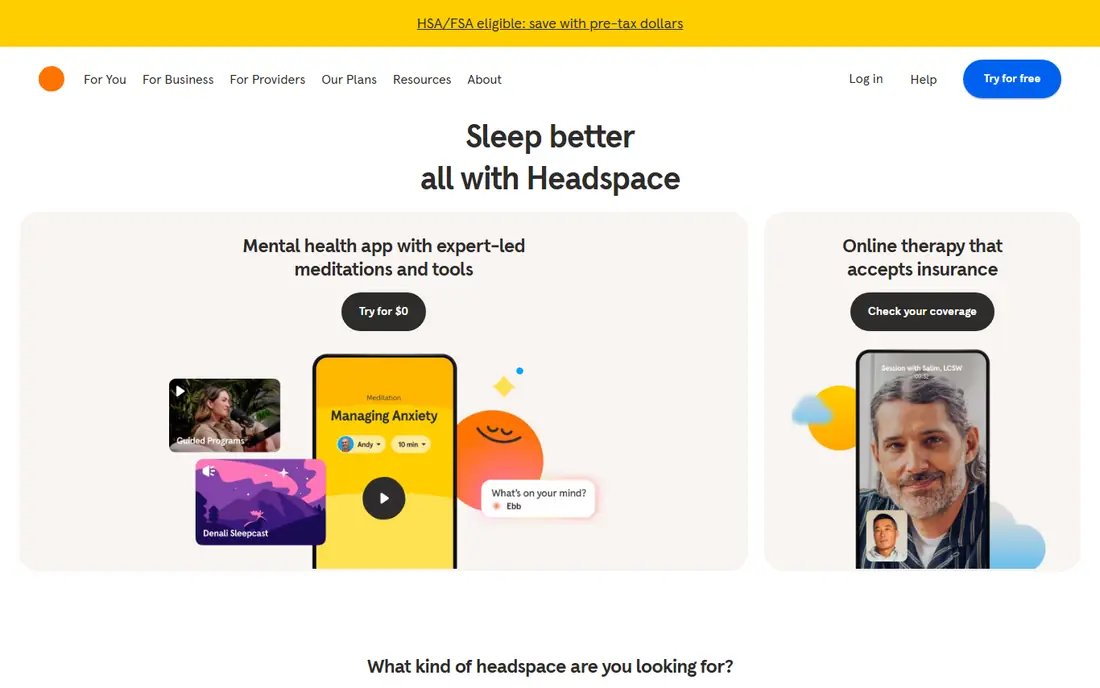
Headspace suits families who want one app for adults and children. Its kids section covers breathing, kindness, calm, and sleep, with short sessions that fit a school-day reset or a bedtime routine, and its structured courses help parents who are new to meditation explain what to do. Teachers in eligible countries can also get free memberships, which makes it a practical classroom option.
The catch is cost and depth. Full access needs a subscription starting at 12.99 dollars per month, or 69.99 dollars per year, and most of the library sits behind that paywall. If only your child will use it, Smiling Mind or Insight Timer may cover the same ground for free, but if adults in the house already subscribe, the kids content is a strong bonus.
- Clear, structured courses for beginners
- Dedicated kids content from toddlers to teens
- Free memberships for eligible teachers
- Most content needs a paid subscription
- Sessions are short, which older kids may outgrow
- Family plan is a separate cost
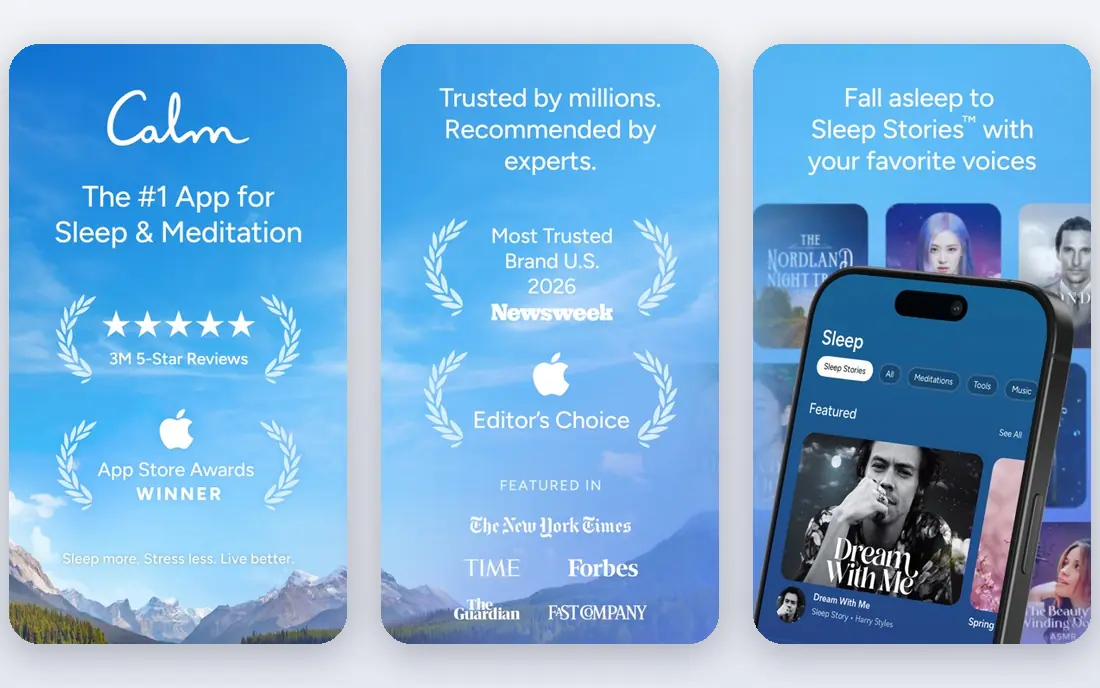
Calm Kids works best as a bedtime tool inside a family subscription. Sleep stories, lullabies, and short meditations help children wind down, and the app's audio quality is consistently high. Parents who already use Calm for sleep or stress will find it easy to add a child profile and play a story without learning a new app.
Its limits are audience and price. Calm is primarily an adult app, so its kids library is smaller and less playful than Moshi's, and full access costs 14.99 dollars per month or 69.99 dollars per year. Try the free content first, and check whether your child prefers stories or guided breathing before paying, since that preference decides whether Calm or Moshi fits better.
- Calm Kids section with stories, music, and meditations
- Good sleep content for bedtime
- Limited free content to try first
- Full access needs a subscription
- Content leans toward older children and adults
- No separate kids-only app
Moshi turns calming time into a story, with characters, gentle adventures, breathing exercises, and sleep sounds that children ask for by name. That story-first approach is why it works so well at bedtime: children who resist "meditation" will happily listen to a Moshi tale, and parents get a predictable wind-down routine. Content is grouped for younger children, with day and night sections for different times.
The honest catch is age range and cost. Moshi suits roughly ages 3 to 8 best, and older children may find it too young, while pricing varies by app store and plan, so we list it as "See website" rather than repeating a figure that may not match your checkout. Use the free trial at bedtime for a week before subscribing, and watch whether it shortens the time to sleep.
- Story-led calming content children enjoy
- Bedtime, breathing, and music sections
- Content for ages around 3 to 8
- Price varies by store and plan, so check before subscribing
- Best for younger children, less so for teens
- Subscription needed for full library
Insight Timer is the best free library for families willing to curate. Thousands of free tracks include children's meditations, sleep stories, and breathing exercises from many teachers, and parents can save favorites into a short playlist so a child is not browsing the whole catalog alone. Premium, at around 59.99 dollars per year, adds courses and offline listening, but the free tier alone covers daily practice.
Curation is the work here. Because Insight Timer serves adults too, parents should build the playlist first and keep the device in a shared space. If you want a ready-made kids path with no browsing, Smiling Mind or Headspace will feel safer and simpler.
- Huge free library of guided meditations
- Kids tracks from many teachers
- Optional premium for courses
- Library is so large that parents must curate it
- Not a kids-only app, so supervision matters
- Full courses need a subscription
GoNoodle suits children who cannot sit still for a breathing exercise, which is most younger children. Its short videos mix movement, dance, and calming routines, and teachers use it widely for classroom brain breaks. A five-minute GoNoodle break can reset a restless afternoon better than asking a seven-year-old to close their eyes for ten minutes.
It is not a pure meditation app, and that is worth knowing before you download it. GoNoodle is video-based, so it adds screen time rather than reducing it, and its mindfulness content is lighter than Smiling Mind's programs. Use it for active resets during the day, and pair it with an audio-only app at bedtime.
- Free tier with movement and mindfulness videos
- Popular in classrooms
- Short, active breaks suit restless children
- More movement than quiet meditation
- Video-based, so screen time is higher
- Premium features vary by plan
Cosmic Kids Yoga tells stories through yoga poses, so children follow an adventure while stretching, balancing, and breathing. That format works well for children who learn through movement, and the free videos give families a no-cost way to test whether story yoga holds their child's attention. Sessions also build body awareness and focus in a way that seated meditation does not.
The catch is that it is yoga first and meditation second. Children who need a quiet bedtime wind-down will do better with Moshi or Calm, while Cosmic Kids fits mornings, after-school energy, and weekends. Make sure there is clear floor space, and join in for younger children until they know the poses.
- Story-led yoga adventures children enjoy
- Free videos available
- Good for movement, balance, and calm in one session
- Yoga-focused rather than meditation-focused
- App pricing and plans vary
- Needs space to move safely
Mindful Powers is a small, focused app that teaches younger children to breathe slowly through play. A friendly guide character leads short exercises, and the design avoids the sprawling catalogs that overwhelm small children in larger apps. For a first meditation app for a child under eight, that focus is a real advantage.
Its limits are size and age range. The library is much smaller than Headspace or Insight Timer, and older children will outgrow it quickly. Check the current price in your app store before buying, and treat it as a starter app: if your child takes to the breathing games, move on to Smiling Mind for a wider program.
- Playful breathing exercises with a friendly guide character
- Short sessions for young children
- Simple, focused design
- Smaller library than the big apps
- Best for younger children only
- Pricing varies by store
How we picked these
We compared official app pages, pricing, and age guidance, plus public reviews from parents and educators, for apps with dedicated children's meditation, sleep, or mindfulness content in 2026. We favored apps that are free or offer a free trial, that state an age range, and that keep sessions short. Where pricing varied by store or region, we wrote "See website" rather than publishing a figure that might not match your checkout, and we excluded apps with no clear children's content or privacy information.
Building a calm routine that sticks
Keep sessions short and regular
Two to five minutes daily beats a single long session each week. Pick one regular slot, such as after school or before bed, and keep it the same for a month before judging whether it helps. Children build habits from repetition, not from session length.
Let the child choose the voice and story
A meditation app only works if the child wants to press play. Let them choose between two or three saved favorites, and change the pick when interest fades. Forcing a disliked narrator or story turns a calming tool into a nightly argument.
Use audio at bedtime and movement during the day
Audio stories suit bedtime because the screen can stay dark, while movement apps suit daytime energy. Mixing the two covers both needs without relying on one app for everything, and it keeps bedtime screen-free where possible.
Check privacy and purchases together
Before the first session, check the app's privacy settings, turn off in-app purchase prompts where possible, and keep the app on an adult account. Review what data the app collects, especially for apps that ask for a child's name or age, and delete accounts for apps your child stops using.
Frequently asked questions
What is the best free meditation app for kids?
Smiling Mind is the best free pick, with age-grouped programs and no subscription. Insight Timer is also strong if a parent curates a short playlist of kids tracks first. Both cover daily practice without payment, so start there before paying for a story-led app.
What is the best meditation app for kids at bedtime?
Moshi is the strongest bedtime pick for younger children, thanks to its story-led sleep content. Calm Kids also works well for families who already subscribe to Calm. Try both free options first and see whether your child falls asleep faster with stories or with guided breathing.
Are meditation apps safe for children?
Most dedicated kids apps are ad-free inside a paid subscription, and Smiling Mind is free and ad-free, but safety varies by app. Parents should check age ratings, privacy settings, ad policies, and purchase controls before use, and keep children's apps on an adult device with supervision.
How long should a child meditate each day?
Younger children do well with two to five minutes, while older children can build up to ten minutes if they enjoy it. Short, daily sessions are more useful than long, occasional ones, and a child should never be forced to sit still for longer than they can manage comfortably.
Can meditation apps help children sleep?
They can support a bedtime routine, especially sleep stories and slow breathing, but they are not a treatment for sleep problems. Keep bedtime consistent, dim lights, and keep screens dark during audio stories. If sleep problems persist, talk to a clinician rather than relying on an app alone.
Do kids need a separate app from adults?
Not always. Headspace and Calm include kids sections inside a family subscription, which suits households where adults already meditate. A separate kids app like Moshi or Smiling Mind suits younger children better, because the content, voices, and navigation are designed for them from the start.
Sources we checked (8)

Online Jobs is an independent blog about careers, online work, learning new skills and the tools that help people earn. More about us.
Keep reading
All posts
Best Workout Tracker App
We compared the best workout tracker app options for gym, home, and running training, checking prices, free plans, and logging tools in detail. See inside.

Best Workout Apps
Looking for the best workout apps? We compared 9 fitness apps for gym, home, running and classes on free plans, pricing and training style in 2026 now.
Best Running App
Best running app compared for 2026, with GPS tracking, training plans, route mapping, and free options for beginners and regular runners across the US.