Best Math Apps for Kids in 2026: 9 Apps Compared


free early learning for ages 2 to 8 · Starting price: Free
How we put this together: we compare official feature and pricing pages, app store listings, privacy policies and public user reviews. Prices change, so check the provider's site before you pay.
Key takeaways
- Khan Academy Kids is the best free starting point for ages 2 to 8, with no ads and no subscription.
- Zearn offers a free curriculum for kindergarten through grade 8, which suits families who want structured lessons without paying.
- Prodigy makes its math questions free and charges only for game extras, which suits children motivated by game play.
- DreamBox and IXL offer deeper adaptive or skill coverage, but both need a paid plan for full home use, so trial them first.
- Check parental controls, ads, and chat features before handing any app to a child, and keep sessions short and supervised for younger children.
Quick comparison
| Name | Who it suits | Starting price | Free option | |
|---|---|---|---|---|
| Khan Academy Kids | free early learning for ages 2 to 8 | Free | Yes | Visit |
 Zearn | free structured math for kindergarten to grade 8 | Free | Yes | Visit |
 Prodigy Math | game based practice for grades 1 to 8 | Free | Yes | Visit |
 IXL Math | targeted practice on specific skills | See website | Free trial | Visit |
 SplashLearn | game based practice for preschool to grade 5 | See website | Free trial | Visit |
 DreamBox Math | adaptive lessons for kindergarten to grade 8 | See website | Free trial | Visit |
 Moose Math | early math games for ages 3 to 7 | Free | Yes | Visit |
 DoodleMath | short daily personalized practice | See website | Yes | Visit |
 Mathseeds | early math for young children | See website | Free trial | Visit |
The best math apps for kids
A note on safety first: the apps below are learning tools, not babysitters. Check each app for ads, in app purchases, chat or friend features, and data collection, and use your device parental controls to limit purchases and screen time. Younger children should use math apps with an adult nearby, especially when an app includes game rewards or social features.
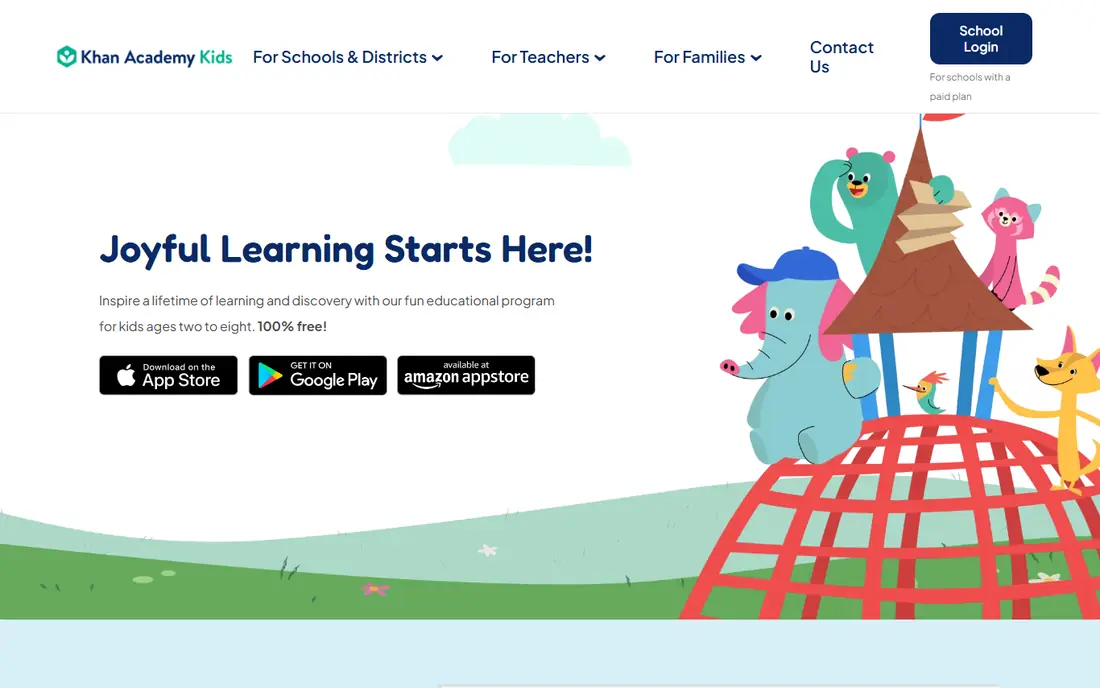
Khan Academy Kids is the easiest recommendation in this list for younger children. It is free, with no ads, no paywalls, and no subscriptions, and it covers early math alongside reading and social emotional learning. The interface suits ages 2 to 8, with characters and activities that keep short sessions engaging without aggressive game rewards.
The limit is age range. By around second grade, children will need a broader math app such as Zearn or Prodigy. For preschool and kindergarten, and for first grade practice, Khan Academy Kids is our first pick, and it pairs well with a parent checking progress in the app.
- Completely free with no ads
- Covers early math plus reading and social skills
- Simple interface for young children
- Ends around second grade
- Older children will outgrow it
Zearn is the best free structured option for elementary and middle school math. Its core curriculum is free for families, with lessons that build step by step rather than jumping between unrelated games. That structure helps parents see what a child has learned and what still needs work.
Children who need game motivation may find Zearn quieter than Prodigy or SplashLearn. It still uses interactive lessons and feedback, but the focus stays on teaching rather than rewards. Choose Zearn when you want a curriculum you can follow at home without paying, and pair it with a game app if motivation dips.
- Free core curriculum for families
- Structured lessons that follow school math
- Progress tracking for parents and teachers
- Less game driven than Prodigy
- Some school features sit behind school accounts
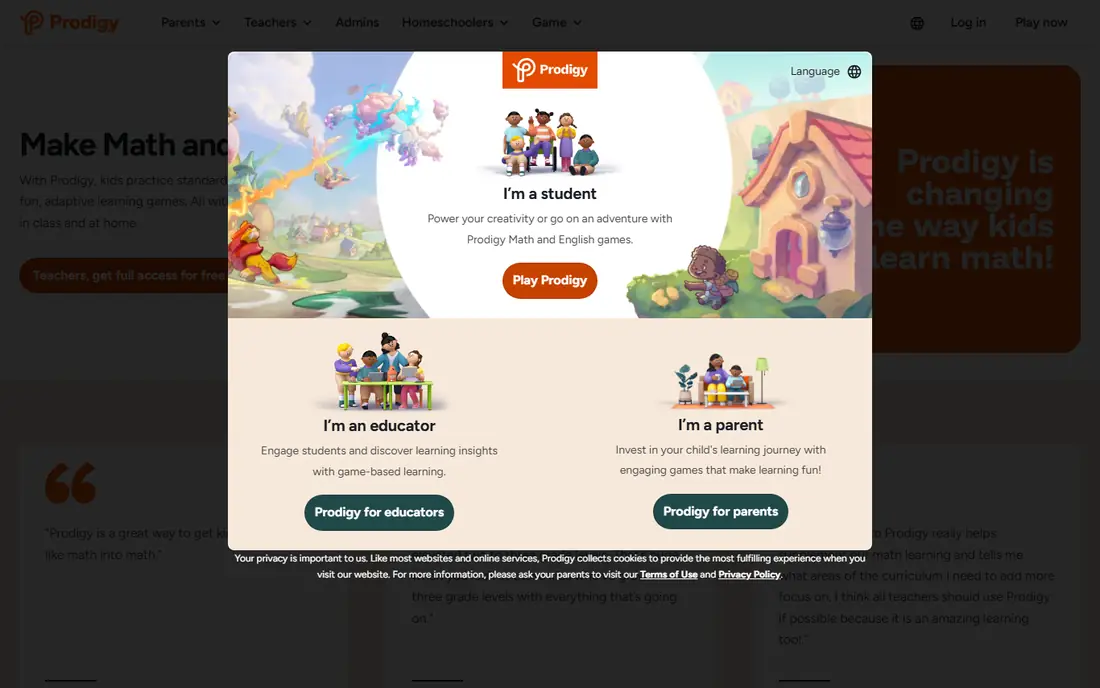
Prodigy turns math practice into a fantasy adventure where answering questions powers game progress. The key fact for parents is that all of its math questions are free, covering grades 1 to 8, while the paid membership adds game extras such as pets and gear. That split means learning does not require paying, even if a child wants the extras.
The game layer is also the risk. Some children focus on the game more than the math, and the membership upsell can create pressure at home. Set expectations before downloading, and use the parent dashboard to track math progress rather than game progress. For a reluctant practicer, Prodigy is often the app that gets practice done.
- All math questions free
- Fantasy adventure game keeps practice engaging
- Adapts to grade level
- Paid membership adds game pets and rewards that children may ask for
- Game can distract from math for some children
IXL Math is the precision tool in this list. It covers a huge range of skills, so a parent or teacher can target exactly the skill a child missed, from counting to algebra. Progress reports show which skills are mastered and which need more work, which helps with homework and tutoring.
The format is closer to school practice than to a game, so children who need game motivation may prefer Prodigy or SplashLearn. Full use also requires a paid membership, with only limited free questions per day. Choose IXL when you need to fix a specific gap and want clear reporting on it.
- Very broad skill coverage from pre-kindergarten to grade 12
- Precise practice for a weak skill
- Detailed progress reports
- Paid plan needed for full use
- Practice format can feel like schoolwork to game loving children
SplashLearn covers preschool through grade 5 with game based lessons that span counting, addition, fractions, and more. Its colorful games suit younger elementary children, and teacher tools make it a common classroom companion. Parents can follow progress and see which topics a child has practiced.
Full home access requires a paid plan, and free school linked access depends on the school. Trial it with your child before subscribing, and check whether your school already offers access. Pick SplashLearn when a younger child needs engaging practice across many elementary topics.
- Game based lessons across elementary topics
- Teacher tools for classroom use
- Colorful and engaging for younger children
- Paid plan needed for full home use
- Some school linked access varies by school
DreamBox Math is built around adaptive teaching rather than drill alone. Its lessons adjust as a child works, offering visual models and hints that build understanding of why an answer works. That approach suits children who can get answers by guessing in a game but still need the concept underneath.
Home use requires a paid subscription, though school access may be available through a child's school. The experience is calmer than a fantasy game, which some children prefer and others find slow. Choose DreamBox when understanding and steady progress matter more than game rewards.
- Adaptive lessons that adjust to each child
- Focus on understanding, not just answers
- Good progress insight for parents
- Paid home subscription needed
- Less game driven than Prodigy
Moose Math, from Duck Duck Moose, offers free mini-games for young children learning to count, add, subtract, and sort. Each game is short, the interface is simple, and parents can track progress. It suits ages 3 to 7 as a first math game, especially alongside Khan Academy Kids.
The range is narrow by design. Once a child moves past early addition and subtraction, Moose Math no longer stretches them. Use it as a gentle starter app for preschool and early elementary children, then move to Zearn, Prodigy, or SplashLearn as skills grow.
- Free early math games
- Simple mini-games for counting and addition
- Progress tracking for parents
- Limited to early math
- Older children will outgrow it quickly
DoodleMath is built around a short daily routine. It gives each child personalized practice in brief sessions, which suits families that want math practice to fit into a morning routine without a long game session. The parent dashboard shows progress and helps keep the habit on track.
Free access is limited, and fuller content needs a premium subscription. Check the current plan before committing, and trial the daily routine with your child for a week. Pick DoodleMath when a short, regular practice habit matters more than a long game session.
- Short daily practice tailored to the child
- Parent dashboard
- Covers kindergarten to grade 5 in the US version
- Limited free access
- Premium needed for fuller content
Mathseeds teaches early math through structured lessons with characters, songs, and interactive activities. It suits preschool and early elementary children who respond to a lesson path rather than open ended games. Parents can track progress and see which lessons a child has completed.
After the trial, full access requires a paid plan, often bundled with Reading Eggs. That bundle can be good value for families who want both, but it is a cost to weigh against free options such as Khan Academy Kids. Choose Mathseeds when a structured early lesson path fits your child better than free play style apps.
- Structured early math lessons
- Engaging characters and songs for young learners
- Parent progress tracking
- Paid plan needed after trial
- Best for early grades only
How we picked these
We compared official app pages, pricing pages, and app store listings for math apps available today to US families. We kept apps that cover a clear age range, offer a usable free tier or trial, and provide parent progress tracking or classroom alignment. We favored apps with no ads or with clear parental controls for younger children, and we noted where paid plans are needed for full use. Prices that change by school access or bundle are marked as See website rather than stated as a fixed home price.
How to choose by age and goal
Match the app to age first, then to goal. Ages 2 to 8 suit Khan Academy Kids, Moose Math, and Mathseeds. Grades 1 to 5 suit Zearn, Prodigy, SplashLearn, and DoodleMath. Grades 6 to 8 suit Zearn, Prodigy, DreamBox, and IXL. A child who needs motivation may do better with Prodigy or SplashLearn, while a child who needs a concept explained may do better with DreamBox or Zearn.
Set up parental controls before the first session
Turn off in app purchases or require approval for them, check whether the app includes ads or friend features, and set a daily time limit that fits your family routine. Review the privacy policy for data collection, and prefer apps with no ads for younger children. A five minute setup prevents most surprises later.
Keep sessions short and regular
Short, regular practice beats long, rare sessions for most children. Aim for a brief daily session, such as 10 to 20 minutes, and pair app time with real world math such as cooking measures or counting change. If a child resists, switch apps or take a break rather than pushing a longer session.
Frequently asked questions
What is the best math app for kids?
Khan Academy Kids is the best free pick for ages 2 to 8, while Zearn is the best free structured pick for kindergarten through grade 8. Prodigy suits children motivated by games, and DreamBox suits children who need adaptive teaching. The best app depends on age, motivation, and whether you want a game or a curriculum.
What is the best free math app for kids?
Khan Academy Kids is fully free with no ads for ages 2 to 8. Zearn offers a free core curriculum for kindergarten through grade 8, and Prodigy makes all of its math questions free, charging only for game extras. Moose Math is also free for early math games.
What is the best math app for kindergarten?
Khan Academy Kids and Moose Math are strong kindergarten picks because both are free, simple, and built for young children. Mathseeds also suits kindergarten with structured early lessons, though full access needs a paid plan after its trial. Check for ads and in app purchases before choosing for a young child.
Are math apps safe for kids?
Most apps on this list are designed for children, but safety still needs a parent check. Look for no ads, no chat or friend features, clear parental controls, and a privacy policy that limits data collection. Use device parental controls to block purchases, and supervise younger children during app time.
How much time should a child spend on a math app?
A short daily session of 10 to 20 minutes works well for most elementary children, paired with schoolwork and offline practice. Longer sessions can help older children preparing for a test, but regular short practice usually builds skills more reliably than occasional long sessions.
Sources we checked (9)

Online Jobs is an independent blog about careers, online work, learning new skills and the tools that help people earn. More about us.
Keep reading
All posts
Best Tools for Virtual Tutoring
Compare the best tools for virtual tutoring, from one-to-one tutor marketplaces to free self-paced learning, with pricing, subjects and honest limits.
Best Study Apps for Young Children
Compare the best study apps for young children in 2026, from Khan Academy Kids and ABCmouse to Reading Eggs, Starfall, Duolingo ABC and PBS Kids, with prices.

Best Study Apps for Kids
Looking for the best study apps for kids? We compare Khan Academy Kids, ABCmouse, Prodigy, IXL and more on age, safety, price and subjects for home learning.