Best low code platform in 2026: 8 options compared

How we put this together: we compare official feature and pricing pages, app store listings, privacy policies and public user reviews. Prices change, so check the provider's site before you pay.
Key takeaways
- OutSystems and Mendix suit enterprise teams building complex, multi-channel apps with governance and scale in mind.
- Microsoft Power Apps is the natural pick for companies already in Microsoft 365, since it links to Teams, SharePoint, and Dynamics 365.
- Retool suits developer teams building internal tools over existing databases and APIs.
- Bubble, Glide, and Softr suit founders and small teams shipping a working app without a large engineering team.
Quick comparison
| Name | Who it suits | Starting price | Free option | |
|---|---|---|---|---|
 OutSystems | enterprise full-stack apps | See website | Yes | Visit |
 Mendix | business and IT teams building together | See website | Yes | Visit |
 Microsoft Power Apps | companies already in Microsoft 365 | See website | Free trial | Visit |
 Appian | process automation and case work | See website | Free trial | Visit |
 Retool | internal tools for developer teams | See website | Free trial | Visit |
 Bubble | founders shipping web apps | See website | Yes | Visit |
 Glide | apps from spreadsheets | See website | Yes | Visit |
 Softr | portals and membership apps | See website | Yes | Visit |
The best low code platform
We compared platforms that let teams build working apps with visual tools plus code where needed, not website builders alone. The list mixes enterprise platforms for complex processes with simpler builders for internal tools and customer-facing apps.
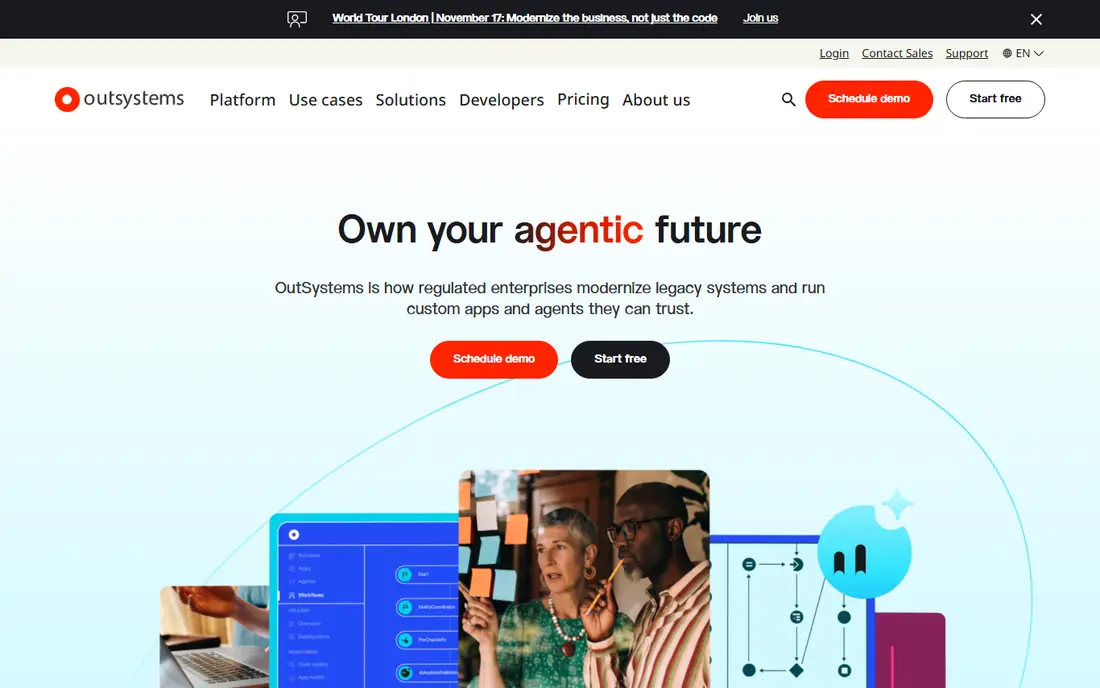
For schools that need an enterprise team building customer and internal apps at scale. its visual modelling, reusable components, and deployment tools support complex apps across web and mobile. We place it here because its core job matches that need closely, and its limits are clear rather than hidden behind a long feature list.
In day to day use, the sales-led pricing and enterprise scope can slow a small team, so it fits best when governance and scale matter from the start That trade is worth naming before you sign up, because it shapes how much admin time the tool saves and how much it adds to a busy week.
Before you commit, check the parts you will touch every week: how data is imported, who can change a record, and how support responds when something breaks. A short trial with real records and a real weekly task will tell you more than a demo with sample data.
- Visual development with code extension
- Web and mobile apps
- Governance and lifecycle tools
- Enterprise pricing and sales process
- Learning curve for new teams
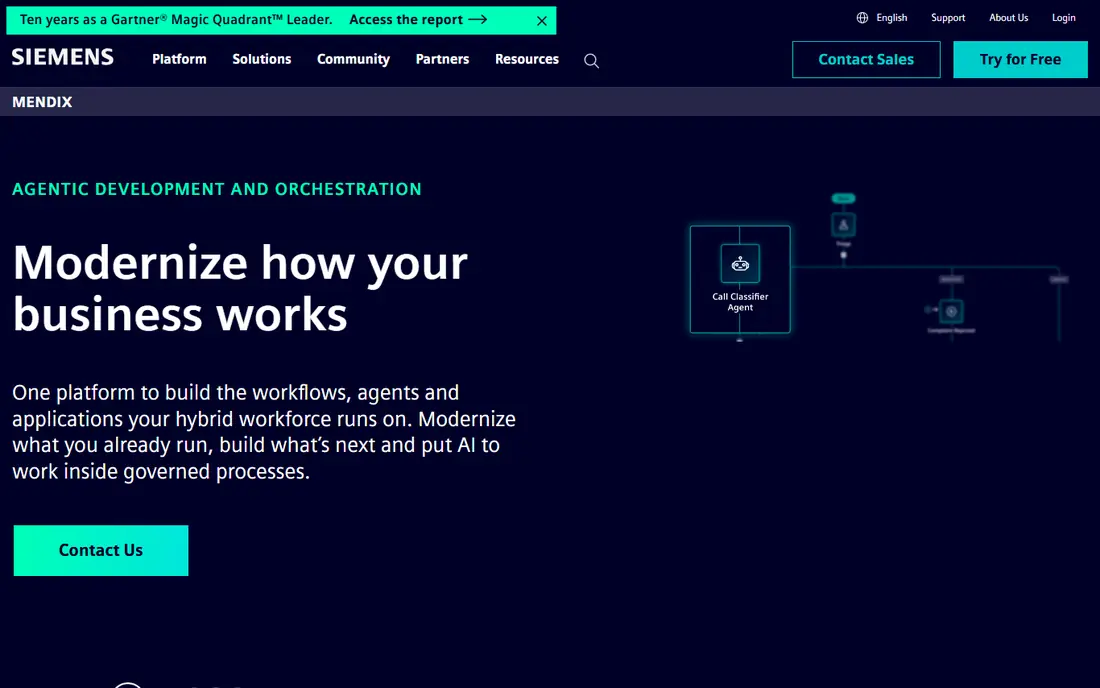
If your team wants a larger organisation where business and IT staff build apps together. its visual models, feedback loops, and deployment options help mixed teams ship apps and keep improving them after launch. We place it here because its core job matches that need closely, and its limits are clear rather than hidden behind a long feature list.
In day to day use, pricing sits at enterprise level, and complex logic still needs developers, so small teams should test the free tier first That trade is worth naming before you sign up, because it shapes how much admin time the tool saves and how much it adds to a busy week.
Before you commit, check the parts you will touch every week: how data is imported, who can change a record, and how support responds when something breaks. A short trial with real records and a real weekly task will tell you more than a demo with sample data.
- Visual modelling and reusable components
- Web, mobile, and desktop deployment
- Collaboration tools
- Enterprise pricing
- Complex apps still need technical skill
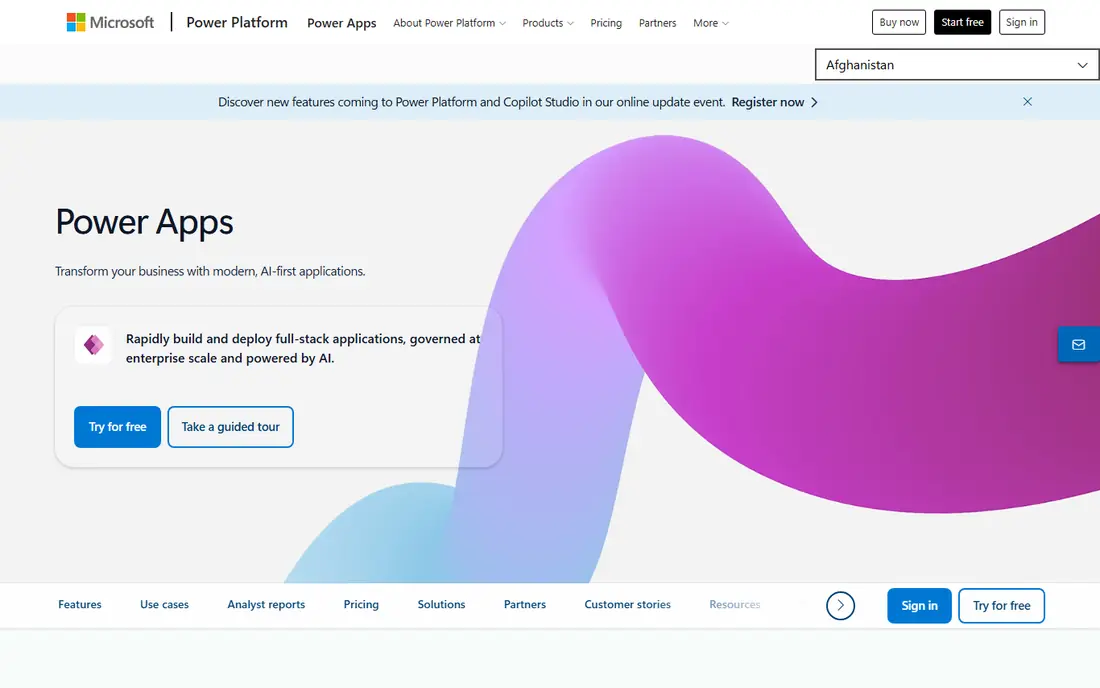
This option suits a company that already runs on Microsoft 365 and needs workflow apps fast. its canvas apps suit freeform forms and approvals, while model-driven apps suit structured data, and both sit inside the Microsoft ecosystem. We place it here because its core job matches that need closely, and its limits are clear rather than hidden behind a long feature list.
In day to day use, licensing can grow quickly with user numbers, and very custom apps may need code or a different platform That trade is worth naming before you sign up, because it shapes how much admin time the tool saves and how much it adds to a busy week.
Before you commit, check the parts you will touch every week: how data is imported, who can change a record, and how support responds when something breaks. A short trial with real records and a real weekly task will tell you more than a demo with sample data.
- Canvas and model-driven apps
- Links to Teams, SharePoint, and Dynamics 365
- AI Builder features
- Licensing adds up at scale
- Highly custom apps can hit limits
When the priority is an organisation with complex approval, case, and compliance workflows. its process designer, case tools, and automation suit work that moves through many roles, rules, and approvals. We place it here because its core job matches that need closely, and its limits are clear rather than hidden behind a long feature list.
In day to day use, teams that only need a simple form or dashboard will find it heavier and costlier than a simpler builder That trade is worth naming before you sign up, because it shapes how much admin time the tool saves and how much it adds to a busy week.
Before you commit, check the parts you will touch every week: how data is imported, who can change a record, and how support responds when something breaks. A short trial with real records and a real weekly task will tell you more than a demo with sample data.
- Process automation and case management
- Workflow design
- Data and document handling
- Enterprise pricing
- Best for process-heavy work, not simple apps
For teams that prefer a developer team building admin panels, dashboards, and internal tools. its components connect to PostgreSQL, MySQL, MongoDB, and REST APIs, and custom code extends the tool when built-ins fall short. We place it here because its core job matches that need closely, and its limits are clear rather than hidden behind a long feature list.
In day to day use, non-developers will find it harder than Bubble or Glide, and large teams should model per-user cost before committing That trade is worth naming before you sign up, because it shapes how much admin time the tool saves and how much it adds to a busy week.
Before you commit, check the parts you will touch every week: how data is imported, who can change a record, and how support responds when something breaks. A short trial with real records and a real weekly task will tell you more than a demo with sample data.
- Drag-and-drop components over databases and APIs
- JavaScript and SQL support
- Custom components
- Needs developer skill to get full value
- Per-user pricing grows with team size
If budget control matters most a founder building a marketplace, SaaS product, or customer portal without code. its visual editor and workflow tools let a small team ship a real web app with accounts, payments, and data. We place it here because its core job matches that need closely, and its limits are clear rather than hidden behind a long feature list.
In day to day use, mobile apps need extra work, and apps with heavy data loads need careful design to keep performance steady That trade is worth naming before you sign up, because it shapes how much admin time the tool saves and how much it adds to a busy week.
Before you commit, check the parts you will touch every week: how data is imported, who can change a record, and how support responds when something breaks. A short trial with real records and a real weekly task will tell you more than a demo with sample data.
- Visual editor for data-driven web apps
- Workflows and user accounts
- Plugin ecosystem
- Web apps first, with mobile via wrappers
- Performance needs care at scale
This pick works well for a small team that wants a working app from existing spreadsheet data. its spreadsheet-first approach turns rows into a usable app quickly, which suits inventories, directories, and field tools. We place it here because its core job matches that need closely, and its limits are clear rather than hidden behind a long feature list.
In day to day use, apps that need complex workflows or custom logic will hit limits sooner than on Bubble or Retool That trade is worth naming before you sign up, because it shapes how much admin time the tool saves and how much it adds to a busy week.
Before you commit, check the parts you will touch every week: how data is imported, who can change a record, and how support responds when something breaks. A short trial with real records and a real weekly task will tell you more than a demo with sample data.
- Builds apps from spreadsheet data
- Templates for business apps
- Simple publishing
- Best for data-driven apps, not complex custom logic
- Paid plans for larger use
For a setup where a team building a client portal or membership site from Airtable data. its templates and permission controls turn Airtable bases into portals, directories, and internal tools without code. We place it here because its core job matches that need closely, and its limits are clear rather than hidden behind a long feature list.
In day to day use, teams that do not use Airtable or Sheets will need to move data first, and complex apps need a fuller platform That trade is worth naming before you sign up, because it shapes how much admin time the tool saves and how much it adds to a busy week.
Before you commit, check the parts you will touch every week: how data is imported, who can change a record, and how support responds when something breaks. A short trial with real records and a real weekly task will tell you more than a demo with sample data.
- Portals and internal tools from Airtable or Google Sheets
- Membership and permissions
- Templates
- Depends on Airtable or Sheets for data
- Custom logic is limited
How we picked these
We compared official feature pages, pricing pages, app store listings, privacy pages, and public user reviews for each option in this guide. We checked that each product is live, that its stated purpose matches the topic of the article, and that its pricing or free tier could be stated plainly or marked as See website where the vendor does not publish a price. We did not claim hands-on testing. Where vendors describe a feature in different words, we used the plain meaning of that feature and left out claims we could not tie to a vendor page or a widely reported public review.
How to pick without buying too much platform
Start with who will build and maintain the app, since that choice narrows the list fast. If developers build internal tools, Retool is a strong fit. If business users build workflow apps inside Microsoft 365, Power Apps is the natural route. If founders ship a customer product, Bubble, Glide, or Softr will move faster. For enterprise processes with approvals and compliance, OutSystems, Mendix, or Appian deserve a proper trial with real data and real users. Test data permissions, audit trails, and export early, because a platform that locks data in is costly to leave. Model total cost at your real user count, including any per-user, per-app, or platform fees, and check how the platform handles testing, versioning, and rollbacks. Build one real app in a trial, not a demo, and judge it on how long that app takes to change after launch.
Frequently asked questions
What is the best low code platform for enterprise teams?
OutSystems and Mendix are the strongest enterprise picks, with Appian leading for process-heavy case work. All three offer governance, lifecycle tools, and scale, but pricing is sales-led. Run a trial with a real process before signing.
What is the best low code app platform for small teams?
Bubble suits founders building web apps, Glide suits teams starting from spreadsheets, and Softr suits portals built on Airtable. Retool suits developer-led teams building internal tools. Pick based on who builds and where your data already lives.
What is the best low code platform for Microsoft 365 users?
Microsoft Power Apps is the clear pick for Microsoft 365 users, since it links to Teams, SharePoint, Dynamics 365, and Azure. It covers canvas apps for freeform work and model-driven apps for structured data. Check licensing at your user count before rollout.
Is there a free low code platform to start with?
OutSystems, Mendix, Bubble, Glide, and Softr all offer free tiers or free trials, though limits vary. Free tiers suit learning and small prototypes, while production apps usually need a paid plan for users, data, or custom domains. Test with real data before paying.
Do low code platforms replace developers?
No, they change where developer time goes. Visual tools speed up common screens, forms, and workflows, but complex logic, integrations, security, and performance still need technical skill. The best results come when business users and developers share one platform and one set of standards.
Sources we checked (8)

Online Jobs is an independent blog about careers, online work, learning new skills and the tools that help people earn. More about us.
Keep reading
All posts
Best Software Development Practices
Best software development practices in 2026: we compare 8 tools that help teams write, review, test and ship code with more care, with current pricing.

n8n Alternatives
n8n alternatives compared for 2026, with Zapier, Make, Activepieces, and more, covering visual builders, code steps, self-hosting, and pricing models.

eBay Alternatives
Looking for ebay alternatives? We compared 9 marketplaces for sellers on fees, buyer reach, categories and ease of listing, to help you sell with confidence.