Best Language App for Kids in 2026: 9 Apps Compared

Game-like lessons · Starting price: See website
How we put this together: we compare official feature and pricing pages, app store listings, privacy policies and public user reviews. Prices change, so check the provider's site before you pay.
Key takeaways
- The best kids language apps use short lessons, games, and speaking practice that fit a child's attention span, not long adult lessons.
- Parents should check privacy policies, parental controls, ad settings, and whether chat or social features are off by default.
- The best rated kids language app for your child depends on age, target language, and whether you want a parent dashboard.
- Language apps work best alongside books, conversation, and real-world practice, not as a sole teacher.
Quick comparison
| Name | Who it suits | Starting price | Free option | |
|---|---|---|---|---|
| Duolingo ABC and Duolingo Kids | Game-like lessons | See website | Yes | Visit |
 Lingokids | Young learners | See website | Yes | Visit |
 Gus on the Go | Early language exposure | See website | No | Visit |
 Studycat | Playful language games | See website | No | Visit |
 Mondly Kids | Multiple languages | See website | No | Visit |
 Rosetta Stone for Kids | Immersion-style learning | See website | No | Visit |
 Little Pim | Video-based early learning | See website | No | Visit |
 DinoLingo | Video and game lessons | See website | No | Visit |
 ABCmouse Language | Preschool learning mix | See website | No | Visit |
The best language app for kids
Children learn a language best when lessons are short, playful, and repeated often. The best language app for kids therefore differs from adult apps: it needs clear speech, simple words, games, and rewards that keep a child engaged without long reading tasks. Parents also need controls for time, content, and privacy.
We compared official app pages, store listings, and privacy and parent guidance for the apps below. We did not claim hands-on testing. Check the privacy policy, age guidance, and parental controls for each app before you let a child use it, and keep chat or social features off unless you have reviewed them.
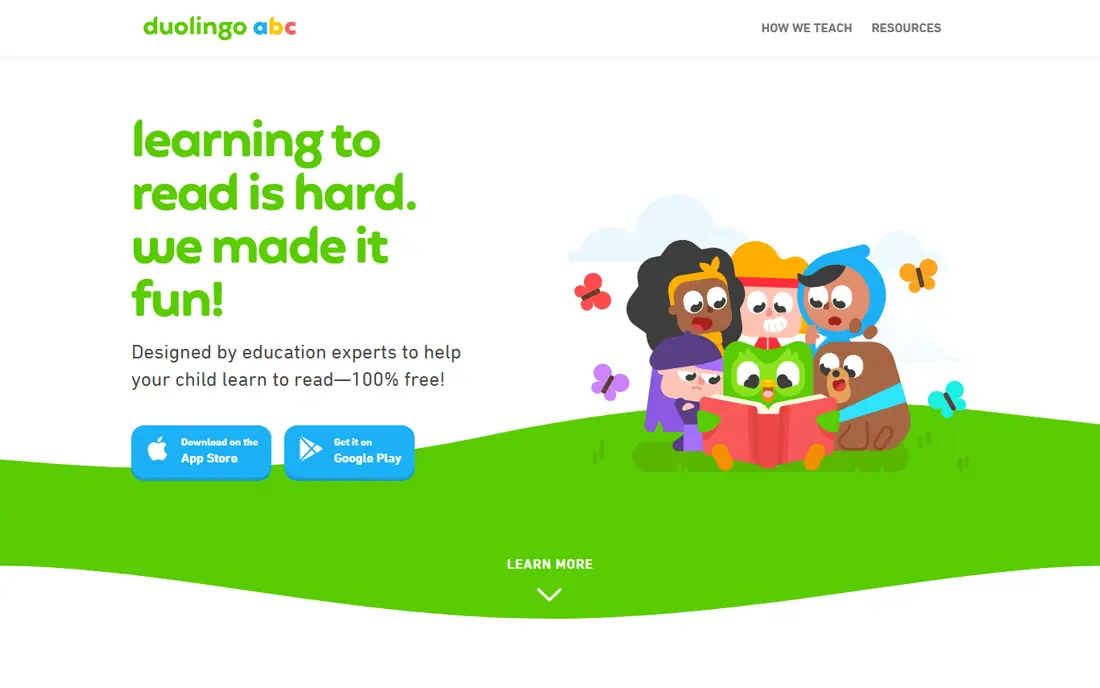
Duolingo ABC focuses on early reading, while Duolingo Kids paths offer language learning in a game-like format. Short lessons, stars, and characters help young learners stay engaged for a few minutes at a time. Parents can use it as a daily habit rather than a long study session.
Check which product and language you are using, because Duolingo ABC and the main Duolingo app serve different ages and goals. Use the kids product for young children, review parent settings, and keep sessions short. For older children, the main Duolingo app may suit better with parent supervision.
- Familiar game-like lessons
- Short activities
- Useful for early reading and language exposure
- Language options for kids vary by product
- Adult Duolingo is not designed for young children
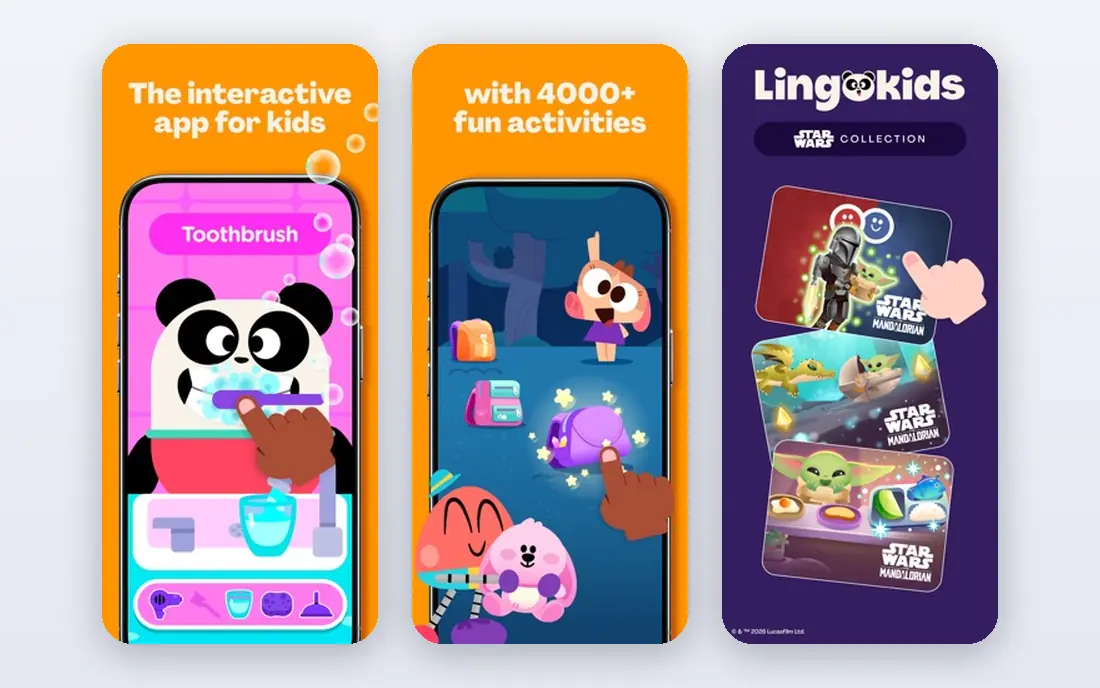
Lingokids is built for young learners, with songs, games, and activities that teach vocabulary through play. That format suits preschool and early primary children who learn best by hearing, repeating, and playing. A parent dashboard can help you track activity and set limits.
Language depth varies, so check whether your target language has enough lessons for your goals. Lingokids works well as a fun first step, especially when paired with books and spoken practice at home. Review privacy settings and ad options before first use.
- Play-based lessons for young children
- Songs and games
- Parent dashboard options
- Content depth varies by language
- Some features need a paid plan
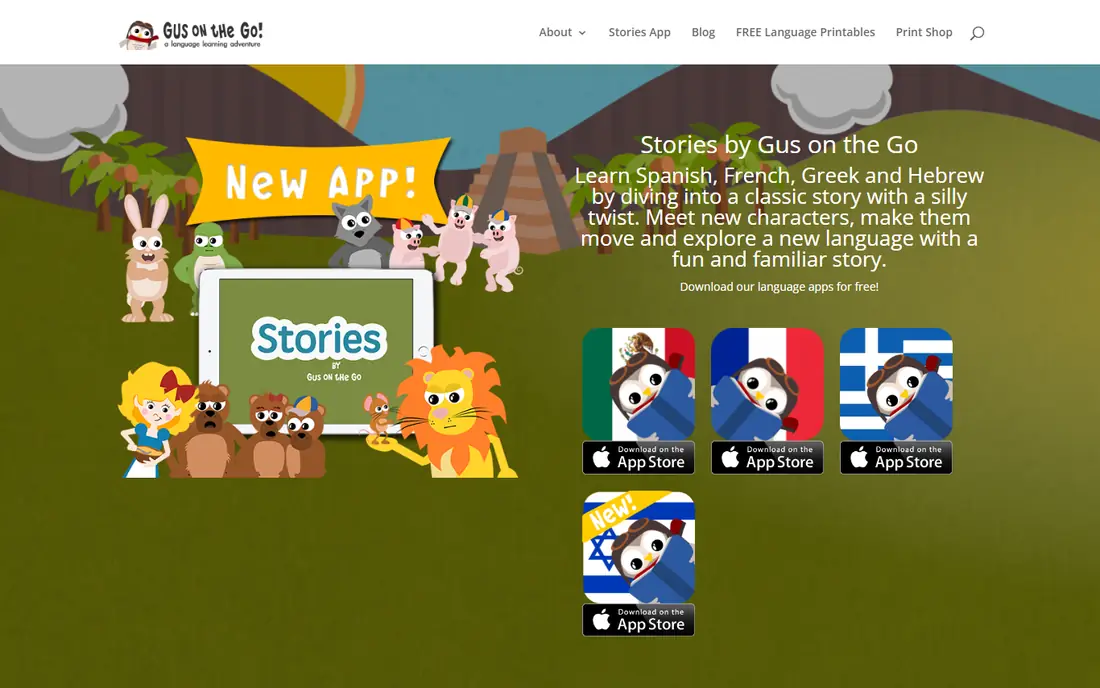
Gus on the Go offers simple, game-based vocabulary lessons for young children. A friendly character guides children through words for animals, food, colors, and everyday topics, with clear audio to repeat. That simplicity helps toddlers and preschoolers build first words.
Older children may outgrow it quickly, because it focuses on early vocabulary rather than sentences and grammar. Use it as an introduction, then move to a deeper app when your child is ready for phrases and conversation practice.
- Simple vocabulary games for young children
- Clear audio
- Useful for early exposure to a new language
- Limited depth for older children
- Fewer languages than large platforms
Studycat, formerly Fun Spanish and related apps, offers playful language games for children in several languages. Lessons use games, songs, and speaking practice to teach words and phrases. That game focus helps children who lose interest in text-heavy lessons.
Check current language coverage and plan details, because Studycat products vary by language. Studycat suits primary-age children who enjoy games and want to learn Spanish, French, Chinese, or other offered languages. Pair it with spoken practice at home for best results.
- Game-based lessons across several languages
- Clear pronunciation practice
- Fun characters for children
- Pricing and language coverage vary
- Progress tracking depends on plan
Mondly Kids offers language lessons for children across many languages, with colorful visuals and interactive activities. Families that want Spanish, French, German, or a less common language may find a wider choice here than in a kids-only app with few languages.
Depth varies by language, so test the target language before you commit to a longer plan. Review parent settings, session time, and privacy options. Mondly Kids works well when a child already shows interest in a language and wants regular, short lessons.
- Wide language choice
- Colorful lessons for children
- Useful for families learning different languages
- Depth varies by language
- Parent controls should be reviewed for each child profile
Rosetta Stone uses an immersion approach, teaching words through images and speech rather than translation. That method can help children build listening and speaking skills without relying on their first language for every word. Its structured lessons suit children who can focus for longer sessions.
Younger children may prefer a more game-like app such as Lingokids or Studycat. Rosetta Stone for Kids is a better fit for older primary children who are ready for structured lessons. Check age guidance and language options on the official site before you buy.
- Immersion approach with images and speech
- Long track record in language learning
- Structured lessons
- Less game-like than some kids apps
- May suit older children better than preschoolers
Little Pim uses short videos to teach early vocabulary to toddlers and preschoolers. A panda character and native-speaker audio introduce words for everyday topics in a calm, repeatable format. Parents often use it for screen time that has a clear learning goal.
It is less interactive than game-based apps, so children who want to tap, play, and earn rewards may prefer another option. Use Little Pim for early exposure, and add a game app later when your child wants more interaction and phrases.
- Short videos for early vocabulary
- Clear native-speaker audio
- Useful for toddlers and preschoolers
- Limited interactivity compared with game apps
- Depth is mainly early vocabulary
DinoLingo combines videos, games, songs, and printable worksheets for children learning a new language. That mix suits families that want a home routine beyond an app alone, with offline activities to reinforce words. Language choice is broad compared with many kids apps.
Check the depth for your target language, because coverage varies. Review parent controls, time limits, and privacy settings before a child uses it alone. DinoLingo works well when a parent sets a short daily routine and reviews progress together with the child.
- Video, game, and worksheet mix
- Wide language choice
- Useful for home learning routines
- Interface and content depth vary by language
- Parent review of settings is important
ABCmouse is a broad early learning program, not a specialist language app, but it includes language and literacy activities within a structured preschool path. Children who already use ABCmouse for reading and math may enjoy its language activities as part of a wider routine.
If your main goal is a second language, a specialist app such as Studycat, Mondly Kids, or DinoLingo may offer deeper language content. ABCmouse suits families that want one early learning subscription covering several subjects, with language as one part of that mix.
- Broad preschool curriculum with language activities
- Structured learning path
- Parent progress tracking
- Language learning is part of a broader curriculum, not a specialist language app
- Pricing is subscription-based
How we picked these
We looked for apps that are clearly designed for children, actively offered, and described on official pages or store listings with age guidance. We included game apps, video apps, and immersion options, and we favored apps with parent dashboards or clear parent guidance where offered.
We left out adult language apps without a kids product, apps whose official page did not clearly match the product, and apps without clear age or privacy information. A high rating alone does not make an app right for your child. Check language coverage, age fit, and privacy controls for your family.
What to check before you choose
Start with age and language. A preschooler needs short, visual lessons, while an older primary child can handle phrases and simple sentences. Check that your target language has enough lessons, not just a landing page mention. Test a free trial or free tier with your child for a week before you pay for a year.
Check privacy and parental controls carefully. Read the privacy policy for data collection, ads, and third-party sharing. Turn off chat, social features, and in-app purchases where possible, and use a child profile if the app offers one. Set a daily time limit, keep the device in a shared room for young children, and review what your child can tap, share, or buy.
Support learning beyond the app. Read books in the target language, label household items, sing songs, and practice simple phrases together. A language app works best as a daily habit of 10 to 20 minutes, plus real conversation. If your child loses interest, try a different format, such as video or games, rather than forcing longer sessions.
A simple routine that works
Pick one app, set a short daily time, and sit with your child for the first few sessions. Praise effort, repeat words together, and use new words in daily life. Review progress weekly, adjust the time limit if needed, and change apps only if the current one no longer fits your child's age or language goal.
Frequently asked questions
What is the best kids language app for Spanish?
Studycat, Lingokids, and Mondly Kids are strong starting points for Spanish, depending on age. Studycat suits game-loving primary children, Lingokids suits younger learners, and Mondly Kids suits families that want a wider language choice. Test the Spanish lessons before you commit.
What are the best kids language apps for preschoolers?
Lingokids, Gus on the Go, and Little Pim suit preschoolers because they use short, visual, and playful lessons. Keep sessions short, sit with your child at first, and check privacy and parental controls before use.
What is the best rated kids language app for older primary children?
For older primary children, Duolingo Kids paths, Studycat, and Rosetta Stone for Kids are worth comparing. Game-like apps suit children who need motivation, while Rosetta Stone suits children ready for structured, immersion-style lessons.
What are the best language app for kids options for French?
Mondly Kids, Studycat, and DinoLingo offer French lessons for children, though depth varies. Check the French lesson count, test a trial, and pair app lessons with French books and songs at home.
How much screen time should a language app take?
Short daily sessions of 10 to 20 minutes work well for most children, with breaks and offline practice. Follow your pediatric guidance for total screen time, keep devices in shared spaces for young children, and adjust based on your child's age and attention.
Are language apps safe for kids?
Safety depends on the app settings and supervision. Choose apps with clear privacy policies, turn off chat and social features, use child profiles where offered, and review purchases and ads settings. Sit with young children during early sessions and check activity regularly.
Sources we checked (9)

Online Jobs is an independent blog about careers, online work, learning new skills and the tools that help people earn. More about us.
Keep reading
All posts
Best Vocabulary Apps
We compare 8 vocabulary apps in 2026, free and paid, for English learners, students, and test prep, with honest notes on what each one does best for daily use.

Best Udemy Alternatives
Explore the best Udemy alternatives for 2026, including Coursera, Skillshare, and LinkedIn Learning, with pricing, certificates, and who each platform suits.
Best Tools for Virtual Tutoring
Compare the best tools for virtual tutoring, from one-to-one tutor marketplaces to free self-paced learning, with pricing, subjects and honest limits.