Best Japanese Learning Apps in 2026: 8 Apps Compared

How we put this together: we compare official feature and pricing pages, app store listings, privacy policies and public user reviews. Prices change, so check the provider's site before you pay.
Key takeaways
- No single app covers Japanese fully, so most learners pair a course app with a kanji or grammar tool.
- Duolingo builds a daily habit for free, while Bunpro and WaniKani add structured grammar and kanji study.
- italki and HelloTalk add real conversation, which self-study apps cannot replace.
- Free tiers are genuinely useful here, especially Duolingo, Anki and Renshuu.
- Check whether an app teaches kana and kanji early, since apps that stay in romaji hold beginners back.
Quick comparison
| Name | Who it suits | Starting price | Free option | |
|---|---|---|---|---|
 Duolingo | Daily habit building | Free | Yes | Visit |
 LingoDeer | Structured grammar courses | See website | Yes | Visit |
 Bunpro | JLPT grammar study | $5 per month | Free trial | Visit |
 WaniKani | Kanji mastery | $9 per month | Yes | Visit |
 Anki | Vocabulary flashcards | Free | Yes | Visit |
 Pimsleur | Audio speaking practice | See website | Free trial | Visit |
 italki | Live tutor lessons | See website | No | Visit |
 HelloTalk | Language exchange | Free | Yes | Visit |
The best Japanese learning apps
Japanese needs several skills at once: two kana scripts, kanji, grammar, vocabulary and speaking. Different apps handle different pieces, so this list covers each skill rather than pretending one app does everything.
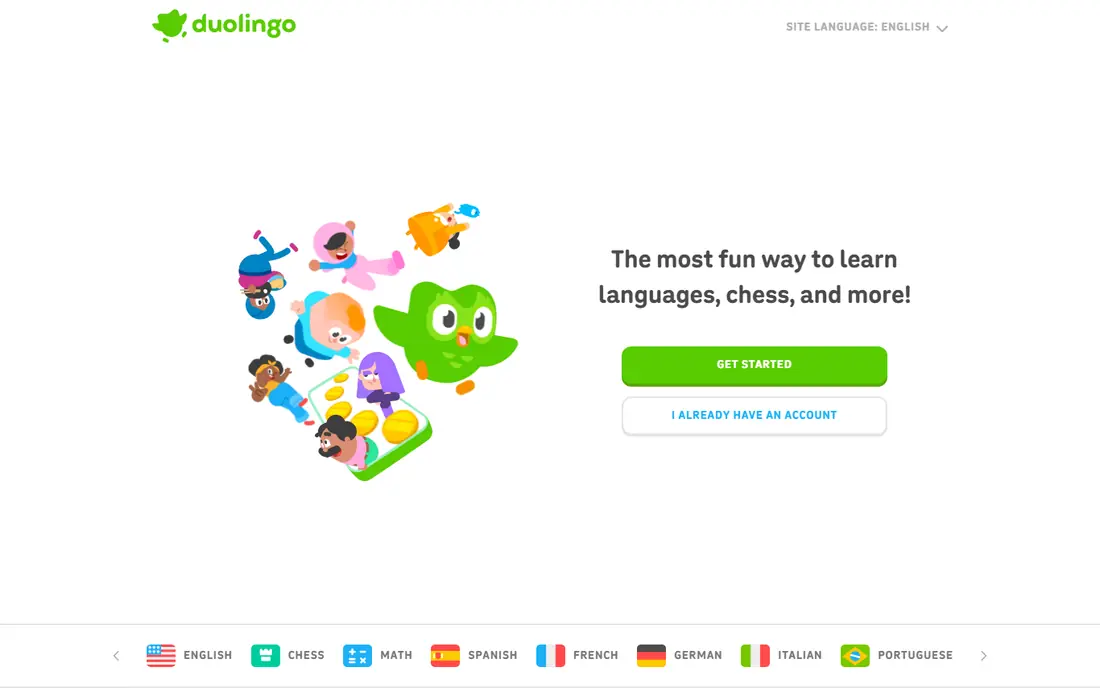
Duolingo is the easiest place to start Japanese and keep going. Lessons are short, streaks and points keep the habit alive, and the full course is available free with ads. It covers vocabulary, basic grammar and kana, with character practice tools for hiragana, katakana and early kanji.
Speaking is the weak point. Lessons lean toward recognition, picking answers rather than producing sentences aloud, and there is no tutor to correct pronunciation. Super Duolingo, at $12.99 per month, removes ads and adds offline access and unlimited energy. Use Duolingo to build the habit, then add a grammar or conversation tool.
- Full Japanese course available free
- Bite-size lessons
- Kana and character practice
- Ads in the free tier
- Limited speaking practice
- Better as a supplement than a sole method

LingoDeer suits learners who want grammar explained, not just drilled. Each lesson pairs sentences with grammar notes, native audio and review drills, and the path moves steadily from kana through beginner and intermediate material. That structure helps learners who felt lost in a purely gamified app.
The first lessons are free, but most of the course needs a subscription, and advanced learners may outgrow it. It pairs well with Bunpro for grammar review and WaniKani for kanji, covering the structured-course role in a small app stack.
- Clear grammar notes
- Native audio
- Structured path through beginner levels
- Some content needs a paid plan
- Less depth at advanced levels
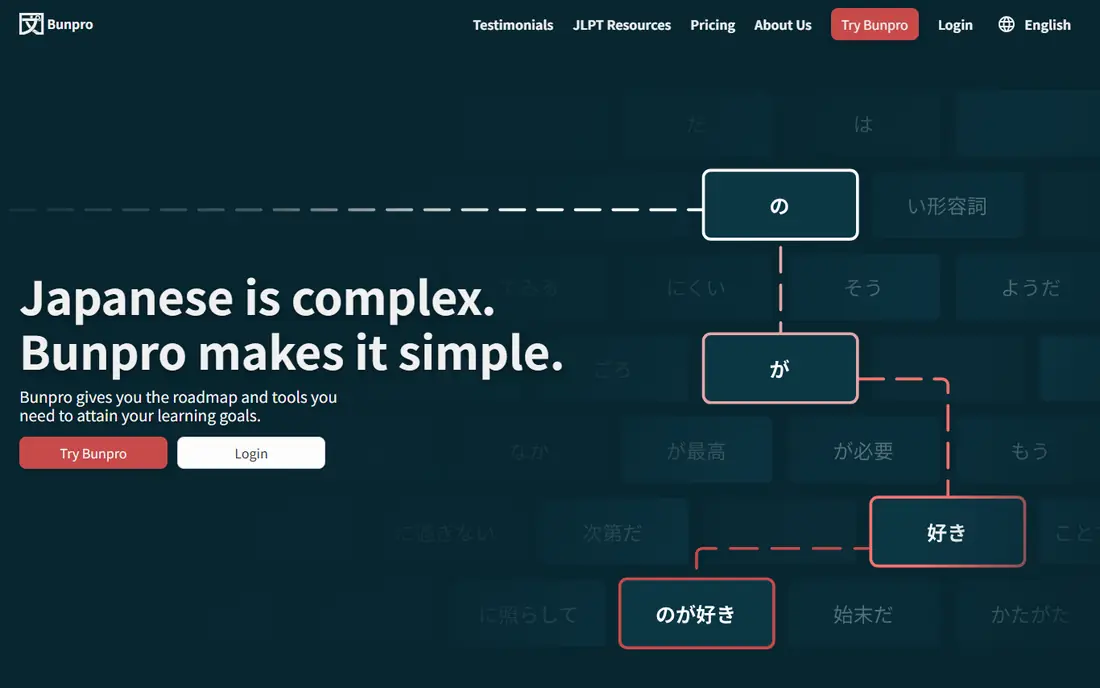
Bunpro is the grammar specialist. It organizes grammar points from the easiest JLPT level through the hardest, with example sentences and spaced repetition reviews that bring each point back before you forget it. Learners preparing for the JLPT, or those who finished a beginner course and want structure, get the most from it.
It teaches grammar, not vocabulary or kanji, so it works best beside another app. At around $5 per month, it is also one of the cheapest paid tools here. If grammar is your weak point, Bunpro is the first paid app to try.
- Grammar from beginner to advanced levels
- Spaced repetition
- Example sentences
- Grammar focus only
- Needs vocabulary study alongside
WaniKani takes the hardest part of Japanese, kanji, and turns it into a clear path. It teaches radicals first, then kanji built from them, then vocabulary using those kanji, with mnemonics to make each character stick. Spaced repetition schedules reviews so characters return at the right time.
The first levels are free, then a subscription of $9 per month applies, with yearly and lifetime options. Vocabulary follows WaniKani order rather than your own needs, which can frustrate learners who want specific words early. For systematic kanji progress, though, it has few rivals.
- Level-by-level kanji path
- Mnemonics for radicals and kanji
- Spaced repetition
- Subscription needed beyond early levels
- Vocabulary is tied to its own order
Anki is a flashcard program, not a course, and that is its strength. Spaced repetition shows each card just before you would forget it, which makes vocabulary stick far better than rereading lists. Shared decks cover Japanese vocabulary, kanji and sentences, and you can build your own from words you meet in reading.
The interface is plain and setup takes some effort, especially choosing a good deck. The iOS app costs $25 as a one-time purchase, while desktop and Android are free. Learners who stick with Anki usually call it the most effective tool in their stack, even if it is the least pretty.
- Free on desktop and Android
- Proven spaced repetition
- Huge shared decks
- Plain interface
- IOS app is paid
- Setup takes effort
Pimsleur is the pick for learners who study while driving, walking or doing chores. Audio lessons use listen-and-repeat dialogues with spaced recall, building speaking and listening without a screen. Pronunciation habits form early, since you speak from the first lesson.
It costs more than most apps here, with monthly pricing around $20 per month in published checks, and it covers less reading and writing. Pair it with a kana and kanji app if literacy matters to you. For speaking confidence, it remains a strong choice.
- Screen-free audio lessons
- Listen-and-repeat format
- Good pronunciation habits
- Higher monthly price
- Less reading and writing practice
italki connects learners with native Japanese tutors for one-on-one video lessons. You pick a tutor by price, availability and focus, from conversation practice to JLPT preparation, and you pay per lesson rather than subscribing. Trial lessons start from a few dollars in published listings.
That flexibility means costs depend on how often you book. A weekly lesson adds up over months, though many learners find one live session per week transforms their speaking faster than months of app drills. If speaking is your goal, budget for italki alongside a free course app.
- One-on-one lessons with native tutors
- Flexible scheduling
- Lessons tailored to your level
- Pay per lesson, so costs vary
- No free tier for lessons
HelloTalk is a language exchange app where you chat with native Japanese speakers who want to learn your language. Built-in tools correct messages, translate words and support voice calls, so conversations stay useful even at beginner level. The free tier covers the core exchange features.
Partner quality varies, and finding a regular partner takes patience. It works best once you can hold a basic conversation, so beginners may prefer italki first. As a free way to practice real Japanese with real people, though, HelloTalk is hard to beat.
- Chat with native speakers
- Built-in corrections and translation
- Free to start
- Quality of partners varies
- Exchange takes patience and time
How we picked these
We compared official feature pages, pricing pages and app store listings for Japanese learning apps available now. We kept apps that teach a clear piece of Japanese, from kana and grammar to kanji, speaking and conversation, and we favored tools with a real free tier or trial. Prices shown come from vendor or app store listings where confirmed, and we wrote See website where pricing varies by plan or region.
How to build your Japanese app stack
Start with a habit app, add one specialist, and add conversation when you are ready. Duolingo or LingoDeer can carry the first weeks, then Bunpro or WaniKani fills the grammar or kanji gap that appears. Trying five apps at once usually ends in none of them being used.
Learn kana first
Hiragana and katakana come before kanji, and most apps here teach them early. Avoid apps that keep you in romaji, the Latin alphabet, for long, since reading real Japanese needs kana from the start. Duolingo, LingoDeer and WaniKani all move you into Japanese script quickly.
Add speaking early
Reading skill grows faster than speaking for most self-study learners, and the gap widens over time. Book a tutor session or start a language exchange once you can introduce yourself and ask simple questions. Even a short weekly conversation keeps speaking from falling behind.
Review beats new lessons
Spaced repetition tools such as Anki, Bunpro and WaniKani work only if you clear reviews daily. A short daily review habit matters more than finishing new lessons quickly. If reviews pile up, pause new lessons until the backlog clears.
Frequently asked questions
What is the best app for learning Japanese?
Duolingo is the best starting app for most beginners, thanks to its free course and daily habit design. LingoDeer suits learners who want more grammar structure, while Bunpro and WaniKani are the best specialist tools for grammar and kanji. Most learners combine two or three apps.
What is the best free app to learn Japanese?
Duolingo offers a full Japanese course free with ads, and Anki is free on desktop and Android for vocabulary. Renshuu also offers a free tier for kanji, vocabulary and grammar quizzes. A free stack of Duolingo plus Anki covers a surprising amount before you need to pay.
How long does it take to learn Japanese with an app?
Basic conversation takes months of regular study for most learners, while reading everyday Japanese takes longer because of kanji. Daily practice of 20 to 30 minutes beats occasional long sessions. Apps build a foundation, but conversation practice speeds progress more than any single app.
Is Duolingo good for Japanese?
Duolingo is good for building a habit and learning basic vocabulary, kana and grammar. It is weaker for speaking and advanced grammar, so treat it as a starting app and add Bunpro, WaniKani or a tutor when you reach intermediate level.
Do I need to learn kanji to speak Japanese?
No, speaking does not need kanji, and Pimsleur builds speaking without written study. Reading Japanese does need kanji, though, so learners who want to read menus, signs and books should start WaniKani or Anki early alongside speaking practice.
Sources we checked (8)

Online Jobs is an independent blog about careers, online work, learning new skills and the tools that help people earn. More about us.
Keep reading
All posts
Best Vocabulary Apps
We compare 8 vocabulary apps in 2026, free and paid, for English learners, students, and test prep, with honest notes on what each one does best for daily use.

Best Udemy Alternatives
Explore the best Udemy alternatives for 2026, including Coursera, Skillshare, and LinkedIn Learning, with pricing, certificates, and who each platform suits.

Best Tools for Virtual Tutoring
Compare the best tools for virtual tutoring, from one-to-one tutor marketplaces to free self-paced learning, with pricing, subjects and honest limits.