Best Free App to Learn Spanish in 2026: 8 Apps Compared

How we put this together: we compare official feature and pricing pages, app store listings, privacy policies and public user reviews. Prices change, so check the provider's site before you pay.
Key takeaways
- Duolingo offers the most complete free course for beginners, with full lessons available without paying, supported by ads.
- Memrise and Drops are best for vocabulary, while Busuu adds feedback from native speakers on its paid tiers and some free content.
- Language Transfer is fully free and audio-first, making it a strong companion to any app on this list.
- No single app covers speaking, grammar, reading and listening alone, so pairing two free apps usually works better than paying for one.
Quick comparison
| Name | Who it suits | Starting price | Free option | |
|---|---|---|---|---|
 Duolingo | Daily beginner lessons | Free | Yes | Visit |
 Memrise | Vocabulary and video clips | Free | Yes | Visit |
 Busuu | Structured lessons and feedback | Free | Yes | Visit |
 Mondly | Short daily lessons | Free | Yes | Visit |
 Drops | Visual vocabulary drills | Free | Yes | Visit |
 LingQ | Reading and listening | Free | Yes | Visit |
 Language Transfer | Free audio grammar course | Free | Yes | Visit |
 SpanishDict | Dictionary and verb tables | Free | Yes | Visit |
The best free app to learn Spanish
Learning Spanish for free is realistic, but free means different things in each app. Some apps give you a full course with ads, some give you a daily sample, and some give you one skill, such as vocabulary or verb tables, for free. The apps below all offer a genuine free tier for Spanish, and we compared official app store listings, pricing pages and feature pages to see what that free tier actually includes.
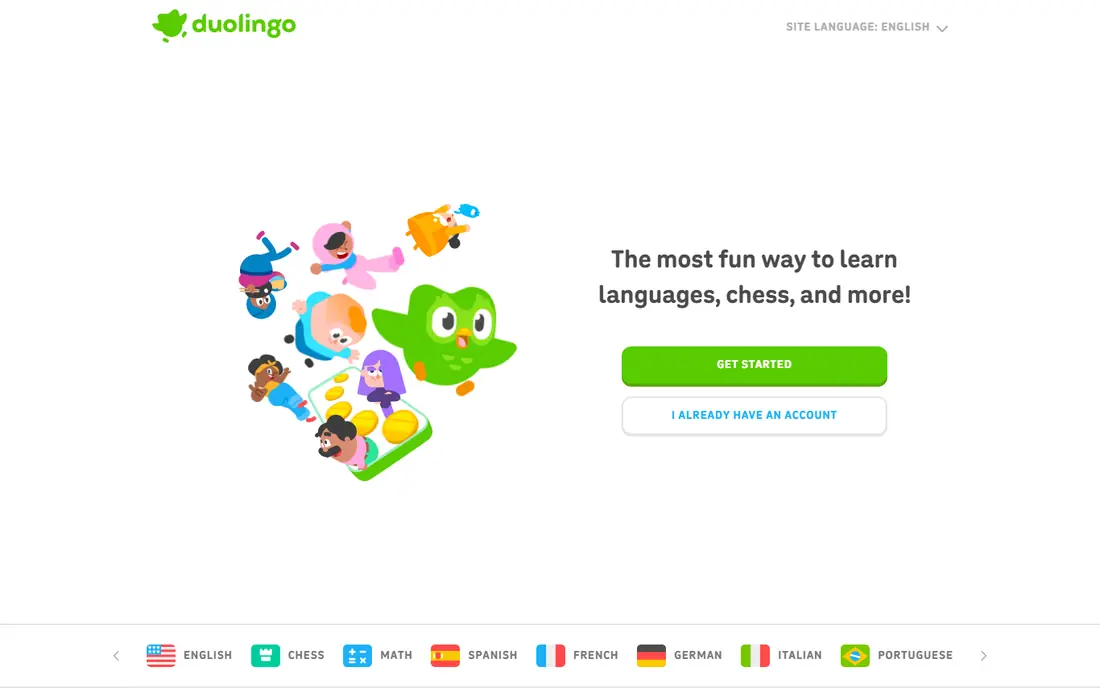
Duolingo is our pick for most people starting Spanish for free, because the free tier teaches the same core lessons as the paid tier. Sessions are short, the app tracks streaks and progress, and it covers vocabulary, sentences, listening and speaking practice in small steps. That structure helps beginners who are not sure where to start, and it keeps study to a few minutes a day when time is tight.
The free experience has limits. Ads appear between lessons, and the hearts system can pause a session after too many mistakes unless you wait or practise. Grammar is taught mainly through examples rather than clear explanations, so many learners pair Duolingo with a grammar resource. Even with those limits, no other free app gives you as much structured Spanish course content for nothing.
- Full core lessons free with ads
- Short, game-like sessions that build a daily habit
- Speaking, listening, reading and writing in one app
- Ads and a hearts system on the free tier can interrupt study
- Grammar explanations are light

Memrise built its name on short video clips of native speakers using words and phrases in context. That matters for Spanish, where hearing a phrase spoken naturally teaches pronunciation and rhythm in a way that text alone cannot. The app repeats words at increasing intervals, a method designed to move vocabulary from short-term memory into longer-term recall.
Memrise works best as a vocabulary builder rather than a full course. It does not explain grammar in a systematic way, so you will still need another resource for verb forms and sentence structure. Used alongside Duolingo or Language Transfer, it fills a clear gap: it helps you recognise and recall the words you meet in lessons, and hear how real speakers say them.
- Native-speaker video clips show real usage
- Spaced repetition helps words stick
- Core vocabulary lessons are free
- Grammar teaching is thin
- Some advanced features need a paid plan
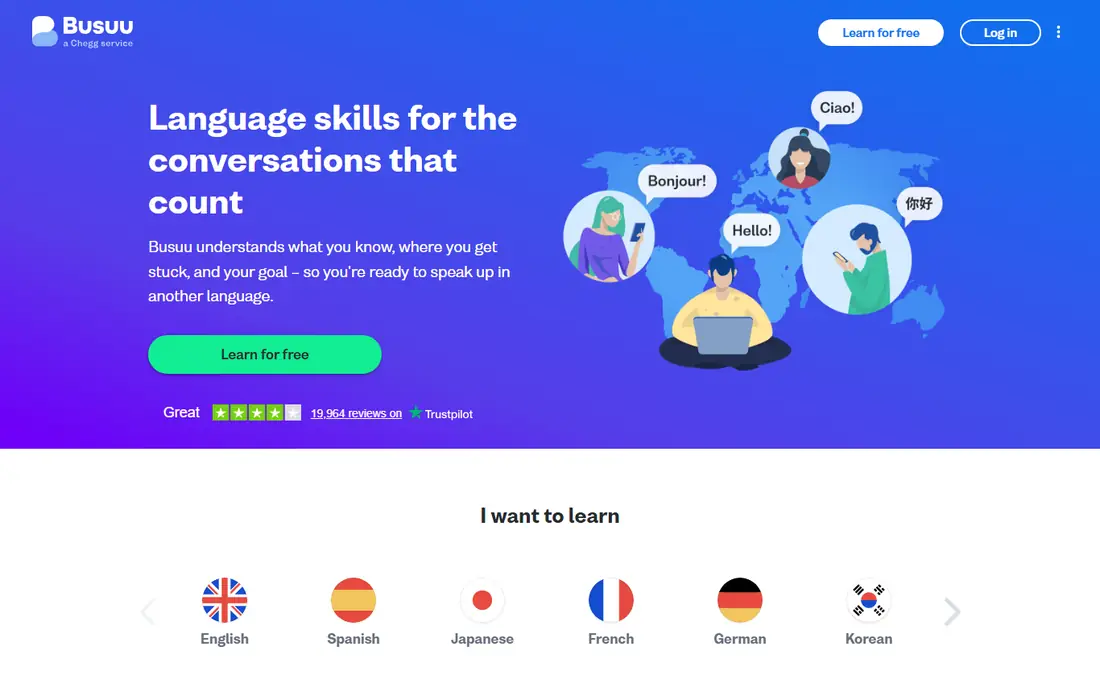
Busuu feels more like a course book than a game. Lessons are organised by level, grammar points are explained more directly than in Duolingo, and learners can submit writing or speaking exercises for correction by native speakers in the community. That feedback loop is valuable, because a learner can practise a sentence and find out quickly if it sounds natural.
The free tier gives a useful taste of that structure, but the full course, including offline lessons and advanced reviews, needs a paid plan. If you like orderly progress and you want human feedback, Busuu is worth trying free first. If you want the largest free course, Duolingo still gives you more lessons without paying.
- Lessons follow a clear level structure
- Community feedback can correct writing and speaking
- Useful for steady, organised study
- Much of the full course sits behind a paid plan
- Free tier is more limited than Duolingo
Mondly suits learners who want a quick daily session focused on useful phrases. Topics cover travel, food, shopping and everyday conversation, and a chatbot lets you practise short exchanges without the pressure of speaking to a real person. Speech recognition gives instant feedback on pronunciation, which helps beginners build confidence before they speak to anyone.
The free tier is deliberately limited. You get the first unit and a daily lesson, which is enough to test the style but not enough to carry you far on its own. Mondly works best as a second app for phrase practice, or as a paid option if you like its daily-lesson format. As a free-only tool, it is a supplement, not a complete course.
- Daily lessons and a chatbot for conversation practice
- Clear, bite-size topics for travel and everyday life
- Speech recognition for pronunciation
- Free access is limited to a first unit and daily lessons
- Depth is thinner than a full course
Drops takes a different approach: five-minute, image-based vocabulary sessions with no typing and no grammar lessons. You match words to pictures, hear them spoken and build a visual memory of each term. For a beginner, that can make the first few hundred Spanish words feel easy, and the short session length fits a commute or a coffee break.
The trade-off is scope. Drops teaches words, not conversation, and the free tier limits daily study time. You will still need a course app for sentences, verbs and listening. As a vocabulary top-up, Drops is one of the most enjoyable free options on this list, and it pairs well with Duolingo or Busuu.
- Beautiful, visual word drills that are easy to do in five minutes
- Strong for nouns and everyday topics
- No heavy grammar to wade through
- Free sessions are time-limited each day
- Focuses on words, not full sentences or grammar
LingQ is built around reading and listening to content you actually enjoy. You open a story, article or transcript, click unknown words to save them, and review those words later. You can also import web articles, which means you can study Spanish about football, cooking or news rather than only textbook dialogues. That personal choice keeps motivation higher for many learners.
The free plan has limits on saved words and imports, and the interface is busier than Duolingo or Drops. Absolute beginners may find it confusing at first, because it assumes you can already follow simple text. Once you know basic Spanish, LingQ becomes a strong tool for moving from textbook sentences to real reading and listening.
- Learn from real articles, stories and imported content
- Click any word to save it for review
- Large library of Spanish material
- Free plan is limited
- Interface takes time to learn
- Better for intermediate learners than absolute beginners
Language Transfer is the hidden gem on this list. It is a free audio course that teaches Spanish by thinking through the language, not by memorising lists. The teacher explains patterns, builds sentences with the listener and shows how English and Spanish connect. Many learners say it finally made verb forms and sentence structure click after years of app drills.
It has no games, streaks or visual lessons, and it will not teach you a large vocabulary on its own. Treat it as the grammar brain to pair with a vocabulary app. Listen during a walk or drive, then practise the same patterns in Duolingo or Busuu. For a free resource, its clarity is hard to match.
- Completely free audio course
- Explains how Spanish grammar works, step by step
- No ads, accounts or paywalls in the core course
- Audio only, with no app drills or vocabulary games
- Covers mainly beginner to lower-intermediate material
SpanishDict is a reference tool first and a course second, but every Spanish learner needs a good reference. Its dictionary gives examples and regional usage notes, its verb tables cover thousands of verbs in every tense, and its translator helps when you meet a word in the wild. The word of the day and short quizzes add light daily learning without turning the app into a full course.
Use SpanishDict alongside any course app on this list. When Duolingo introduces a new verb, check its full conjugation here. When Memrise shows a word you do not fully understand, look up its examples. It is free for core use, and its premium plan adds extra drills and removes ads for learners who want more.
- Excellent dictionary, translator and verb conjugations
- Word of the day and quizzes
- Free core tools with ads
- Not a structured course
- Premium features such as advanced drills need a paid plan
How we picked these
We compared official pricing pages, app store listings and feature pages, and we checked that each homepage loads and belongs to the product named. We included only apps with a genuine free tier for Spanish, not just a short trial, and we favoured apps that cover different skills, so a reader can combine two or three of them into a complete routine. We also noted where a free tier is limited, because a free label on its own does not tell you how far it will take you.
How to build a free Spanish routine
Start with one main course app and one support app. Duolingo works well as the main course for most beginners, with Language Transfer for grammar explanations and Memrise or Drops for vocabulary. Set a small daily target, such as 10 to 15 minutes, and keep it steady for a month before you judge progress. A short daily session beats a long session once a week, because spaced review depends on regular contact with the language.
Add speaking as soon as you can, even if it feels awkward. Repeat sentences aloud in Duolingo, shadow the teacher in Language Transfer and read SpanishDict examples out loud. If you can, find a free language exchange partner once you know basic sentences, because real conversation exposes gaps that apps hide. Finally, check your level every few weeks by reading a short Spanish article in LingQ or trying a simple conversation, and adjust your mix if one skill is falling behind.
A note on free plans
Free plans change, and app store prices can differ from website prices. Check the current free tier in the app before you rely on it for a long study plan, and turn off auto-renew if you try a paid trial. A free app should never ask for payment details to start its core free lessons.
Frequently asked questions
What is the best free app to learn Spanish?
Duolingo is the best free app to learn Spanish for most beginners, because its core lessons are free and it covers reading, listening, speaking and writing. Memrise is a strong second choice for vocabulary, and Language Transfer is the best free grammar companion. The best combination is usually Duolingo plus one other app from this list.
What is the best free app to learn Spanish for free, with no trial trap?
Duolingo, Memrise, Busuu, LingQ and SpanishDict all offer ongoing free tiers, not just a short trial. Language Transfer is fully free. Mondly and Drops also have free tiers, but they limit daily access more tightly. Check the free tier in the app store listing before you install, and avoid any app that requires a card for its free lessons.
Can I become fluent using only a free app?
An app alone rarely leads to fluency, because fluency needs real conversation and a lot of listening to natural Spanish. Free apps build vocabulary, grammar and basic listening well, and they give you a strong base. Pair them with free audio, reading and, when you are ready, conversation practice with native speakers.
Which free Spanish app is best for speaking?
Busuu offers community feedback on speaking exercises, and Mondly offers chatbot conversation practice, while Duolingo includes speaking drills in its lessons. None of these replaces speaking to a real person. Use app speaking drills to build confidence, then move to a language exchange when you can hold a simple conversation.
Is Busuu or Duolingo better for free Spanish learning?
Duolingo gives you more free course content, while Busuu gives you a more structured course and community feedback. If you want the largest free course, pick Duolingo. If you want clearer grammar explanations and human corrections, try Busuu free and see if its style suits you better.
How long should I study Spanish each day with a free app?
Aim for 10 to 20 minutes a day, every day, rather than an hour once a week. Short, regular sessions help vocabulary stick and keep grammar fresh. After a month of steady study, add reading or listening in LingQ or Language Transfer to stretch beyond short app exercises.
Sources we checked (8)

Online Jobs is an independent blog about careers, online work, learning new skills and the tools that help people earn. More about us.
Keep reading
All posts
Best Udemy Alternatives
Explore the best Udemy alternatives for 2026, including Coursera, Skillshare, and LinkedIn Learning, with pricing, certificates, and who each platform suits.

Best Tools for Virtual Tutoring
Compare the best tools for virtual tutoring, from one-to-one tutor marketplaces to free self-paced learning, with pricing, subjects and honest limits.
Best Study Apps for Young Children
Compare the best study apps for young children in 2026, from Khan Academy Kids and ABCmouse to Reading Eggs, Starfall, Duolingo ABC and PBS Kids, with prices.