Best Foreign Language Apps in 2026: 8 Apps Compared

How we put this together: we compare official feature and pricing pages, app store listings, privacy policies and public user reviews. Prices change, so check the provider's site before you pay.
Key takeaways
- Duolingo is our pick for most beginners, thanks to a free tier, short lessons, and a habit forming daily routine.
- Babbel suits learners who want structured grammar and conversation lessons, while Pimsleur suits audio first learning on the move.
- Busuu and Memrise add community feedback and real world listening, while italki adds live lessons with human tutors.
- No app alone makes you fluent, so pair a core app with speaking practice, reading, and listening outside the app.
Quick comparison
| Name | Who it suits | Starting price | Free option | |
|---|---|---|---|---|
 Duolingo | Beginners and daily habit | Free | Yes | Visit |
 Babbel | Structured grammar and conversation | See website | No | Visit |
 Rosetta Stone | Immersion and pronunciation | See website | No | Visit |
 Busuu | Community feedback | Free | Yes | Visit |
 Memrise | Vocabulary and real world listening | Free | Yes | Visit |
 Pimsleur | Audio first learning | See website | No | Visit |
 LingoDeer | Asian language courses | Free | Yes | Visit |
 Mondly | Wide language choice | See website | No | Visit |
The best foreign language apps
Foreign language apps differ in method, not just price. Some gamify daily practice, some teach grammar in structured courses, some focus on audio, and some connect you with tutors. We compared course structure, speaking practice, language range, and pricing models, using official sites and app listings. Prices vary by plan, billing period, and region, so we used See website where a single figure would be misleading.
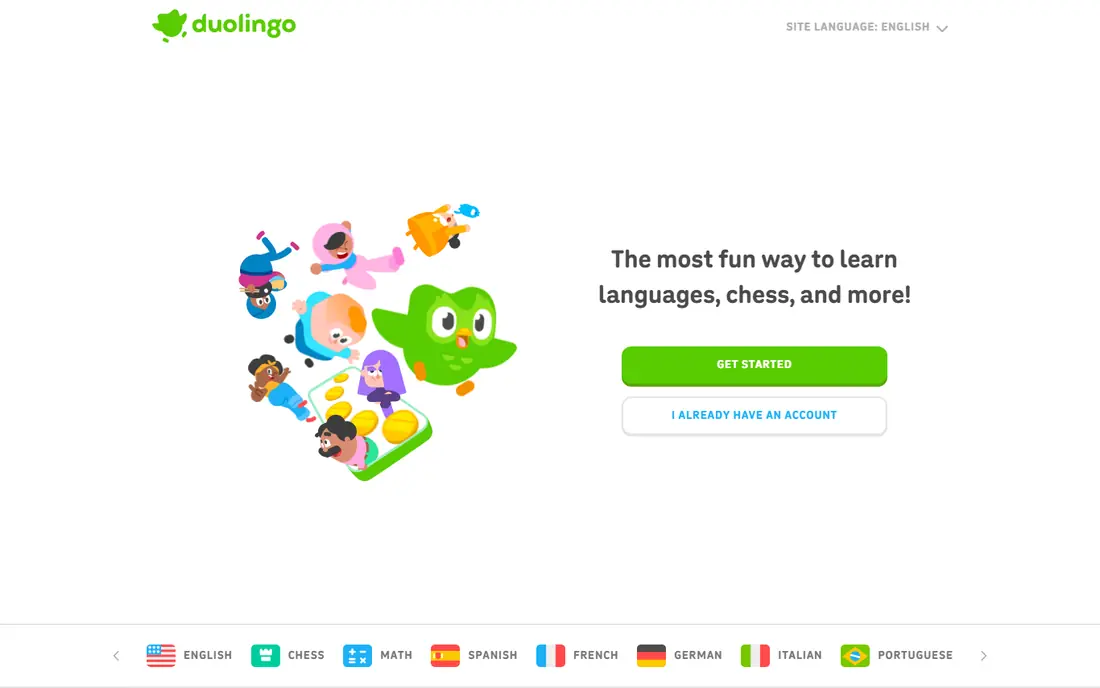
Duolingo is the easiest app to start with, and for many learners that is the most important feature. Lessons are short, gamified, and available in many languages, and the free tier covers core practice with ads and some limits. Streaks, leagues, and reminders help beginners keep going past the first week, which is where many language plans fail.
The honest limit is depth. Duolingo builds vocabulary and basic grammar well, but intermediate and advanced learners will need conversation, reading, and grammar resources beyond the app. Use Duolingo as a daily habit builder, then add speaking and real world input as you progress.
- Free tier with many languages
- Short gamified lessons
- Streaks and reminders build a daily habit
- Depth thins at intermediate and advanced levels
- Speaking practice is limited in the free tier
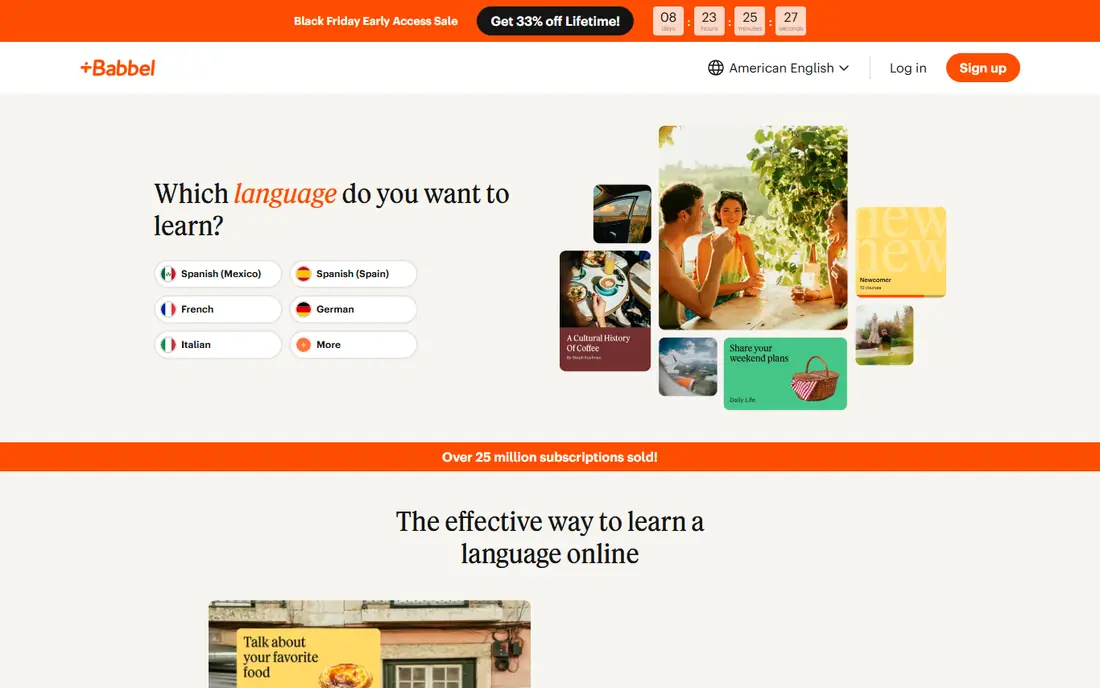
Babbel takes a more classroom like approach, with lessons organised by topic and level, grammar explanations in plain language, and dialogues based on real life situations such as travel, work, and daily life. That structure suits learners who want to understand why a sentence works, not just memorise phrases.
Language choice is narrower, focused mainly on European languages, and most full courses need a paid plan. If you want a structured path to conversation in a language Babbel covers, and you prefer lessons over games, Babbel is a strong core app.
- Structured lessons built around real conversation
- Clear grammar explanations
- Speech recognition for pronunciation
- Fewer languages than Duolingo
- Free content is limited to a first lesson in many courses
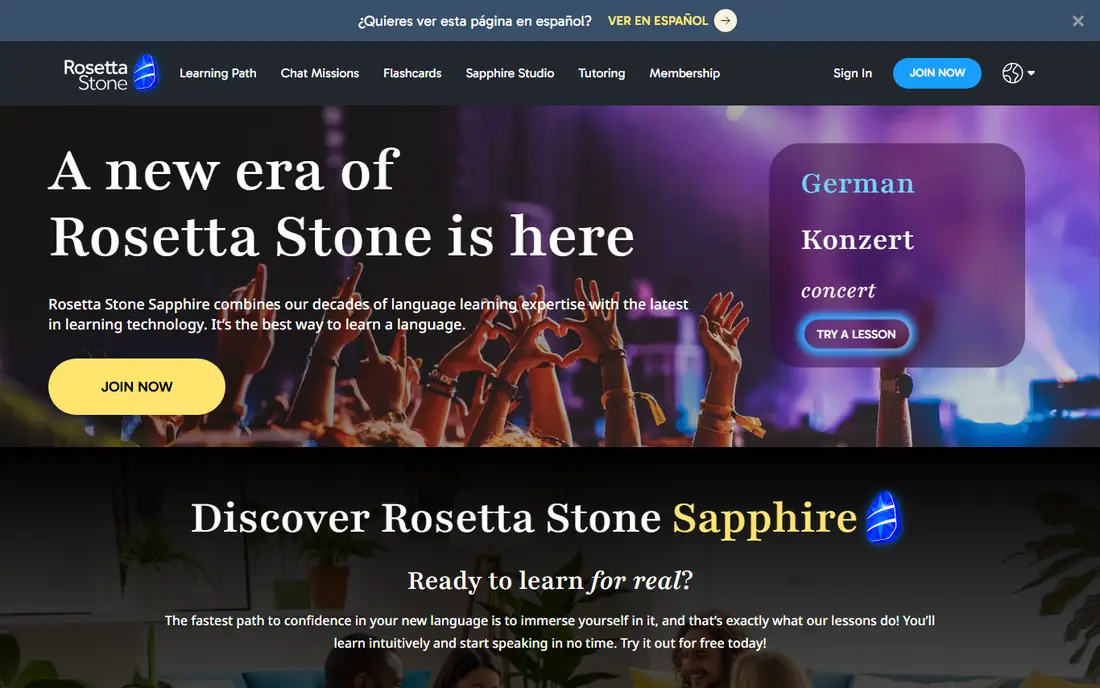
Rosetta Stone teaches through images, audio, and context, without translation in the core lessons, aiming to build intuition in the new language. Its TruAccent speech tool gives feedback on pronunciation, and offline access helps learners study on planes, commutes, and trips without a connection.
Some learners find the pace slow and the lack of explicit grammar explanations frustrating, especially at higher levels. If you like immersion, pronunciation practice, and a method that avoids your first language, Rosetta Stone remains a distinctive choice, best paired with a grammar reference when you need one.
- Immersion method without translation
- TruAccent speech feedback
- Offline lessons on many plans
- Progression can feel slow and repetitive
- Grammar explanations are limited
Busuu combines structured courses with community feedback, letting native speakers correct your writing and speaking exercises. That human feedback is valuable, since an app alone cannot always tell you if a sentence sounds natural, and Busuu progress is aligned to common European levels, which helps learners track growth.
Its language list is smaller than Duolingo, and premium features such as offline mode and full grammar review need a paid plan. For learners who want course structure plus real human corrections, Busuu offers a balance that pure self study apps lack.
- Free tier for core lessons
- Native speaker corrections on writing and speaking
- Progress aligned to levels
- Language range is smaller than Duolingo
- Full premium features need a paid plan
Memrise focuses on vocabulary and listening, using video clips of native speakers, spaced repetition, and short practice sessions. Hearing real people, with natural speed and accent, helps learners move from textbook phrases to understanding everyday speech, which is a common stumbling block.
Grammar teaching is thinner than Babbel, and conversation practice needs another tool. As a vocabulary and listening companion, especially alongside a structured course, Memrise is effective and enjoyable, and its free tier makes it easy to try.
- Free tier for core learning
- Native speaker video clips
- Spaced repetition for vocabulary
- Grammar and conversation depth is limited
- Some content varies by language
Pimsleur is built for ears and voice. Lessons are audio first, with prompts to speak, recall, and respond, which trains listening and pronunciation in a way that screen based apps often miss. It suits commuters, drivers, and learners who freeze when they need to speak, since speaking aloud is the core exercise from lesson one.
Reading, writing, and grammar need separate study, and the subscription is pricier than many rivals. If your goal is to speak and understand in conversation, especially for travel, Pimsleur is one of the best audio methods available, and it pairs well with a reading app.
- Audio lessons built around speaking aloud
- Good for commutes and driving
- Strong for pronunciation and recall
- Mainly audio, so reading and writing need another resource
- Subscription cost is higher than many apps
LingoDeer stands out for Asian languages, with courses for Japanese, Korean, Chinese, and others that include grammar notes, writing systems, and structured progression. That depth matters, since Asian languages need script, tone, and grammar support that generic apps often treat lightly.
Its overall language list is smaller, and depth varies by language, with Asian courses generally strongest. Learners of Japanese, Korean, or Chinese who want a structured app with real grammar teaching should put LingoDeer near the top of their list.
- Strong courses for Japanese, Korean, and Chinese
- Clear grammar notes
- Offline mode on paid plans
- Language range is smaller
- Some languages have less depth than the flagship Asian courses
Mondly covers a wide list of languages, with daily lessons, vocabulary, and a chatbot for conversation practice. That breadth suits learners of less common languages, or families where different members learn different languages, and its daily lesson format keeps practice short and regular.
Depth varies, and chatbot practice, while useful, does not replace human conversation. For a broad choice, a fun daily routine, and a way to test a language before committing to a deeper course, Mondly is a practical option, best paired with speaking practice as you advance.
- Wide language list
- Chatbot conversation practice
- Daily lessons and augmented reality features on some plans
- Depth varies by language
- Conversation practice is chatbot based, not human
How we picked these
We reviewed official sites, course structures, and pricing pages, and we confirmed that each official site loads and matches the app named. We favoured apps with a real free tier or trial where stated, a clear teaching method, and a language range that serves US learners, from European to Asian languages. We did not claim hands on testing; our comparison rests on published course information, app listings, and public community material. Prices vary by plan and region, so we used See website where a single figure would mislead.
Choosing the right language app
Start with your goal and time. For a trip in a few months, a structured course plus audio practice works well. For a long term skill, a daily habit app plus weekly speaking practice is more sustainable. For a less common language, check course depth first, since a wide language list does not guarantee a deep course in your language.
Also plan beyond the app. No app alone builds fluency, so add conversation with a tutor or exchange partner, reading in the language, and listening to podcasts, shows, or news. Use the app for daily structure, and use real language for the speaking, listening, and cultural skills that an app can only partly teach.
Frequently asked questions
Which language app is best for beginners?
Duolingo is best for most beginners, thanks to its free tier, short lessons, and habit forming design. Babbel suits beginners who want more grammar structure, while LingoDeer suits beginners in Japanese, Korean, or Chinese.
Can an app make me fluent?
No app alone makes you fluent. Apps build vocabulary, grammar, and listening, but fluency needs conversation, reading, and listening outside the app, plus time and regular practice over months and years.
Is Babbel better than Duolingo?
Babbel is better for structured grammar and conversation lessons, while Duolingo is better for a free, gamified daily habit and a wider language list. Many learners use Duolingo to start and Babbel to deepen grammar, or vice versa.
What is the best app for learning Japanese or Korean?
LingoDeer is a strong pick for Japanese and Korean, thanks to grammar notes and script teaching. Pair it with a vocabulary app, listening practice, and conversation with a tutor for faster progress.
How much time should I study each day?
Short daily practice beats occasional long sessions for most learners. Aim for 15 to 30 minutes a day in the app, plus a few minutes of listening or speaking where you can, and add a longer session or tutor lesson each week if your schedule allows.
Sources we checked (8)

Online Jobs is an independent blog about careers, online work, learning new skills and the tools that help people earn. More about us.
Keep reading
All posts
Best Vocabulary Apps
We compare 8 vocabulary apps in 2026, free and paid, for English learners, students, and test prep, with honest notes on what each one does best for daily use.

Best Udemy Alternatives
Explore the best Udemy alternatives for 2026, including Coursera, Skillshare, and LinkedIn Learning, with pricing, certificates, and who each platform suits.
Best Tools for Virtual Tutoring
Compare the best tools for virtual tutoring, from one-to-one tutor marketplaces to free self-paced learning, with pricing, subjects and honest limits.