Best Foraging Apps for Plant Identification in 2026: 8 Tools Compared

How we put this together: we compare official feature and pricing pages, app store listings, privacy policies and public user reviews. Prices change, so check the provider's site before you pay.
Key takeaways
- PlantNet and iNaturalist give strong free identification, with community checks that help when a photo alone is unclear.
- Seek by iNaturalist suits beginners and families, because it works fast and keeps the focus on learning rather than eating.
- PictureThis and PlantIn add care and diagnosis features, but they are built more for garden plants than for wild food.
- No app on this list should be your only check before eating a wild plant, and a second source plus expert confirmation matters most with lookalikes.
Quick comparison
| Name | Who it suits | Starting price | Free option | |
|---|---|---|---|---|
 PlantNet | Wild plant identification | Free | Yes | Visit |
 iNaturalist | Community confirmed identifications | Free | Yes | Visit |
 Seek by iNaturalist | Fast beginner identification | Free | Yes | Visit |
 PictureThis | Detailed plant profiles | See website | Free trial | Visit |
 PlantSnap | Quick photo identification | See website | Free trial | Visit |
 PlantIn | Identification plus plant care | See website | Free trial | Visit |
 Flora Incognita | European wild plant identification | Free | Yes | Visit |
 Google Lens | Everyday visual search | Free | Yes | Visit |
The best foraging apps for plant identification
We compared free and paid identifiers on photo identification, extra plant information, offline use, and how well each one supports careful foraging. The best choice depends on where you walk, how much detail you want, and how strict you are about confirming a find before you touch it, let alone taste it.
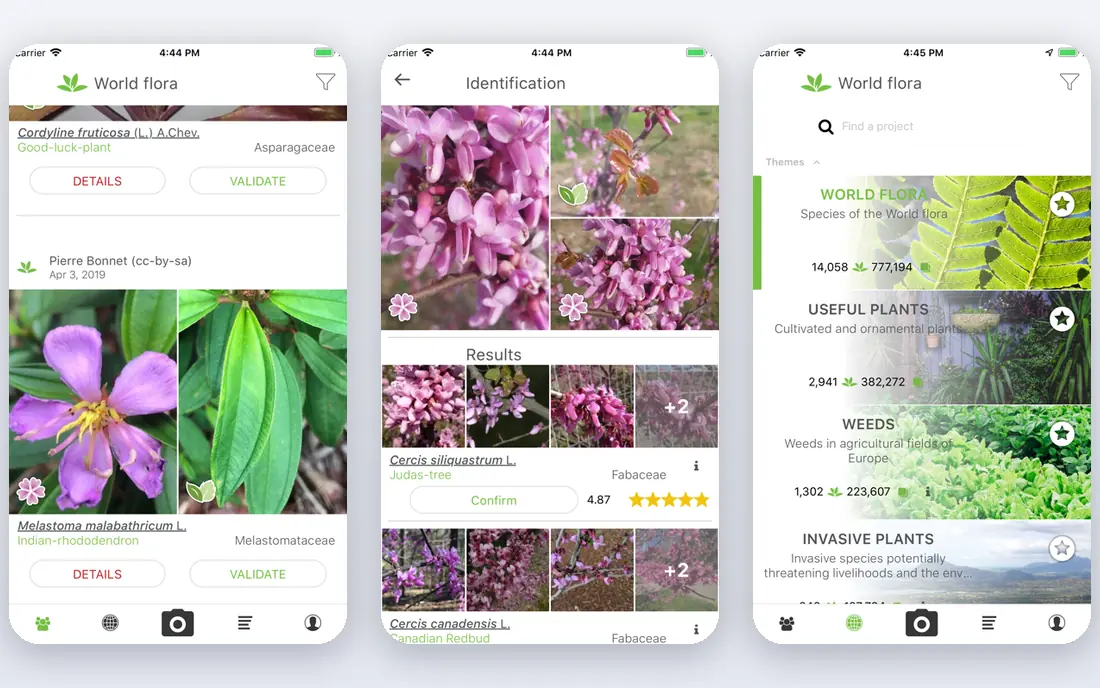
PlantNet opens with a clear job: take a photo, choose the plant part you photographed, and compare your plant with matching species. That structure helps on a walk, because a leaf photo and a flower photo often lead to different candidates, and the app asks you to be specific. Its database leans toward wild and spontaneous plants rather than garden varieties, which makes it a natural first stop for foragers.
The honest catch is that PlantNet is an identification aid, not a safety verdict. A confident-looking match can still be wrong, especially with closely related species, poor light, or a photo that misses key details such as leaf arrangement or stem shape. Use it to narrow a find, then check a field guide, compare several photos, and get confirmation from an experienced forager before eating anything. Safety note: misidentification can be dangerous, and apps do not replace expert confirmation.
- Free to use
- Strong for wild species
- Observations support research
- Results depend on photo quality
- The interface feels plain next to paid apps
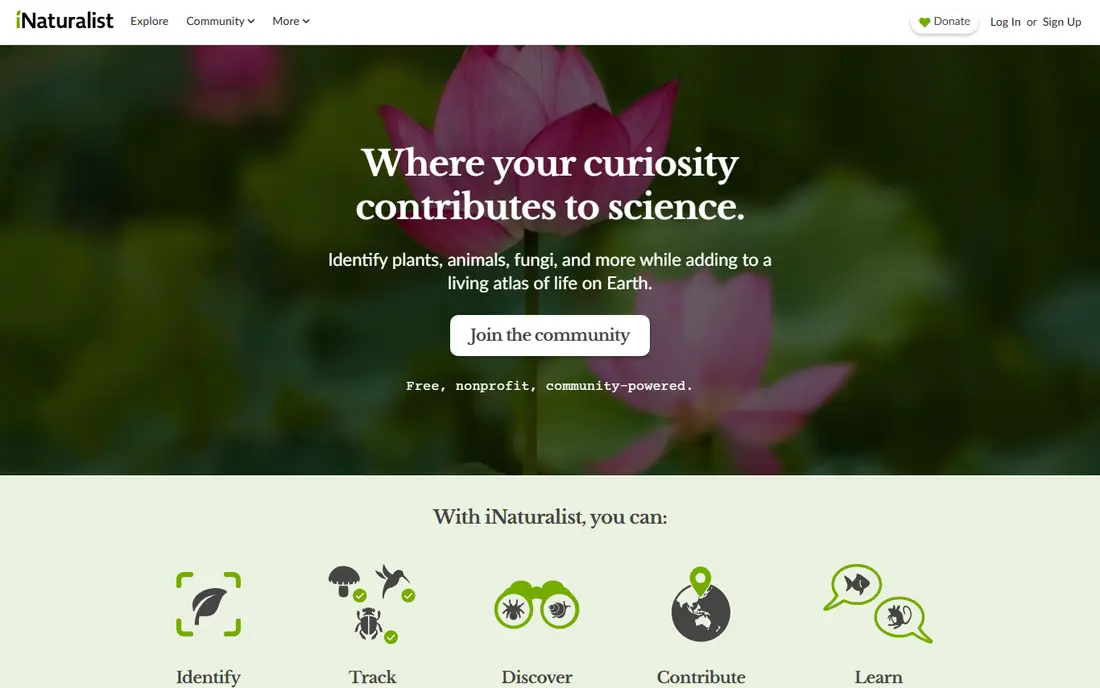
iNaturalist takes a different route from instant-only identifiers. You post an observation with photos and location, and other users, including experienced naturalists, can agree with or correct the identification. That human layer is valuable when an app guess feels shaky, because a second pair of eyes may spot a detail the first photo hid. Your observations also build a personal record of what you found and where.
The trade-off is patience. Community confirmation is not instant, so iNaturalist works best as part of a two-step habit: use a fast identifier in the field, then post the interesting finds here for checking later. It also covers animals, fungi, and other wildlife, so foragers need to filter their own attention to plants. For learning over a season, though, few tools match the depth of its community knowledge.
- Large community of identifiers
- Records can support science
- Useful discussion around tricky finds
- Confirmation can take time
- The app is broader than foraging alone
Seek is the quicker, lighter companion to iNaturalist, and it suits people who are still learning plant names. Point the camera at a plant and the app suggests an identification in real time, then tracks the species you have found. That low-friction design works well with children and with adults who want to learn names on a walk without stopping to fill in forms.
Seek is best treated as a learning tool, not a foraging safety tool. It can name a common plant quickly, but it does not tell you with enough certainty that a wild plant is safe to eat, and it has no reason to know whether you photographed the right part of the plant. Pair it with a field guide and with iNaturalist for finds that matter, and enjoy it most for building plant literacy one walk at a time.
- Free with no account needed for basic use
- Camera identification feels immediate
- Challenges make learning fun
- Less detailed than full iNaturalist
- Not designed as an edibility checker
PictureThis is the polished option in this list, with a clean camera flow and plant pages that cover toxicity notes, care needs, and related species. For a walker who also keeps houseplants, that breadth is handy, because one app can answer both a trail question and a windowsill question. The identification step itself is quick, and the extra information helps you learn what you are looking at rather than just collecting a name.
The catch for foragers is focus. PictureThis is aimed mainly at gardeners and houseplant owners, so its edibility notes and care tips should not be read as foraging guidance. A plant page may flag toxicity, which is useful, but a missing warning is not proof that a plant is safe. Check the current price on the vendor site before subscribing, since plans and trial terms change, and keep a dedicated field guide for any plant you plan to eat.
- Fast photo identification
- Rich plant profiles
- Extra tools for care and diagnosis
- Paid features sit behind a subscription
- Garden plants get more attention than wild food plants
PlantSnap keeps the process short: photograph a plant, review the suggested matches, and read a short profile. That simplicity suits walkers who want a name without learning a new system, and its database covers a wide mix of garden plants, trees, flowers, and wild species. When a photo is clear and the plant is common, the result often arrives fast enough to keep a walk moving.
As with every photo identifier, the result is only as good as the photo. Blurry leaves, mixed plants in one frame, and species that differ mainly in small details can all mislead the app. PlantSnap works best when you photograph one plant at a time, include leaves and flowers where possible, and treat an uncertain result as a prompt to look closer rather than as an answer. Confirm edibility elsewhere, every time.
- Simple photo-first flow
- Large plant database
- Works for garden and wild plants
- Free use is limited
- Accuracy varies with unusual or similar species
PlantIn appeals to people who identify a plant and then want to keep it alive, which makes it a good companion for garden foraging and for plants brought home from a nursery. After identification, the app can set watering reminders, check for signs of disease, and offer care guidance based on the species. That follow-through is missing from many pure identifiers, and it suits beginners who want one place for plant questions.
For wild foraging, PlantIn is a supporting tool rather than a lead tool. Its strengths sit in care and diagnosis, not in confirming whether a wild plant is edible, and its paid plan is needed to get the most from it. Use it to identify and learn about a plant you found, then turn to foraging-specific guides and experienced local knowledge before making any decision about eating it.
- Identification plus care reminders
- Disease checks
- Botanist help options
- Care features dominate the app
- Subscription needed for full use
Flora Incognita stands out because it was built for wild plants rather than adapted from a gardening app. It combines photo identification with questions about visible features, which can improve results when a photo alone is ambiguous. The app also explains its identification steps in a way that teaches you what to look for next time, from leaf shape to flower structure.
The main limit is geography. Its coverage is strongest in Central Europe, so walkers in other regions may get weaker results or missing species. If you walk mainly in its core region, it deserves a place next to PlantNet. If you walk elsewhere, treat it as a learning aid and lean on the broader tools in this list for identification, with the same safety rule: never eat a plant on the strength of one app result.
- Free
- Built for wild plants
- Asks structured questions about plant features
- Coverage is strongest in Central Europe
- Less useful elsewhere
Google Lens is the handy backup that many people already have, and it earns its place here for convenience rather than specialism. Point it at a plant and it searches visually similar images across the web, which can surface a name, a nursery page, or a field guide entry. It also helps with the practical side of a walk, from reading a trail sign to identifying a plant label in a garden.
That general approach is also its weakness. Lens is not tuned for plant taxonomy, so a result may look plausible while pointing to a related but different species. Use it as a quick cross-check, especially when another app gives an uncertain answer, and give more weight to specialist tools and human confirmation for anything you might eat. For casual curiosity, though, it is hard to beat for speed and price.
- Free and already on many phones
- Fast visual search
- Useful for signs, labels, and plants
- Not a specialist plant app
- Results can mix plant matches with shopping and web pages
How we picked these
We checked official feature pages, app store listings, and pricing pages for each app, and we favored tools that are still maintained and available in October 2026. We looked for a mix of free and paid options, specialist wild plant tools, and general identifiers that foragers actually use on walks. We also weighed how each app handles uncertainty, because a foraging app that sounds certain about every photo is more dangerous than one that shows close matches and invites a second check.
We did not treat app store star counts or marketing claims as proof of accuracy. Plant identification accuracy varies with photo quality, region, season, and species, so we focused on features you can verify: whether the app shows similar species, whether humans can confirm a find, whether it covers wild plants, and whether it is clear about its limits.
Buying guide: how to choose a foraging identification app
Start with your region and your goal. A free specialist tool such as PlantNet or Flora Incognita fits wild plant walks, while a paid garden app fits houseplant care better. If you are learning, pair a fast camera tool with a community tool so you get both speed and a second opinion.
Photograph for a better result
Take several photos of one plant: the whole plant, a leaf, a flower or fruit if present, and the stem or bark. Avoid frames crowded with other plants, and photograph in good light. A clear, single-subject photo gives every app a better chance, and it also helps a human identifier confirm the find later.
Treat edibility as a separate question
Identification and edibility are two different jobs. An app can suggest a species, but safe eating also depends on the exact plant part, the season, preparation, local lookalikes, and your own health. Use a trusted field guide for your region, learn the dangerous lookalikes first, and ask an experienced forager or local expert before eating a new species.
Check offline use before a remote walk
Many identifiers need a connection to process a photo, which matters on trails with weak signal. Before a remote walk, test your chosen app, download any offline material it offers, and take photos you can identify later if the app cannot connect. A paper field guide still earns its weight in a pack when signal fails.
Frequently asked questions
Can a foraging app tell me if a plant is safe to eat?
No app can give a reliable yes on its own. It can suggest a species and show toxicity notes, but a wrong identification, a similar lookalike, or a photo of the wrong plant part can change the answer. Use apps for identification, then confirm edibility with a trusted field guide and an experienced person.
Which foraging app is best for beginners?
Seek by iNaturalist is a good starting point because it is free, fast, and easy to use, and PlantNet is a strong free next step for wild plants. Beginners should still learn the common poisonous plants in their area first, since avoiding a dangerous mistake matters more than naming every plant on a walk.
Do I need a paid app for plant identification?
No, not for basic identification. PlantNet, iNaturalist, Seek, Flora Incognita, and Google Lens all offer free identification, and they cover most casual needs. Paid apps add polish, care tools, and diagnosis features, so pay only if those extras match how you actually use the app.
How accurate are plant identification apps?
Accuracy is high for common, well-photographed species and lower for rare plants, close lookalikes, and poor photos. Results improve with clear photos of leaves, flowers, and stems, and with cross-checking across two tools or a community. Treat any single result as a suggestion, not a verdict.
What should I photograph to identify a plant?
Photograph the whole plant, a close view of a leaf, any flowers or fruit, and the stem or bark where relevant. Note the habitat and location too, since that context helps human identifiers and field guides narrow the options. Avoid picking a plant you cannot identify, and leave rare plants alone.
Can I use these apps offline?
Some apps allow you to save photos and identify them later, but most need a connection for full identification. Check your chosen app before a remote walk, and carry a field guide or save reference material in advance if you expect weak signal.
Sources we checked (7)

Online Jobs is an independent blog about careers, online work, learning new skills and the tools that help people earn. More about us.
Keep reading
All posts
n8n Alternatives
n8n alternatives compared for 2026, with Zapier, Make, Activepieces, and more, covering visual builders, code steps, self-hosting, and pricing models.
eBay Alternatives
Looking for ebay alternatives? We compared 9 marketplaces for sellers on fees, buyer reach, categories and ease of listing, to help you sell with confidence.

ZoomInfo Alternatives
The best ZoomInfo alternatives in 2026, compared on price, free plans, data coverage, and which tool fits small teams or large sales teams best in detail.