Best Food Tracker App in 2026: 8 Apps Compared


Largest database and device support · Starting price: $19.99 per month
How we put this together: we compare official feature and pricing pages, app store listings, privacy policies and public user reviews. Prices change, so check the provider's site before you pay.
Key takeaways
- MyFitnessPal suits most people first, thanks to its large food database and wide device support, though its fastest logging tools need Premium.
- Cronometer is the best pick for micronutrient detail, with verified data and tracking for dozens of nutrients on its free plan.
- Lose It and FatSecret suit budget trackers, while MacroFactor suits lifters and athletes who want adaptive macro targets.
- Photo and barcode logging save time, but they are often paid features, so check which plan includes the logging method you will actually use.
- Food tracking is a self-help tool, not medical advice: if you have a medical condition, an eating disorder, or a history of disordered eating, talk to a clinician before tracking calories.
Quick comparison
| Name | Who it suits | Starting price | Free option | |
|---|---|---|---|---|
| MyFitnessPal | Largest database and device support | $19.99 per month | Yes | Visit |
 Cronometer | Micronutrients and verified data | $10.99 per month | Yes | Visit |
 Lose It | Simple, affordable weight-loss diary | See website | Yes | Visit |
 MacroFactor | Adaptive macro coaching for athletes | $11.99 per month | Free trial (7 days) | Visit |
 MyNetDiary | Feature-rich free tracking | Free | Yes | Visit |
 FatSecret | Free barcode scanning and a large database | Free | Yes | Visit |
 YAZIO | Recipes, fasting tools, and a clean diary | See website | Yes | Visit |
 Carb Manager | Low-carb and keto tracking | See website | Yes | Visit |
The best food tracker app
The best food tracker is the one you will still open in week six. We compared official pricing pages, app store listings, and public reviews for apps that track calories and macros in 2026, and we favored apps with a usable free plan, a barcode scanner or photo logging, and clear premium pricing. Prices vary by billing term and app store, so check the checkout screen before subscribing.
Food tracking can help with awareness of portions and patterns, but it is not a substitute for medical advice. If you have diabetes, kidney disease, a heart condition, or any condition that affects diet, or if tracking triggers anxiety around food, stop and talk to a clinician or dietitian.
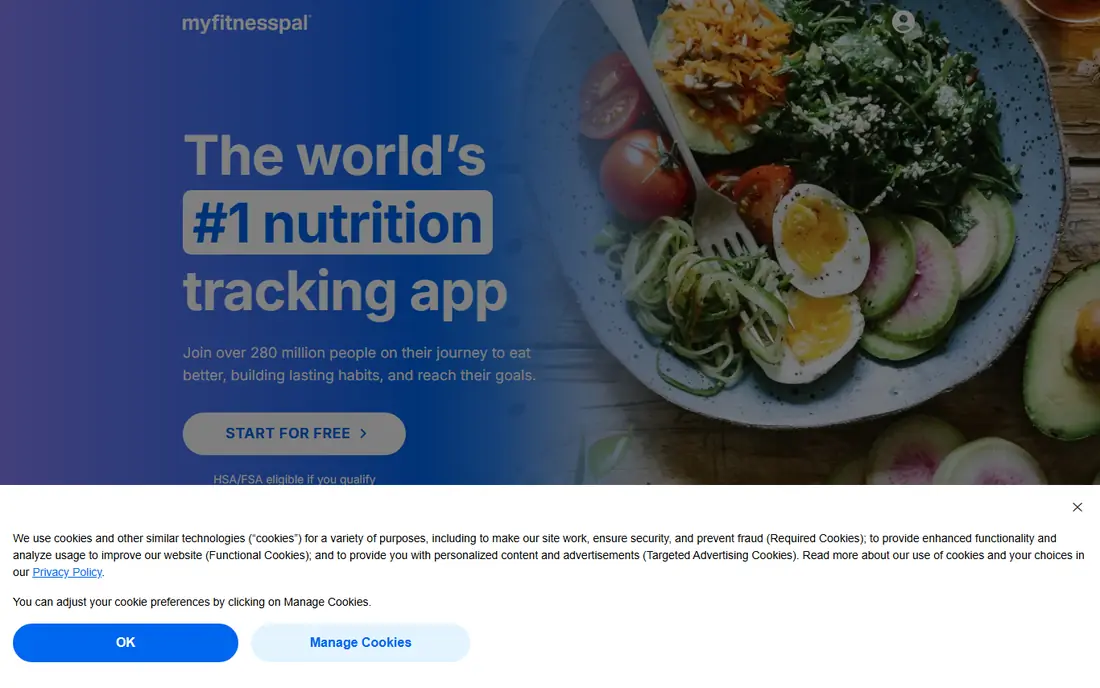
MyFitnessPal remains the default food tracker for a simple reason: it usually finds the food. Its database covers branded products, restaurant items, and user-entered foods, and it connects to many watches, scales, and fitness apps, so exercise and weight data flow in without manual entry. For a first-time tracker, that breadth removes the most common frustration, which is searching for a food and not finding it.
The catch is the paywall around speed. Barcode scanning, voice logging, and meal scanning now sit in Premium, which costs 19.99 dollars per month or 79.99 dollars per year, with a Premium Plus tier above it for meal planning. If you log mostly by searching and typing, the free plan works well, but if you want the fastest logging, budget for Premium or choose FatSecret or MyNetDiary instead.
- Very large food database
- Broad fitness device and app integrations
- Community features and recipe tools
- Barcode, voice, and meal scanning need Premium
- Free tier includes ads
- Premium costs 79.99 dollars per year on annual billing
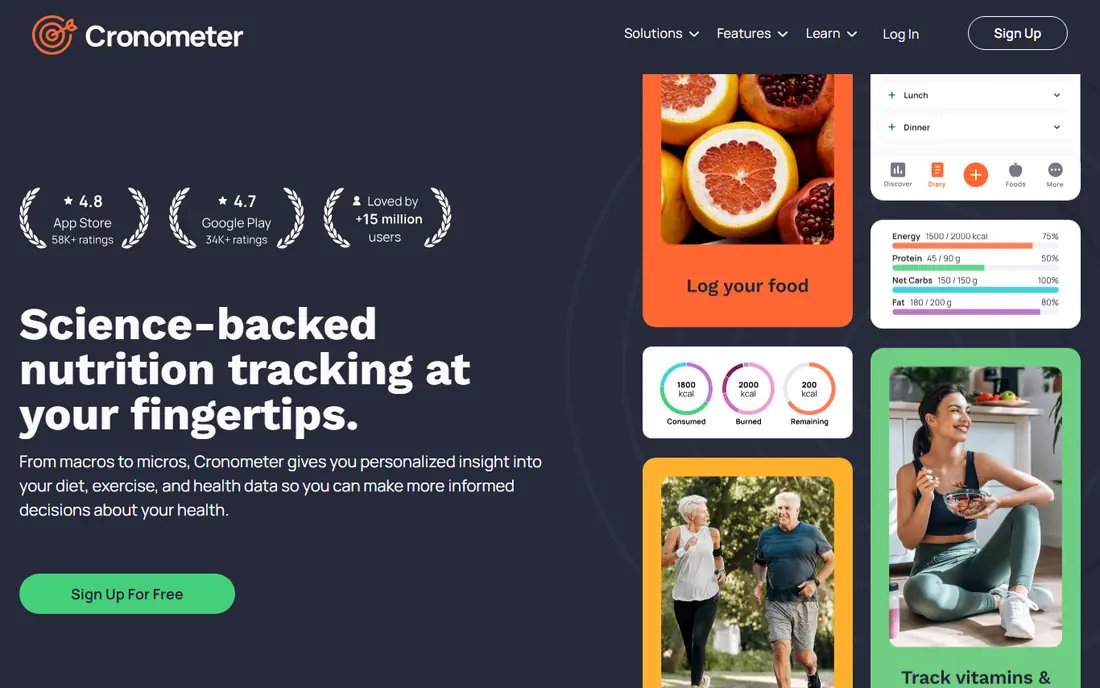
Cronometer is the pick for people who care about more than calories. Its free plan tracks a wide range of vitamins and minerals from verified sources, which suits nutrition professionals, people with specific nutrient goals, and anyone who wants to see whether a diet is actually balanced. Charts and reports make trends easy to spot over weeks, not just single days.
That depth is also its drawback for casual users. If you only want a daily calorie total, Cronometer's nutrient panels and settings can feel like extra work, and its food database, while verified, is smaller than MyFitnessPal's. Gold costs 10.99 dollars per month or 59.99 dollars per year and adds features such as a macro scheduler, but most trackers can start free and upgrade only if they miss a Gold feature.
- Tracks up to 84 nutrients with verified data sources
- Free plan is genuinely useful
- Clear charts for trends over time
- Depth can overwhelm simple calorie counters
- Gold is needed for some advanced features
- Food database is smaller than MyFitnessPal
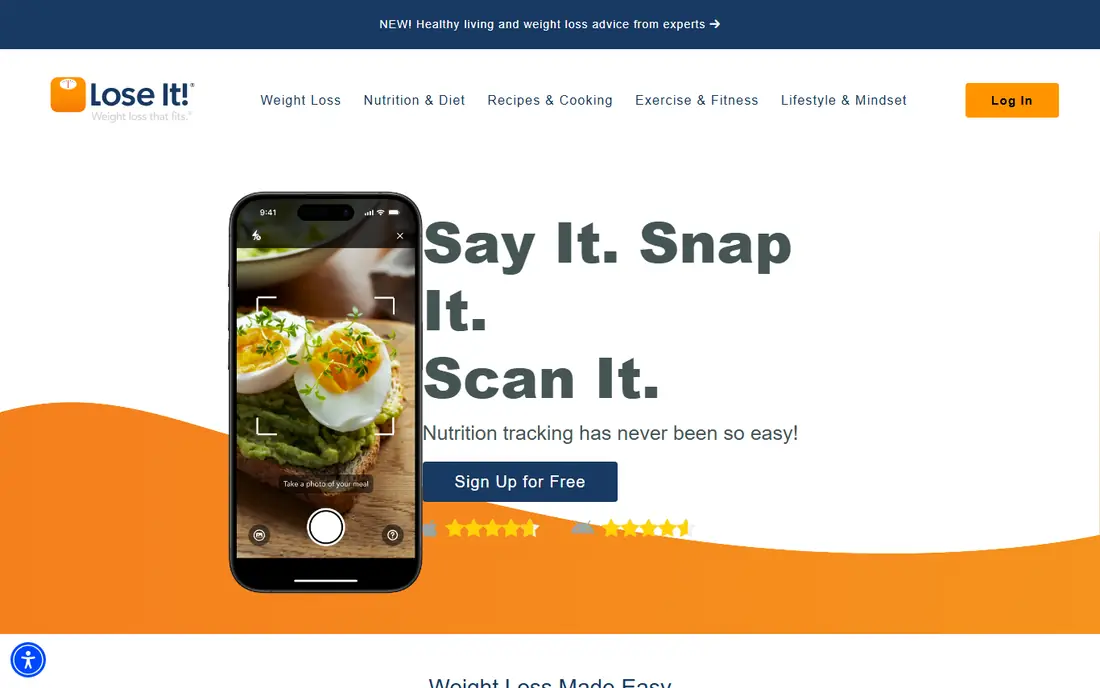
Lose It suits people who want a straightforward diary without a wall of nutrient charts. Setting a calorie goal, logging meals, and watching a weight trend is quick, and streaks and challenges give a gentle nudge to keep going. It is a good first app for weight loss, because it does not ask you to learn macro theory before your first log.
The honest catch is that its fastest logging tools are paid. Barcode, photo, and voice logging sit in Premium, and premium pricing varies by store and promotion, so we list it as "See website" rather than repeating a figure that may not match your checkout. Try the free diary for two weeks first: if you log consistently without the paid tools, you may not need them at all.
- Clean, simple diary design
- Goals, streaks, and challenges keep habits visible
- Photo and voice logging on Premium
- Barcode, photo, and voice logging need Premium
- Premium price varies by store and offer
- Fewer micronutrient details than Cronometer
MacroFactor is built for people who train seriously and want their targets to move with their results. Instead of a fixed calorie goal, it adjusts calories and macros based on your logged intake and weight trend, which suits lifters, athletes, and anyone working toward a physique goal over months. The coaching logic is its main advantage over a static diary.
That strength comes with demands. There is no permanent free plan, only a 7-day trial, and the subscription costs 11.99 dollars per month or 71.99 dollars per year. It also needs consistent, honest logging to adapt well: patchy data produces patchy targets. Casual trackers will get better value from a free app, but committed athletes often find MacroFactor worth the price.
- Adaptive calorie and macro targets that adjust with your data
- Strong for lifters and physique goals
- No free tier distractions, just coaching
- No permanent free plan, only a trial
- Needs consistent, complete logging to adapt well
- Overkill for casual calorie counting
MyNetDiary is the best free tracker for people who want premium-feeling features without paying. Its free plan covers calorie and macro tracking, custom targets by grams or percentages, and a solid food database, all without third-party ads. In logging-speed comparisons, it has also performed well, which matters when you log three meals a day for months.
Premium, at 59.99 dollars per year, adds meal planning, AI coaching, and advanced tools, with a Premium Plus tier above it, so the pricing ladder needs a quick read before upgrading. If you want community features and the largest database, MyFitnessPal still leads, but for a private, feature-rich free diary, MyNetDiary is hard to beat.
- Free plan includes barcode-free logging, custom macro targets, and no third-party ads
- Premium adds planning and coaching
- Fast logging in tests
- Premium features such as AI coaching need paid tiers
- Interface is less social than MyFitnessPal
- Lifetime and Plus tiers complicate pricing
FatSecret is the pick for trackers who refuse to pay for a barcode scanner. Unlike MyFitnessPal and Lose It, it keeps barcode scanning and its full database in the free plan, so the core job of logging food costs nothing. Weight tracking, a food diary, and community features round out a solid, no-frills app.
The trade-off is polish and coaching. FatSecret's design feels dated next to MyFitnessPal or YAZIO, and it offers fewer guided programs or adaptive targets. If you want a free, functional diary and you do not care about modern design or coaching, it delivers; if you want guidance, pair it with a separate plan or choose a coaching-focused app.
- Barcode scanning and full food database on the free plan
- Simple diary and weight tracking
- Community and recipe features
- Design feels older than rivals
- Premium features are limited and vary
- Fewer coaching tools than MacroFactor or Noom-style apps
YAZIO suits people who want recipes and fasting alongside calorie tracking. Its diary is clean, its recipe library helps with meal ideas, and its fasting tracker covers common fasting schedules without a second app. That combination appeals to users who plan meals ahead rather than logging reactively.
The catch is the Pro paywall. Meal planning, advanced fasting tools, and several analysis features need Pro, whose price varies by billing term, so we list it as "See website". There is also no web app, so all logging happens on a phone. Try the free diary and fasting timer first, and upgrade only if you use the recipes or plans weekly.
- Clean design with recipes and meal plans
- Fasting tracker included
- Good for users who want food plus fasting in one app
- Many planning tools need Pro
- No web app
- Pro pricing varies by billing term
Carb Manager is the specialist pick for low-carb and keto eaters. It tracks net carbs by default, offers keto calculators and recipes, and lets free users set custom macro targets, which many general trackers charge for. For someone following keto, that focus saves the daily workarounds needed in a general app, such as subtracting fiber by hand.
For everyone else, it is less ideal. Its design leans heavily toward low-carb workflows, and premium features such as per-meal and day-of-week targets need a paid plan, whose price varies. If you eat a balanced diet, MyFitnessPal or Cronometer will feel more natural, but if keto is your plan, Carb Manager is the most direct tool here.
- Net carb tracking built for keto and low-carb diets
- Free plan includes custom macro targets
- Large low-carb food and recipe library
- Less suited to balanced or high-carb diets
- Premium features such as per-meal targets need a paid plan
- Interface is busy for beginners
How we picked these
We compared official pricing pages, app store listings, and public reviews for food trackers that are actively maintained in 2026, and we favored apps with a usable free plan, clear premium pricing, and a distinct strength, such as micronutrients, adaptive coaching, or keto tracking. Where premium pricing varied by store, promotion, or billing term, we wrote "See website" rather than publishing a figure that might not match your checkout. We excluded apps whose main job is coaching or weight-loss programs rather than food tracking itself.
Logging habits that last
Log the same way every day
Pick one method, such as barcode scanning or searching, and use it for every meal. Switching methods daily adds friction, and friction is what ends tracking habits. A consistent, imperfect log beats a perfect log you abandon after a week.
Weigh foods for a week, then estimate
A kitchen scale for one week teaches portion sizes far better than any database. After that week, you can estimate common foods with reasonable accuracy, and return to the scale when a new food or a plateau appears. Guessing from day one usually underestimates portions.
Track patterns, not single days
One high day does not ruin a week, and one low day does not prove a diet works. Look at weekly averages for calories, protein, and weight, and judge a plan over four weeks. Daily swings from water, salt, and meal timing will mislead you if you react to every one.
Stop if tracking harms your relationship with food
If logging makes you anxious, guilty, or obsessed with numbers, or if you start skipping meals to hit a target, pause tracking and talk to a clinician or dietitian. A tracker should increase awareness, not distress, and there are other ways to build healthy eating habits.
Frequently asked questions
What is the best food tracker app for weight loss?
Lose It and MyFitnessPal are the most popular weight-loss diaries, with simple goals and weight trends. MacroFactor suits athletes who want adaptive targets, while Cronometer suits people who also want nutrient detail. The best choice is the app whose logging method you will use daily.
What is the best free food tracker app?
MyNetDiary and FatSecret offer the most generous free plans: MyNetDiary includes custom macro targets without ads, and FatSecret includes barcode scanning and its full database free. Cronometer's free plan is also strong for micronutrients. Try two free apps for a week each and keep the one you open more.
What is the best calorie counter app for macros?
MacroFactor leads for adaptive macro coaching, while Cronometer and MyNetDiary let free users set custom macro targets by grams. MyFitnessPal offers macro tracking free by percentage, with gram targets and per-meal targets in Premium. Check whether your app fixes grams or percentages, since the two behave differently when calories change.
Do food tracker apps need a subscription?
No, for basic tracking. Most apps here offer free calorie and macro logging, and subscriptions add speed tools such as barcode and photo logging, meal planning, or coaching. Start free, identify the one paid feature you actually miss, and subscribe only for that feature.
Are food tracker apps accurate?
Database entries vary in accuracy, especially user-entered foods, and photo estimates are rougher than weighed entries. Verified databases such as Cronometer's are more reliable, and weighing food for a week improves accuracy more than any app feature. Treat tracked calories as an estimate with a margin of error, not an exact figure.
Can I track food without counting calories?
Yes, some people track only macros, meal patterns, or specific nutrients instead of calories. Cronometer lets you focus on nutrients, Carb Manager focuses on net carbs for keto, and YAZIO's fasting tools track eating windows. If calorie counting feels harmful, choose a pattern-based approach and talk to a clinician about alternatives.
Sources we checked (8)

Online Jobs is an independent blog about careers, online work, learning new skills and the tools that help people earn. More about us.
Keep reading
All posts
Best Workout Tracker App
We compared the best workout tracker app options for gym, home, and running training, checking prices, free plans, and logging tools in detail. See inside.
Best Workout Apps
Looking for the best workout apps? We compared 9 fitness apps for gym, home, running and classes on free plans, pricing and training style in 2026 now.

Best Running App
Best running app compared for 2026, with GPS tracking, training plans, route mapping, and free options for beginners and regular runners across the US.