Best Financial Management Software in 2026: 9 Tools Compared


Hands-on zero-based budgeting · Starting price: $14.99 per month or $109 per year
How we put this together: we compare official feature and pricing pages, app store listings, privacy policies and public user reviews. Prices change, so check the provider's site before you pay.
Key takeaways
- YNAB costs $14.99 per month or $109 per year and suits hands-on budgeters who want a clear method for every dollar.
- Monarch Money costs $14.99 per month or $99.99 per year and suits households wanting budgeting, investments, and net worth in one dashboard.
- Quicken Simplifi lists $5.99 per month billed annually in some plans, making it a lower-cost all-round option with cash-flow forecasts.
- Goodbudget, Rocket Money, and Empower offer free tiers, so a budget does not have to start with a paid subscription.
Quick comparison
| Name | Who it suits | Starting price | Free option | |
|---|---|---|---|---|
| YNAB | Hands-on zero-based budgeting | $14.99 per month or $109 per year | No | Visit |
 Monarch Money | Complete household money dashboard | $14.99 per month or $99.99 per year | No | Visit |
 Quicken Simplifi | Budget-conscious all-round tracking | $5.99 per month billed annually | No | Visit |
 Copilot Money | Apple households wanting a polished tracker | $13 per month or $95 per year | No | Visit |
 Rocket Money | Finding and cancelling subscriptions | Free basic tools; Premium pay-what-you-choose | Yes | Visit |
 Goodbudget | Envelope budgeting without bank links | Free for limited envelopes; Plus $10 per month or $80 per year | Yes | Visit |
 Tiller | Spreadsheet fans wanting automated feeds | $79 per year | No | Visit |
 Empower | Free net worth and investment oversight | Free for personal dashboard tools | Yes | Visit |
 PocketGuard | A single safe-to-spend number | $12.99 per month or $74.99 per year | Yes | Visit |
The best financial management software
Financial management software pulls bank, card, and investment accounts into one view, sorts spending, and shows what is left before the month ends. The best financial management software for a household depends on whether the goal is strict budgeting, a full net worth view, or simple subscription tracking.
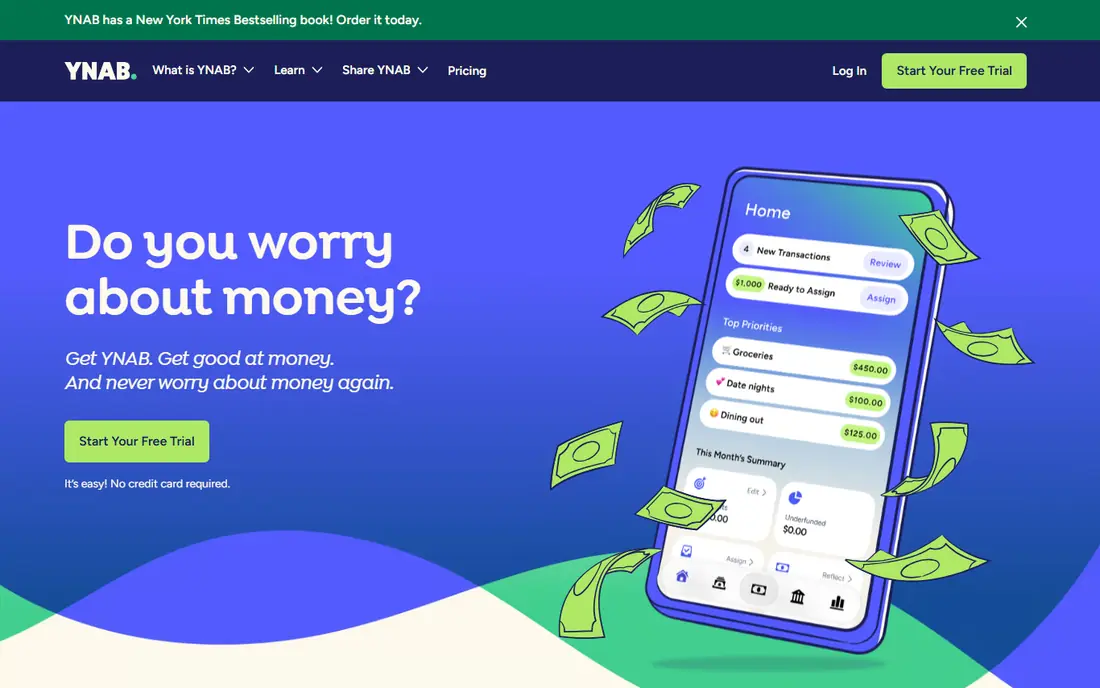
A first look at this option shows its hands-on zero-based budgeting method. YNAB asks users to assign every dollar a job before spending it, which changes how many households handle irregular costs. A 34-day trial gives time to learn the method, though the system only pays off for people who check it often. The trade-offs deserve a clear look before signing up. Requires regular use to pay off is the main drawback to weigh, while Clear budgeting method, goal tracking, bank sync, long trial is the main reason buyers stay with it. Check the current pricing page and the feature list for the plan you need, since tiers and add-ons change over time and the entry plan may not include every feature described here.
- Clear budgeting method, goal tracking, bank sync, long trial
- Requires regular use to pay off
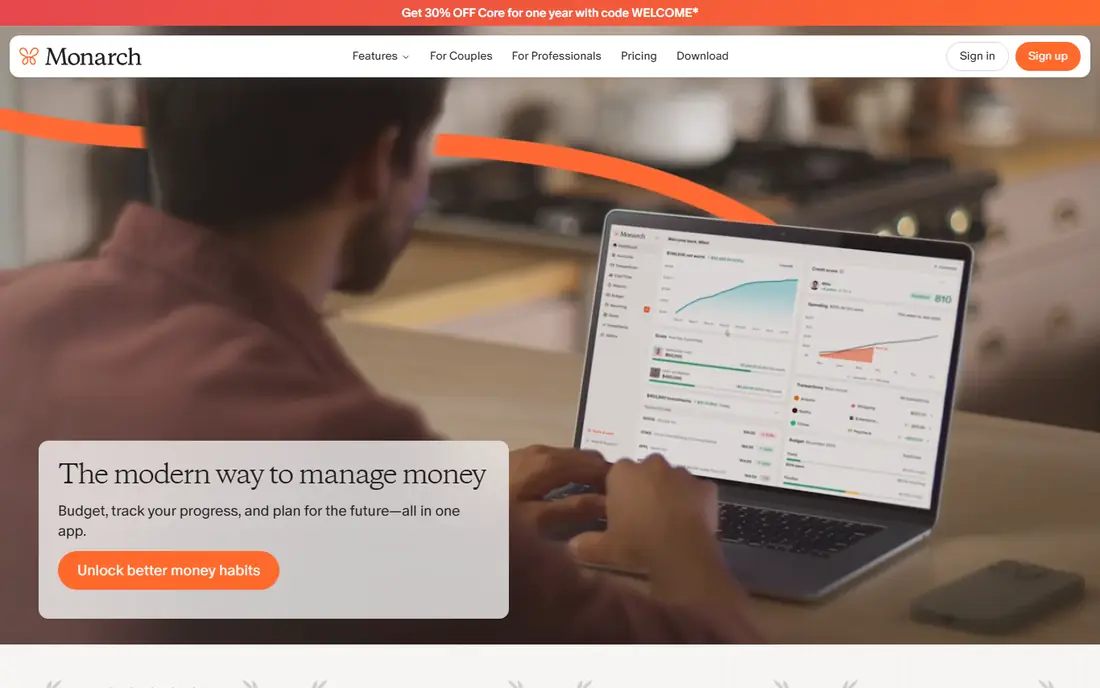
In daily use, this option stands out because its complete dashboard for budgeting, investments, and net worth. Monarch Money pulls accounts, investments, and budgets into one polished view that couples can share. Net worth tracking and custom categories help households see the full picture, while the short trial means buyers should test sync quickly. The trade-offs deserve a clear look before signing up. No free tier beyond a short trial is the main drawback to weigh, while Budgeting, investments, net worth, shared household access is the main reason buyers stay with it. Check the current pricing page and the feature list for the plan you need, since tiers and add-ons change over time and the entry plan may not include every feature described here.
- Budgeting, investments, net worth, shared household access
- No free tier beyond a short trial
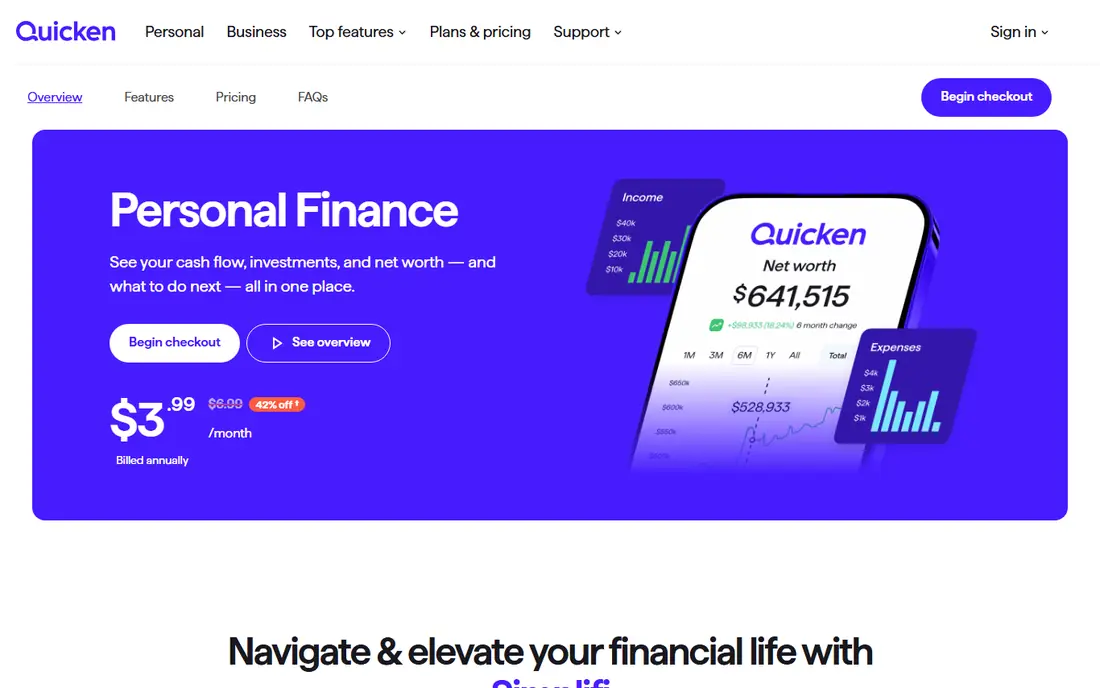
For buyers weighing options, this one earns attention for its spending plans paired with cash-flow forecasts. Quicken Simplifi shows where money is heading, not only where it went, which helps households plan for slow months. The price undercuts many rivals, though buyers should note the renewal rate after any first-year offer. The trade-offs deserve a clear look before signing up. First-year pricing may differ from renewal pricing is the main drawback to weigh, while Spending plans, cash-flow forecasts, account sync is the main reason buyers stay with it. Check the current pricing page and the feature list for the plan you need, since tiers and add-ons change over time and the entry plan may not include every feature described here.
- Spending plans, cash-flow forecasts, account sync
- First-year pricing may differ from renewal pricing
What sets this option apart is its polished design for Apple devices. Copilot Money focuses on iOS, Mac, and web, with a clean layout and smart categorization that Apple users praise. Investment tracking sits beside budgeting, while Android households must choose a cross-platform rival. The trade-offs deserve a clear look before signing up. No Android app is the main drawback to weigh, while Clean design, investment tracking, smart categorization is the main reason buyers stay with it. Check the current pricing page and the feature list for the plan you need, since tiers and add-ons change over time and the entry plan may not include every feature described here.
- Clean design, investment tracking, smart categorization
- No Android app
Looking closer, this option works best when its subscription tracking and bill reminders. Rocket Money scans linked accounts for recurring charges and flags subscriptions that may no longer be wanted. Free basic tools cover tracking, while Premium adds bill negotiation help and deeper features for a price the user chooses within a range. The trade-offs deserve a clear look before signing up. Premium features need a paid plan is the main drawback to weigh, while Subscription tracking, bill reminders, spending views is the main reason buyers stay with it. Check the current pricing page and the feature list for the plan you need, since tiers and add-ons change over time and the entry plan may not include every feature described here.
- Subscription tracking, bill reminders, spending views
- Premium features need a paid plan
A practical view of this option starts with its digital envelope system for shared budgets. Goodbudget recreates cash envelopes in digital form, with a set number of envelopes on the free tier and more on Plus. Couples can share one budget and see the same limits, while households wanting automatic sync may prefer another tool. The trade-offs deserve a clear look before signing up. Bank sync limited and mainly for US banks on paid plans is the main drawback to weigh, while Digital envelopes, shared budgets, manual entry control is the main reason buyers stay with it. Check the current pricing page and the feature list for the plan you need, since tiers and add-ons change over time and the entry plan may not include every feature described here.
- Digital envelopes, shared budgets, manual entry control
- Bank sync limited and mainly for US banks on paid plans
This option makes sense for buyers who its automatic bank feeds into spreadsheets. Tiller feeds transactions into Google Sheets or Excel templates that users can shape freely. That control suits spreadsheet fans who want custom reports, while buyers wanting a ready-made app dashboard may find the setup heavier. The trade-offs deserve a clear look before signing up. Requires comfort with spreadsheets is the main drawback to weigh, while Automatic bank feeds into Google Sheets and Excel, custom templates is the main reason buyers stay with it. Check the current pricing page and the feature list for the plan you need, since tiers and add-ons change over time and the entry plan may not include every feature described here.
- Automatic bank feeds into Google Sheets and Excel, custom templates
- Requires comfort with spreadsheets
On balance, this option appeals because its free net worth and investment dashboard. Empower offers a free personal dashboard that tracks net worth, investments, and retirement progress. Budgeting exists but stays lighter than YNAB or Monarch Money, so it suits investors who mainly want the big picture. The trade-offs deserve a clear look before signing up. Budgeting features are lighter than dedicated budget apps is the main drawback to weigh, while Net worth tracking, investment views, retirement planning tools is the main reason buyers stay with it. Check the current pricing page and the feature list for the plan you need, since tiers and add-ons change over time and the entry plan may not include every feature described here.
- Net worth tracking, investment views, retirement planning tools
- Budgeting features are lighter than dedicated budget apps
A first look at this option shows its single safe-to-spend number. PocketGuard answers one question fast: how much can be spent after bills and goals are covered. That simplicity helps people who feel overwhelmed by full budgets, while investors needing detailed portfolio views should look elsewhere. The trade-offs deserve a clear look before signing up. Investment tracking is limited is the main drawback to weigh, while Safe-to-spend view, bill tracking, spending categories is the main reason buyers stay with it. Check the current pricing page and the feature list for the plan you need, since tiers and add-ons change over time and the entry plan may not include every feature described here.
- Safe-to-spend view, bill tracking, spending categories
- Investment tracking is limited
How we picked these
We compared official feature pages, pricing pages, app store listings where relevant, privacy and security pages, and public user reviews. We grouped products by the job they do, then checked which plans include the features a buyer actually needs on day one. We did not claim hands-on testing, and we treated any price we could not verify on the vendor site as unconfirmed. That method keeps the list grounded in what vendors publish, rather than in marketing claims alone. Where a vendor uses custom quotes, we say so plainly, because a missing price is itself useful information for a buyer planning a budget and a timeline.
How to choose financial software that you will actually use
Start with the budgeting style you can sustain. Zero-based budgeting suits people who check the app often, envelope budgeting suits people who want fixed limits, and a simple dashboard suits people who mainly want to see accounts and trends. A method you ignore is worse than a simpler tool you open weekly. Next, check bank sync coverage for your accounts. Most paid tools sync with major banks, but smaller banks and credit unions vary, and manual entry may be needed for some accounts. Test sync during a trial before moving a full budget across. Finally, compare the renewal price, not only the first-year offer. Some tools discount the first year, so note the regular rate and the trial length. Cancel before renewal if the tool is not earning its place, and keep a backup export of your data. This guide is for general information only and is not financial advice. Budgeting and investment decisions depend on personal circumstances, so consider speaking with a qualified financial adviser before making major changes.
Frequently asked questions
What is the best personal finance software overall?
Monarch Money suits many households as an all-round dashboard, with budgeting, investments, and net worth tracking for $14.99 per month or $99.99 per year. YNAB suits hands-on budgeters better, while Quicken Simplifi suits buyers wanting a lower-cost all-rounder. The best pick follows the budgeting style you will sustain.
What is the best software for personal finance on a budget?
Goodbudget offers a free tier with digital envelopes, and Rocket Money offers free basic tools for subscription tracking. Quicken Simplifi is a lower-cost paid option at $5.99 per month billed annually in some plans. Free tiers usually limit bank sync or account counts, so check those limits.
What is the best financial management app for couples?
Monarch Money and Goodbudget both support shared budgets, which helps couples track joint spending. Monarch Money adds investments and net worth views, while Goodbudget focuses on envelope limits both partners can see. Choose based on whether investments matter to the household.
What is the best app for financial management on Apple devices?
Copilot Money suits Apple users, with a polished design for iOS, Mac, and web at $13 per month or $95 per year. Android users should look elsewhere, since Copilot does not offer an Android app. Monarch Money and YNAB work across iOS, Android, and web.
Is financial management software safe to link to a bank account?
Reputable tools use bank-level encryption and read-only connections through aggregation providers, and they do not move money without separate authorization. Still, review the privacy policy, use two-factor authentication, and check which accounts are linked. Remove any account you no longer want synced.
Sources we checked (9)

Online Jobs is an independent blog about careers, online work, learning new skills and the tools that help people earn. More about us.
Keep reading
All posts
Best Credit Builder Apps
Searching for the best credit builder apps? We compare 9 apps that report to credit bureaus, with costs, account types, and who each one suits best today.

n8n Alternatives
n8n alternatives compared for 2026, with Zapier, Make, Activepieces, and more, covering visual builders, code steps, self-hosting, and pricing models.

eBay Alternatives
Looking for ebay alternatives? We compared 9 marketplaces for sellers on fees, buyer reach, categories and ease of listing, to help you sell with confidence.