Best Enterprise Risk Management Software in 2026: 9 Products Compared


Mid-market teams that want no-code GRC · Starting price: See website
How we put this together: we compare official feature and pricing pages, app store listings, privacy policies and public user reviews. Prices change, so check the provider's site before you pay.
Key takeaways
- Most enterprise risk platforms are quote-only, so budget for a sales process and a demo before you see real prices.
- No-code configuration suits smaller risk teams, while large regulated firms often need deeper control libraries.
- Risk, audit, compliance, and third-party risk should share one register, or gaps will hide between teams.
- Implementation time and reporting quality matter as much as feature lists in this category.
Quick comparison
| Name | Who it suits | Starting price | Free option | |
|---|---|---|---|---|
| LogicGate Risk Cloud | Mid-market teams that want no-code GRC | See website | No | Visit |
 Riskonnect | Large firms with claims and insurance risk | See website | No | Visit |
 MetricStream | Large regulated firms with complex controls | See website | No | Visit |
 RSA Archer | Enterprises that need governed risk and audit | See website | No | Visit |
 Onspring | Teams that want configurable GRC without code | See website | No | Visit |
 LogicManager | Mid-size firms that want guided GRC | See website | No | Visit |
 NAVEX | Compliance-led firms that need policy and risk | See website | No | Visit |
 Diligent | Board and governance-led risk programs | See website | No | Visit |
 Resolver | Mid-large firms that want flexible GRC | See website | No | Visit |
The best enterprise risk management software
Enterprise risk management software brings risk registers, controls, audits, and incidents into one place so leaders can see exposure across the business. We compared platforms on risk coverage, configuration, reporting, and fit for different team sizes.
LogicGate Risk Cloud
Who it suits: Mid-market teams that want no-code GRC
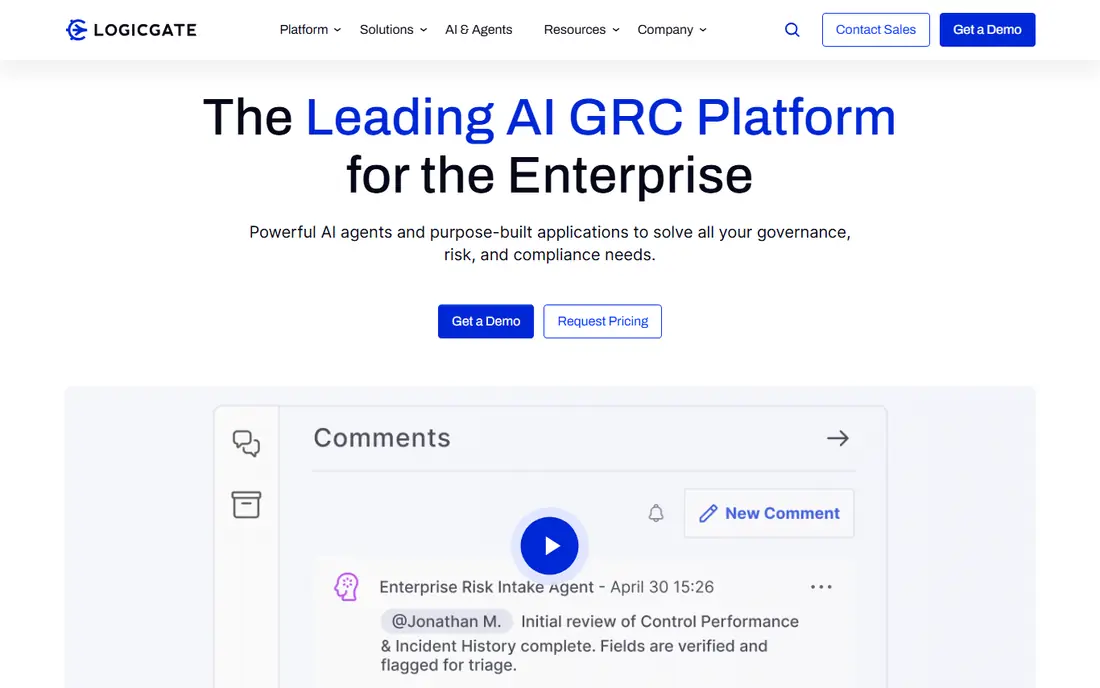
LogicGate Risk Cloud fits risk teams that want to build workflows without writing code. The drag-and-drop builder lets business users shape forms, assessments, and approvals, which speeds up changes when risk needs shift.
It suits mid-market teams and larger firms that want business users, not only IT, to run risk programs. Prebuilt apps for enterprise risk, third-party risk, audit, and compliance give a useful starting point.
The catch is reporting depth. Standalone reporting can feel thin for complex board needs, so test your key reports during the demo and ask what custom reporting costs. Before you subscribe, check the vendor pricing page for the current plan, because prices and plan inclusions change, and confirm that the features you need sit on the plan you will actually buy. A short trial with your own data or daily routine will tell you more than a feature list alone.
- No-code workflow builder
- Prebuilt risk apps
- Flexible reporting
- Standalone reporting can feel thin
- Quote-only pricing
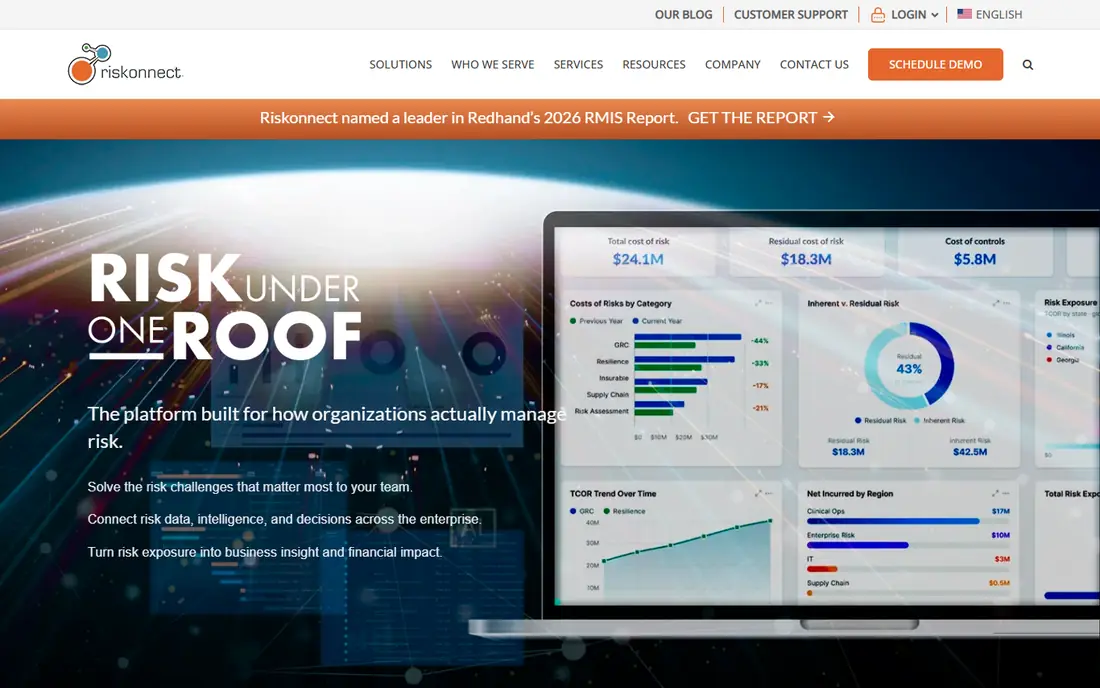
Riskonnect fits large enterprises that need risk, claims, insurance, and health and safety in one platform. It pulls insurable and non-insurable risks together, with tools for incidents, claims, and third-party risk.
It suits firms juggling workers compensation, vendor risk, and regulatory frameworks at once. The breadth helps when risk data must flow between departments without manual handoffs.
The catch is setup effort and cost. Implementation is complex and needs dedicated staff, so smaller teams may find the scope and price hard to justify. Before you subscribe, check the vendor pricing page for the current plan, because prices and plan inclusions change, and confirm that the features you need sit on the plan you will actually buy. A short trial with your own data or daily routine will tell you more than a feature list alone.
- Integrated risk, claims, and insurance
- Health and safety tools
- Broad modules
- Complex setup
- Pricing signals a large-enterprise fit
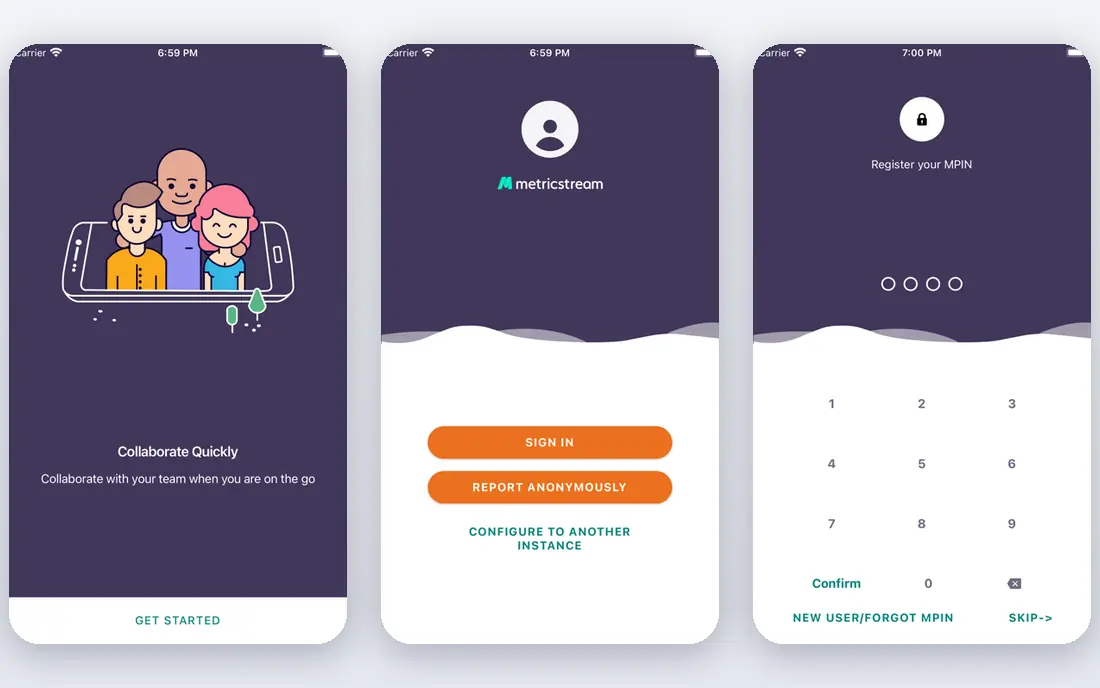
MetricStream fits large regulated firms with complex, interconnected risk programs across banking, energy, healthcare, and similar sectors. Its control libraries and data model suit firms with many frameworks to map at once.
It suits teams that need AI-assisted insight and a governed view of risk across business units. The platform handles scale, but it rewards firms that invest in rollout and training.
The catch is weight. Deeper changes often need specialist skills, and ad-hoc reporting can feel cumbersome, so test reporting with your own data during evaluation. Before you subscribe, check the vendor pricing page for the current plan, because prices and plan inclusions change, and confirm that the features you need sit on the plan you will actually buy. A short trial with your own data or daily routine will tell you more than a feature list alone.
- Deep control libraries
- AI-assisted insight
- Federated data model
- Heavy implementation
- Ad-hoc reporting can be cumbersome
RSA Archer fits enterprises that need a mature, governed platform for risk, audit, and compliance. Its long history in GRC means deep control and audit coverage, with a large partner and user ecosystem.
It suits large firms with established GRC processes and IT support, where governance and audit trails matter most. The platform handles complex programs that span many business units.
The catch is effort. Setup and changes need technical skill, and the interface can feel dated compared with newer no-code tools, so factor training into your plan. Before you subscribe, check the vendor pricing page for the current plan, because prices and plan inclusions change, and confirm that the features you need sit on the plan you will actually buy. A short trial with your own data or daily routine will tell you more than a feature list alone.
- Mature GRC platform
- Strong audit and control coverage
- Large ecosystem
- Setup needs technical skill
- Interface feels dated to some users
Onspring fits teams that want to configure GRC workflows themselves without a heavy IT project. Risk, audit, and compliance modules share one platform, and business users can shape fields and workflows.
It suits mid-market teams that need flexibility but cannot support a large implementation team. The no-code approach helps risk owners adapt the system as programs change.
The catch is ecosystem size. It is smaller than the largest GRC vendors, so check integrations and reference customers in your sector before you commit. Before you subscribe, check the vendor pricing page for the current plan, because prices and plan inclusions change, and confirm that the features you need sit on the plan you will actually buy. A short trial with your own data or daily routine will tell you more than a feature list alone.
- Configurable workflows
- No-code design
- Audit and risk modules
- Smaller ecosystem than largest rivals
- Quote-only pricing
LogicManager fits mid-size firms that want guided structure for risk and governance. A built-in taxonomy helps teams organise risks consistently, and the support model suits teams without a large GRC staff.
It suits firms moving from spreadsheets to a governed platform, where consistency matters more than deep customisation. Governance, risk, and compliance modules share one data model.
The catch is scale ceiling. Very large firms with highly complex programs may need deeper customisation than LogicManager offers, so test your most complex workflow in the demo. Before you subscribe, check the vendor pricing page for the current plan, because prices and plan inclusions change, and confirm that the features you need sit on the plan you will actually buy. A short trial with your own data or daily routine will tell you more than a feature list alone.
- Guided risk taxonomy
- Governance tools
- Strong support model
- Less suited to very large complex programs
- Quote-only pricing
NAVEX fits compliance-led firms that need policy, training, and risk in a connected program. Policy management and compliance tools sit alongside risk and audit modules, which helps firms with strong regulatory duties.
It suits firms where compliance drives the risk agenda, and where policy attestation and training completion must link to risk records. The breadth helps audit teams show a joined-up program.
The catch is module balance. Risk depth can vary by module, so check whether the risk register and scoring meet your needs, not only the compliance side. Before you subscribe, check the vendor pricing page for the current plan, because prices and plan inclusions change, and confirm that the features you need sit on the plan you will actually buy. A short trial with your own data or daily routine will tell you more than a feature list alone.
- Policy management
- Compliance training links
- Risk and audit modules
- Risk depth varies by module
- Quote-only pricing
Diligent fits firms where board effectiveness and governance sit at the centre of risk work. Board management, entity records, audit, and compliance share one platform, with central risk records and dashboards.
It suits regulated firms that need clear board reporting and a governed record of decisions, policies, and audits. The interface is approachable once teams pass the initial learning curve.
The catch is emphasis. Governance breadth is a strength, but teams that need deep risk analytics should test scoring, modelling, and reporting carefully in the demo. Before you subscribe, check the vendor pricing page for the current plan, because prices and plan inclusions change, and confirm that the features you need sit on the plan you will actually buy. A short trial with your own data or daily routine will tell you more than a feature list alone.
- Board management links
- Entity and audit tools
- Central risk records
- Governance focus may outweigh deep risk analytics for some teams
Resolver fits mid-large firms that want a flexible GRC platform covering risk, security, and investigations. Users value the interface and customisable reports once setup is complete.
It suits firms that need corporate security and GRC under one roof, with reports tailored to different audiences. The platform adapts to varied risk programs without forcing one rigid model.
The catch is rollout. Users flag slower setup and narrower third-party links, so ask for an implementation plan and check the integrations you need most. Before you subscribe, check the vendor pricing page for the current plan, because prices and plan inclusions change, and confirm that the features you need sit on the plan you will actually buy. A short trial with your own data or daily routine will tell you more than a feature list alone.
- Flexible GRC platform
- Customisable reports
- Investigations support
- Setup can be slow
- Integration breadth is narrower
How we picked these
We compared enterprise risk platforms that cover risk registers, controls, assessments, and reporting, and we checked vendor sites for pricing disclosure and product scope. Most vendors publish no public price, so we mark those as See website and focus on fit, configuration, and coverage. We did not run full implementations, so use demos with your own data to confirm fit before you buy.
How to choose enterprise risk software
Start with the risk types you must cover, not the feature list. List enterprise risk, operational risk, third-party risk, compliance, audit, and incident needs, then check which platform covers each one natively versus through add-ons or custom work.
Next, test configuration with your own risk register. Bring a real register to the demo, ask the vendor to build a workflow, a scoring model, and a report from it, and note how much help you need. A platform your risk team can shape without IT will move faster than one that needs consultants for every change.
Then check reporting and audit trails. Leaders need dashboards that show trends, overdue actions, and control gaps, while auditors need a clear history of changes and approvals. Ask to see a board-ready report and an audit trail, not only a product tour.
Finally, plan implementation honestly. Ask for timelines, data migration help, training, and ongoing support costs, and speak to a reference customer of similar size. A platform that looks complete but takes a year to roll out may cost more in delay than a simpler tool that goes live in months.
Frequently asked questions
What is enterprise risk management software?
It is software that records risks, controls, assessments, incidents, and actions in one system, so teams can track exposure and ownership. It often covers compliance, audit, and third-party risk as well. The goal is a shared view of risk across departments, not a set of separate spreadsheets.
Why is most pricing quote-only?
Enterprise risk platforms vary by users, modules, implementation, and support, so vendors price by quote rather than a public list. That makes demos and scoped quotes essential, and it means you should compare total cost, including implementation, not only licence fees. Ask for a written quote with modules and support included.
How long does implementation take?
Timelines vary from weeks for a focused rollout to many months for a large regulated program with complex controls. Factors include data migration, workflow design, integrations, and training. Ask vendors for a phased plan with a live date for your core risk register first.
Do small companies need enterprise risk software?
Small companies can often manage risk with spreadsheets and simple tools until risk, compliance, and audit work grows. Enterprise platforms suit firms with many risks, regulators, or third parties to track. If your register fits on one spreadsheet and stays current, you may not need this category yet.
What is the difference between GRC and ERM?
ERM focuses on identifying and managing enterprise risks, while GRC is a broader term covering governance, risk, and compliance together. Many platforms cover both, with modules for risk, audit, policy, and compliance. Choose based on which modules you will actually use, not the label.
Sources we checked (9)

Online Jobs is an independent blog about careers, online work, learning new skills and the tools that help people earn. More about us.
Keep reading
All posts
n8n Alternatives
n8n alternatives compared for 2026, with Zapier, Make, Activepieces, and more, covering visual builders, code steps, self-hosting, and pricing models.

iPhone Alternatives
Looking for iPhone alternatives in 2026? Compare 9 Android phones from Samsung, Google, OnePlus, and more, with cameras, battery life, and honest trade-offs.

eBay Alternatives
Looking for ebay alternatives? We compared 9 marketplaces for sellers on fees, buyer reach, categories and ease of listing, to help you sell with confidence.