Best Enterprise AI Platforms in 2026: 8 Platforms Compared


Microsoft-centred enterprises · Starting price: See website
How we put this together: we compare official feature and pricing pages, app store listings, privacy policies and public user reviews. Prices change, so check the provider's site before you pay.
Key takeaways
- Microsoft Foundry suits firms already on Azure and Microsoft 365 who want AI inside tools staff already use.
- Amazon Bedrock and Google Vertex AI suit firms standardised on AWS or Google Cloud who want model choice inside that cloud.
- Databricks and Snowflake suit firms whose data already lives in a lakehouse or cloud data platform.
- Palantir suits complex operations where AI must work inside governed, operational workflows.
Quick comparison
| Name | Who it suits | Starting price | Free option | |
|---|---|---|---|---|
| Microsoft Foundry | Microsoft-centred enterprises | See website | Free trial | Visit |
 Google Vertex AI | Google Cloud and data teams | See website | Free trial | Visit |
 Amazon Bedrock | AWS-standardised organisations | See website | Free trial | Visit |
 Databricks | data and ML teams building custom AI | See website | Free trial | Visit |
 Snowflake | cloud data teams adding AI | See website | Free trial | Visit |
 Palantir Foundry and AIP | complex operations and regulated work | See website | No | Visit |
 Anthropic Claude | long-document and coding workloads | See website | No | Visit |
 OpenAI Platform | teams that want broad tooling and models | See website | No | Visit |
The best enterprise AI platforms
An enterprise AI platform is not just a model. It is the data controls, access rules, deployment options and monitoring that let a large company use AI without losing track of its data. We compared platforms on model choice, data governance, deployment, security and how they fit an existing cloud or data setup.
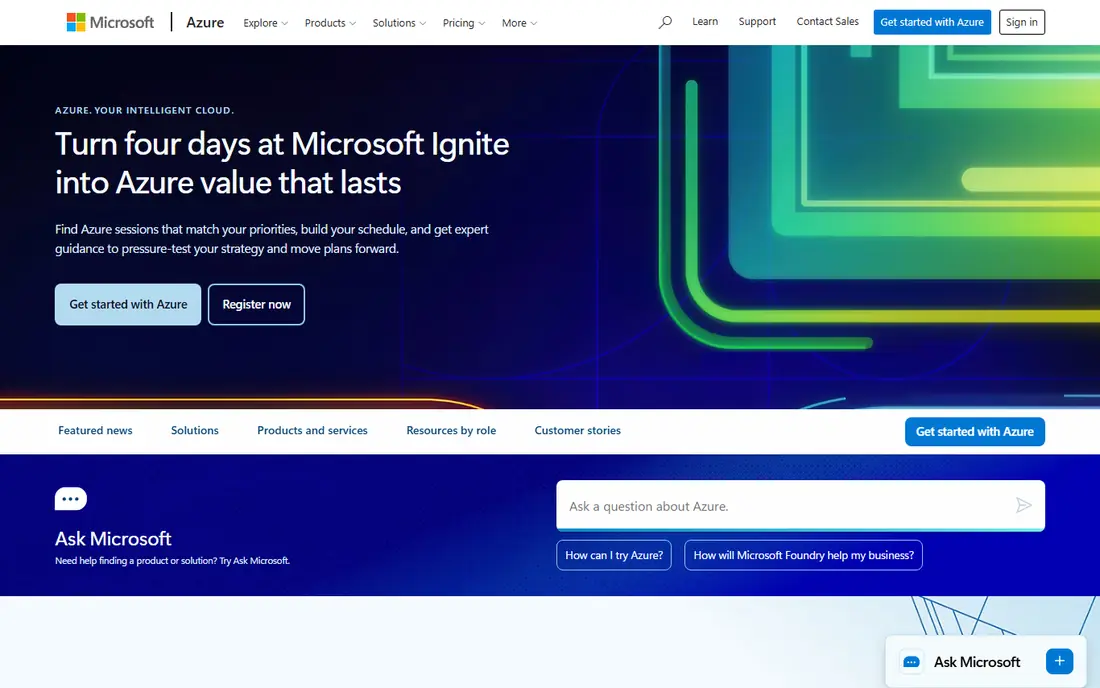
For readers who want Microsoft-centred enterprises, Microsoft Foundry is a name worth checking first. Its strengths include wide model catalogue; azure identity and compliance; copilot integration and that mix shapes who will get the most from it. We compared its official feature and pricing pages against the other tools in this list, and we looked at what it does well, what it limits, and who should look elsewhere before paying. Microsoft Foundry, formerly Azure AI Foundry, is the platform for building AI apps and agents on Azure, with access to OpenAI models plus many other models through one catalogue. Its strength is fit: Entra ID for identity, private networking, compliance controls and Copilot across Microsoft 365 give a Microsoft firm a joined-up path from model to daily work. Costs span several Azure services, including compute, storage and retrieval, so a pilot budget needs care. Firms that are not already on Azure will get less value from the integration. For a Microsoft-centred enterprise, Foundry is the natural starting point.
- Wide model catalogue
- Azure identity and compliance
- Copilot integration
- Costs span many services
- Best value needs Azure commitment
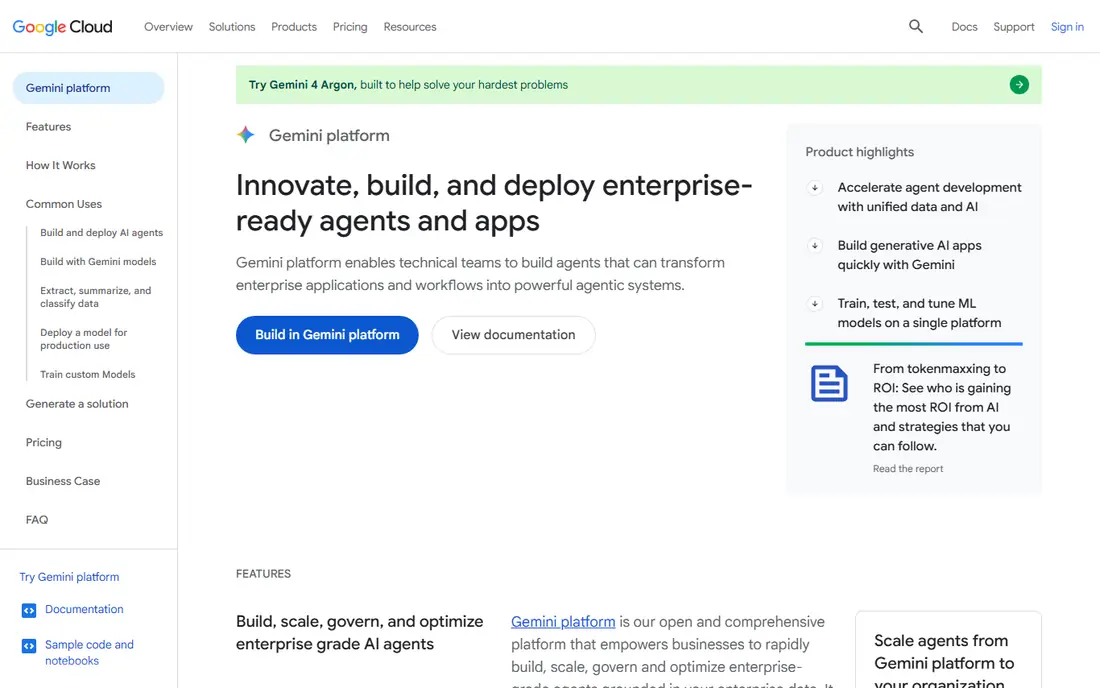
For readers who want Google Cloud and data teams, Google Vertex AI is a name worth checking first. Its strengths include managed model lifecycle; bigquery integration; many models and that mix shapes who will get the most from it. We compared its official feature and pricing pages against the other tools in this list, and we looked at what it does well, what it limits, and who should look elsewhere before paying. Vertex AI offers managed tools for building, deploying and monitoring models on Google Cloud, with close links to BigQuery and other Google data services. That suits teams whose analytics already run on Google Cloud and who want model work near their data, with managed pipelines and monitoring built in. Its value is strongest inside Google Cloud, and pricing covers several services, so teams outside that cloud should compare Bedrock or Foundry first. For a Google Cloud firm, Vertex AI gives a coherent, managed route to production AI.
- Managed model lifecycle
- BigQuery integration
- Many models
- Best fit needs Google Cloud
- Pricing has many parts
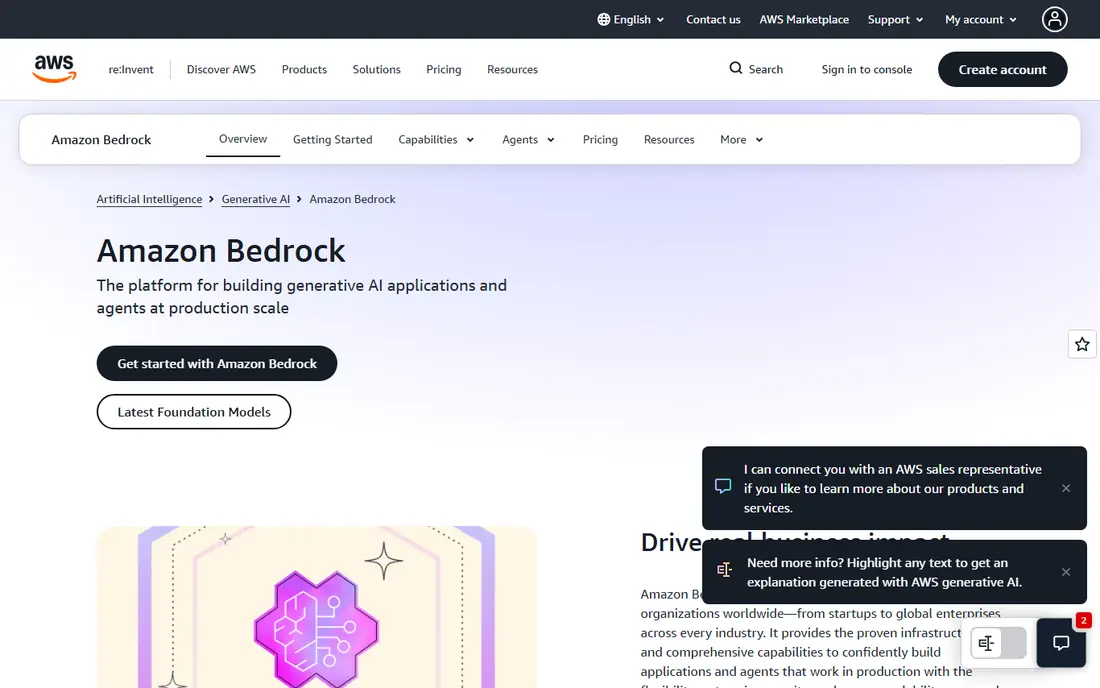
For readers who want AWS-standardised organisations, Amazon Bedrock is a name worth checking first. Its strengths include model choice without per-model contracts; aws security; serverless options and that mix shapes who will get the most from it. We compared its official feature and pricing pages against the other tools in this list, and we looked at what it does well, what it limits, and who should look elsewhere before paying. Amazon Bedrock lets AWS firms use many foundation models through one service, without a separate vendor contract for each model. Its AWS identity, networking and security controls suit firms that already run on AWS, and serverless options keep small pilots simple. Model availability varies by region, and costs vary by model, tier and reserved capacity, so check the models you need in your region before you commit. For an AWS firm that wants model choice inside familiar controls, Bedrock is a strong choice.
- Model choice without per-model contracts
- AWS security
- Serverless options
- Model availability varies by region
- Costs vary by model and tier
For readers who want data and ML teams building custom AI, Databricks is a name worth checking first. Its strengths include lakehouse plus ml; unity catalog governance; model serving and that mix shapes who will get the most from it. We compared its official feature and pricing pages against the other tools in this list, and we looked at what it does well, what it limits, and who should look elsewhere before paying. Databricks unifies data engineering, analytics and machine learning on a lakehouse, with Unity Catalog for governance and model serving for deployment. That suits teams whose training and reference data already live in Databricks and who want to build custom models on their own data. Consumption pricing needs careful monitoring, and the platform rewards teams with data engineering skills. A team that only needs to call a hosted model may find it more platform than the job needs. For data-led AI teams, Databricks is a leading option.
- Lakehouse plus ML
- Unity Catalog governance
- Model serving
- Consumption pricing needs care
- Setup needs data skills
For readers who want cloud data teams adding AI, Snowflake is a name worth checking first. Its strengths include governed data sharing; ai-ready data platform; scalable compute and that mix shapes who will get the most from it. We compared its official feature and pricing pages against the other tools in this list, and we looked at what it does well, what it limits, and who should look elsewhere before paying. Snowflake provides a cloud data platform with governed sharing, scalable compute and AI features that sit close to enterprise data. That suits firms that want AI to work on governed data without moving it to a separate system, and its data sharing helps teams collaborate across business units. Its AI story is data-platform led rather than model-led, so teams that want the widest model catalogue may pair it with another platform. Credit-based pricing also needs monitoring. For a data-centred enterprise, Snowflake is a solid foundation for AI work.
- Governed data sharing
- AI-ready data platform
- Scalable compute
- AI features are data-platform led
- Pricing is credit based
Palantir Foundry and AIP
Who it suits: complex operations and regulated work
For readers who want complex operations and regulated work, Palantir Foundry and AIP is a name worth checking first. Its strengths include ontology-based data integration; operational ai apps; strong governance and that mix shapes who will get the most from it. We compared its official feature and pricing pages against the other tools in this list, and we looked at what it does well, what it limits, and who should look elsewhere before paying. Palantir Foundry connects disparate data sources into a governed ontology, and its AI Platform builds operational apps and agents on top of that layer. That suits complex operations, regulated work and firms where AI must support real decisions, not just answer questions in a chat window. Contracts are enterprise scale and setup is a larger project, often with vendor support. That rules it out for small teams or simple pilots. For large, complex operations, Palantir's governed, workflow-led approach is distinctive.
- Ontology-based data integration
- Operational AI apps
- Strong governance
- Enterprise contracts
- Setup is a larger project
For readers who want long-document and coding workloads, Anthropic Claude is a name worth checking first. Its strengths include strong long-document handling; coding support; enterprise api options and that mix shapes who will get the most from it. We compared its official feature and pricing pages against the other tools in this list, and we looked at what it does well, what it limits, and who should look elsewhere before paying. Anthropic Claude, accessed through its API and through cloud partners, suits long-document analysis, coding and careful, structured work. Its enterprise options add controls and support for larger deployments, and it is available inside major clouds as well as directly. Pricing varies by model and use, and the full enterprise control set sits on business plans. Teams should trial it on their own long documents, since quality gains over other models depend on the task. For document-heavy enterprise work, Claude is a strong contender.
- Strong long-document handling
- Coding support
- Enterprise API options
- Usage pricing varies by model
- Enterprise controls need a business plan
For readers who want teams that want broad tooling and models, OpenAI Platform is a name worth checking first. Its strengths include broad model range; strong developer tooling; enterprise agreements and that mix shapes who will get the most from it. We compared its official feature and pricing pages against the other tools in this list, and we looked at what it does well, what it limits, and who should look elsewhere before paying. The OpenAI Platform offers a broad model range, developer tools and agent features that many enterprise teams already know, with enterprise agreements for larger deployments. Its tooling support and hiring pool are practical advantages: engineers are more likely to have used it before, which shortens a pilot. Usage pricing varies by model, and data controls and residency need enterprise terms rather than a basic API plan. Teams in regulated work should check those terms carefully. For broad, general enterprise AI work, OpenAI remains a central option.
- Broad model range
- Strong developer tooling
- Enterprise agreements
- Usage pricing varies
- Data controls need enterprise terms
How we picked these
We compared official feature pages, pricing pages, app store listings and public documentation for each product, and we checked that each official homepage belongs to the product named. We did not claim hands-on testing that did not happen, and we did not invent prices, awards, user counts or ratings. Where a price could not be confirmed from the vendor site, we wrote See website rather than guessing. We also weighed fit over fame. A well-known tool that does not match the topic was left out, while a smaller tool that matches the job well was kept in. That is why each list mixes leaders with smaller options, and why the best choice for one reader may not be the best choice for another.
How to choose an enterprise AI platform
Start with where your data lives. A platform that sits close to your data warehouse or lakehouse will usually be faster to adopt and easier to govern than one that needs data copied elsewhere. Next, check model choice and lock-in: can you swap models, run open models, or keep a model inside your own cloud region if a contract changes. Governance is the next test: access controls, audit logs, data residency and approval workflows matter more than demo features, especially in regulated work. Then model the full cost, including data, compute, storage and support, since headline token prices rarely tell the whole story. Finally, run a pilot on a real workflow with real data controls, and measure accuracy, latency and cost together before you roll out more widely.
Check the free plan before you pay
Open the pricing page and read the free plan limits in full, including export quality, storage, minutes, seats and any watermark. A free plan that looks generous can still limit the exact feature you need, such as high-resolution export, CRM sync or team seats. Trial the paid feature you care about most during any trial period, and set a reminder before the trial ends.
Compare the total cost, not just the headline price
Add up the monthly or yearly fee, any per-seat or per-minute cost, payment processing where it applies, and the cost of add-ons you will actually use. A low headline price with expensive add-ons can cost more than a higher plan that includes them. If pricing is quote only, ask for the full cost in writing, including setup, support and renewal terms, before you compare vendors.
Frequently asked questions
What is the best enterprise AI platform?
There is no single winner. Microsoft Foundry suits Microsoft firms, Bedrock suits AWS firms, Vertex AI suits Google Cloud firms, and Databricks or Snowflake suit data-led firms. Pick the platform that fits your cloud, data and governance needs.
What is the best AI platform for enterprise use with strict governance?
Palantir, Microsoft Foundry and Databricks all offer strong governance, with access controls, audit trails and deployment options for regulated work. Check certifications, data residency and how approvals work for your specific compliance needs.
Are enterprise AI platforms priced per token or by contract?
Both models exist. API platforms often charge per token or per hour, while larger deployments use enterprise agreements, committed use or consumption units. Get a quote based on your expected volume, not a headline rate.
Can I use more than one AI platform?
Yes, and many large firms do. A main platform for governed workloads plus a second platform for a specific model or team is common. Keep governance consistent across platforms, or the extra choice can create extra risk.
What is the best enterprise AI tool for a small team?
A small team often does better with a single cloud AI service or a managed model API than a full enterprise platform. Start with the cloud you already use, prove value on one workflow, and expand only when governance or scale demands it.
Sources we checked (8)

Online Jobs is an independent blog about careers, online work, learning new skills and the tools that help people earn. More about us.
Keep reading
All posts
n8n Alternatives
n8n alternatives compared for 2026, with Zapier, Make, Activepieces, and more, covering visual builders, code steps, self-hosting, and pricing models.

ZoomInfo Alternatives
The best ZoomInfo alternatives in 2026, compared on price, free plans, data coverage, and which tool fits small teams or large sales teams best in detail.
Yotpo Alternatives
Find cheaper alternatives to Yotpo for reviews and loyalty, with Judge.me, Loox, Stamped, and more compared for Shopify stores in 2026, all in one guide.