Best English Learning Apps in 2026: 8 Products Compared

How we put this together: we compare official feature and pricing pages, app store listings, privacy policies and public user reviews. Prices change, so check the provider's site before you pay.
Key takeaways
- Duolingo is our pick for free daily practice and habit building, especially for beginners.
- Babbel and Busuu suit learners who want structured courses with clearer grammar and level progression.
- ELSA Speak is the strongest focused pick for pronunciation, with AI feedback on sounds and stress.
- Cambly and italki help learners who need real conversation with a human tutor or teacher.
- Rosetta Stone, Memrise, and Pimsleur cover immersion, vocabulary, and audio learning for different study styles.
Quick comparison
| Name | Who it suits | Starting price | Free option | |
|---|---|---|---|---|
 Duolingo | Free daily practice | Free | Yes | Visit |
 Babbel | Structured courses | See website | No | Visit |
 Busuu | Level-based learning | Free | Yes | Visit |
 Rosetta Stone | Immersion learning | See website | Free trial | Visit |
 Memrise | Vocabulary learning | Free | Yes | Visit |
 Pimsleur | Audio learning | See website | Free trial | Visit |
 Cambly | Live conversation | See website | Free trial | Visit |
 ELSA Speak | Pronunciation practice | Free | Yes | Visit |
The best english learning apps
We compared official course pages, pricing pages, app store listings, privacy policies, and public reviews for each app. We focused on English courses, not on every language each platform offers, and we checked that each app still offers English learning in 2026. The best app depends on your level, your goal, and how much time you can study each day.
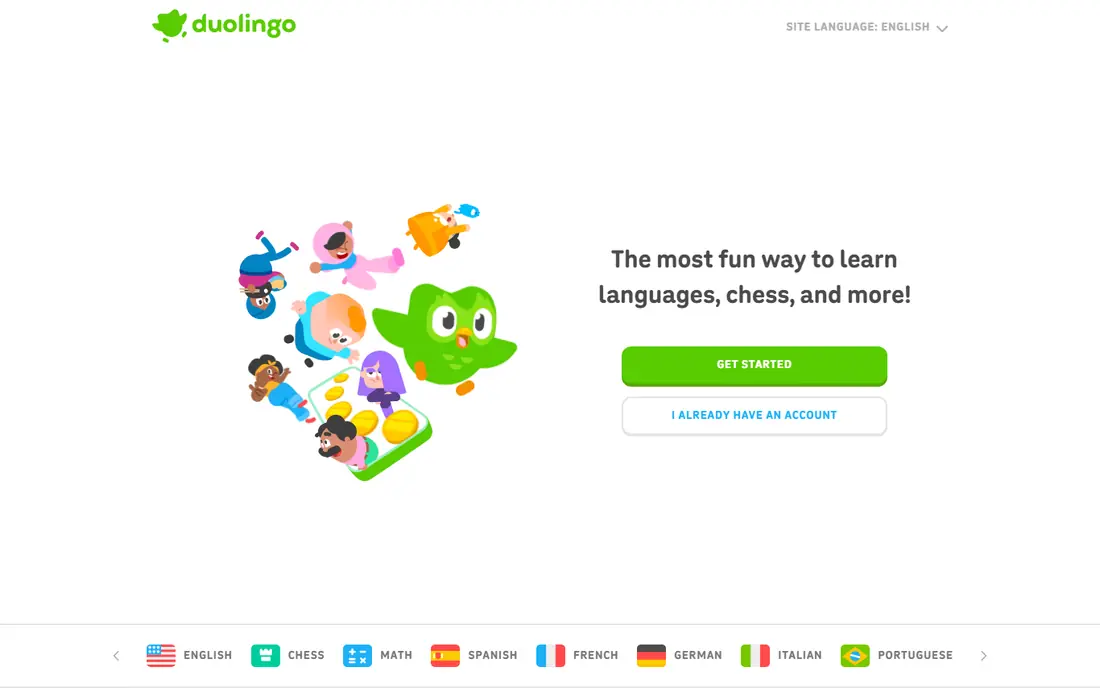
Duolingo is a good first app because it makes daily practice easy. Lessons are short, game-like, and structured, so you can fit study into a commute or a break. The free tier covers a useful range of English basics, and paid plans remove ads and add extra features, including AI practice on higher tiers in some markets.
The limit is depth. Duolingo builds vocabulary and basic sentence patterns well, but it does not replace conversation or detailed grammar study for higher levels. Use it as a daily base, then add a speaking or grammar tool when you reach the point where short exercises feel too easy. For beginners on a budget, it is still the easiest place to start.
- Free tier with daily lessons
- Streaks and short lessons build a habit
- Covers vocabulary, grammar, listening, and speaking basics
- Grammar explanations can feel thin
- Progress may slow at intermediate levels
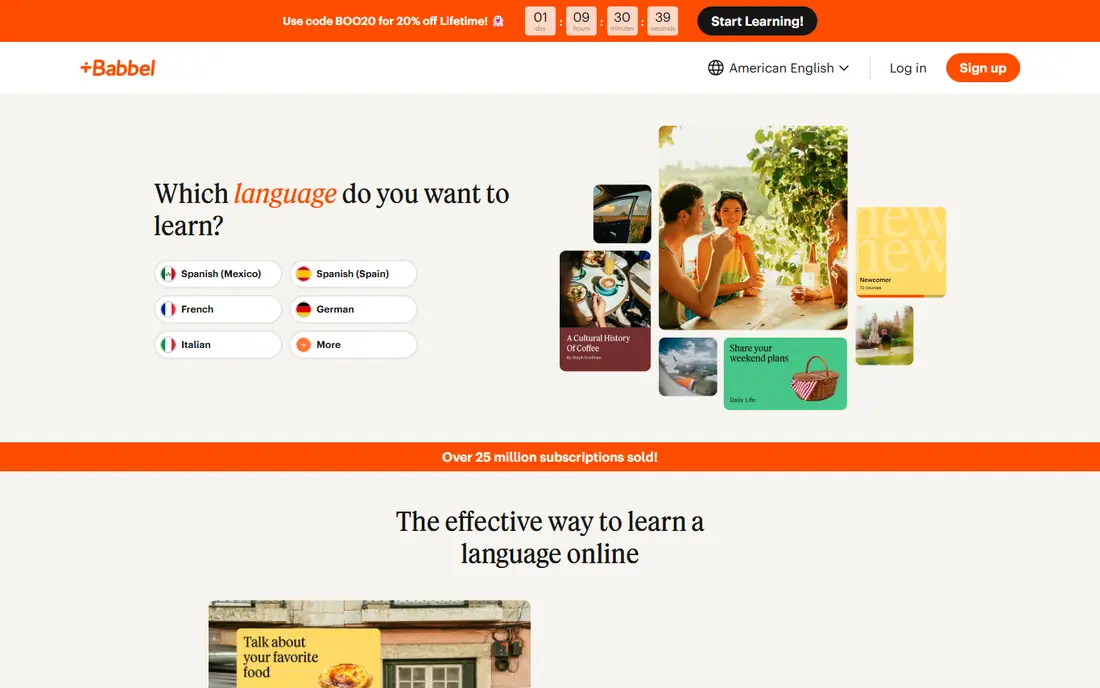
Babbel suits learners who want a course, not just a game. Lessons follow dialogues, explain grammar in context, and review vocabulary with spaced repetition. That structure helps learners who feel lost in an open app with no clear path, and it works well for people who study for 15 to 20 minutes a day.
The main catch is price and access. Babbel is mainly a paid app, with only limited free lessons, so check the current plan for your country before you commit. If you want a clear course path and you are willing to pay for structure, Babbel is a strong pick. If you need free practice first, start with Duolingo or Busuu.
- Dialogue-led lessons built by teachers
- Clearer grammar progression
- Practical everyday topics
- Free access is limited to first lessons
- Fewer English course levels than some rivals in some markets
Busuu is useful because it shows you where you stand. Courses are organised by level, from beginner to upper intermediate in many markets, so you can see progress in a way that feels concrete. The community feature lets native speakers correct your writing and speaking exercises, which adds a human element that many apps lack.
The free tier covers basic lessons, while paid plans open full courses, offline mode, and grammar review. Community corrections are helpful, but they are not a substitute for a teacher, and response times vary. If you want a structured path with some human feedback, Busuu is a good middle option between Duolingo and a tutor platform.
- Courses aligned to CEFR levels
- Feedback from native speakers
- Useful grammar and vocabulary review
- Some features need a paid plan
- Community feedback quality can vary
Rosetta Stone takes a different approach by teaching through images and context rather than translation. That immersion method can help learners think in English earlier, especially for basic vocabulary and sentence patterns. The speech recognition tool gives feedback on pronunciation, which is useful for learners who want to speak more clearly.
The method is not for everyone. Some learners want grammar rules explained directly, and Rosetta Stone can feel slow if you already know basic English. It also costs more than many rivals, so check the current subscription or lifetime offer on the official site. If you like visual learning and a steady pace, it is worth a trial.
- Image-based immersion method
- Speech recognition for pronunciation
- Structured units without translation in early lessons
- Grammar progression can feel slow
- Price is higher than many app rivals
Memrise is best for building words and phrases you can actually use. It uses spaced repetition to bring words back at the right time, and many courses include short videos of native speakers, which helps with listening and natural phrasing. That focus makes it a good companion app alongside a main course.
It is less strong as a complete course on its own, because grammar and writing practice are lighter than in Babbel or Busuu. Use Memrise to grow vocabulary while you study grammar and speaking elsewhere. The free tier is useful for testing the method, and paid plans add more courses and offline access.
- Strong vocabulary and phrase learning
- Video clips of native speakers in many courses
- Spaced repetition for review
- Less structured grammar teaching
- Some courses vary in depth
Pimsleur is the pick for learners who study with their ears, not their eyes. Lessons are around 30 minutes, focus on speaking and listening, and prompt you to respond out loud. That design suits commuters, drivers, and people who want to improve spoken English without staring at a screen.
The trade-off is reading and writing. Pimsleur does not teach those skills in the same depth, so pair it with a reading or writing tool if you need full English skills for work or exams. It also costs more than a basic app, so use the trial to check whether the audio pace suits you. If speaking confidence is your main goal, Pimsleur is a strong choice.
- Audio-first lessons for commutes and walking
- Strong speaking and listening practice
- Spaced repetition built into lessons
- Light on reading and writing
- Subscription cost is higher than many app rivals
Cambly helps learners who need real conversation, not just exercises. You can book video lessons with tutors, practise speaking on everyday topics, and get instant corrections. That live practice is hard to replace with an app, especially for learners who understand English but freeze when they need to speak.
The cost is the main barrier, since live lessons cost more than a subscription app. Tutor style also varies, so try more than one tutor before you judge the platform. If your goal is fluency for work, interviews, or travel, Cambly is a practical step after you have basic vocabulary from an app such as Duolingo or Busuu.
- Live video lessons with native-speaking tutors
- Flexible scheduling
- Useful for speaking confidence and fluency
- Cost is higher than app-only learning
- Tutor quality can vary by tutor
ELSA Speak focuses on one skill and does it well. It listens to your speech, highlights sounds that need work, and gives exercises for word stress and intonation. That feedback is useful for learners whose grammar is strong but whose pronunciation causes misunderstandings at work or in daily life.
It is not a full course, so use it alongside a grammar or vocabulary app if you need broader English skills. The free tier lets you test the feedback, while paid plans open more lessons and tracking. If pronunciation is your main block, ELSA Speak is the most focused pick in this list.
- Detailed AI feedback on sounds, stress, and intonation
- Focused pronunciation lessons
- Useful for accent and clarity goals
- Less complete as a full English course
- Best results need regular short practice
How we picked these
We compared official course pages, pricing pages, app store listings, privacy policies, and public reviews for each app. We checked that each app offers English learning in 2026, that it has a clear free tier or trial where listed, and that it fits a distinct learning need, from daily habit to live conversation. We did not claim hands-on testing, and we did not rank by a single store score, since scores change and can reflect older versions.
We favoured a mix of free, structured, audio, and live options, because learners have different goals. A beginner needs a habit and basic words, an intermediate learner needs grammar and conversation, and a worker may need pronunciation only. Where a price could not be confirmed on the vendor site, we wrote See website rather than guessing a monthly figure.
What to check before you choose an English app
Start with your goal and your level, not with the most popular app. If you need English for a job interview, speaking practice matters more than vocabulary games. If you need it for an exam, check whether the app covers the exam skills you need, such as writing and reading. If you are a beginner, pick an app with a clear level path and short daily lessons you will actually finish.
Study time and habit
A 10-minute daily habit beats a long weekly session you skip. Check whether the app sends reminders, tracks streaks, and works offline for commutes. Try the free tier for two weeks and note how many days you studied, not just how many lessons you finished. If the app feels like a chore after a week, switch to a different style, such as audio or live lessons.
Speaking, grammar, and vocabulary balance
Most learners need more than one tool. Use one app for daily vocabulary and grammar, one for speaking or pronunciation, and real reading or listening outside the app, such as news, podcasts, or short videos. That balance prevents a common problem, where a learner can pass app exercises but struggles in a real conversation. Review your weak skill each month and adjust your tools.
Price, trials, and cancellations
Check the plan length, renewal terms, and cancellation steps before you pay, especially for annual plans. Use free trials to test speaking feedback, lesson difficulty, and tutor quality, and set a reminder before a trial ends. A cheaper annual plan is only good value if you will still be studying in three months, so start monthly if you are unsure.
Frequently asked questions
What are the best apps for learning English for free?
Duolingo, Busuu, Memrise, and ELSA Speak all offer useful free tiers for English learning. Duolingo is best for daily habit and basics, Busuu for level-based courses, Memrise for vocabulary, and ELSA Speak for pronunciation. Start free, test which style you enjoy, and pay only for the skill that remains weak after a few weeks.
What is the best English learning app for speaking?
Cambly and italki-style live tutoring give the most realistic speaking practice, because you talk with a human tutor in real time. Pimsleur also helps speaking confidence through audio lessons that prompt you to respond out loud. App-only speaking exercises are useful for practice, but they do not replace a live conversation for fluency.
What is the best software for learning English grammar?
Babbel and Busuu offer clearer grammar progression than most game-like apps, with lessons that explain rules in context and review them over time. Duolingo covers basic grammar, but its explanations can feel thin at higher levels. If grammar is your main goal, pick a structured course and keep a notebook for rules and examples you want to review.
Are English learning apps enough to become fluent?
Apps build vocabulary, grammar, and confidence, but fluency also needs real listening, reading, and conversation outside the app. Use an app for daily practice, then add live lessons, podcasts, books, or conversation partners for real use. That mix is more effective than any single app, and it helps you move from exercises to natural speech.
What is the best English learning app for beginners?
Duolingo is a strong beginner pick, because it is free, short, and easy to start, with clear progress and daily reminders. Busuu is also good for beginners who want a level path and community feedback. Start with one app, study daily for a month, and add a second tool only when you know which skill needs more work.
How long does it take to learn English with an app?
Time depends on your starting level, study time, and goal, and no app can promise a fixed date for fluency. Daily practice over months is more useful than intense study for a week, and speaking practice speeds progress for conversation goals. Set a small weekly target, such as five short sessions and one conversation, and review progress each month.
Sources we checked (8)

Online Jobs is an independent blog about careers, online work, learning new skills and the tools that help people earn. More about us.
Keep reading
All posts
Best Tools for Virtual Tutoring
Compare the best tools for virtual tutoring, from one-to-one tutor marketplaces to free self-paced learning, with pricing, subjects and honest limits.
Best Study Apps for Young Children
Compare the best study apps for young children in 2026, from Khan Academy Kids and ABCmouse to Reading Eggs, Starfall, Duolingo ABC and PBS Kids, with prices.
Best Study Apps for Kids
Looking for the best study apps for kids? We compare Khan Academy Kids, ABCmouse, Prodigy, IXL and more on age, safety, price and subjects for home learning.