Best EMR Software in 2026: 8 Systems Compared

How we put this together: we compare official feature and pricing pages, app store listings, privacy policies and public user reviews. Prices change, so check the provider's site before you pay.
Key takeaways
- Epic is our pick for large hospitals and health systems that need deep integration across inpatient, outpatient and specialty care.
- athenahealth suits practices that want billing and revenue help bundled with the record, rather than managing claims in a separate system.
- DrChrono and Practice Fusion are better starting points for small practices that need a simpler setup and a lower entry cost.
- Oracle Health and eClinicalWorks fit mid-size to large organizations that need broad specialty coverage and reporting.
- No EMR choice is only about software features, since migration, training and support shape the real cost far more than the monthly price.
Quick comparison
| Name | Who it suits | Starting price | Free option | |
|---|---|---|---|---|
 Epic | Large hospitals and health systems | See website | No | Visit |
 Oracle Health | Large systems needing broad coverage | See website | No | Visit |
 athenahealth | Practices wanting billing support included | See website | No | Visit |
 eClinicalWorks | Mid-size practices and groups | See website | No | Visit |
 NextGen Healthcare | Specialty and ambulatory practices | See website | No | Visit |
 DrChrono | Small practices on Apple devices | See website | Free trial | Visit |
 Practice Fusion | Small practices needing a simple start | See website | Free trial | Visit |
 Tebra | Independent practices wanting one platform | See website | No | Visit |
The best emr software
An EMR system holds patient records, notes, orders, results and billing in one place, and it shapes almost every part of a clinic day. The right choice depends on practice size, specialty, existing systems and how much billing help you want from the vendor. We compared official product pages, feature documentation and pricing information to sort the major options by fit, not by brand size alone.
Please note this guide is not medical or legal compliance advice. EMR rules, privacy duties and billing requirements vary by state, specialty and payer, so check your obligations with qualified advisers before you switch systems.
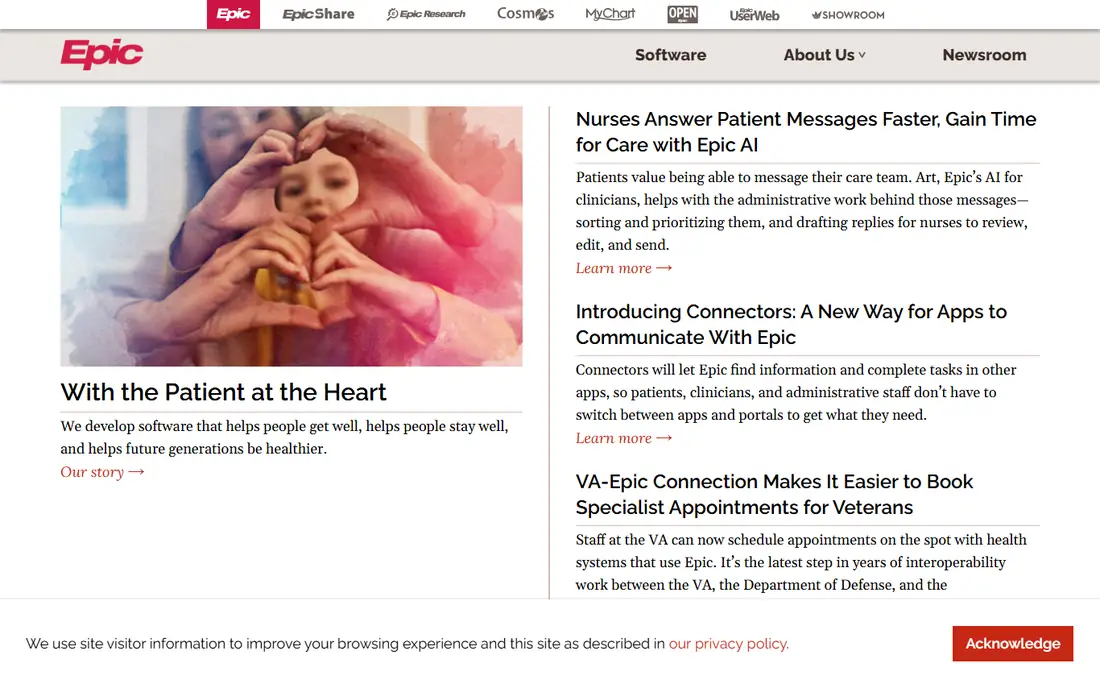
Epic is the system most large US health systems run on, and that scale is its main strength. One record can follow a patient from a primary care visit to a hospital stay to a specialist referral, with results, orders and messaging in the same place. For a large organization, that shared record reduces duplicate tests and handoff gaps, and it gives leaders consistent reporting across sites.
The catch is scope. Epic is a major implementation project, not a quick signup, and it needs dedicated IT support and training time. Small independent practices usually get Epic only through a larger host organization, rather than buying it directly. If you run a hospital or a large multi-site group, Epic belongs at the top of the list. If you run a two-clinician practice, it is not the right starting point.
- Deep integration across hospital and clinic settings
- Strong patient portal and connected care tools
- Broad specialty and reporting coverage
- High cost and long implementation for large systems
- Can be more system than a small practice needs
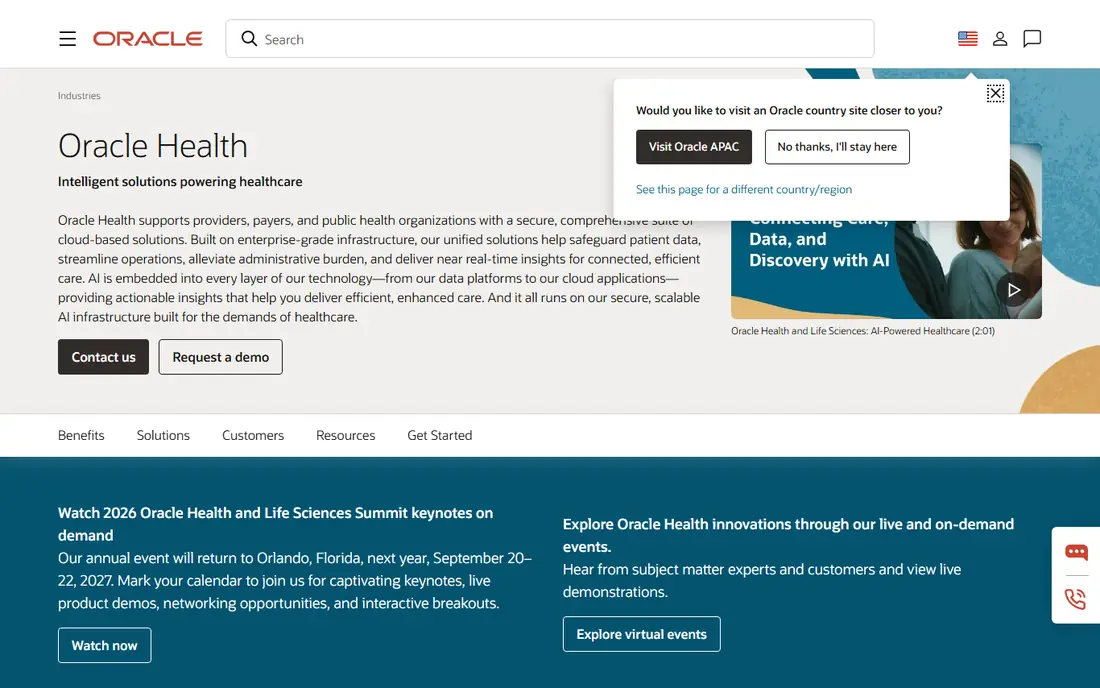
Oracle Health, built from the former Cerner business, serves hospitals and large ambulatory groups that need clinical records, revenue cycle tools and population health reporting together. Its strength is breadth: inpatient, emergency, laboratory and outpatient workflows can sit in one system, which helps large organizations standardize care and reporting.
As with Epic, the honest cost is implementation. Moving records, rebuilding order sets and retraining staff takes months, and the project needs strong internal leadership. Oracle Health fits organizations that are already at hospital scale or growing toward it. Smaller practices will usually find a simpler, faster system a better match for their budget and staff time.
- Broad clinical, financial and population health tools
- Built on the former Cerner platform used by many hospitals
- Cloud-based hosting options
- Migration and training take significant time
- Pricing is custom and sales-led
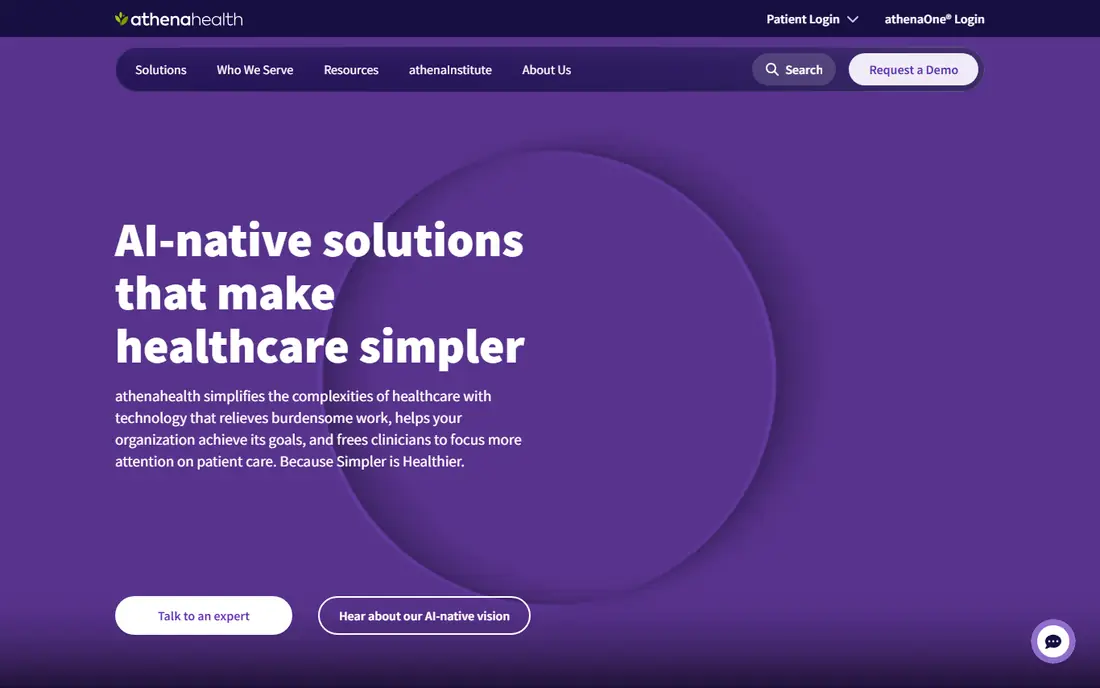
athenahealth appeals to practices that are tired of chasing claims. Its model pairs the EMR with revenue cycle services, so eligibility checks, claim scrubbing and denial follow-up are handled as part of the workflow rather than as a separate job. For a busy practice without a large billing team, that support can matter more than an extra charting feature.
The trade-off is control and comparison. Pricing is custom, often tied to collections, so two practices may pay very different amounts for a similar setup. Practices that prefer to keep billing fully in-house, or that already have a strong billing team, may prefer a system that sells software alone. For practices that want help getting paid, athenahealth is a strong contender.
- Billing and claims work closely tied to the record
- Network-based updates and payer rule handling
- Patient scheduling and portal tools included
- Pricing is custom and can be hard to compare
- Less control for practices that want to run billing in-house
eClinicalWorks is a familiar name in ambulatory care, used by many mid-size practices and physician groups. It covers charting, e-prescribing, scheduling, telehealth and patient messaging, with templates for many specialties. That breadth makes it a practical choice for a group that has several specialties and wants one system rather than a patchwork.
New users sometimes find the screens dense, and the experience depends a lot on how well the system is configured for your specialty. Ask for a demo using your own visit types, not a generic walkthrough, and check references from practices of a similar size. With good setup, eClinicalWorks gives a mid-size practice a full-featured record without hospital-scale complexity.
- Wide specialty templates and telehealth options
- Patient engagement and population health tools
- Long track record with ambulatory practices
- Interface can feel busy for new users
- Implementation quality varies by setup team
NextGen Healthcare focuses on ambulatory practices, including specialty groups that need tailored templates and reporting. It pairs clinical charting with practice management, so scheduling, billing and reporting sit beside the record. Practices working on quality reporting and value-based care contracts often value its reporting tools.
The main limits are price transparency and polish. You will need a sales conversation for a firm quote, and some screens feel less modern than newer cloud rivals. That matters less if the workflows match your specialty well. NextGen fits practices that want a proven ambulatory system with billing included, and that are willing to invest in training to get the most from it.
- Strong ambulatory and specialty workflows
- Integrated practice management and billing
- Reporting tools for quality programs
- Custom pricing through sales
- Older parts of the interface can feel dated
DrChrono is a good fit for small practices that want a modern, mobile-friendly record. It was built with Apple devices in mind, so charting, scheduling and patient check-in feel natural on an iPad in the exam room. Billing, e-prescribing and patient messaging are included, which keeps a small team from juggling extra tools.
It is not a hospital system, and large multi-site groups will likely outgrow it. But for a small practice, that focus is an advantage: setup is faster, training is simpler and the monthly cost is easier to plan. If your team already uses Apple devices and wants a record that feels designed for a small clinic day, DrChrono deserves a demo.
- Clean design built around iPad and iPhone use
- Integrated scheduling, billing and messaging
- Easier onboarding than hospital systems
- Some advanced hospital features are absent
- Best fit is small to mid-size practices
Practice Fusion is aimed at small practices that need a working EMR without a large project. The cloud setup is straightforward, and the core features cover charting, e-prescribing, lab ordering and scheduling. For a new practice or a solo clinician, that simplicity can be the deciding factor, since every week spent on implementation is a week of lost clinic time.
The trade-off is depth. Larger groups, complex specialties and hospital workflows will need more than Practice Fusion offers, and you should check current plan details carefully before you commit. For a small practice with standard primary care or general specialty needs, though, it is a practical and low-friction starting point.
- Simple cloud setup for small practices
- Core charting, e-prescribing and scheduling
- Lower barrier to getting started
- Fewer advanced specialty and hospital features
- Support and feature depth vary by plan
Tebra brings together the Kareo clinical and billing platform with PatientPop patient growth tools, aimed squarely at independent practices. The idea is to cover the record, billing and patient acquisition in one place, so a practice does not need separate vendors for its website, scheduling and reputation tools. For an independent practice competing with larger groups, that bundle can be useful.
The catch is that the value depends on using the bundle. If you only want a record and already have marketing covered, compare Tebra against a simpler EMR on that basis alone. But if you want one vendor for clinical work, billing and bringing in new patients, Tebra is a coherent option worth a detailed quote.
- Combines EMR, billing and patient growth tools
- Built from Kareo and PatientPop for independent practices
- Scheduling and online presence tools included
- Pricing is custom
- Some features work best as a full bundle
How we picked these
We compared official vendor pages, product documentation and public pricing information for EMR systems that are live and widely used in the United States in 2026. We included hospital-scale systems and small-practice systems, because the best EMR for a hospital is rarely the best EMR for a solo clinic. We favored systems with clear specialty coverage, billing options and patient access tools, and we left out systems that are no longer sold or that serve only one narrow niche.
We did not claim hands-on clinical testing, and we did not invent prices, ratings or feature claims. Where a vendor does not publish a price, we wrote See website. Final pricing depends on practice size, modules and contract terms, so get a written quote that covers implementation, training, data migration and ongoing support.
What to check before you choose an EMR
An EMR switch affects every clinician, every patient interaction and every claim, so test the details that matter to your daily work.
Run your own visit types in the demo
Ask the vendor to chart a typical visit for your specialty, including orders, prescriptions and patient instructions. Watch how many clicks each step takes, and how the system handles refills, referrals and abnormal results. A system that looks clean in a sales demo can still slow down a real clinic day.
Price the whole switch, not just the subscription
Add implementation, data migration, training, interface building for labs and imaging, and any billing service fees. Ask how long migration usually takes for a practice your size, and what happens to historical records. A cheaper monthly price can still be costly if migration drags on or staff need weeks of extra training.
Check compliance and support in writing
Confirm how the vendor handles privacy, security, backups and downtime, and what support hours and response times your contract includes. This guide is not medical or legal compliance advice, and your practice should confirm regulatory duties with qualified advisers. Get key promises in the contract, not just in a sales call.
Frequently asked questions
What is the best EMR software for small practices?
Small practices often do best with DrChrono or Practice Fusion, because setup is simpler and the feature set matches a small clinic day. athenahealth can also fit if you want billing help included. The right pick depends on your specialty, device preferences and whether you want billing services bundled with the record.
What are the top EMR software companies?
The largest names in US health care include Epic, Oracle Health, athenahealth, eClinicalWorks and NextGen Healthcare. These vendors serve hospitals, large groups and many ambulatory practices. Smaller independent practices also use DrChrono, Practice Fusion and Tebra, which focus more on simple setup and practice growth.
What is the top rated EMR software?
Ratings vary by practice size, specialty and reviewer, so there is no single top rated system for everyone. Epic and athenahealth often score well with large systems and practices that value billing support, while smaller practices rate simpler systems higher for ease of use. Use ratings as a starting point, then run demos with your own visit types.
What are the top EMR software vendors for hospitals?
Epic and Oracle Health are the main vendors for large hospitals and health systems, because they cover inpatient, emergency and outpatient care in one record. A hospital choice is usually a multi-year project with detailed integration and reporting needs, so it should be decided with clinical, IT and finance leaders together.
How much does EMR software cost?
Most major vendors price by practice size, modules and contract terms, and many do not publish a standard price. Small-practice systems can cost far less per month than hospital systems, but implementation, migration and billing services add to the total. Get a written quote that covers the full first year before you compare options.
Sources we checked (8)

Online Jobs is an independent blog about careers, online work, learning new skills and the tools that help people earn. More about us.
Keep reading
All posts
Best workout apps for women
Compare the best workout apps for women in 2026, from free guided classes to structured strength plans, with current prices, free plans and honest trade-offs.

Best Yoga App
Find the best yoga app for home practice in 2026, with verified prices, free options, class styles, trials and honest limits for 10 yoga apps compared.
Best Workout Tracker App
We compared the best workout tracker app options for gym, home, and running training, checking prices, free plans, and logging tools in detail. See inside.