Best Email Marketing Tool for Growing Startup in 2026: 10 Tools Compared

How we put this together: we compare official feature and pricing pages, app store listings, privacy policies and public user reviews. Prices change, so check the provider's site before you pay.
Key takeaways
- Mailchimp is our safe all-round pick for a growing startup that wants a familiar editor, templates, and integrations.
- Brevo is our value pick, because it prices by emails sent rather than contacts stored, which helps a list grow without a steep jump.
- MailerLite suits a startup on a tight budget that wants clean design and simple automation at a low price.
- Kit is the creator pick, with tag-based subscribers and strong automation for newsletters and digital products.
- Compare pricing at your list size, not the starter price, because email platforms charge very differently as contacts grow.
Quick comparison
| Name | Who it suits | Starting price | Free option | |
|---|---|---|---|---|
 Mailchimp | All-round small business | $13 per month | Yes | Visit |
 Brevo | Value as lists grow | $9 per month | Yes | Visit |
 MailerLite | Budget-friendly design | $12 per month | Yes | Visit |
 Kit | Creators and newsletters | $39 per month | Yes | Visit |
 ActiveCampaign | Deep automation and CRM | $19 per month | Free trial (14 days) | Visit |
 GetResponse | Funnels and webinars | $19 per month | Yes | Visit |
 Constant Contact | Small business and events | $12 per month | Free trial | Visit |
 Klaviyo | Ecommerce segmentation | $20 per month | Yes | Visit |
 Beehiiv | Newsletter growth | Free | Yes | Visit |
 Omnisend | Ecommerce email and SMS | $16 per month | Yes | Visit |
The best email marketing tool for growing startup
A growing startup needs more than a send button. It needs signup forms, segments, automation for welcome and onboarding emails, clear reports, and pricing that does not punish growth. The platforms below cover that range, from simple newsletter tools to full marketing platforms with CRM features.
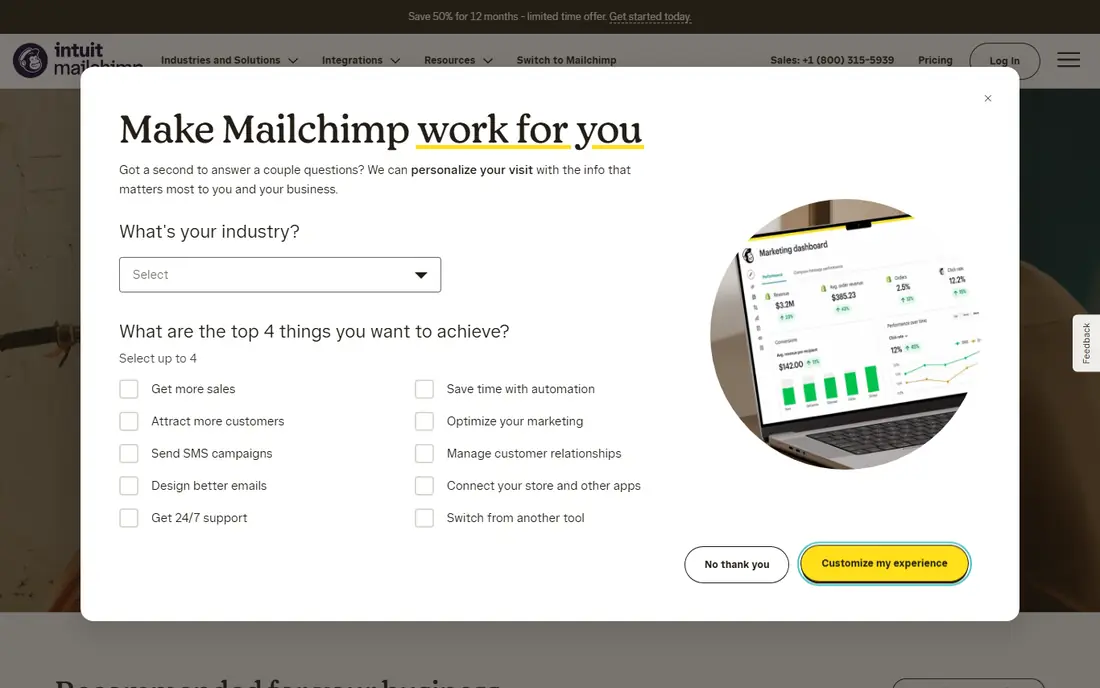
Mailchimp remains the default choice for many startups because it is easy to learn and easy to find help for. The editor, templates, signup forms, and integrations cover the common startup needs, from a launch announcement to a weekly newsletter, without a long setup. Reports are readable, and the platform connects to common website, ecommerce, and CRM tools.
The cost is the catch. The free plan covers 250 contacts and 500 sends per month, and the Essentials plan starts at $13 per month for 500 contacts, with prices rising as the list grows. Unsubscribed contacts can also count toward billing on some plans, so clean your list regularly. Mailchimp is a good pick when you want a safe, well-supported platform, and a weaker pick when your list will grow fast on a tight budget.
- Easy drag-and-drop editor
- A large template and integration library
- Clear reports for beginners
- Pricing rises fast as contacts grow
- Some advanced automation sits on higher plans
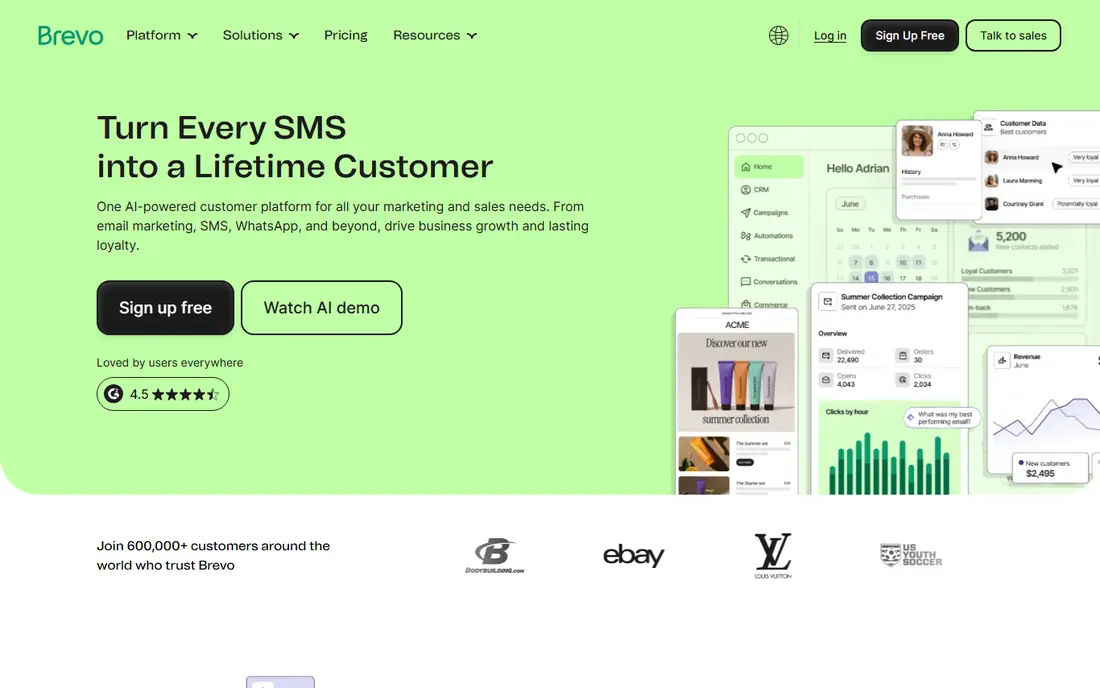
Brevo, formerly Sendinblue, prices by email volume rather than contacts stored, which changes the math for a growing startup. You can store a large list and pay for the sends you actually make, which helps when a list grows faster than your sending frequency. The free plan allows 300 emails per day, and the Starter plan starts at $9 per month.
Brevo also covers SMS, WhatsApp, and chat in one platform, which suits a startup that wants more than email in one account. Automation is stronger on higher plans, so check whether the plan you choose includes the workflows you need. For a startup that sends regularly but wants cost control as contacts grow, Brevo is our value pick.
- Pricing by emails sent, with unlimited contacts
- Email plus SMS and chat
- A free plan for testing
- Automation depth varies by plan
- The interface is less polished than Mailchimp for some users
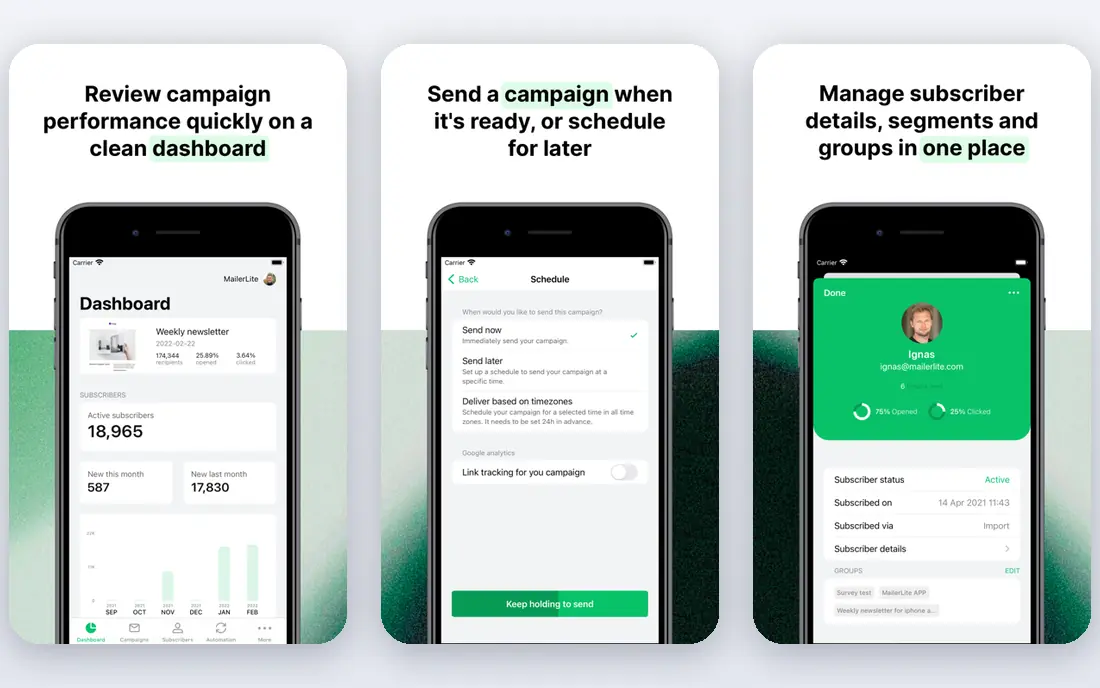
MailerLite is a good fit for a startup that wants a clean design without a steep learning curve or a high bill. The editor is simple, templates look modern, and automation covers welcome emails, segments, and basic workflows. The free plan covers 250 subscribers and 2,500 emails per month, and the paid plan starts at $12 per month for 500 subscribers.
MailerLite checks new accounts more strictly than some rivals, which can delay a first send, but that check also helps deliverability for everyone on the platform. Support is a noted strength in public reviews. If your startup needs solid email design and automation at a low price, and you do not need a full CRM, MailerLite is hard to beat.
- Clean editor and templates
- Simple automation
- Low price for small lists
- Free plan is limited to 250 subscribers
- Approval checks can delay a first campaign
Kit, formerly ConvertKit, is built for creators, bloggers, newsletter writers, and startups that sell courses or digital products. Subscriber management uses tags rather than lists, so one subscriber can belong to several segments without paying for them twice. Visual automation makes welcome sequences, onboarding, and sales funnels easier to build than in a list-based tool.
The free plan covers up to 10,000 subscribers with limited automation, which is generous for a new newsletter. Paid plans start at $39 per month for 1,000 subscribers, which is higher than MailerLite or Brevo. Kit is the right pick when your product is content, a newsletter, or a digital product, and a weaker pick when you need heavy template design or ecommerce segmentation.
- Tag-based subscribers, so one person is not counted twice
- Strong visual automation
- Commerce tools for digital products
- Higher paid price than MailerLite or Brevo
- The editor favors simple emails over heavy design
ActiveCampaign suits a startup that has outgrown simple newsletters and needs automation with conditions, scoring, and CRM records. You can build workflows that react to site visits, purchases, email opens, and form answers, and you can track a contact through sales stages in the same platform. That depth helps a startup with a longer sales cycle or a sales team.
There is no free plan, only a 14-day trial, and paid plans start at $19 per month for 1,000 contacts on the Starter plan. The interface takes longer to learn than Mailchimp or MailerLite, and small teams may not use the full depth at first. Choose ActiveCampaign when automation and CRM matter more than a low starter price.
- Powerful conditional automation
- Built-in CRM
- Detailed segmentation and scoring
- No free plan beyond the trial
- The learning curve is steeper than Mailchimp
GetResponse is an all-in-one platform for a startup that wants email, landing pages, funnels, and webinars in one account. That breadth helps a small team run a launch, collect signups, send a sequence, and host a live session without stitching several tools together. The free plan covers 500 contacts and 2,500 emails per month, and paid plans start at $19 per month for 1,000 contacts.
The interface packs in many features, so it can feel busy compared with MailerLite. Webinar and funnel tools also add cost if you never use them. GetResponse is a strong pick for a startup that will actually use landing pages and webinars, and a less clear pick for a team that only sends a newsletter.
- Email plus landing pages, funnels, and webinars
- A free plan for testing
- Good automation for the price
- The interface can feel busy
- Webinar features matter only if you run webinars
Constant Contact is built for small businesses, nonprofits, and event organizers who want email plus simple marketing in one place. Templates, event registration, and social posting cover the common needs of a local business or a community startup, and support is a noted strength. The Lite plan starts at $12 per month for 500 contacts, with a free trial rather than a free plan.
Automation is lighter here than in ActiveCampaign, Klaviyo, or Kit, so a startup with complex onboarding flows may outgrow it. Pricing also rises with contacts, so check the cost at your expected list size. Constant Contact fits a startup that values simplicity, support, and event tools over deep automation.
- Simple editor and event tools
- Strong support for small businesses
- Social posting in one place
- No free plan beyond the trial
- Automation is lighter than ActiveCampaign or Klaviyo
Klaviyo is the ecommerce pick on this list, because it pulls order, browsing, and customer data into segments and flows. A store can build abandoned cart emails, post-purchase sequences, win-back campaigns, and product recommendations from real purchase behavior, not just email opens. That data depth is why many ecommerce startups choose Klaviyo despite a higher price.
The free plan covers 250 profiles and 500 emails per month, and paid plans start at $20 per month for 500 profiles. Costs rise as profiles grow, and Klaviyo counts active profiles in a way that needs careful list hygiene. If you run an online store, Klaviyo is worth the price. If you run a content newsletter, a cheaper platform will serve you better.
- Deep ecommerce data and segmentation
- Strong flows for abandoned carts and post-purchase emails
- Good reports
- Pricing rises fast with profiles
- Less suited to a non-ecommerce newsletter
Beehiiv is built for newsletters as a product, not just as a marketing channel. It gives you a publication website, signup forms, referral programs, and growth tools in one place, and the free plan covers up to 2,500 subscribers with unlimited sends. That makes it a strong starting point for a startup whose main asset is its newsletter audience.
Paid plans start at $49 per month billed annually for 1,000 subscribers on the Scale tier in some listings, so check the current pricing page for the tier you need. Beehiiv is less suited to complex ecommerce flows than Klaviyo or ActiveCampaign. Choose it when growth, referrals, and a clean reading experience matter most.
- A free plan for up to 2,500 subscribers
- Built-in growth and referral tools
- A publication-style website
- Less suited to complex ecommerce automation
- Paid plans start higher than some rivals
Omnisend combines email and SMS for online stores, with templates and prebuilt flows for welcome emails, abandoned carts, and post-purchase messages. That combination helps a store reach customers on two channels without managing two tools, and the reports show email and SMS results together. The free plan covers 250 contacts and 500 emails per month.
Paid plans start at $16 per month for 500 contacts, with no annual discount on some tiers, so check the billing terms. Omnisend is a good budget alternative to Klaviyo for a smaller store, especially one that wants SMS. For a non-ecommerce startup, a general platform such as Mailchimp, Brevo, or MailerLite will fit better.
- Email plus SMS in one workflow
- Ecommerce templates and flows
- A free plan for testing
- Less suited to non-ecommerce content
- Pricing rises with contacts
How we picked these
We compared official feature pages, pricing pages, app store listings, privacy policies, and public reviews for email marketing platforms that serve small businesses and growing startups in the United States. We favored platforms with clear free or trial terms, automation, segmentation, and pricing by contacts or sends that a startup can forecast. We did not claim hands-on testing, and we did not rank a creator tool against an ecommerce tool as if they served the same customer.
Check the vendor pricing page at your list size before you commit, because starter prices hide the cost at 2,500 or 10,000 contacts, and free plan limits change often.
What a growing startup should check first
A platform that feels easy at 200 subscribers can feel expensive or limited at 5,000, so test the parts that scale. Import a sample list, build a welcome sequence, create two segments, and send a test campaign to yourself and a colleague. That short test reveals editor, automation, and reporting limits faster than a feature list.
Pricing by contacts, sends, or profiles
Mailchimp, MailerLite, Kit, and Klaviyo mainly price by contacts or profiles, while Brevo prices by sends. A list that grows fast but sends rarely favors Brevo, while a small list that sends often may favor a contact-based plan. Ask how unsubscribed contacts, duplicates, and inactive profiles count, because those rules change the real bill.
Deliverability, consent, and list hygiene
Use double opt-in where it fits, clean inactive subscribers regularly, and avoid buying lists, which harms deliverability and can breach platform rules. Check that the platform offers authentication help for your domain, clear unsubscribe handling, and bounce management. A platform with strong deliverability support protects a startup reputation as it scales.
Automation that saves time without feeling robotic
Start with three flows, which are a welcome series, an onboarding sequence, and a re-engagement email for inactive subscribers. Add cart or post-purchase flows only if you sell online, and review each flow monthly for broken links, outdated offers, and tone. Automation should feel like a helpful follow-up, not a stream of messages a reader did not ask for.
Frequently asked questions
What is the best email marketing platform for a small business?
Mailchimp is our safe all-round pick for a small business, because it is easy to learn and connects to many tools. Brevo is a strong value pick, and MailerLite is a strong budget pick. The best email marketing platform for your business depends on list size, sending frequency, and whether you need ecommerce or creator tools.
What is the best email marketing software for a growing startup?
A growing startup should pick a platform whose price at 5,000 contacts still fits the budget. Brevo helps when contacts grow faster than sends, while MailerLite and Mailchimp suit steady growth with simple automation. ActiveCampaign suits a startup that needs deep automation and CRM, even though it costs more to learn.
Is there a free email marketing platform for startups?
Yes. Mailchimp, Brevo, MailerLite, Kit, GetResponse, Klaviyo, Beehiiv, and Omnisend all offer free plans, with different contact and send limits. Kit and Beehiiv are generous for newsletters, while Brevo is generous for contact storage. Check the send limit, not just the contact limit, before you rely on a free plan.
How much does email marketing cost as a list grows?
Costs vary widely, because some platforms price by contacts and others by sends. At 500 contacts, starter plans on this list range from $9 to $39 per month, and at 10,000 contacts the same platforms can cost several times more. Model the price at your expected list size in six and twelve months, and include SMS or add-on costs if you use them.
What is the best email campaign software for automation?
ActiveCampaign offers the deepest conditional automation on this list, with CRM features to match. Klaviyo is best for ecommerce automation from purchase data, while Kit is best for creator automation with tags and visual workflows. Mailchimp and MailerLite cover welcome and basic sequences well for a smaller team.
Should a startup use one email platform or several tools?
Start with one platform that covers email, forms, and basic automation, because managing several tools adds cost and data problems. Add a specialist tool only when a clear limit appears, such as ecommerce segmentation or newsletter growth. Keep your subscriber data in one place as long as possible, and export backups regularly.
Sources we checked (10)
- https://mailchimp.com/pricing
- https://www.brevo.com/pricing
- https://www.mailerlite.com/pricing
- https://kit.com/pricing
- https://www.activecampaign.com/pricing
- https://www.getresponse.com/pricing
- https://www.constantcontact.com/pricing
- https://www.klaviyo.com/pricing
- https://www.beehiiv.com/pricing
- https://www.omnisend.com/pricing

Online Jobs is an independent blog about careers, online work, learning new skills and the tools that help people earn. More about us.
Keep reading
All posts
Best Web Scraping Tools
Compare the best web scraping tools in 2026, from no-code Octoparse and Browse AI to Apify, Firecrawl, Bright Data, Zyte, ScraperAPI and free Scrapy, with prices.
Best Web Hosting Services
Find the best web hosting services for your site in 2026. We compare prices, speed, support and ease of use across eight leading hosting providers today.
Best Video Conferencing Software
Looking for the best video conferencing software? We compare 8 meeting apps on price, meeting limits, features, security and ease of use. Read the guide.