Best Email Marketing Platforms for E-commerce in 2026: 8 Platforms Compared

How we put this together: we compare official feature and pricing pages, app store listings, privacy policies and public user reviews. Prices change, so check the provider's site before you pay.
Key takeaways
- Klaviyo is the strongest pick for stores that want deep purchase data driving segments and automated flows.
- Omnisend gives smaller stores ready-made e-commerce flows for email and SMS at a lower starting price.
- Mailchimp remains the easiest general starting point, with the widest integration library.
- Pricing scales with contacts or sends, so compare costs at your actual list size, not the headline starting price.
- Free plans suit testing, but most real stores outgrow them fast once flows and campaigns run together.
Quick comparison
| Name | Who it suits | Starting price | Free option | |
|---|---|---|---|---|
 Klaviyo | Data-driven e-commerce stores | $20 per month | Yes | Visit |
 Omnisend | E-commerce automation on a budget | $16 per month | Yes | Visit |
 Mailchimp | Beginners and generalists | $13 per month | Yes | Visit |
 Brevo | Pay by sends, not contacts | $9 per month | Yes | Visit |
 MailerLite | Simplicity and value | See website | Yes | Visit |
 ActiveCampaign | Advanced automation | $15 per month | Free trial | Visit |
 Drip | Repeat-purchase campaigns | $39 per month | Free trial | Visit |
 Constant Contact | Support-led small businesses | $12 per month | Free trial | Visit |
The best e-commerce email marketing platforms
E-commerce email is not a newsletter. The best platforms pull orders, browsing, and product data from your store, then turn that data into welcome series, abandoned cart reminders, and post-purchase flows. We compared official pricing pages, feature pages, and integration lists to rank the platforms that serve online stores best.
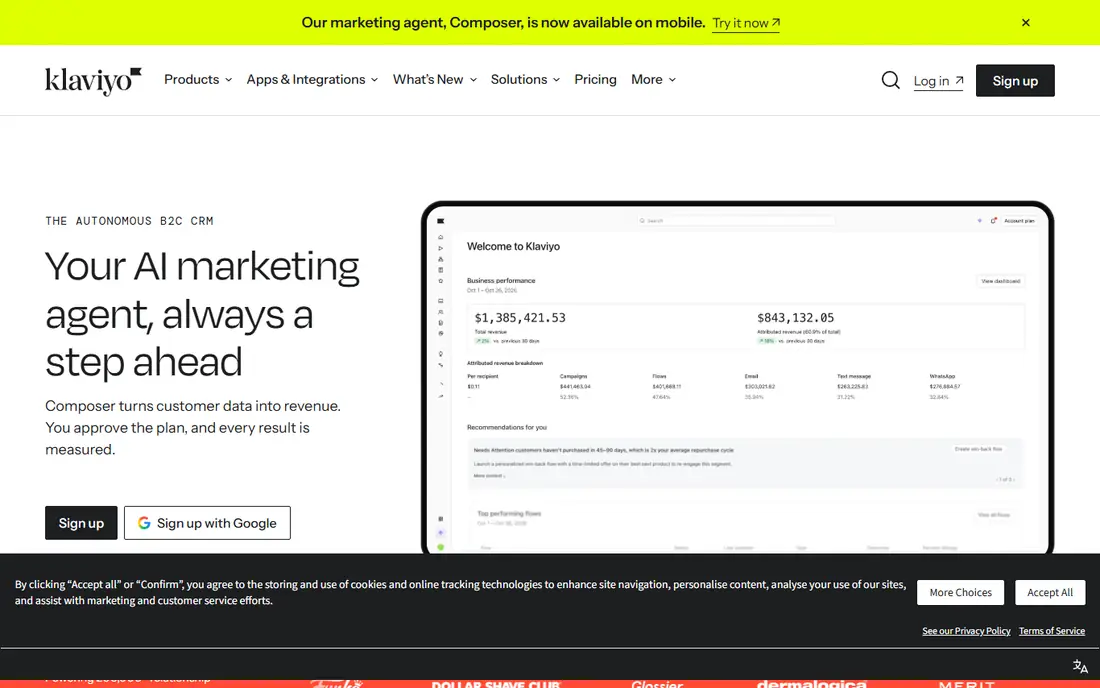
Klaviyo is the default choice for serious e-commerce, and it earns that spot with data depth. Its store connections pull in purchase history, browsing behavior, and product interactions, then let you build segments and triggers on all of it. That means a welcome flow can differ for a first-time browser and a repeat buyer without manual list juggling.
The price is the catch. Paid plans start at 20 dollars a month, but costs rise with contacts, and a growing list can turn into a large monthly bill. The free plan, limited to a small number of contacts, works as a test drive rather than a business tool. If you will actually use the segmentation and attribution, Klaviyo pays its way.
- Deep Shopify and WooCommerce data integration
- Strong segmentation and predictive tools
- Revenue attribution per campaign
- Costs climb fast as lists grow
- Learning curve for advanced features
- Free plan covers only small lists
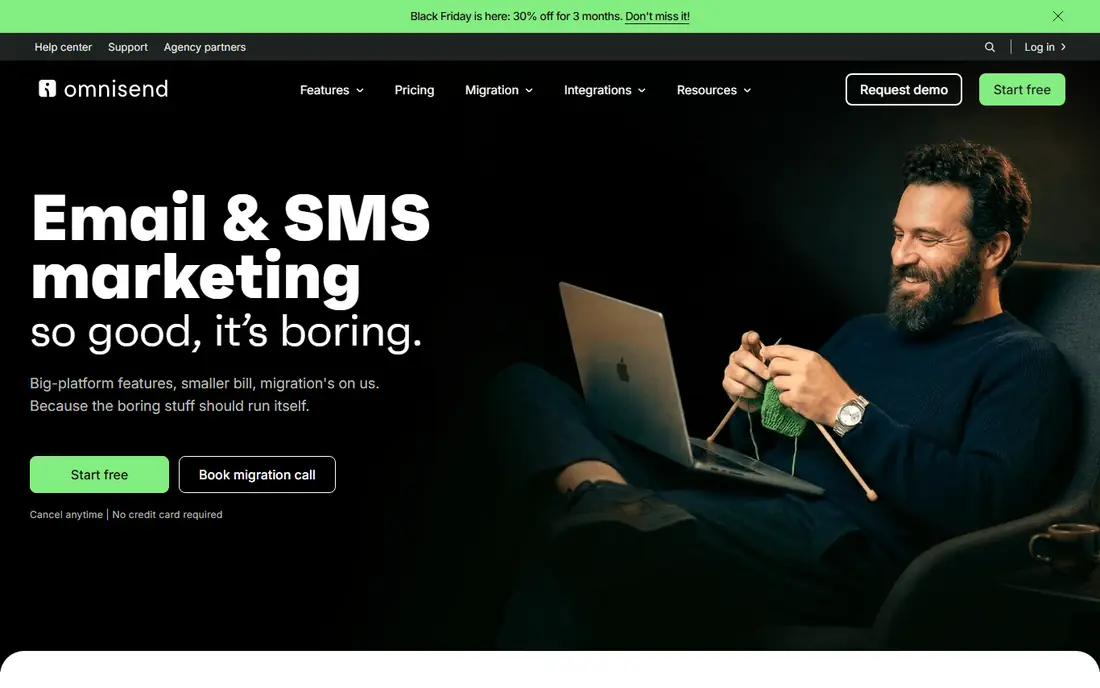
Omnisend is built for online retail from the start, and it shows in the templates. Abandoned cart, welcome, and post-purchase flows come ready to switch on, so a small store can run sensible automation without hiring a specialist. Email, SMS, and push messages can sit in the same workflow, which keeps follow-up in one place.
Reporting does not reach Klaviyo depth, and designers who want total control may find the editor plain. The free plan covers small lists, and paid plans start at 16 dollars a month, which makes Omnisend a strong value pick for stores that want automation now rather than a data science project.
- Ready-made e-commerce flows
- Email plus SMS in one workflow
- Clear pricing for small stores
- Reporting is less deep than Klaviyo
- Design tools are simpler
- Free plan limits contacts and sends
Mailchimp remains the easiest door into e-commerce email. Its editor is friendly, its templates look good with little effort, and it connects to more tools than most rivals, which helps stores that also run content, events, or services alongside a shop. Landing pages and basic automation come included, so a new store can start fast.
The limits appear as stores mature. Purchase-based segmentation and revenue reporting are weaker than Klaviyo, and advanced automation sits on pricier tiers. Paid plans start at 13 dollars a month, with a free plan for small lists. For generalist stores and beginners, that trade-off is fair.
- Widest integration library
- Easy drag-and-drop editor
- Good templates and landing pages
- E-commerce data is less deep than Klaviyo
- Pricing rises with contacts
- Advanced automation needs higher tiers
Brevo, formerly Sendinblue, prices by how much you send rather than how many contacts you hold, which suits stores with large lists and modest sending frequency. The platform also covers SMS and WhatsApp alongside email, plus a built-in CRM for tracking customers and deals, so small teams can run several channels from one dashboard.
E-commerce segmentation does not match Klaviyo, and a few features require manual approval before they switch on. Paid plans start at 9 dollars a month, and the free plan allows a daily sending limit. Stores that send in bursts, or that want multichannel tools without paying per contact, should shortlist Brevo.
- Pricing based on email volume
- Email, SMS, and WhatsApp in one place
- Built-in CRM
- E-commerce data is less deep than Klaviyo
- Some features need manual approval
- Interface takes learning
MailerLite appeals to store owners who want email done without fuss. The interface is clean, campaigns go together quickly, and landing pages and signup forms come included, which helps a new shop build its list. Pricing is friendly for small lists, and the free plan covers early testing well.
The platform is less of a dedicated e-commerce engine than Klaviyo or Omnisend, with lighter automation and fewer deep store integrations. Stores that need complex purchase-based flows will outgrow it. For a small shop that values simplicity and price over depth, MailerLite is a calm, capable choice.
- Clean, fast interface
- Landing pages and forms included
- Good value for small lists
- E-commerce automation is lighter than Klaviyo or Omnisend
- Fewer native store integrations
- Support is mainly online
ActiveCampaign suits stores that also run service or content workflows and want automation with real logic. Its builder supports many triggers, conditions, and branches, and the built-in CRM plus lead scoring help teams follow customers beyond the inbox. That depth makes it a favorite for businesses that treat email as part of a wider sales process.
There is no lasting free plan, only a trial, and beginners can find the builder heavy at first. Paid plans start at 15 dollars a month, with higher tiers adding more contacts and features. If your flows need branching logic that simpler tools cannot express, ActiveCampaign earns its price.
- Powerful automation builder
- CRM and lead scoring included
- Many triggers and conditions
- No permanent free plan
- Steeper learning curve
- Costs add up with contacts and add-ons
Drip focuses on the part of e-commerce that pays: getting customers to buy again. Its workflows and segmentation suit repeat-purchase campaigns, win-back series, and post-purchase follow-up, and it integrates with the major store platforms. Stores with a solid product range and a returning customer base will use it well.
The starting price of 39 dollars a month is higher than most rivals here, and there is no permanent free plan, only a trial. That makes Drip a poor pick for a brand-new shop, but a sensible one for an established store where retention drives profit.
- Strong e-commerce workflows
- Good segmentation for repeat buyers
- Many integrations
- Higher starting price
- No permanent free plan
- Smaller template library than Mailchimp
Constant Contact wins fans through support. Real help by phone and chat matters to small business owners who would rather ask a person than read documentation, and its event tools suit shops that also run markets, classes, or local events. Templates are easy, and campaigns go out with little training.
Automation and e-commerce depth lag Klaviyo and Omnisend, and there is no lasting free plan, only a trial. Paid plans start at 12 dollars a month. For a small store that values support and simplicity over advanced data tools, Constant Contact is a safe, friendly pick.
- Strong customer support
- Event and local business tools
- Easy templates
- No permanent free plan
- Automation is simpler than rivals
- E-commerce features are less deep
How we picked these
We compared official pricing pages, feature pages, and integration lists for the leading e-commerce email platforms, and we favored tools with real store integrations, automation for abandoned carts and post-purchase flows, and published pricing or a clear free tier. Each platform had to serve online stores specifically, not just newsletters, and come from a vendor we could verify. We did not claim hands-on testing we did not do, and we treated list-size pricing as the key cost factor, since headline prices hide the real bill.
How to choose for your store
Start with your store platform and list size. Shopify and WooCommerce stores get the most from Klaviyo or Omnisend, since their integrations run deepest there, while generalist stores may prefer Mailchimp or Brevo. Then price your plan at your current contact count and at double that count, because email costs grow with your list and a cheap starter price can turn expensive within a year.
Next, list the flows you actually need: welcome, abandoned cart, post-purchase, and win-back cover most revenue, so any platform that lacks one of those should lose points. Test deliverability too, with a small campaign to your own addresses and to seed accounts, and check spam placement before you migrate a full list. Finally, confirm that unsubscribes, consent records, and data processing terms meet the rules where your customers live.
Watch the total cost, not the headline price
Paid plans often charge extra for SMS credits, higher sending volumes, or advanced reporting, so ask for the fully loaded monthly cost at your volume. A platform that looks cheap at 500 contacts can cost more than a rival at 5,000, and switching platforms later costs time and risks deliverability. A short trial with real flows tells you more than any pricing page.
Frequently asked questions
What is the best email marketing platform for e-commerce?
Klaviyo is the strongest all-round pick for data-driven stores, while Omnisend is the best value for smaller shops that want ready-made flows. Mailchimp suits beginners, and Brevo suits stores with large lists and low send frequency. The best choice depends on your store platform, list size, and how much automation you will actually use.
What is the best email marketing software for e-commerce on Shopify?
Klaviyo and Omnisend both integrate deeply with Shopify, pulling order and browsing data into segments and flows. Klaviyo offers deeper analytics and prediction, while Omnisend offers faster setup and lower starting prices. Test both free plans with your store data before committing.
What is the best e-commerce email marketing software for small stores?
Omnisend and MailerLite are strong picks for small stores, since both offer free plans and low starting prices with usable automation. Mailchimp also works well for beginners. Start with the free tier, build your core flows, and upgrade only when your list or sending volume forces it.
How much does e-commerce email marketing cost?
Entry prices on this list run from 9 to 39 dollars a month, but the real cost depends on contacts, sends, and SMS use. Free plans cover small lists, while a store with 10,000 contacts can pay several times the starting price. Price every shortlisted platform at your actual list size before choosing.
Is there a best email marketing tool for e-commerce with SMS?
Omnisend and Brevo both combine email with SMS in one workflow, which keeps follow-up simple. Klaviyo also offers SMS as a paid addition. Compare SMS credit prices separately, since they can add a large amount to the monthly bill for stores that text often.
Sources we checked (8)

Online Jobs is an independent blog about careers, online work, learning new skills and the tools that help people earn. More about us.
Keep reading
All posts
n8n Alternatives
n8n alternatives compared for 2026, with Zapier, Make, Activepieces, and more, covering visual builders, code steps, self-hosting, and pricing models.

ZoomInfo Alternatives
The best ZoomInfo alternatives in 2026, compared on price, free plans, data coverage, and which tool fits small teams or large sales teams best in detail.
Yotpo Alternatives
Find cheaper alternatives to Yotpo for reviews and loyalty, with Judge.me, Loox, Stamped, and more compared for Shopify stores in 2026, all in one guide.