Best Email Automation Tools in 2026: 8 Platforms Compared


Deep automation for growing teams · Starting price: $15 per month
How we put this together: we compare official feature and pricing pages, app store listings, privacy policies and public user reviews. Prices change, so check the provider's site before you pay.
Key takeaways
- ActiveCampaign is our pick for teams that want deep automation without enterprise pricing, starting at $15 per month.
- Klaviyo is the strongest choice for online stores, because purchase and browsing data drive its flows directly.
- Brevo is the budget pick for large lists with modest sending, since pricing follows email volume rather than list size.
- Mailchimp remains the easiest starting point for beginners, with a free plan and simple automation templates.
- Check how each platform counts contacts, because that single rule often decides the real monthly bill.
Quick comparison
| Name | Who it suits | Starting price | Free option | |
|---|---|---|---|---|
| ActiveCampaign | Deep automation for growing teams | $15 per month | Free trial | Visit |
 Klaviyo | Online stores and ecommerce | $20 per month | Yes | Visit |
 Brevo | Large lists on a budget | $9 per month | Yes | Visit |
 Mailchimp | Beginners and small businesses | $13 per month | Yes | Visit |
 HubSpot Marketing Hub | Teams already using HubSpot CRM | $9 per seat per month | Yes | Visit |
 MailerLite | Simple, clean email automation | See website | Yes | Visit |
 Kit | Creators and newsletter writers | See website | Yes | Visit |
 Customer.io | SaaS lifecycle messaging | $100 per month | Free trial | Visit |
The best email automation tools
Email automation is the difference between sending one newsletter a week and running welcome series, abandoned cart reminders, re-engagement flows and post-purchase follow-ups without touching each send. The platforms below all automate email, but they price differently, count contacts differently, and suit different kinds of business. Picking by headline price alone is a common mistake.
The list below starts with the strongest all-round automation platform and moves through ecommerce, budget and creator-focused options.
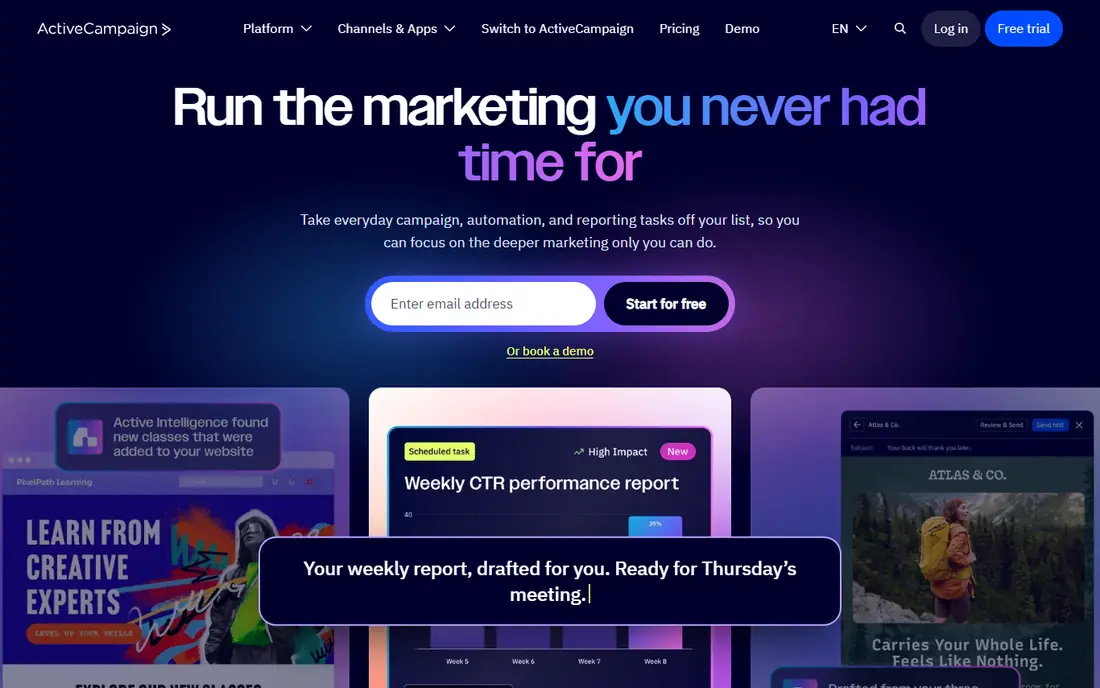
ActiveCampaign earns the top spot for teams that have outgrown simple newsletters. Its automation builder lets you branch flows by opens, clicks, purchases, site visits and tags, so a welcome series can take a different path for an engaged reader than for someone who never opened the first email. That depth is what turns automation from a time saver into a revenue tool.
Segmentation is equally strong. You can build audiences from behavior and custom fields without exporting lists to a spreadsheet, and the built-in CRM on higher plans keeps sales follow-up in the same system. The starting price of $15 per month covers 1,000 contacts on the Starter plan billed annually in recent listings, with a 14-day trial and no free tier. If you only send a monthly newsletter, that power is wasted. If you run several flows at once, it is money well spent.
- Powerful visual automation builder
- Good segmentation and tagging
- CRM and sales automation included on higher plans
- No permanent free plan
- Learning curve is steeper than Mailchimp for a first-time user
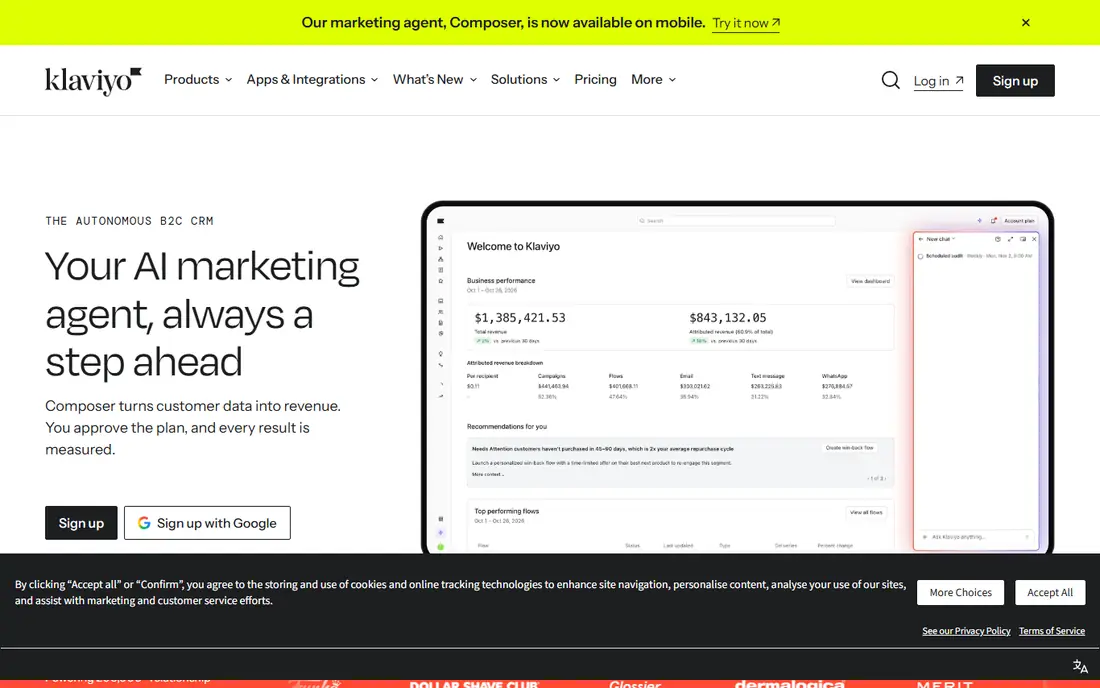
Klaviyo is built around one idea: your store data should drive your email. Purchases, browsing, cart adds and order history sync into profiles, and flows can react to those events in minutes. An abandoned cart email, a back-in-stock alert or a win-back series for lapsed buyers all start from real store behavior rather than a static list.
Pricing starts with a free plan for up to 250 profiles, and paid email from $20 per month for 500 profiles in recent listings. That sounds cheap until a growing store passes a few thousand profiles, when the bill rises in steps. For a store where email drives a large share of revenue, the return usually covers it. For a service business with no store, Klaviyo adds cost without adding much value over a general platform.
- Deep Shopify and WooCommerce data sync
- Strong abandoned cart and post-purchase flows
- Predictive analytics on higher plans
- Costs climb fast as profiles grow
- Overkill for a business with no online store
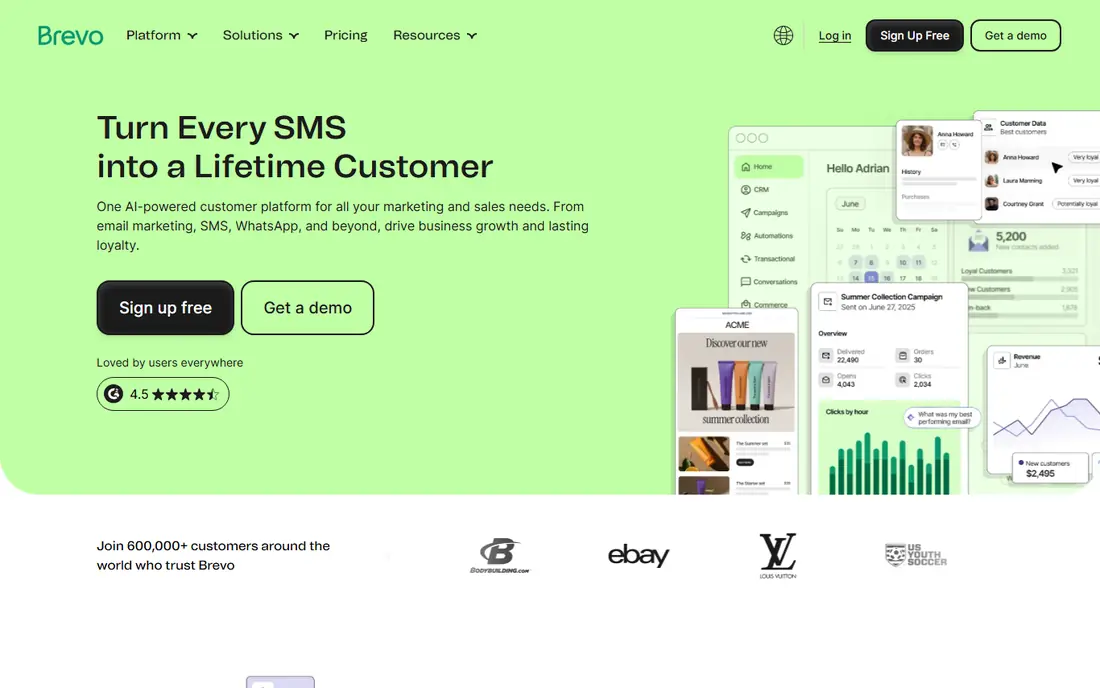
Brevo, formerly Sendinblue, is the budget pick with a twist. Its free plan allows unlimited contacts with 300 emails per day, and paid plans start at $9 per month for 5,000 emails per month. Because you pay for sends rather than list size, a business with a large list that emails twice a month can pay far less here than on a per-contact platform.
The trade-off is automation depth. Brevo covers welcome flows, transactional email, SMS and basic journeys well, but it does not match ActiveCampaign for complex branching and scoring. If your list is large, your sending is modest, and you want email plus SMS in one bill, Brevo is a smart pick. If you need intricate multi-step journeys, pay for the deeper tool.
- Free plan with unlimited contacts
- Pricing by email volume suits infrequent senders
- SMS and chat included in one account
- Automation depth is thinner than ActiveCampaign
- Template and design tools feel more basic
Mailchimp is still the name most small businesses know first, and for a beginner that familiarity helps. Setup is guided, templates are plentiful, and basic automations such as welcome emails and abandoned cart reminders are ready to switch on. A free plan covers up to 500 contacts in recent listings, which is enough to learn the platform before paying.
The catch appears as you grow. Paid plans start at $13 per month for 500 contacts, and the per-contact model means a list of 10,000 costs far more than the entry price suggests. Automation also stays simpler than ActiveCampaign, with fewer branching options. Start here if you are new and your list is small. Move on when your flows need more branches than Mailchimp comfortably handles.
- Easiest onboarding in this list
- Huge template library
- Free plan for very small lists
- Price rises steeply as contacts grow
- Automation builder feels limited next to ActiveCampaign
HubSpot makes sense when your team already lives in HubSpot CRM. Contacts, deals, email and reporting share one record, so a marketing email can trigger a sales task without an integration breaking in the middle. The free tier covers basic CRM and marketing tools, and Starter pricing has been listed at $9 per seat per month billed annually.
The jump is the warning. Professional, at a far higher monthly price plus onboarding in many listings, is where the serious automation features live. A small team that only needs email should not buy HubSpot for email alone. A team that wants marketing and sales on one platform, with room to grow, will find the combined system worth the cost.
- Marketing, sales and CRM in one system
- Free CRM tools to start
- Strong reporting and lead management
- Professional plan jumps to a much higher price
- Onboarding costs can apply on higher tiers
MailerLite appeals to people who found Mailchimp busy or ActiveCampaign daunting. The interface is calm, the automation builder is visual and easy to follow, and the free plan covers small lists with a useful monthly send allowance. For a small business sending newsletters and a welcome series, that is often all you need.
Depth is the limit. Segmentation, ecommerce triggers and advanced reporting are lighter here, so a store or a data-heavy team will feel the ceiling sooner. As a first paid step beyond a free plan, though, MailerLite is one of the least stressful platforms in this list, and its price stays friendly for small lists.
- Clean, uncluttered interface
- Generous free plan for small lists
- Easy automation builder for beginners
- Segmentation and ecommerce depth are lighter than Klaviyo or ActiveCampaign
- Fewer native integrations
Kit, formerly ConvertKit, is designed for creators who sell knowledge: newsletter writers, course sellers and coaches. Subscriber tagging and simple automation rules let you send a welcome sequence, pitch a course, or move readers between interests without a marketing degree. Landing pages are included, which helps a creator grow a list from scratch.
It is not an ecommerce platform, and it is not a B2B automation suite. If your business needs cart flows, lead scoring and CRM depth, look at Klaviyo or ActiveCampaign. If you are a creator whose main asset is an audience, Kit keeps the tooling close to the work you actually do.
- Built for creators, newsletters and courses
- Simple automation rules for subscriber journeys
- Landing pages included
- Not built for ecommerce flows
- Complex B2B automation is outside its strengths
Customer.io is the pick for software and app businesses that message users based on what they do inside a product. A trial ending, a feature unused, or a billing event can trigger a message across email, push or SMS, with segmentation built from real product events. That makes it a lifecycle tool, not just a newsletter sender.
The starting price of $100 per month puts it out of reach for a tiny newsletter, and setup takes more technical work than Mailchimp or MailerLite. For a SaaS team with thousands of users and clear lifecycle stages, that investment pays back in activation and retention. For everyone else, it is more platform than the job needs.
- Behavior-triggered email, push and SMS from product data
- Strong segmentation for app businesses
- Good for lifecycle flows
- High starting price for small teams
- Setup needs product data and technical input
How we picked these
We compared official pricing pages, feature pages and app store listings for email automation platforms, and kept only platforms that offer real automation, not just one-off sending. We favored tools with a usable free plan or trial, clear automation builders, and a track record with small businesses. Where pricing varies by contacts, sends or seats, we show the starting figure from recent vendor listings and note the basis, and where we could not verify a current price we wrote See website.
How to choose an email automation platform
Start with your list and your sending pattern, not with features. Count your contacts, estimate monthly sends, and check whether the platform charges per contact, per send or per seat. Then list the three flows you will actually build in the first month, such as welcome, abandoned cart and re-engagement, and trial only the platforms that handle those flows well.
Test deliverability and the builder
Send test flows to yourself and to a colleague on a different email provider, and check whether messages land in the inbox rather than spam. Build one branching flow in the trial, not just a single email, and see how long it takes and how easy it is to edit a week later. A builder that feels fine for one email can feel painful for a ten-step journey, and that pain is what makes teams abandon automation.
Watch the growth curve
Ask what the platform costs at double your current list size, and at ten times it. A cheap entry plan that triples at 5,000 contacts may cost more over two years than a pricier platform with gentler steps. Also check whether inactive contacts count toward billing, and archive or remove them regularly if they do.
Frequently asked questions
What is the best email automation platform overall?
ActiveCampaign is our pick for most growing teams, because its automation builder, segmentation and tagging cover complex journeys at a starting price of $15 per month. Beginners should start with Mailchimp or MailerLite, and online stores should look at Klaviyo first.
What is the best email marketing automation software for ecommerce?
Klaviyo is the strongest email automation software for ecommerce, because store data such as purchases, browsing and cart events sync directly into flows. Abandoned cart, post-purchase and win-back flows are its core strengths. Brevo is a cheaper alternative when store data depth matters less.
What is the best email automation platform for small businesses?
For a small business, Brevo is the budget pick thanks to its free plan and volume-based pricing, while Mailchimp is the easiest to learn. If your team plans to run several automated journeys, ActiveCampaign gives more room to grow without switching platforms later.
Is there a free email automation platform?
Yes, Brevo, Mailchimp, Klaviyo, HubSpot, MailerLite and Kit all offer free plans with limits on contacts, sends or features. Free plans suit small lists and simple flows, but growing lists and advanced automation usually need a paid plan. Check the free limits carefully before you build a large list on one.
How much do email automation tools cost?
Starting prices in this list range from $9 per month for Brevo to $100 per month for Customer.io, with Mailchimp at $13, ActiveCampaign at $15 and Klaviyo at $20 per month. Final cost depends on contacts, sends, seats and billing period, so model your price at your actual list size before you commit.
What is the difference between email marketing and email automation?
Email marketing covers one-off campaigns such as newsletters, while email automation sends messages triggered by actions or dates, such as a welcome series after signup or a reminder after an abandoned cart. The tools in this list do both, but their automation builders are what separate a simple sender from a platform that works while you sleep.
Sources we checked (8)

Online Jobs is an independent blog about careers, online work, learning new skills and the tools that help people earn. More about us.
Keep reading
All posts
Moz Pro Alternatives
Compare Moz Pro alternatives for SEO, from free tools to full suites, including Semrush, Ahrefs, SE Ranking, and budget options for small teams today.
Constant Contact Alternatives
Compare the best constant contact alternatives for small businesses, creators and nonprofits, with free plans and automation notes to guide your switch.
Best keyword difficulty tool
Looking for the best keyword difficulty tool? We compare 9 SEO tools on difficulty scores, SERP data, price, and ease of use for sites of all sizes in 2026.