Best EHR Software in 2026: 8 Systems Compared

How we put this together: we compare official feature and pricing pages, app store listings, privacy policies and public user reviews. Prices change, so check the provider's site before you pay.
Key takeaways
- athenahealth suits practices that want managed billing, while Practice Fusion and DrChrono suit smaller, budget-conscious practices.
- SimplePractice and TherapyNotes lead for behavioral health, with scheduling, notes, and billing built for therapists.
- eClinicalWorks and NextGen suit multi-location and specialty practices that need deeper templates and reporting.
- Epic is powerful but usually overkill for independent small practices, except through a hospital Community Connect program.
- EHR choice depends on practice size, specialty, and compliance needs, including HIPAA, e-prescribing, and billing rules.
Quick comparison
| Name | Who it suits | Starting price | Free option | |
|---|---|---|---|---|
 athenahealth | Managed billing | See website | No | Visit |
 Practice Fusion | Budget small practices | $149 per month | No | Visit |
 DrChrono | Mobile-first practices | $199 per month | No | Visit |
 SimplePractice | Behavioral health solo | $29 per month | Free trial | Visit |
 TherapyNotes | Insurance-heavy therapy | $69 per month | Free trial | Visit |
 eClinicalWorks | Multi-location practices | See website | No | Visit |
 NextGen Healthcare | Specialty practices | See website | No | Visit |
 Epic | Large systems | See website | No | Visit |
The best EHR software
We compared official product pages, pricing information, specialty templates, billing models, and practice size fit for electronic health record systems. An EHR is a long-term choice that affects charting, billing, patient access, and compliance, so the best system for a solo therapist differs sharply from the best system for a multi-specialty group.
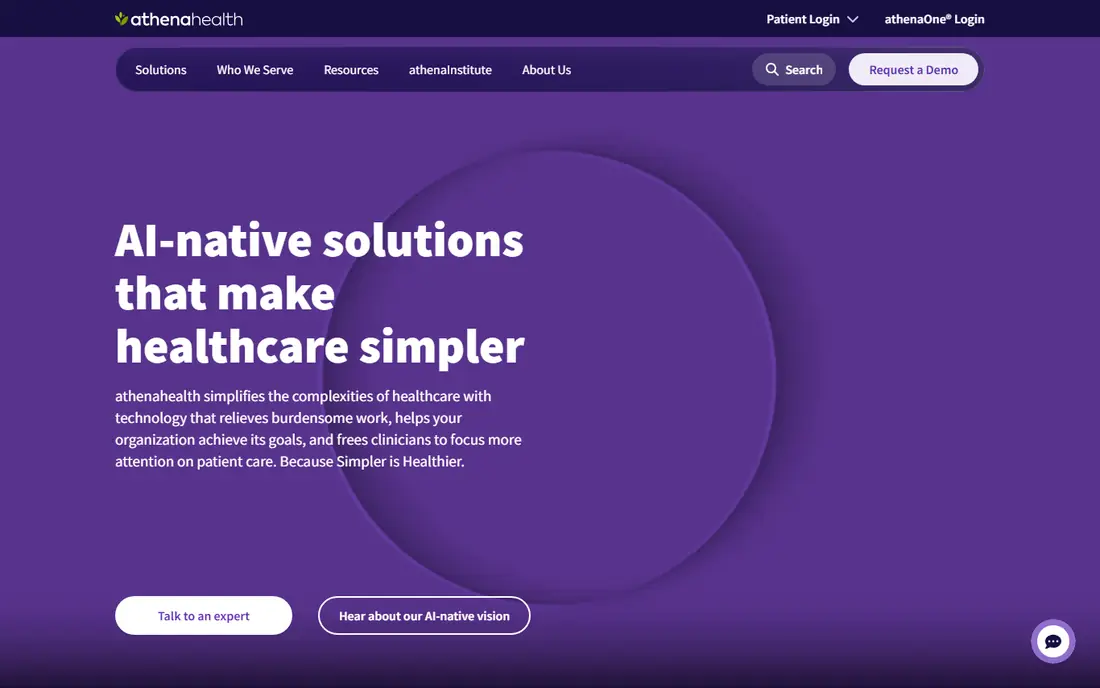
athenahealth, through athenaOne, suits practices that want billing handled as a service rather than as a staff job. The platform combines EHR charting, scheduling, patient portal, and revenue cycle management, with payer rules updated centrally. For practices tired of denials and billing follow-up, that managed model is the main appeal.
Pricing needs careful modeling. athenahealth often charges a base subscription plus a percentage of collections, commonly cited at 4 to 8 percent depending on contract terms. For a practice with strong billing staff, a flat-rate rival may cost less. For a practice that would otherwise hire billing help, the percentage model can be competitive.
- Integrated revenue cycle management
- Broad payer connectivity
- Cloud-based EHR, practice management, and patient portal
- Percentage-of-collections pricing can grow costly as revenue rises
- Template customization is more limited than some rivals

Practice Fusion is our pick for price-sensitive small primary care practices. At $149 per month in many listings, it offers cloud charting, e-prescribing, lab integrations, and a patient portal without the enterprise pricing of larger systems. Setup is quicker than for complex EHRs, which helps new practices start seeing patients sooner.
The limit is depth. Billing, reporting, and specialty workflows are simpler than on athenahealth, eClinicalWorks, or NextGen. If your practice needs complex billing or specialty templates, budget for a larger system. If you need a clean, affordable EHR for primary care, Practice Fusion gives strong value.
- Low entry price for a full EHR
- Cloud-based charting and e-prescribing
- Quick setup for primary care
- Billing features are more basic than athenahealth
- Fewer specialty templates than larger systems
- Add-ons cost extra

DrChrono, now part of Tebra, suits providers who chart on a tablet in the exam room. Its iPad-first design lets clinicians chart, prescribe, and bill without returning to a desktop, and it combines clinical workflows with billing and patient messaging. Specialty templates cover fields from family medicine to podiatry.
Pricing clarity is the drawback. Some listings cite $199 per month, while current vendor pages lean toward quotes, so confirm the rate for your provider count and modules. If your team lives on tablets, DrChrono is a strong fit. If your team works mainly at desktops, a web-first EHR may feel more natural.
- IPad-first charting for exam rooms
- EHR plus billing and patient engagement
- AI documentation features
- Specialty templates
- Pricing is quote-based in many current listings, despite published entry figures
- Desktop workflows can feel secondary
SimplePractice is the best starting point for solo therapists, counselors, and wellness practitioners. It combines scheduling, intake forms, session notes, billing, and telehealth in a system designed for behavioral health workflows, not adapted from a hospital EHR. The $29 per month entry tier makes it accessible for a new practice.
It is not a general medical EHR. Practices that need complex medical charting, lab orders, or specialty procedure templates should look at athenahealth or eClinicalWorks instead. For therapy and coaching practices, SimplePractice covers daily work with less setup and lower cost than a full EHR.
- Low entry price
- Scheduling, notes, billing, and telehealth built for therapists
- Client portal and secure messaging
- Not built for large medical practices
- Medical charting depth trails full EHR systems
- Higher tiers needed for more features
TherapyNotes suits therapy practices that bill insurance heavily and need claims handled cleanly. It offers scheduling, notes, billing, eligibility checks, electronic remittance, and a client portal, with workflows built around therapy sessions and insurance rules. That insurance depth is its main advantage over simpler practice tools.
The trade-off is scope. TherapyNotes is not a general medical EHR, and its design prioritizes function over polish. If your practice is therapy-focused and insurance billing is a daily burden, TherapyNotes is a strong pick. If you need medical charting or lab integration, a broader EHR will fit better.
- Strong claims, eligibility checks, and ERA handling
- Notes and scheduling built for therapy
- Support geared to behavioral health
- Less suited to general medical practices
- Price rises with add-ons and clinician count
- Interface is functional rather than modern
eClinicalWorks suits mid-sized and multi-location practices that need a broad, mature EHR. It covers charting, scheduling, billing, patient portal, telehealth, and population health tools, with AI scribe features that help reduce documentation time. Its scale also means wide payer and lab connectivity.
Cost and complexity are the drawbacks. Pricing is by quote, with listings often citing $449 per month and up, and implementation needs planning across locations. Small solo practices may find Practice Fusion or DrChrono simpler and cheaper. Growing groups that need one system across sites will find eClinicalWorks more capable.
- Broad EHR, practice management, and patient engagement
- AI scribe features
- Multi-location support
- Large provider base
- Pricing is by quote and often cited from $449 per month
- Setup and customization take time
- Interface feels dated in places
NextGen Healthcare fits specialty and mid-sized practices that need templates shaped to their field. It offers customizable charting, reporting, billing, and patient engagement, with specialty content for fields such as orthopedics, cardiology, and behavioral health. That template depth saves clinicians from building notes from scratch.
The cost is setup and price opacity. Quotes vary by provider count, modules, and specialty content, so small practices should compare Practice Fusion first. If your specialty needs detailed templates and your group is growing, NextGen gives a scalable path without moving to a hospital-grade system.
- Custom templates and reporting for specialties
- EHR plus practice management
- Scalable for growing groups
- Pricing is by quote, often cited from $150 to $500 per provider per month
- Implementation needs specialty configuration
Epic is the standard for large hospitals and health systems, with deep charting, ordering, billing, and interoperability across a network. Its MyChart patient portal is widely recognized, and chart sharing within an Epic network helps referrals and hospital coordination. For a large organization, that network effect is hard to match.
For an independent small practice, Epic is usually overkill in cost, complexity, and IT requirements. The practical exception is Epic Community Connect, where a small practice joins a local hospital Epic instance at lower cost and gains chart sharing with that system. Without a Community Connect sponsor, small practices should choose athenahealth, eClinicalWorks, or a smaller EHR instead.
- Deepest hospital and health system integration
- Broad specialty modules
- Strong chart sharing across large networks
- Cost and IT needs are usually too high for independent small practices
- Implementation is long and complex
How we picked these
We compared official product pages, pricing models, specialty fit, billing approaches, and practice size guidance for EHR systems operating in the United States. We kept systems that offer charting, e-prescribing, scheduling, and billing or billing integration, and that serve at least one clear practice type. Where pricing is by quote, we say so and cite commonly listed ranges only as a guide.
Choosing the right EHR software
Start with specialty, size, and billing model, not with a feature checklist. A therapist, a primary care solo, and a multi-specialty group need different templates, billing tools, and support. Shortlist two or three systems that fit your type, then demo them with your real visit types.
Billing: flat fee or percentage
Flat-rate EHRs give predictable monthly costs, while percentage-of-collections models tie cost to revenue and include managed billing. Model both at your current collections and at higher volumes. A percentage model that looks fair at low revenue can become costly as your practice grows, while a flat model that looks high at first may be cheaper at scale.
Compliance and interoperability
Confirm HIPAA-compliant hosting and access controls, e-prescribing including controlled substances where needed, lab and imaging interfaces, and patient portal access. Check how records export if you switch vendors later, since data lock-in is a real risk. Ask for the export format and cost in writing before signing.
Trial with real visits
Demo a full visit: intake, charting, ordering, prescribing, coding, and billing, using your most common visit types. Time how long charting takes, check template fit, and test support response during the trial. A system that looks strong in a sales demo but slows daily charting will cost more in clinician time than it saves in license fees.
Frequently asked questions
What is the best EHR software overall?
There is no single winner. athenahealth suits managed billing, Practice Fusion suits budget small practices, and eClinicalWorks suits multi-location groups. Match the system to your size and specialty first.
What is the best EHR software for a small practice?
Practice Fusion at $149 per month and DrChrono at $199 per month are strong small practice options for primary care. SimplePractice at $29 per month and TherapyNotes at $69 per month lead for behavioral health solo and small practices.
Which EHR software is best for specialty practices?
NextGen Healthcare offers strong specialty templates and reporting, while eClinicalWorks suits multi-specialty groups. Specialty-specific systems, such as ModMed for dermatology, may beat general EHRs for narrow fields.
Is Epic good for small practices?
Usually no, due to cost, complexity, and IT needs. Epic Community Connect through a local hospital is the main exception, since it gives small practices Epic access and chart sharing at lower cost than a standalone Epic build.
How much does EHR software cost?
Entry prices range from $29 per month for SimplePractice, to $69 for TherapyNotes, $149 for Practice Fusion, and $199 for DrChrono, with athenahealth, eClinicalWorks, NextGen, and Epic using quote-based or percentage pricing. Implementation, training, and add-ons add to the base cost.
Sources we checked (8)

Online Jobs is an independent blog about careers, online work, learning new skills and the tools that help people earn. More about us.
Keep reading
All posts
ZoomInfo Alternatives
The best ZoomInfo alternatives in 2026, compared on price, free plans, data coverage, and which tool fits small teams or large sales teams best in detail.

Zoom Alternatives
Zoom alternatives compared for 2026: Google Meet, Microsoft Teams, Webex, Jitsi and more for free calls, large meetings and webinars for teams and classrooms.

Workday Alternatives
We compared the best workday alternatives for HR, payroll, and global hiring, from BambooHR and Gusto to Rippling, Deel, and HiBob for growing teams in 2026.