Best Ecommerce Personalization Platform in 2026: 8 Platforms Compared


Enterprise experimentation · Starting price: See website
How we put this together: we compare official feature and pricing pages, app store listings, privacy policies and public user reviews. Prices change, so check the provider's site before you pay.
Key takeaways
- Dynamic Yield leads for enterprise teams that want experimentation-led personalization across channels.
- Nosto suits mid-market retailers that want recommendations, search, and merchandising in one platform.
- Bloomreach is strongest where product discovery and search drive revenue, especially for large catalogs.
- Smaller Shopify stores should start with LimeSpot or Klaviyo before paying for an enterprise platform.
- Personalization pricing often ties to traffic or order volume, so model costs at peak season, not average traffic.
Quick comparison
| Name | Who it suits | Starting price | Free option | |
|---|---|---|---|---|
| Dynamic Yield | Enterprise experimentation | See website | No | Visit |
 Nosto | Mid-market on-site personalization | See website | No | Visit |
 Bloomreach | Search and discovery | See website | No | Visit |
 Insider | Cross-channel journeys | See website | No | Visit |
 Klaviyo | Email and SMS personalization | $20 per month | Yes | Visit |
 Rebuy | Shopify cart personalization | See website | Free trial | Visit |
 LimeSpot | Small Shopify stores | $50 per month | No | Visit |
 Recombee | Developer-built recommendations | $99 per month | Yes | Visit |
The best ecommerce personalization platforms
Ecommerce personalization means showing each shopper the products, content, and offers most likely to matter to them, based on browsing, purchase history, and segment. The best platforms cover on-site recommendations, search, merchandising, and often email and app channels too. We compared official feature pages, pricing signals, and public reviews to rank the platforms that serve online retailers best.
Dynamic Yield, part of Mastercard, leads for enterprise teams that treat personalization as experimentation. Its testing engine, behavioral targeting, and recommendation algorithms work across website, app, email, and SMS, so one platform can run homepage tests, product recommendations, and triggered content together. Segmentation draws on behavior, affinity, and purchase history.
Pricing is quote-based at enterprise levels, and getting full value needs technical staff for implementation and test design. Smaller teams will find it heavy. For large retailers with traffic to test on and a team to run experiments, Dynamic Yield is the most complete personalization suite here.
- Strong A/B testing and AI decisioning
- Personalization across site, app, and email
- Deep segmentation
- Quote-based enterprise pricing
- Needs a technical team
- Implementation takes time
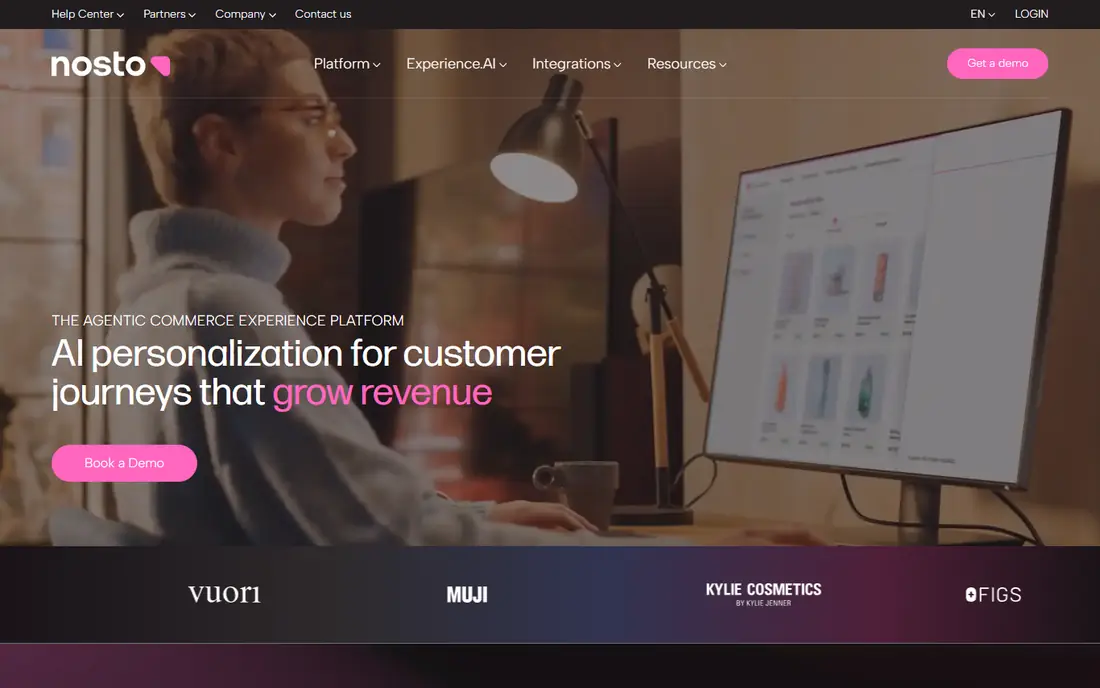
Nosto gives mid-market retailers a commerce experience platform that covers the shopping journey end to end. Product recommendations, personalized search, category merchandising, dynamic bundles, and post-purchase offers sit in one system, and Shopify and Magento integrations run deep. Category pages can change by segment or individual shopper, which lifts discovery beyond generic best-seller lists.
Pricing is quote-based and depends on traffic, order volume, and modules, so costs grow with success and need modeling at peak season. Setup for advanced merchandising benefits from experienced help. For mid-market stores that want one personalization vendor, Nosto is a strong default.
- Recommendations, search, and merchandising in one platform
- Strong Shopify and Magento support
- Category personalization
- Quote-based pricing tied to traffic and order volume
- Modules add cost
- Smaller teams may need help with setup
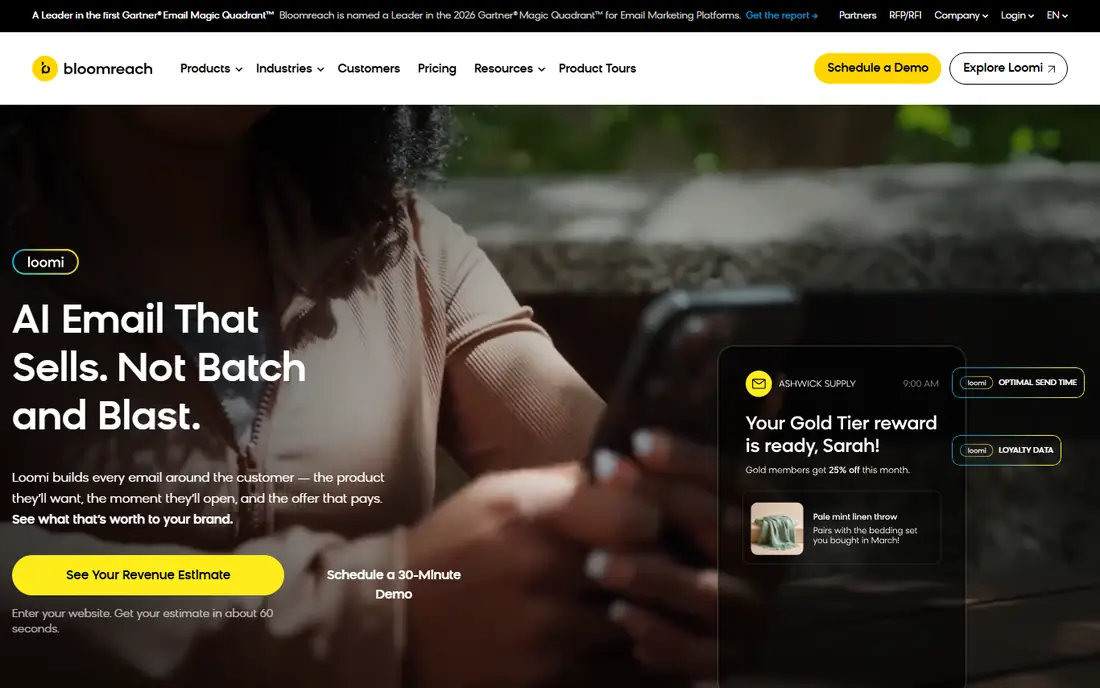
Bloomreach wins where shoppers cannot find products. Its AI search understands natural language and terms that do not appear in product descriptions, merchandising tools let teams shape ranking and category pages, and recommendations extend personalization across the site and campaigns. A customer data platform option ties web behavior to email and SMS for larger brands.
Pricing is quote-based, and the platform makes most sense once a catalog and traffic volume justify it. Small stores will find it too much. For large brands where search drives a large share of revenue, Bloomreach can pay for itself through better discovery alone.
- AI search that understands natural language
- Merchandising and recommendations
- Customer data platform options
- Quote-based pricing
- Best for large catalogs and traffic
- Implementation needs planning
Insider, branded as Insider One, suits brands that want to replace several tools with one cross-channel platform. Customer data, journey orchestration, on-site personalization, and messaging across email, SMS, push, and WhatsApp sit together, and predictive segments adapt journeys as behavior changes. That breadth helps brands that run campaigns across many channels at once.
Pricing is quote-based, and the broad scope means rollout needs planning, since teams can easily buy more than they use in year one. Start with one or two channels and expand. For growing and mid-market brands consolidating tools, Insider is a serious contender.
- Journeys across web, app, email, SMS, and WhatsApp
- Predictive segments
- Customer data platform
- Quote-based pricing
- Broad scope needs careful rollout
- Smaller teams may use only part of it
Klaviyo personalizes the channels where many stores earn repeat revenue: email and SMS. Behavioral flows trigger on browsing, cart, and purchase activity, predictive segments estimate purchase likelihood and churn risk, and send-time optimization tunes delivery per subscriber. Store data integration with Shopify and WooCommerce runs deep.
On-site recommendations and merchandising are thinner than dedicated platforms such as Nosto, so Klaviyo pairs with an on-site tool for full coverage. Paid plans start at 20 dollars a month, with costs rising by profile count and SMS use. For retention-led personalization, Klaviyo is the strongest pick here.
- Behavioral flows and predictive segments
- Strong store data integration
- Revenue attribution
- On-site personalization is thinner than Nosto or Dynamic Yield
- Costs climb with profiles
- SMS adds cost
Rebuy focuses on the moment that decides average order value: the cart and checkout. Smart cart recommendations, upsells, bundles, and post-purchase offers run inside Shopify, turning a plain cart into a personalized selling surface. Stores with complementary products and repeat buyers see the clearest gains.
The platform is Shopify focused, so other store platforms should look elsewhere, and pricing is tiered by usage, which needs modeling at peak order volume. A trial helps prove lift before committing. For Shopify stores that want cart personalization without an enterprise suite, Rebuy is the specialist pick.
- Smart cart and checkout upsells
- Bundles and post-purchase offers
- Built for Shopify
- Shopify focused
- Pricing is tiered and usage-based
- Needs traffic to show lift
LimeSpot gives small to mid-size Shopify stores personalization at an approachable price. Recommendations, upsells, and cross-sells run on product and collection pages, with email and SMS widgets extending the same logic beyond the site. Installation through Shopify takes minutes, and paid plans start at 50 dollars a month.
Depth trails enterprise platforms: testing, merchandising controls, and analytics are simpler, and large catalogs may outgrow it. For a growing Shopify store that wants recommendations now without a quote-based contract, LimeSpot is the most sensible starting point.
- Affordable entry price
- On-site recommendations plus email and SMS
- Easy Shopify install
- Less depth than enterprise platforms
- Analytics are simpler
- Best for small to mid-size stores
Recombee suits developer-led teams that want to build custom recommendations rather than buy a packaged suite. Its API takes your catalog and interaction data and returns personalized recommendations for site, app, and email, with a free tier for testing and paid plans from 99 dollars a month. That flexibility fits unusual catalogs and custom storefronts.
There is no ready-made merchandising suite, so marketers used to visual editors will need engineering help. The interface is technical by design. For teams that can build on an API and want control over recommendation logic, Recombee offers power at a fair price.
- Flexible recommendation API
- Free tier for testing
- Works across site, app, and email
- Needs developer effort
- No ready-made merchandising suite
- Interface is technical
How we picked these
We compared official feature pages, pricing signals, and public reviews for personalization platforms serving online retailers, and we favored tools with real recommendation, search, or journey capabilities, not just email segmentation alone. Each platform had to personalize shopping for real stores, publish a price or a clear quote model, and come from a vendor we could verify. We did not claim hands-on testing we did not do, and we treated third-party price estimates as signals, since most enterprise vendors price by quote.
How to choose a personalization platform
Start with the problem costing you revenue. If shoppers cannot find products, prioritize search and discovery with Bloomreach or Nosto. If carts stay small, prioritize Rebuy or LimeSpot for upsells. If repeat purchases lag, prioritize Klaviyo for email and SMS. Buying a broad suite before naming the problem wastes budget on features you will not use in year one.
Next, check your store platform and traffic. Shopify stores have the widest choice, while custom storefronts may need API-led tools such as Recombee or Algolia-style search. Model pricing at peak-season traffic and order volume, since many platforms charge on those measures. Finally, run a controlled test: show personalization to half your traffic and compare conversion and revenue per visitor before rolling out fully.
Privacy and personalization
Personalization uses browsing and purchase data, so consent and data handling matter. Check that your platform supports consent signals, data deletion requests, and regional privacy rules where your customers live. Shoppers accept recommendations that feel helpful, but tracking that feels hidden damages trust fast, so keep your privacy notice plain and honest about what you collect and why.
Frequently asked questions
What is the best ecommerce personalization platform?
Dynamic Yield leads for enterprise experimentation, Nosto leads for mid-market on-site personalization, and Bloomreach leads for search-driven discovery. Klaviyo leads for email and SMS personalization. The best platform depends on your store size, catalog, and which channel needs the most help.
What is the best ecommerce personalization software for Shopify?
Nosto, Klaviyo, Rebuy, and LimeSpot all serve Shopify well. Nosto covers on-site personalization broadly, Klaviyo covers email and SMS, Rebuy covers cart upsells, and LimeSpot covers small-store recommendations affordably. Many Shopify stores combine Klaviyo with one on-site tool.
What is the best personalization tool for ecommerce on a budget?
LimeSpot at 50 dollars a month and Klaviyo with its free plan are the best budget starting points. Recombee also offers a free tier for developer-led teams. Start with one tool, prove revenue lift with a test, and upgrade only when traffic or catalog size demands it.
How much do ecommerce personalization platforms cost?
Small-store tools start near 50 dollars a month, mid-market platforms often run into hundreds or thousands per month depending on traffic and order volume, and enterprise suites price by quote. Always model costs at peak-season traffic before signing.
Does personalization actually increase sales?
Well-run personalization can lift conversion and order value, but results depend on traffic, catalog size, and test quality. Run a controlled comparison against a non-personalized experience and measure revenue per visitor, not just clicks. If a vendor will not support a measured trial, treat that as a warning sign.
Sources we checked (8)

Online Jobs is an independent blog about careers, online work, learning new skills and the tools that help people earn. More about us.
Keep reading
All posts
n8n Alternatives
n8n alternatives compared for 2026, with Zapier, Make, Activepieces, and more, covering visual builders, code steps, self-hosting, and pricing models.

ZoomInfo Alternatives
The best ZoomInfo alternatives in 2026, compared on price, free plans, data coverage, and which tool fits small teams or large sales teams best in detail.

Yotpo Alternatives
Find cheaper alternatives to Yotpo for reviews and loyalty, with Judge.me, Loox, Stamped, and more compared for Shopify stores in 2026, all in one guide.