Best Dropshipping Platforms in 2026: 8 Products Compared

How we put this together: we compare official feature and pricing pages, app store listings, privacy policies and public user reviews. Prices change, so check the provider's site before you pay.
Key takeaways
- Shopify is the best base platform for most dropshipping stores, while DSers, AutoDS, and Spocket handle sourcing and automation on top of it.
- US and EU suppliers through Spocket and Zendrop ship faster than AliExpress suppliers, but products often cost more.
- CJdropshipping suits sellers who want sourcing and warehousing without a subscription, while Printful and Printify suit print-on-demand with no inventory.
- Total cost includes the platform plan, app subscription, product cost, shipping, and transaction fees, so price the full stack before you launch.
Quick comparison
| Name | Who it suits | Starting price | Free option | |
|---|---|---|---|---|
 Shopify | Base store platform | See website | Free trial | Visit |
 DSers | AliExpress order automation | Free | Yes | Visit |
 AutoDS | Multi-supplier automation | See website | Free trial | Visit |
 Spocket | US and EU suppliers | See website | Free trial | Visit |
 CJdropshipping | Sourcing and warehousing | Free | Yes | Visit |
 Zendrop | US fulfillment and branding | See website | Yes | Visit |
 Printful | Premium print-on-demand | Free | Yes | Visit |
 Printify | Budget print-on-demand | Free | Yes | Visit |
The best dropshipping platforms
We compared official feature pages, pricing pages, app store listings, and public reviews to find dropshipping platforms and apps that cover sourcing, automation, fulfillment, and print-on-demand.
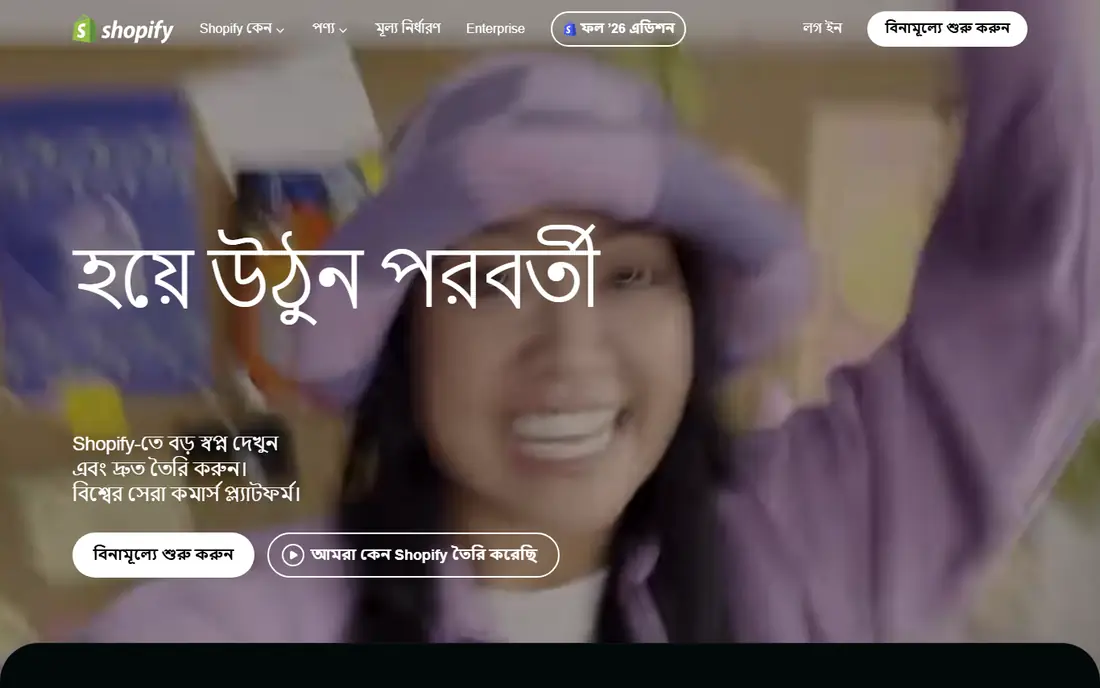
Shopify is the base platform most dropshipping sellers build on, rather than a sourcing app itself. You can set up a store, add products, take payments, and manage orders in one dashboard, then add a dropshipping app from the Shopify App Store for sourcing and fulfillment. That separation is useful: Shopify handles the store, and the app handles suppliers, which keeps each part replaceable if your needs change.
The cost catch is stacking. Your Shopify plan, your dropshipping app subscription, product costs, shipping, and transaction fees all add up, so a store that looks cheap on a single price page can cost more in total. Shopify offers a trial, which gives you time to test a theme, a product import, and checkout before paying. For most new dropshipping sellers, Shopify is the safest base to start from.
- Easy store setup and checkout
- Large app store for dropshipping
- Reliable hosting and payments
- Monthly platform cost is separate from app costs
- Transaction fees apply unless you use Shopify Payments in supported regions
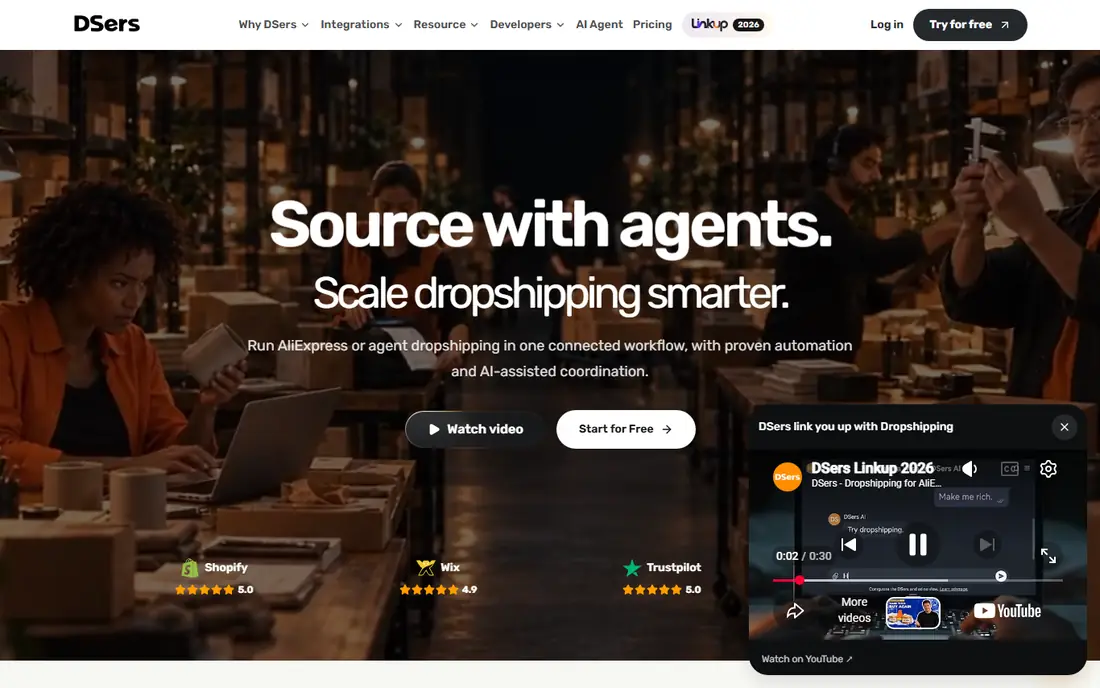
DSers is the established AliExpress automation app for Shopify. It lets you import AliExpress products, map suppliers to your listings, set pricing rules, and process many orders at once instead of placing each order manually. That bulk processing saves hours when order volume grows, and the free tier lets a new seller test AliExpress dropshipping without an app subscription.
Shipping time is the honest catch. AliExpress orders often take longer than US or EU supplier orders, and product quality varies by supplier, so you should order samples before you scale a product. DSers does not fix supplier quality or shipping speed on its own. For AliExpress-based stores that want automation at low cost, DSers is a strong and proven choice.
- Free tier to start
- Bulk AliExpress order processing
- Supplier mapping and pricing rules
- Shipping from AliExpress is often slower
- Product quality varies by supplier
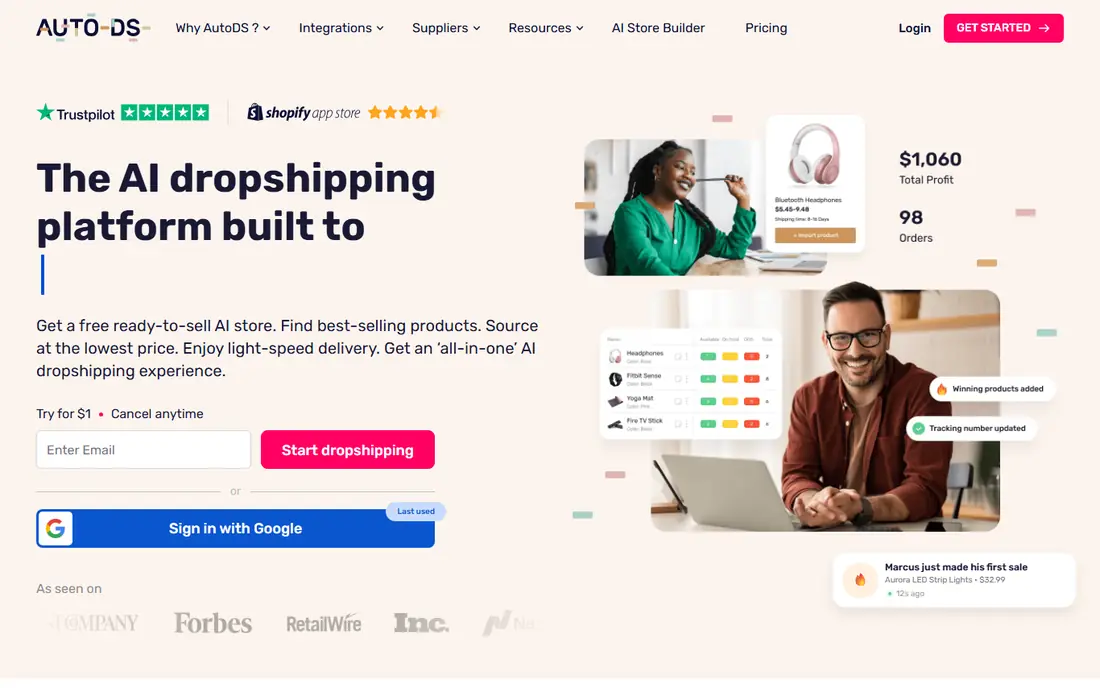
AutoDS suits sellers who source from several places and want automation to handle the routine work. It offers product research, import, price monitoring, stock monitoring, and automated order fulfillment across supplier types, which helps when a product goes out of stock or a supplier changes price. That automation reduces manual checking and helps avoid overselling a product you cannot fulfill.
AutoDS is paid after a trial, and its full automation rules take time to learn. A new seller should start with a small product set, test automation on a few orders, and only then expand. For sellers who already have winning products and want to scale without hiring help for order processing, AutoDS gives a broad automation toolkit in one place.
- Automation across several supplier types
- Product research tools
- Price and stock monitoring
- Paid after trial
- Learning curve for full automation rules
Spocket is best for sellers who want faster shipping to US and EU customers. Its marketplace focuses on suppliers in the US and EU, so delivery times are often shorter than China-direct shipping, and branded invoicing helps a store look more professional to customers. That speed and presentation can improve repeat purchase rates, which matters more than a low product cost alone over time.
Spocket costs more per month than a basic AliExpress app, and its product range is narrower, so you may not find every niche product there. Test whether your niche is covered before you commit, and compare total landed cost, including product price and shipping, against AliExpress options. For US and EU focused stores, Spocket is a strong balance of speed, quality control, and branding.
- US and EU suppliers for faster shipping
- Branded invoicing
- Quality checks on suppliers in its marketplace
- Higher monthly cost than DSers
- Product range is narrower than AliExpress
CJdropshipping is different from most apps in this list because there is no subscription to join. You pay per order, and you can use its sourcing service to find a product, check quality, store stock in a warehouse, and ship from a closer location. That model suits sellers who want flexibility, who sell a smaller number of proven products, or who want custom packaging without paying a monthly app fee first.
The catch is variation by product and route. Sourcing time, warehouse stock, and shipping speed depend on the specific product and warehouse, so you should test a product end to end before you advertise it widely. CJdropshipping works best when you treat it as a sourcing partner for proven products, not as a quick import tool for hundreds of untested listings.
- No subscription to join
- Sourcing service and global warehouses
- Quality checks and custom packaging options
- Service quality varies by product and warehouse
- Shipping times vary by route
Zendrop focuses on US fulfillment and branding for dropshipping stores. You can import products, use US warehouses for faster delivery on some items, and add branded packaging that makes an order feel like it came from your store, not from a generic supplier. That branding and speed help with customer trust, especially for stores that sell higher-value products where presentation matters.
The free plan is mainly for browsing, and automated fulfillment sits on paid plans, so check what is included before you launch. Zendrop suits sellers who have a proven product and want to improve delivery speed and unboxing experience, rather than sellers who are still testing many products at low cost. For that stage, Zendrop is a polished option.
- US fulfillment options
- Branded packaging
- Product catalog with coaching resources in some plans
- Full fulfillment features need a paid plan
- Free plan is mainly for browsing
Printful is the premium print-on-demand pick in this list. You design a product, such as a shirt, hoodie, mug, or poster, and Printful prints, packs, and ships each order as it comes in. There is no inventory to buy upfront, and fulfillment quality is generally higher than budget print providers, which helps for stores that sell design-led products at a higher price.
Printful product costs are higher than bulk printing, so margins depend on setting a retail price that covers product, shipping, platform, and marketing costs. Order a sample of your own design before you launch, since print color and fabric feel vary by product. For creators, artists, and brands that want quality print-on-demand without inventory risk, Printful is a strong choice.
- No inventory needed
- Quality print and fulfillment
- Wide product range and integrations
- Product cost is higher than bulk printing
- Profit margins depend on your retail price
Printify is the budget-friendly print-on-demand network in this list. Instead of one fulfillment company, Printify connects you to many print providers, so you can compare product costs, shipping times, and locations for the same design. That choice can lower product costs and improve shipping speed for customers in different regions, which helps margins on price-sensitive products.
Quality varies by provider, so testing is essential. Order samples from two or three providers for your main product, check print quality, fabric, and shipping time, and only then scale the winning provider. Printify also offers a paid premium plan with discounts, so check whether that plan pays for itself at your order volume. For budget print-on-demand with provider choice, Printify is a practical pick.
- Free to start
- Many print providers to compare
- Lower product costs on many items than premium providers
- Quality varies by provider
- You must test providers before scaling
How we picked these
We compared official feature pages, pricing pages, Shopify app listings, and public reviews for platforms and apps that are available today and that cover the main dropshipping jobs: store building, sourcing, automation, fulfillment, and print-on-demand. We favored a mix of a base platform, AliExpress automation, multi-supplier automation, US and EU sourcing, sourcing and warehousing, and print-on-demand, so readers can build a full stack rather than pick a single app in isolation. Where a price could not be verified on the vendor site or app listing at the time of writing, we wrote See website instead of guessing. We did not claim hands-on selling results.
How to choose a dropshipping platform
Start with your product and customer location. If you sell to US or EU customers and speed matters, shortlist Spocket, Zendrop, or CJdropshipping warehouses in those regions. If you sell low-cost products and test many ideas, shortlist DSers and AutoDS for AliExpress and multi-supplier automation. If you sell designs, shortlist Printful or Printify. Your supplier location and product type should decide the app, not the app marketing alone.
Next, price the full stack for 100 orders. Add your Shopify plan, app subscription, average product cost, shipping cost, transaction fees, and expected refund rate. A cheap app with slow shipping and high refunds can cost more than a pricier app with faster delivery and fewer support tickets. Order samples, test delivery time to your own address, and check product quality before you spend on ads.
Finally, plan for support and returns. Dropshipping customers will ask where an order is, and some orders will arrive late or damaged. Pick an app with clear tracking sync, a clear return process, and supplier communication you can manage. Write a clear shipping time and return policy on your store, and do not promise delivery times your supplier cannot meet. Honest shipping times reduce refunds and build repeat business.
Testing a product before you scale
Import a small set of products, order a sample, photograph the real product, and run a small ad test. Check delivery time, packaging, and quality, and check whether the supplier communicates quickly if there is a problem. Only scale products that pass sample, delivery, and support checks. That discipline saves more money than any app feature alone.
When to use more than one app
Use more than one app when your products come from different supplier types. A store might use DSers for AliExpress products, Spocket for US suppliers, and Printful for print-on-demand designs, all on Shopify. That mix works if you keep inventory sync clean and avoid listing the same product from two suppliers with different shipping times. Keep a simple spreadsheet of which app fulfills each product.
Frequently asked questions
What is the best dropshipping platform?
Shopify is the best base platform for most dropshipping stores because of its store tools, checkout, and app ecosystem. The best sourcing app on top of Shopify depends on your supplier location and product type, with DSers for AliExpress, Spocket for US and EU suppliers, and Printful for print-on-demand.
What are the best dropshipping apps for Shopify?
DSers, AutoDS, Spocket, CJdropshipping, Zendrop, Printful, and Printify are all strong Shopify apps, each for a different job. DSers leads for AliExpress automation, AutoDS for multi-supplier automation, Spocket for US and EU shipping, and Printful and Printify for print-on-demand. Pick by supplier source and shipping needs.
What is the best platform for dropshipping for beginners?
Shopify plus a free or low-cost app is best for beginners, because setup is clear and you can test products without buying inventory. Start with DSers, CJdropshipping, or Printful free tiers, order samples, and learn fulfillment before you pay for a higher app tier or run large ad budgets.
What is the best software for dropshipping automation?
AutoDS is best for broad multi-supplier automation, while DSers is best for AliExpress bulk order automation. Both help with price monitoring, stock sync, and order forwarding. Test automation on a small product set first, since automation rules need tuning for your suppliers and pricing.
How fast is dropshipping shipping in 2026?
Shipping speed depends on supplier location. US and EU suppliers through Spocket, Zendrop, or CJdropshipping warehouses often deliver in a few business days to a week, while AliExpress direct shipping often takes longer. Always state a realistic delivery range on your store based on your actual supplier test.
Is dropshipping still profitable?
Dropshipping can be profitable when product margins cover platform, app, product, shipping, transaction, and marketing costs, and when returns stay low. It is less profitable when sellers compete only on price with slow shipping and no branding. Focus on a clear niche, tested products, faster suppliers, and honest shipping times to improve margins.
Sources we checked (8)

Online Jobs is an independent blog about careers, online work, learning new skills and the tools that help people earn. More about us.
Keep reading
All posts
Zoom Alternatives
Zoom alternatives compared for 2026: Google Meet, Microsoft Teams, Webex, Jitsi and more for free calls, large meetings and webinars for teams and classrooms.

Workday Alternatives
We compared the best workday alternatives for HR, payroll, and global hiring, from BambooHR and Gusto to Rippling, Deel, and HiBob for growing teams in 2026.
WordPress Alternatives
WordPress alternatives guide: we compare 8 platforms for builders, designers, stores, and publishers to leave WordPress without losing your full site content.