Best DFS Apps in 2026: 8 Apps Compared

How we put this together: we compare official feature and pricing pages, app store listings, privacy policies and public user reviews. Prices change, so check the provider's site before you pay.
Key takeaways
- DraftKings and FanDuel remain the main choices for classic salary-cap daily fantasy, with the largest contest lobbies and the widest sport coverage.
- Underdog and PrizePicks suit players who prefer drafts, best ball, or simple player-pick entries rather than building a full salary-cap lineup.
- Sleeper, Chalkboard, and Dabble add a social layer, which matters if you mostly play with friends or follow other players.
- Availability, age limits, and contest types vary by state, so check the rules in your state inside each app before you deposit any money.
Quick comparison
| Name | Who it suits | Starting price | Free option | |
|---|---|---|---|---|
 DraftKings | Classic salary-cap contests | Free | Yes | Visit |
 FanDuel | Beginners in salary-cap contests | Free | Yes | Visit |
 Underdog | Best ball and drafts | Free | Yes | Visit |
 PrizePicks | Simple player picks | Free | Yes | Visit |
 Sleeper | Social fantasy play | Free | Yes | Visit |
 Betr | Quick player picks | Free | Yes | Visit |
 Chalkboard | Community pick contests | Free | Yes | Visit |
 Dabble | Social pickem play | Free | Yes | Visit |
The best DFS apps
Daily fantasy sports, often shortened to DFS, covers several different games, and the best app depends on which game you actually want to play. Some apps focus on salary-cap lineups, where you build a team under a budget and compete for a night or a weekend. Others focus on drafts, best ball, or picking whether players go over or under a projected stat. We compared the official feature pages, contest formats, and state availability notes for the apps below, and we left out any app that did not clearly offer a fantasy product in the United States.
A note before the list: DFS is paid-entry gaming in many states, and it is not available everywhere. Most apps require players to be 18 or older, and some states require players to be 21 or older. Set a budget, treat entry fees as entertainment spending, and use deposit limits or self-exclusion tools if play stops feeling fun. If gambling becomes a problem, call or text 988 in the United States for support options, or contact the helpline listed inside the app you use. Nothing here promises winnings, and no strategy guarantees a profit.
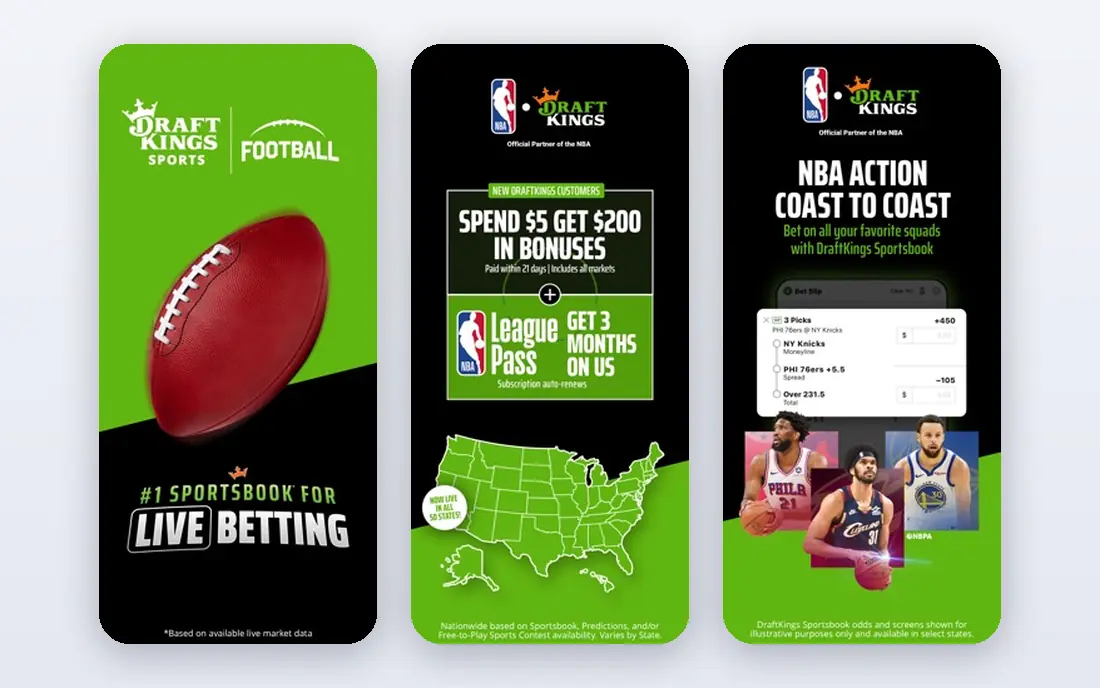
DraftKings is the default starting point for classic DFS, and that is because of scale. Its salary-cap contests cover the major United States sports plus golf, mixed martial arts, motorsport, and more, and its tournament lobbies are deeper than those of most rivals. If you want a head-to-head, a 50/50, a large guaranteed prize pool tournament, or a single-game showdown contest, you will usually find all of them here on a busy sports night.
The catch is that scale cuts both ways. Large tournaments attract experienced players who build many lineups, so a casual player can feel outmatched in the biggest events. Smaller contests and single-entry events soften that problem, and the app makes contest size and entry limits clear before you join. DraftKings also offers a separate Pick6 product in some states, which is a player-pick game rather than a salary-cap lineup, so check which product is live where you live.
- Largest contest lobbies
- Wide sport coverage
- Many contest types including tournaments and single-game contests
- Competition in large tournaments is tough
- Availability and contest types vary by state
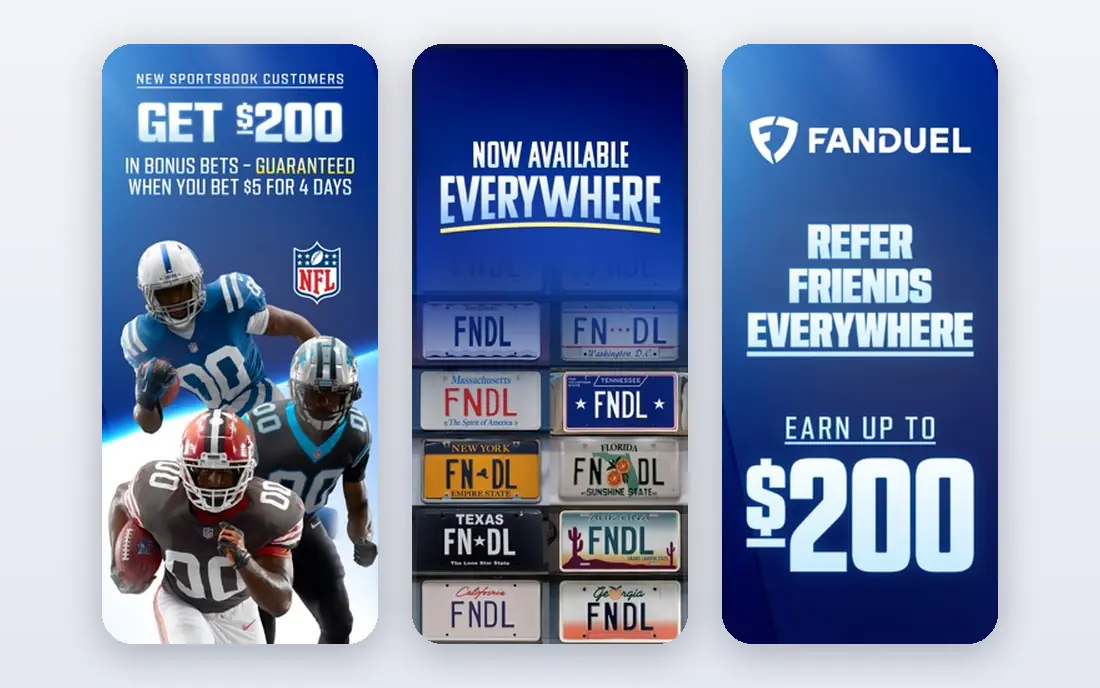
FanDuel is the other long-running salary-cap option, and it tends to feel a little calmer for a first-time player. The lobby is easy to filter by sport, contest size, and entry fee, and its single-game contests are a gentle way into DFS because you only build a lineup for one match. Best ball contests are also here, which suit players who like drafting a team and then letting the best scores count without weekly lineup changes.
Where FanDuel loses ground is in the same place DraftKings does: the biggest tournaments are crowded and competitive. That is not a flaw in the app so much as a fact of large prize pool contests. Start with smaller fields, use the contest filters to avoid multi-entry sharks where possible, and treat the first few weeks as learning time rather than profit time.
- Clean app layout
- Strong single-game and best ball options
- Beginner-friendly contest filters
- Large tournaments are still competitive
- Some formats are state restricted
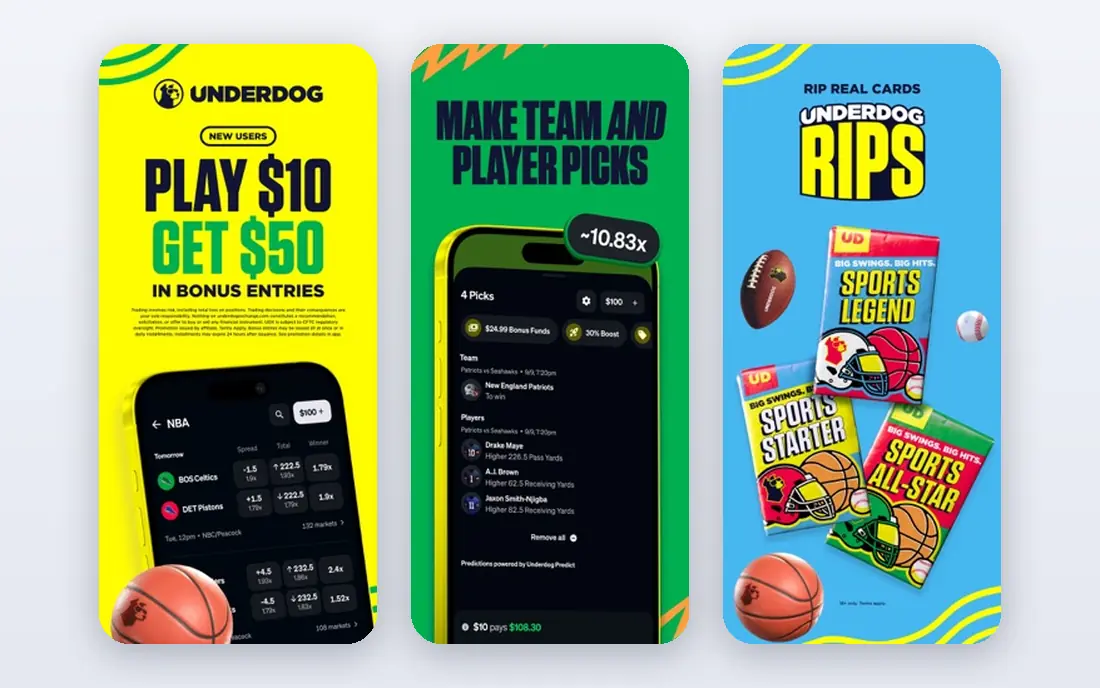
Underdog built its name on drafts rather than salary caps. You join a draft room, pick players in turns, and in best ball formats your best lineup scores itself each week, which removes the weekly task of setting a lineup. That makes it a good fit for players who enjoy drafting but do not want to manage a team every day. Its app is built for phones first, and draft rooms fill quickly around big events.
The trade-off is scope. If your main interest is classic salary-cap DFS, Underdog is not the natural home for it. Pickem-style contests are also limited or reshaped in some states, including peer-to-peer versions where rules differ from standard pickem. Read the contest rules for your state before entering, and pick Underdog for drafts and best ball rather than as a one-app replacement for everything.
- Mobile-first design
- Strong best ball tournaments
- Fast draft rooms
- Salary-cap lineups are not its focus
- Pickem availability varies by state
PrizePicks strips DFS down to one decision at a time: pick whether a player goes more or less than a projected number for a stat, and combine a few picks into one entry. There is no salary cap, no draft room, and no opponent lineup to study. For a casual sports fan who wants a five-minute entry before a game, that simplicity is the whole appeal, and the app is clear about how each entry is scored.
Simplicity has a cost, though. Players who enjoy the puzzle of fitting a team under a salary cap will find PrizePicks thin, and the exact format on offer depends on state rules. In some states the product runs as a peer-to-peer game, which changes how entries are matched and paid. Check the version live in your state, read the scoring rules for each stat type, and keep entries small while you learn how projections are set.
- Very simple entry process
- Broad player projections
- Quick entries
- No full lineup building
- Format and availability vary by state, including peer-to-peer versions in some states
Sleeper started as a fantasy league app, and that social core is still its strength. Leagues get chat, polls, and shared boards, and the app also offers pickem-style daily entries alongside season-long, dynasty, and keeper leagues. If your fantasy life revolves around a friend group, Sleeper keeps the conversation and the contest in one place, which is more than most DFS apps attempt.
As a pure DFS app, though, Sleeper is not as deep as DraftKings or FanDuel for salary-cap contests. Its daily offering is better seen as an add-on to its league tools than as a replacement for a dedicated DFS lobby. Pickem rules also vary by state, so confirm what is available to you. Choose Sleeper when the group matters as much as the game, and pair it with a salary-cap app if that format is your main interest.
- Strong league and chat tools
- Season-long and daily options
- Friendly mobile design
- Daily fantasy is not its deepest product
- Pickem availability varies by state
Betr is a newer pickem-style app with a clean, fast interface that suits short sessions. You work through player pick cards, choose more or less on a stat, and submit an entry in a couple of minutes. The design feels closer to a social app than a traditional sportsbook lobby, and that lowers the learning curve for someone trying DFS-style picks for the first time.
The honest catch is depth. Betr does not match the contest range of DraftKings or FanDuel, and it is not available in every state. Its pick formats and payout structures also differ by location, so the version your friend uses in another state may not be the version you see. Treat Betr as a quick-pick option rather than a full DFS home, and compare its entry rules with PrizePicks before settling on one.
- Fast, modern app
- Simple pick cards
- Quick entry flow
- Smaller contest range than the leaders
- Availability varies by state
Chalkboard leans into community play, with contests built around creators and groups rather than anonymous tournament lobbies. You can follow other players, join community contests, and make picks in a format that feels closer to playing with a group than entering a giant pool. For players who find big DFS tournaments impersonal, that structure is genuinely different and worth trying.
Pool size is the limitation. Smaller contests mean fewer opponents, which some players prefer, but also less variety in contest types and prize structures. Chalkboard is not a salary-cap app, so do not expect deep lineup tools here. It fits best as a second app for social picks alongside a main salary-cap or draft app.
- Community and creator-led contests
- Simple pick format
- Social discovery features
- Smaller player pools
- Less suited to serious salary-cap play
Dabble mixes pickem entries with a social feed, so you can see what other players are picking and follow people whose entries you like. The entry process itself is simple, built around more-or-less picks on player stats, and the app is easy to learn in a single session. If you enjoy the social side of sports talk, Dabble turns that chatter into part of the game.
Depth is again the trade-off. Dabble does not offer the salary-cap lobby of the big two, and its availability and product shape vary by location, since the company also operates in other countries under different rules. Confirm the United States product in your state before depositing. Dabble works best as a light, social pickem app rather than a serious DFS workhorse.
- Social feed and copy features
- Simple pickem entries
- Beginner-friendly layout
- Limited contest depth
- Availability varies by state and country
How we picked these
We compared official product pages, contest format descriptions, and state availability notes for the major DFS apps operating in the United States, and we checked app store listings for platform coverage. We favored apps with a clear, current fantasy product, transparent contest rules, and responsible play tools such as deposit limits. We left out apps that only offer sports betting, apps with no clear United States fantasy product, and offshore sites that do not operate under United States state rules. Prices here mean the cost to download and enter free contests where offered; paid entries cost extra, and entry fees vary by contest.
What to check before you enter a contest
Start with your state. DFS legality, age limits, and allowed formats differ across states, and some apps reshape their product state by state, so a format you read about online may not be the format you see at sign-up. Next, match the format to your time. Salary-cap lineups reward research and weekly attention, best ball rewards drafting skill with less upkeep, and pickem entries reward quick judgment on a handful of stats. Pick the format you will actually enjoy, not the one with the biggest advertised prize pool.
Then look at contest size and entry limits. A 20-person contest and a 100,000-person tournament are different games even when the sport is the same, and single-entry contests level the field against players who submit many lineups. Finally, set money rules before your first paid entry: a weekly budget, a maximum entry fee, and a stop point for losing days. Use the deposit limit tools in the app, and treat any app that makes those tools hard to find as a warning sign.
A note on responsible play
Paid fantasy contests can be fun, and they can also lead to losses that pile up faster than expected, especially when entries are small and frequent. Keep fantasy spending separate from money needed for bills, avoid chasing losses with bigger entries, and take breaks when play stops feeling like entertainment. Every app on this list should offer responsible play settings; use them early rather than after a bad week. If you need help, contact the support resources listed in your app or call or text 988 in the United States.
Frequently asked questions
What is the best DFS app for beginners?
FanDuel and PrizePicks are the easiest starting points, for different reasons. FanDuel teaches classic salary-cap play with clear filters and small contests, while PrizePicks skips lineup building entirely and asks only for more-or-less picks on player stats. Try a free contest on each before paying an entry fee, and pick the format you find easier to follow during a live game.
Are DFS apps legal in every state?
No. Availability, age limits, and allowed contest types vary by state, and some states restrict or reshape pickem-style games. Each app shows which products are available after you enter your location, so check inside the app rather than trusting a national advertisement. If an app is not offered in your state, do not use workarounds to access it.
Do I need to be 21 to play DFS?
It depends on your state and the app. Many states set the minimum age at 18 for fantasy contests, while others require players to be 21. The app will verify your age and location at sign-up, and those checks are part of keeping play within state rules. If you are under the limit in your state, wait rather than using someone else's account.
What is the difference between salary-cap DFS and pickem?
Salary-cap DFS asks you to build a full team under a budget and score points across all your players. Pickem asks you to predict whether individual players go over or under a projected stat, with no team to assemble. Salary-cap play rewards lineup construction and research, while pickem rewards quick reads on a few matchups. Best ball sits between the two: you draft a team, then your best scores count automatically.
Can you win money on DFS apps?
Paid contests pay out to winning entries, but most players lose money over time, especially in large tournaments against experienced opponents. Treat entry fees as entertainment spending, not income, and be skeptical of anyone selling a system that promises steady profits. Small contests, strict budgets, and realistic expectations make the hobby more enjoyable and less risky.
Which DFS app has the biggest contests?
DraftKings and FanDuel run the largest tournament lobbies, including large guaranteed prize pool events around major sports weekends. Underdog runs large best ball tournaments that also draw big fields. Bigger contests mean bigger advertised prizes, but they also mean more opponents and longer odds of finishing near the top, so size alone is a poor reason to choose an app.
Sources we checked (8)

Online Jobs is an independent blog about careers, online work, learning new skills and the tools that help people earn. More about us.
Keep reading
All posts
n8n Alternatives
n8n alternatives compared for 2026, with Zapier, Make, Activepieces, and more, covering visual builders, code steps, self-hosting, and pricing models.
eBay Alternatives
Looking for ebay alternatives? We compared 9 marketplaces for sellers on fees, buyer reach, categories and ease of listing, to help you sell with confidence.

ZoomInfo Alternatives
The best ZoomInfo alternatives in 2026, compared on price, free plans, data coverage, and which tool fits small teams or large sales teams best in detail.