Best Customer Review Platforms in 2026: 9 Platforms Compared

How we put this together: we compare official feature and pricing pages, app store listings, privacy policies and public user reviews. Prices change, so check the provider's site before you pay.
Key takeaways
- Trustpilot is our pick for consumer brands that need public trust at scale, while G2 is our pick for software sellers that need buyer-facing reviews.
- Google Business Profile and Yelp are essential for local businesses, because buyers check them before they visit or call.
- Birdeye and Podium suit multi-location and service businesses that need review requests, messaging, and local listings in one place.
- The best customer review software is not only a collection tool. It also helps you respond, display reviews, and learn from feedback.
- Check where your buyers actually read reviews, since a platform with no audience in your market will not help, even if its tools are strong.
Quick comparison
| Name | Who it suits | Starting price | Free option | |
|---|---|---|---|---|
 Trustpilot | Consumer brands that need public trust | Free | Yes | Visit |
 G2 | Software sellers reaching business buyers | See website | Yes | Visit |
 Yelp | Local restaurants, services, and shops | Free | Yes | Visit |
 Google Business Profile | Local search, Maps, and general trust | Free | Yes | Visit |
 Birdeye | Multi-location brands managing reviews at scale | See website | Free trial | Visit |
 Yotpo | Ecommerce stores using reviews and loyalty | See website | Free trial | Visit |
 Podium | Service businesses that win reviews by text | See website | Free trial | Visit |
 Reviews.io | Collecting and displaying verified reviews | See website | Free trial | Visit |
 Feefo | Verified reviews tied to real transactions | See website | Free trial | Visit |
The best customer review platforms
Customer reviews shape buying choices, search visibility, and trust, but different platforms reach different buyers. A shopper checking a store, a patient choosing a clinic, and a manager choosing software do not read the same sites. The platforms below cover consumer trust, local search, software discovery, and ecommerce, so you can pick the mix that matches where your buyers look.
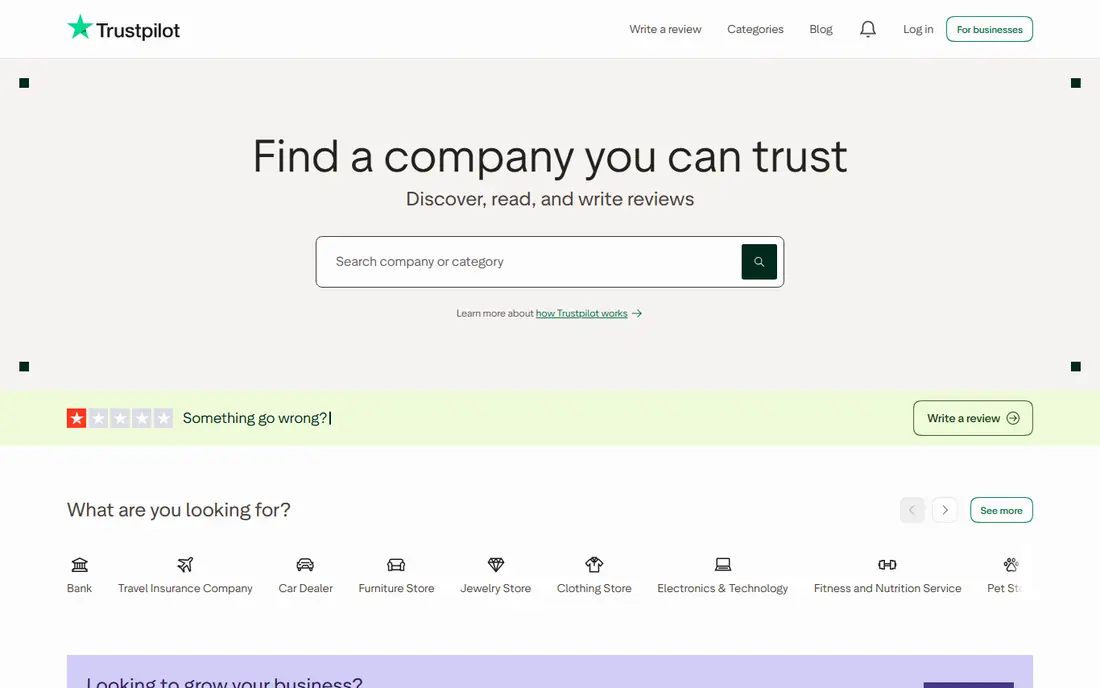
Trustpilot is one of the most recognized consumer review sites, and that recognition is its main asset. A strong Trustpilot profile can reassure a first-time buyer who has never heard of your brand, and review stars often appear in search results. Businesses can invite customers to review, respond publicly, and display reviews on their own site with widgets.
The cost is the main barrier. While a basic profile is free, paid plans that add more invitations, analytics, and tools are priced for larger firms. You must also follow Trustpilot rules on invitations and responses, since selective inviting can breach policy. For a consumer brand that sells online, Trustpilot is still the default public trust platform to consider first.
- Large consumer audience and strong search visibility
- Review invitations and widgets
- Clear business profile pages
- Paid plans are costly for small firms
- Review moderation rules need careful handling
G2 is the review platform software buyers use to compare tools, read peer feedback, and shortlist vendors. A profile with recent, detailed reviews can put a small vendor beside much larger rivals in category pages and comparisons. G2 also organizes reviews by company size, use case, and feature, which helps buyers find feedback from firms like theirs.
A free profile is a useful start, but paid vendor plans add promotion, intent data, and richer analytics at a cost that suits growing software firms more than tiny startups. Review collection also takes effort, since you must ask real users to write detailed reviews. For a software company, G2 is the most buyer-relevant platform on this list, and it should sit beside your own case studies and demo.
- Large software buyer audience
- Detailed review categories and comparisons
- Buyer intent signals on paid plans
- Paid vendor plans are costly
- Review collection needs active outreach to users
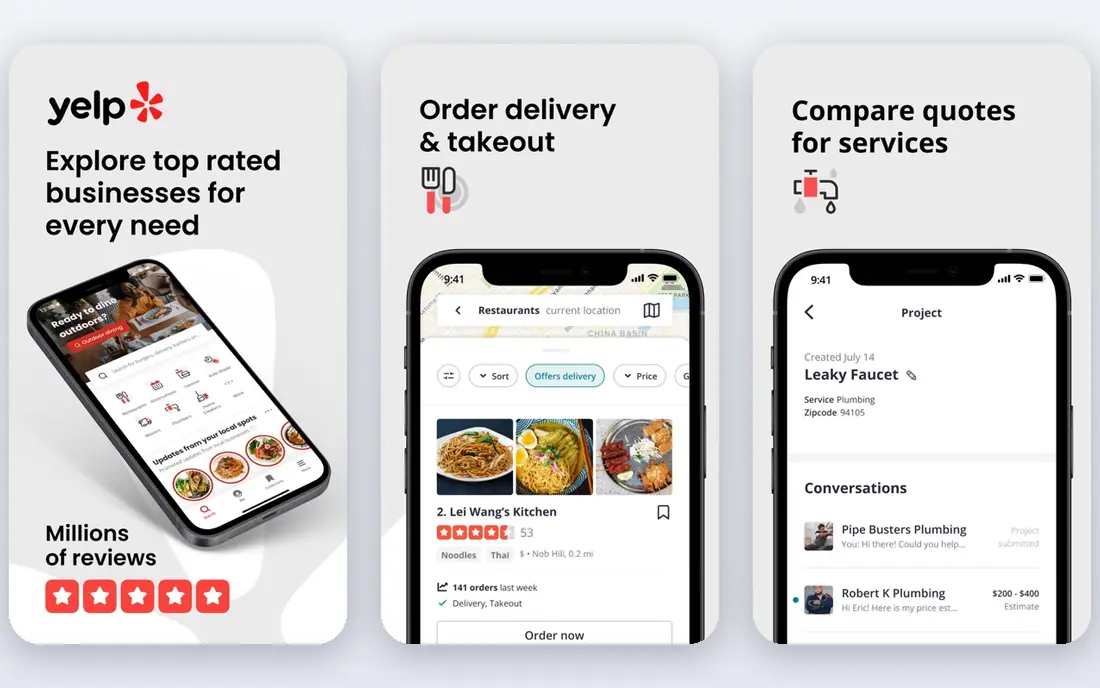
Yelp remains a key discovery site for local services, restaurants, salons, and shops. Many buyers check Yelp before visiting, calling, or booking, and a complete page with photos, hours, and recent reviews builds confidence fast. Claiming and updating your page is free, which makes Yelp a basic step for any local business.
The frustration for owners is review filtering and paid options. Yelp filters some reviews, and owners cannot remove reviews they dislike, which can feel unfair when a filtered review looks genuine. Paid ads can raise visibility, but they are not required to have a useful page. For a local business, Yelp is worth claiming and maintaining, even if it is not your only review channel.
- Strong local consumer audience
- Free business page with photos and info
- Useful for discovery and directions
- Advertising and paid tools add cost
- Review filtering can frustrate owners
Google Business Profile
Who it suits: Local search, Maps, and general trust
Google Business Profile is the most important free review presence for most local and service businesses. When someone searches for your business or a nearby service, your profile, star rating, and recent reviews appear in search and Maps. That visibility is hard to match, and it costs nothing to claim and maintain a profile.
The trade is tooling. Google gives you reviews, responses, photos, and basic insights, but it does not offer the invitation campaigns, widgets, or analytics of a paid review platform. You will still need a separate tool if you want automated requests and detailed reporting. Even so, no local business should skip Google. It is the first profile buyers see, and it should be accurate, complete, and actively answered.
- Free profile with Maps and search visibility
- Reviews appear where buyers search
- Simple owner responses
- Limited collection and display tools
- Owner controls are basic compared with paid platforms
Birdeye suits brands with many locations that need one system for reviews, listings, and customer messaging. You can send review requests by text or email, monitor reviews across sites, respond from one inbox, and track performance by location. That central view helps a head office spot locations that need help, rather than checking each profile separately.
Pricing is quote-based, which makes it harder for a small firm to judge cost without a sales conversation. Setup for many locations also takes planning, including listing data and request templates. For a single-location shop, Google and Yelp may be enough. For a chain, franchise, or multi-site service firm, Birdeye gives control that free profiles alone cannot match.
- Review requests, listings, and messaging in one place
- Good for multi-location reporting
- Survey and social tools included
- Pricing is quote-based, so small firms must ask for a price
- Setup takes time for many locations
Yotpo is built for online stores. It collects reviews after purchase, displays them on product pages, and supports photo and video reviews that help shoppers judge quality. Because it connects to order data, it can time requests well and link reviews to real purchases. Loyalty and referral tools on higher plans extend the same customer data into repeat buying.
The focus is also a limit. Yotpo fits ecommerce best, and a service business without product pages will gain less from it. Pricing scales with usage and features, so a growing store should check plan limits before launch. If you run a store and want reviews that sell on the product page, Yotpo is one of the strongest ecommerce options.
- Review collection tied to orders
- Photo and video reviews
- Loyalty and referral tools on higher plans
- Cost grows with orders and features
- Setup is ecommerce-focused, so service firms gain less
Podium focuses on a simple habit: after a job or visit, staff send a text with a review link. That timing and channel produce more reviews than a later email for many service businesses, such as clinics, auto shops, and home services. Podium also adds messaging, so a customer can reply in the same thread, and some plans add payments and webchat.
The system only works if staff use it every time, so training and routine matter more than features alone. Pricing is quote-based, which means a small firm must request a price. For a service business that sees customers in person or on site, Podium is a practical pick. For an online store, Yotpo or Reviews.io may fit the purchase flow better.
- Text-based review requests with high response rates
- Messaging and payments in one inbox
- Good for local services
- Pricing is quote-based
- Value depends on staff sending requests consistently
Reviews.io is a collection and display tool rather than a large public review destination. You invite customers, collect reviews, and show them on your site with widgets, badges, and product-page displays. That control suits brands that want social proof on their own pages without relying only on a third-party site audience.
The trade is reach. Reviews.io does not bring the same built-in shopper traffic as Trustpilot, Google, or Yelp, so you must drive customers to leave reviews and then display them well. For a brand that already has traffic and wants clean, verified displays, that trade is fine. For a new brand that needs discovery, a public platform should come first, with Reviews.io as a display layer.
- Invitation and widget tools for many platforms
- Verified review badges
- Flexible display options
- Public audience is smaller than Trustpilot or Google
- Paid plans needed for full features
Feefo only invites verified customers, which gives its reviews a clear trust signal. A shopper can see that a review came from a real transaction, not from an open form. Feefo supports both service reviews and product reviews, and it offers widgets and insights for businesses that want to track feedback over time.
The limit is awareness. Some shoppers know Trustpilot or Google better, so Feefo reviews may carry less weight with a first-time visitor who does not recognize the badge. Pricing also depends on volume, so check the plan for your order count. If verified purchase reviews matter most to your buyers, Feefo is a credible and focused choice.
- Reviews linked to verified purchases
- Strong trust signals for ecommerce and services
- Service and product review options
- Less known to some shoppers than Trustpilot
- Pricing depends on volume and features
How we picked these
We compared official product and pricing pages, and we focused on audience reach, collection tools, display options, response workflows, and cost. We included public review sites and private collection tools, because the best platform for customer reviews depends on whether you need discovery, proof on your own site, or both. We used "See website" where pricing is quote-based or depends on volume, and we did not claim hands-on testing. Review rules and pricing change, so check the vendor page and the platform policy before you start a campaign.
How to choose the right customer review platform
Start with where your buyers already look. A local service should secure Google and Yelp first. A consumer brand selling online should weigh Trustpilot. A software seller should claim G2. A store should add an ecommerce tool such as Yotpo or Reviews.io. A multi-location brand should consider Birdeye or Podium for central control. The right mix is usually one public platform plus one collection tool, not five platforms at once.
Ask at the right moment
Timing drives response rates more than template wording. Ask after delivery, after a successful job, or after a support issue is resolved, while the experience is fresh. Keep the request short, link directly to the review form, and do not offer rewards for positive reviews, since that can breach platform rules and damage trust. A steady flow of honest reviews beats a burst of perfect scores.
Respond and learn from every review
Reply to negative reviews promptly, with a specific next step and a contact route, rather than a generic apology. Thank positive reviewers briefly and note the detail they praised. Track themes each month, such as delivery, pricing, or staff behavior, and fix the root cause before you ask for more reviews. Reviews are feedback first and marketing second, and buyers notice when a business actually acts on them.
Frequently asked questions
What is the best customer review platform for a small business?
Google Business Profile is the best free starting point for most small businesses, because reviews appear in search and Maps. Add Yelp for local services, or Trustpilot for online consumer brands, depending on where your buyers look. A collection tool such as Podium or Reviews.io helps once you need steady requests and displays.
What is the best customer review software for software companies?
G2 is our pick for software companies, because business buyers use it to compare tools and read peer reviews. A free profile is a good start, and paid plans add promotion and buyer data. Software sellers should also collect reviews on their own site, but G2 gives them buyer reach that a private tool cannot match.
How does the best platform for customer reviews handle fake reviews?
Major platforms use verification, filtering, and reporting tools to reduce fake reviews, but no system is perfect. Feefo ties reviews to verified transactions, while Trustpilot and Google allow reporting of reviews that breach policy. Businesses should never buy reviews or invite only happy customers, since that risks removal and loss of trust.
Is there a best customer review app with a free plan?
Yes. Google Business Profile, Yelp, and Trustpilot all offer free profiles, and G2 offers a free vendor profile. Free profiles give you a public presence and basic responses. Paid plans add invitations at scale, analytics, widgets, and multi-location control, so upgrade only when those tools save real staff time.
Should I display reviews on my own website?
Yes, if the reviews are genuine and clearly sourced. Widgets from Trustpilot, Yotpo, Reviews.io, or Feefo let visitors read proof without leaving your site. Show a mix of ratings, include recent reviews, and link to the source platform where possible. Avoid cherry-picking only perfect reviews, since buyers trust a realistic range more than a flawless wall of praise.
Sources we checked (9)

Online Jobs is an independent blog about careers, online work, learning new skills and the tools that help people earn. More about us.
Keep reading
All posts
Moz Pro Alternatives
Compare Moz Pro alternatives for SEO, from free tools to full suites, including Semrush, Ahrefs, SE Ranking, and budget options for small teams today.

Constant Contact Alternatives
Compare the best constant contact alternatives for small businesses, creators and nonprofits, with free plans and automation notes to guide your switch.
Brevo Alternatives
Searching for Brevo alternatives? We compare 8 email marketing tools, from Mailchimp and MailerLite to Klaviyo and ActiveCampaign, on price and features.