Best Cryptocurrency Trading Platform in 2026: 8 Platforms Compared

How we put this together: we compare official feature and pricing pages, app store listings, privacy policies and public user reviews. Prices change, so check the provider's site before you pay.
Key takeaways
- Coinbase is our pick for beginners because onboarding is simple and the interface is easy to follow.
- Kraken suits security-focused traders who want detailed fee tiers and order-book trading.
- Binance offers broad coin choice and low standard spot fees where it is available, but availability varies by country.
- Crypto.com, Gemini, Bybit, KuCoin, and eToro suit different needs, from rewards to derivatives, so check local availability first.
- This is not financial advice; trading carries risk, and crypto prices can fall sharply.
Quick comparison
| Name | Who it suits | Starting price | Free option | |
|---|---|---|---|---|
 Coinbase | Beginners | Free | Yes | Visit |
 Kraken | Security-focused traders | Free | Yes | Visit |
 Binance | Broad coin choice | Free | Yes | Visit |
 Crypto.com | Rewards and mobile trading | Free | Yes | Visit |
 Gemini | Regulated US trading | Free | Yes | Visit |
 Bybit | Derivatives traders | Free | Yes | Visit |
 KuCoin | Wide altcoin choice | Free | Yes | Visit |
 eToro | Social and copy trading | Free | Yes | Visit |
The best cryptocurrency trading platform
A trading platform, or exchange, is where you buy, sell, and hold crypto, and the right one depends on your country, experience, and trading style. We chose platforms that are still operating in 2026, offer a clear trading interface, and cover beginners, active traders, and specialist needs. Fees, coins, and availability vary by location, so always check the fee page for your account before trading.
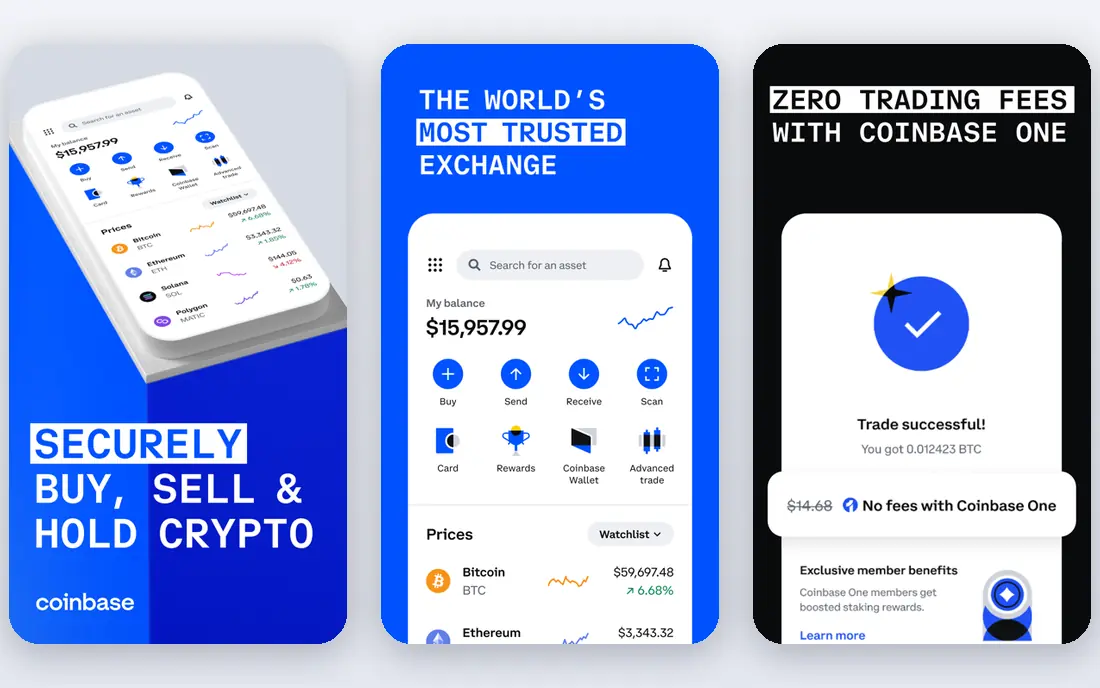
Coinbase is our pick for a first crypto platform because the basic flow is easy to follow. You can buy with a bank transfer or card, view your holdings in one app, and learn the basics through built-in education material. That simplicity matters when crypto terms and order types feel new.
The cost of that simplicity is fees on simple buys, which are higher than trading on the Advanced order-book interface. Once you are comfortable, switching to Advanced trading can lower costs for the same assets. Start small, enable two-factor authentication, and check withdrawal rules before you deposit a large amount.
- Simple buying flow for first-time users
- Strong compliance profile in the US
- Educational resources for new traders
- Simple buy fees are higher than order-book trading
- Advanced trading is a separate interface
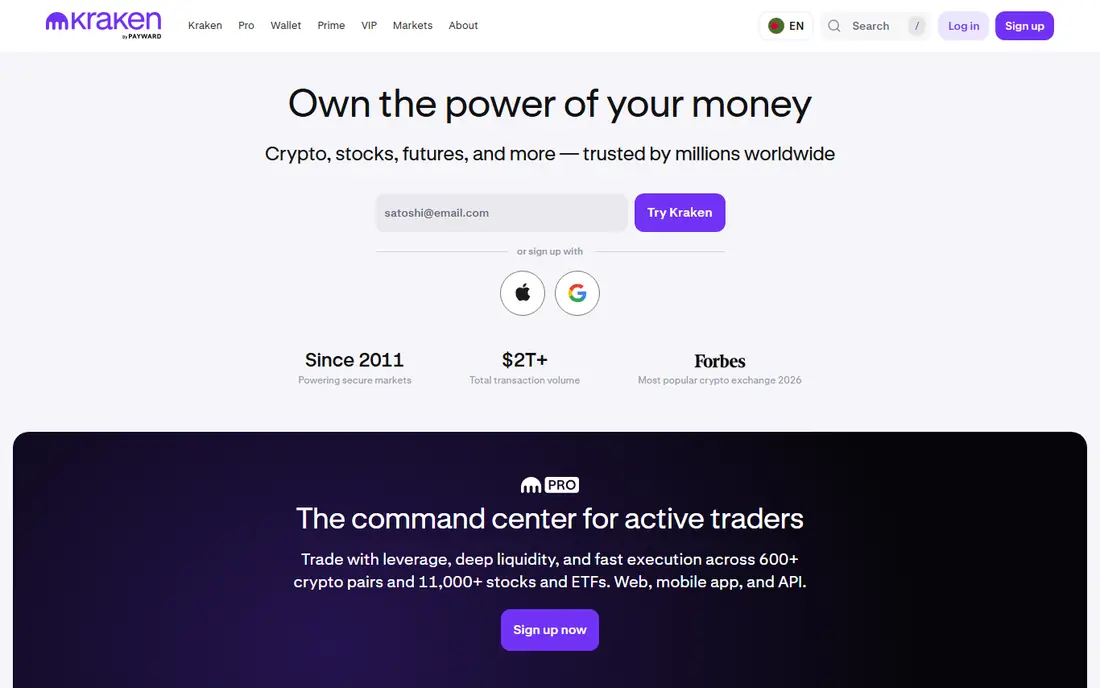
Kraken appeals to traders who want a security-first platform with transparent order-book trading. The Pro interface offers detailed charts, order types, and fee tiers, while the basic app offers a simpler buy flow. That split lets a beginner start simple and move to advanced trading without changing platforms.
Fee tiers are worth checking carefully, since Kraken updated its entry spot rates during 2026. Do not rely on an old fee page or a review from a previous year. For traders who value a long security record and detailed controls, Kraken remains a strong choice.
- Long track record with a strong security focus
- Detailed fee tiers for order-book trading
- Good range of coins and staking options
- Interface can feel dense for beginners
- Fee tiers changed in 2026, so check current rates
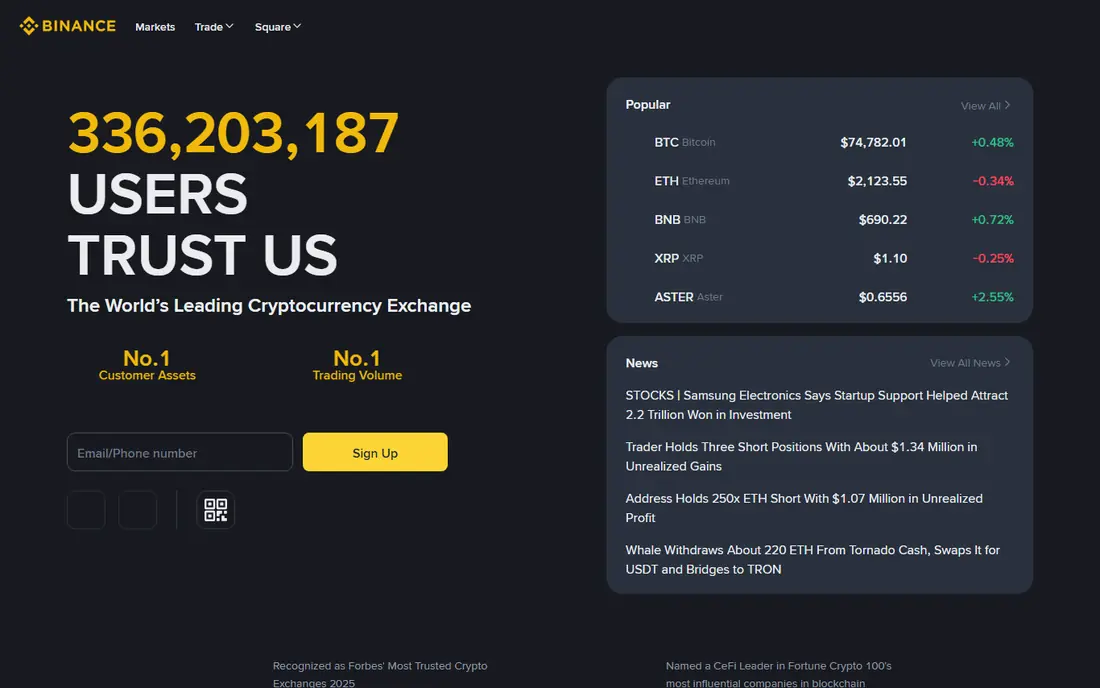
Binance offers one of the broadest selections of coins and trading pairs, with low standard spot fees for order-book trades. Liquidity is deep for major pairs, which helps larger orders fill at prices close to the quoted price. For active traders who want many altcoins in one place, Binance is hard to match.
Availability is the key check. Binance does not serve every country in the same way, and US users use Binance.US, which lists fewer coins. Never use a method to bypass location rules, since that can put your account and funds at risk. Check the official availability page for your country first.
- Very broad coin and pair choice
- Low standard spot fees
- Deep liquidity for major pairs
- Not available in the same form in every country
- US users use a separate platform with fewer coins
Crypto.com suits mobile-first users who want a broad app with trading, rewards, and a card ecosystem. The main app is easy to use for buying and holding, while the Exchange interface offers lower-fee order-book trading for more active users. That two-level structure is similar to Coinbase, with a simple layer and an advanced layer.
Fees vary by tier, volume, and whether you use the app or the Exchange, so compare the exact route you will use. Rewards can also change, so do not choose a platform for a reward rate alone. For a mobile trader who wants many coins in one app, Crypto.com is a solid option.
- Strong mobile app with many coins
- Rewards and card options for active users
- Exchange interface for lower-fee trading
- Fee structure can feel complex
- Simple app buys cost more than exchange trades
Gemini is a US-focused exchange with a strong emphasis on regulation, security, and custody. The simple interface suits beginners, while ActiveTrader offers order-book trading with lower fees for active users. That combination appeals to traders who prioritise a regulated operator over the widest coin list.
Coin choice is narrower than on global exchanges, so check that the assets you want are listed before you sign up. Fees also differ between the simple interface and ActiveTrader, so use the advanced interface once you are comfortable. For a security-conscious US trader, Gemini is a credible choice.
- Strong regulatory and security focus in the US
- Simple and advanced trading options
- Clear custody and insurance information
- Fewer coins than Binance or KuCoin
- Simple buy fees are higher than advanced trading
Bybit is best known for derivatives, including futures and perpetual contracts, alongside spot trading. Active traders value its liquidity, order types, and charting tools. Spot fees are competitive, and the platform suits traders who already understand order books and risk management.
Derivatives are not a beginner product. Borrowed money can magnify losses as well as gains, and derivatives are restricted or unavailable in some countries. If you only want to buy and hold major coins, a simpler platform such as Coinbase or Kraken will suit you better. This is not financial advice; trading carries risk.
- Strong derivatives platform with deep liquidity
- Competitive spot fees
- Advanced charting and order types
- Derivatives carry high risk and are restricted in some countries
- Not suited to beginners
KuCoin suits traders who want access to many altcoins, including tokens listed early. Spot fees are low for standard trades, and the platform offers staking, earning, and other features for holders. For a trader who follows new projects, KuCoin offers breadth that regulated US exchanges often do not.
That breadth also brings risk. Newer tokens can be volatile and illiquid, and availability varies by country. Research any token before buying, check whether KuCoin serves your location, and keep only a trading balance on any exchange, moving larger holdings to a wallet you control where possible.
- Very wide altcoin listing, including newer tokens
- Low standard spot fees
- Staking and earning options
- Availability and regulation vary by country
- Newer listings carry higher risk
eToro suits a beginner who likes the idea of learning from other traders. Social feeds show what other users are discussing, and copy trading lets you mirror another trader's positions, though past performance does not predict future results. In many regions, you can also hold stocks alongside crypto in one app.
Crypto choice is narrower than on Binance or KuCoin, and costs appear through spreads and fees that vary by asset. Copy trading also carries risk, since you inherit the other trader's losses as well as gains. For a casual trader who wants a simple, social start, eToro is an accessible option, but it is not a specialist exchange for active trading.
- Simple interface for beginners
- Social feeds and copy trading features
- Stocks and crypto in one app in many regions
- Crypto choice is narrower than specialist exchanges
- Spreads and fees vary by asset and region
How we picked these
We compared official fee pages, availability pages, and public exchange guides, and we favoured platforms that are still operating, offer a clear trading interface, and serve a distinct trader type. We included beginner, security-focused, broad-choice, derivatives, and social options, rather than eight near-identical spot exchanges. Fees and availability change by country and tier, so we list account opening as Free and advise checking the fee page for your exact trade type.
How to choose a trading platform
Start with your country and the coins you want. A platform with the lowest fee is useless if it does not serve your location or list your asset. Next, decide whether you will use simple buys or order-book trading, since fees differ sharply between those routes on most platforms.
Fees, spreads, and withdrawals
Compare the full cost: trading fee, spread on simple buys, deposit fee, and withdrawal fee. A low trading fee can be offset by a wide spread or a high withdrawal charge. Make a small test deposit and withdrawal first, and confirm the total cost before you move a larger amount.
Security basics
Enable two-factor authentication, use a strong unique password, and be wary of messages asking you to send crypto to an unknown address. Keep large, long-term holdings in a wallet you control where possible, and leave only a trading balance on an exchange. No platform is risk-free, even with strong security controls.
Frequently asked questions
What is the best cryptocurrency trading platform for beginners?
Coinbase is our pick for beginners because onboarding and simple buying are easy to follow. Gemini and eToro are also accessible, while Kraken and Binance suit traders who want order-book trading once they gain confidence.
What is the best platform for cryptocurrency trading with low fees?
Binance and KuCoin offer low standard spot fees for order-book trades, while Coinbase Advanced and Kraken Pro can also be competitive depending on tier and location. Simple buy fees are higher on most platforms, so use the advanced interface when you are ready.
What are the best cryptocurrency trading apps for mobile?
Coinbase, Crypto.com, Kraken, and Binance all offer strong mobile apps for buying, selling, and tracking holdings. Crypto.com and Coinbase lean most toward mobile-first use, while Kraken and Binance mobile apps pair with fuller web trading tools.
What is the best app for trading in cryptocurrency in the US?
Coinbase and Gemini are strong US-focused choices, with Kraken also serving US traders. Binance.US is the separate US platform for Binance, with fewer coins than the global platform, so check listings for your state before signing up.
What is the best trading platform cryptocurrency traders use for altcoins?
Binance and KuCoin offer the widest altcoin choice in this list, with many pairs and newer listings. Research any altcoin carefully, since smaller tokens can be volatile, and check that the platform serves your country.
Is cryptocurrency trading safe?
No trading platform is risk-free. Prices can fall sharply, accounts can be targeted, and platforms can change rules or availability. This is not financial advice; trading carries risk, so start small, use security controls, and never invest money you cannot afford to lose.
Sources we checked (8)

Online Jobs is an independent blog about careers, online work, learning new skills and the tools that help people earn. More about us.
Keep reading
All posts
Top AI Financial Software
Searching for top AI financial software? We compared 9 AI finance tools for AP, spend, close, forecasting and bookkeeping to help teams choose wisely.
Quicken Alternatives
Compare the best quicken alternatives for Mac, Windows, and small business owners, from Monarch Money and YNAB to Copilot, Tiller, and Banktivity in 2026.
QuickBooks Online Alternatives
Looking for quickbooks online alternatives? We compared 8 accounting tools on invoicing, bank feeds, payroll, pricing and fit for small businesses today.