Best Crypto Staking Platforms in 2026: 8 Platforms Compared

How we put this together: we compare official feature and pricing pages, app store listings, privacy policies and public user reviews. Prices change, so check the provider's site before you pay.
Key takeaways
- This is not financial advice. Staking carries risk, including price drops, lock-ups, slashing, and smart contract flaws, and rewards change with network conditions.
- Coinbase and Kraken suit beginners who want custodial staking in one app, while Lido and Rocket Pool suit Ethereum holders who want liquid staking tokens.
- Fees matter more than headline rates. A platform that takes a large share of rewards can leave you with far less than the advertised rate.
- Check availability in your country or state before you choose, since staking products, assets, and rules vary by jurisdiction and change often.
Quick comparison
| Name | Who it suits | Starting price | Free option | |
|---|---|---|---|---|
 Coinbase | Beginner-friendly custodial staking | Free | Yes | Visit |
 Kraken | Custodial staking with strong security | Free | Yes | Visit |
 Binance | Widest asset choice outside the US | Free | Yes | Visit |
 Lido | Liquid staking for Ethereum | Free | Yes | Visit |
 Rocket Pool | Decentralized liquid staking for Ethereum | Free | Yes | Visit |
 Crypto.com | Staking plus card and app rewards | Free | Yes | Visit |
 Gemini | US-regulated custodial staking | Free | Yes | Visit |
 Jito | Liquid staking for Solana | Free | Yes | Visit |
The best crypto staking platforms
Staking means locking crypto to help secure a proof-of-stake network, in return for rewards. You can stake through an exchange, which holds your assets, or through a decentralized protocol, which gives you a liquid token in return. We compared official product pages, fee disclosures, and support documentation, and we weighed custody, fees, supported assets, lock-ups, and ease of use. We did not use headline reward rates as the main ranking factor, since those rates move with network conditions and fees.
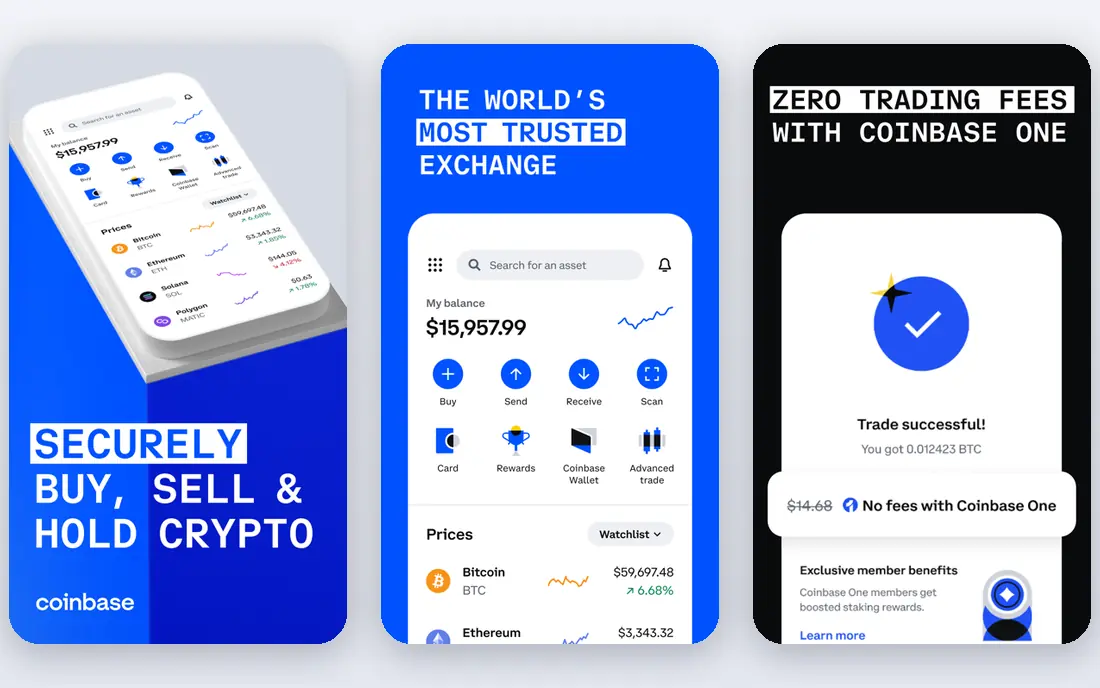
Coinbase is the easiest starting point for a US beginner. You buy or hold a supported asset, turn on staking, and rewards appear in the app without managing validators or wallets. The interface is clear, and the company is publicly listed, which gives some users extra comfort.
The cost is the catch. Coinbase takes a sizable commission on staking rewards, so the net rate you keep is lower than the gross network rate. For a small holder who values simplicity over maximum yield, that trade can be fair. For a larger holder, compare the net rate with Kraken or a liquid staking protocol before committing.
- Simple staking in a familiar app
- Wide US availability for supported assets
- Clear reward tracking
- High commission on rewards compared with some rivals
- Fewer assets than larger exchanges
- Staking availability varies by asset and region
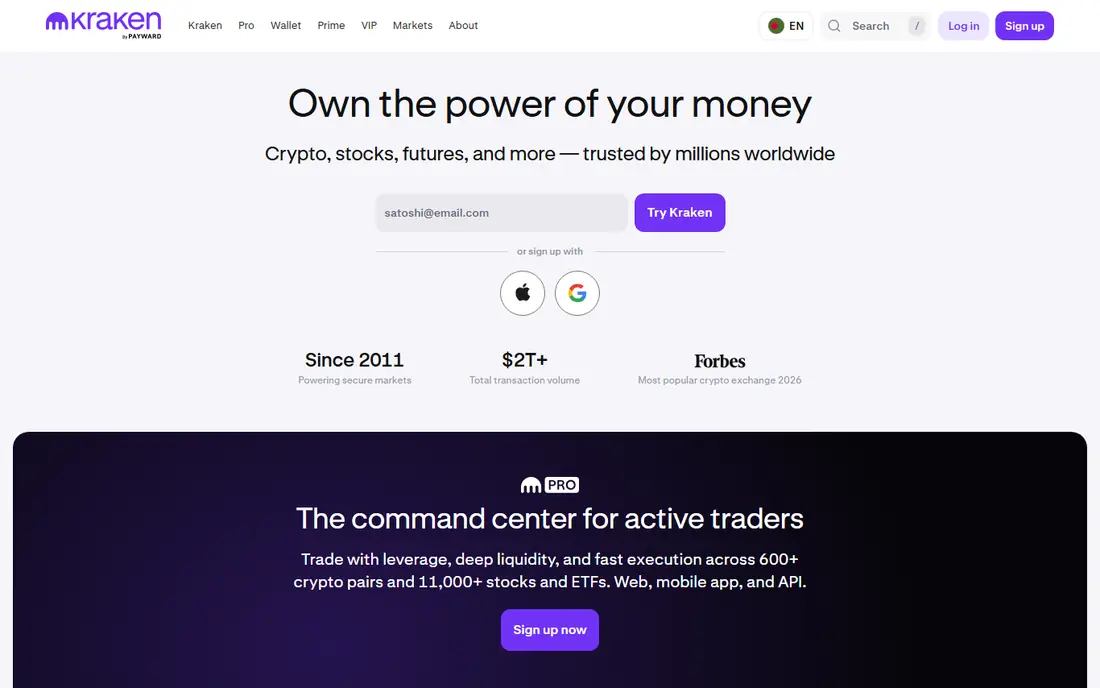
Kraken is a strong pick for users who want custodial staking with a focus on security. It offers bonded staking, which can pay more but locks assets, and flexible staking for some assets, which allows faster unstaking at a lower rate. Security features, including hardware key support, appeal to careful holders.
Beginners may find the trading interface busier than Coinbase, and US users should check which staking products are available in their state. For a holder who wants a reputable exchange, clear fees, and a choice between locked and flexible terms, Kraken is a solid leading option.
- Long security record
- Bonded and flexible staking options
- Clear fee disclosures for many assets
- Interface can feel advanced for beginners
- Staking availability varies by region
- Bonded staking locks assets for a period
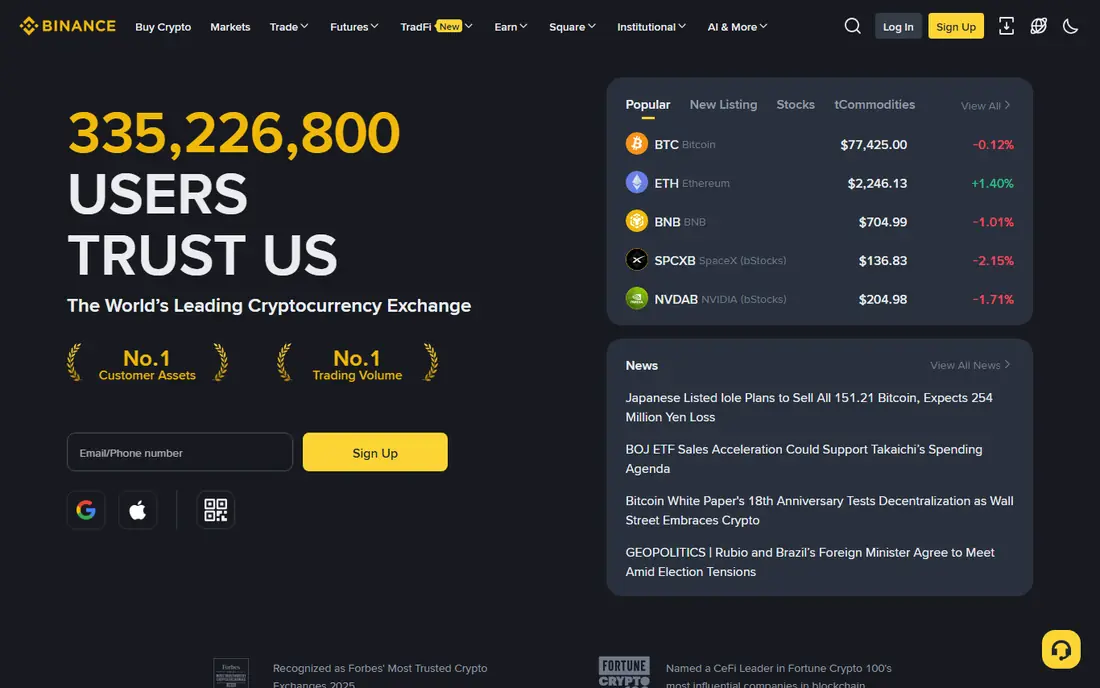
Binance offers staking for more assets than most rivals, with locked terms for higher rates and flexible terms for easier access. For a holder outside the US with a varied portfolio, that breadth is useful, and the app makes it easy to move between staking and trading.
US users should use Binance.US, which has a smaller asset list and different products, and all users should check local rules. Commissions on some bonded products are high, so compare the net rate, not the headline rate. For breadth and liquidity, Binance remains a major option, with custody risk that comes with any large exchange.
- Very wide range of staking assets
- Locked and flexible options
- Deep liquidity for trading staked assets
- US users need Binance.US with a smaller range
- Commissions on some products are high
- Regulatory status varies by country
Lido lets you stake Ethereum and receive stETH, a token that represents your staked ETH and can be traded or used in other DeFi apps. That liquidity is the main draw: you do not have to wait for unstaking to access value, though selling stETH depends on market price.
Lido charges a fee on rewards, split between node operators and the protocol, which is lower than many exchange commissions. Risks remain, including smart contract flaws, validator issues, and price differences between stETH and ETH. For an Ethereum holder who understands DeFi and wants liquidity, Lido is the most established liquid staking choice.
- Liquid staking token you can trade or use in DeFi
- Lower fee on rewards than many exchanges
- Large, established protocol
- Smart contract risk
- StETH price can differ slightly from ETH
- Governance and validator risks apply
Rocket Pool is a decentralized alternative to Lido for Ethereum staking. You stake ETH and receive rETH, which grows in value relative to ETH as rewards accrue. Node operators run validators with their own collateral, which spreads risk across many operators rather than a single company.
It is more technical than Coinbase or Kraken, since you need a compatible wallet and you pay Ethereum gas fees. For a user who values decentralization and understands wallets, Rocket Pool is a strong pick. For a beginner who wants one app and no wallet setup, an exchange is easier.
- More decentralized validator set
- Liquid rETH token
- Smaller minimums than solo staking
- More technical than exchange staking
- Gas fees on Ethereum
- RETH can trade at a small premium or discount
Crypto.com suits users who already use its app and card. Staking CRO and other assets can raise card rewards and earn rates, and the app brings trading, staking, and spending together. For a user who wants one ecosystem, that integration is convenient.
The best rates often require locking assets and holding CRO, so the headline rate may not match a casual holder. Check the tier, lock-up, and unstaking terms before you stake. For a Crypto.com user, it is a natural pick. For a user who only wants staking, Kraken or Lido may be simpler.
- Staking for many assets in one app
- Card tiers linked to CRO staking
- Familiar mobile experience
- Best rates often need lock-ups and CRO holdings
- Fee and rate details vary by tier
- App can feel complex
Gemini appeals to US users who prioritize regulation and custody. The exchange emphasizes security, cold storage, and compliance, and staking is presented simply for supported assets. For a cautious beginner who wants a US-regulated venue, that focus matters.
The asset range is smaller, and rates are modest, since Gemini does not chase the highest promotional yields. If you hold a supported asset and you value a regulated, security-first exchange, Gemini is a calm, dependable choice. If you want many assets or higher DeFi yields, look at Kraken, Lido, or Jito.
- US-regulated exchange with strong custody focus
- Simple staking for supported assets
- Clear security practices
- Smaller asset range than Binance or Kraken
- Staking availability varies
- Rates are modest compared with DeFi options
Jito is the leading liquid staking option for Solana. Stake SOL, receive JitoSOL, and keep liquidity while earning staking rewards plus a share of MEV-related value from the network. Solana fees are low, which makes the wallet workflow cheaper than Ethereum liquid staking.
It is only for Solana, so Ethereum holders should look at Lido or Rocket Pool instead. As with any DeFi protocol, smart contract risk and price differences between JitoSOL and SOL apply. For a Solana holder who wants liquid staking, Jito is the clear specialist pick.
- Liquid staking for Solana with JitoSOL
- MEV-related rewards can raise returns
- Low Solana transaction fees
- Solana-specific, not for Ethereum holders
- DeFi and smart contract risks apply
- Needs a Solana wallet
How we picked these
We compared official product pages, fee disclosures, and support documentation for staking platforms that are still available. We favored platforms with clear custody models, published fees, and a track record, and we included both custodial exchanges and decentralized protocols. We did not rank by headline reward rates alone, since those rates change with network conditions, fees, and lock-ups. We did not claim hands-on testing, and we left starting prices as Free where account creation is free, since staking itself is not a subscription price.
What to check before you choose
Start with custody. An exchange holds your assets, which is simple but adds exchange risk. A protocol gives you a liquid token and wallet control, which adds technical risk and smart contract risk. Neither is risk-free, so choose the risk you understand better.
Next, compare net rewards, not headline rates. Ask what commission or fee the platform takes, whether rewards are bonded or flexible, and how long unstaking takes. A high headline rate with a high commission and a long lock-up can leave you worse off than a lower rate with no lock-up, especially if prices fall while your assets are locked.
Finally, check taxes, region, and security. Staking rewards may be taxable in your country, and rules vary. Turn on two-factor authentication, use a hardware key where available, and never share seed phrases. Start with a small amount, test unstaking, and only increase once you understand the full workflow.
Frequently asked questions
What is the best staking platform?
For beginners, Coinbase and Kraken are strong custodial picks. For Ethereum liquid staking, Lido and Rocket Pool lead. For Solana, Jito is the specialist pick. The best platform follows your asset, your custody preference, and your region.
Is crypto staking safe?
Staking carries risk. Prices can fall, assets can be locked, validators can be penalized, and smart contracts can have flaws. Exchanges add custody risk, while DeFi adds technical risk. Only stake what you can afford to lose, and research each platform before committing.
What is the difference between custodial and DeFi staking?
Custodial staking means an exchange holds your assets and handles validators for you. DeFi staking means you use a protocol and a wallet, often receiving a liquid token in return. Custodial is simpler, while DeFi gives you more control and liquidity, with more technical steps.
Can I unstake at any time?
It depends. Flexible staking allows faster unstaking, while bonded or locked staking requires waiting. Ethereum unstaking also depends on network queues. Check the lock-up and unstaking time before you stake, especially if you may need the funds soon.
Do I need a lot of crypto to stake?
No. Many exchanges allow staking with small amounts, and liquid staking protocols allow smaller stakes than solo validation, which needs a large amount of ETH and technical setup. Check minimums for your asset and platform.
Is staking taxable?
In many countries, staking rewards may be taxable as income when received, and later sales may trigger capital gains rules. Rules vary by country and change often, so check local guidance or speak to a tax professional for your situation.
Sources we checked (8)

Online Jobs is an independent blog about careers, online work, learning new skills and the tools that help people earn. More about us.
Keep reading
All posts
Who Is the Best Company to Get Travel Insurance
Compare the best travel insurance companies, including World Nomads, Allianz Travel, SafetyWing and AXA, with coverage types, limits and who each suits.

Top AI Financial Software
Searching for top AI financial software? We compared 9 AI finance tools for AP, spend, close, forecasting and bookkeeping to help teams choose wisely.
Quicken Alternatives
Compare the best quicken alternatives for Mac, Windows, and small business owners, from Monarch Money and YNAB to Copilot, Tiller, and Banktivity in 2026.