Best Content Management Software in 2026: 10 Systems Compared

How we put this together: we compare official feature and pricing pages, app store listings, privacy policies and public user reviews. Prices change, so check the provider's site before you pay.
Key takeaways
- WordPress suits classic websites of any size, with a huge plugin library and a large hiring pool.
- Headless options suit teams publishing to web, app, and other channels from one content hub.
- Webflow suits design led marketing teams that want visual control without plugin upkeep.
- Check editing experience first, since the people who publish daily will live in the tool.
Quick comparison
| Name | Who it suits | Starting price | Free option | |
|---|---|---|---|---|
 WordPress | classic websites of any size | Free | Yes | Visit |
 Drupal | complex sites with strict access control | Free | Yes | Visit |
 Contentful | enterprise teams publishing to many channels | See website | Yes | Visit |
 Sanity | developers building custom editorial tools | See website | Yes | Visit |
 Strapi | headless CMS on your own infrastructure | Free | Yes | Visit |
 Storyblok | marketing teams wanting visual headless editing | See website | Yes | Visit |
 Webflow | design driven marketing websites | See website | Yes | Visit |
 HubSpot Content Hub | companies already running on HubSpot | See website | Yes | Visit |
 Ghost | publishing focused blogs and newsletters | See website | Yes | Visit |
 Joomla | community and multilingual sites on open source | Free | Yes | Visit |
The best content management software
We compared content systems for classic websites, headless publishing, and design led marketing sites. The right pick depends on who edits content, how much code your team wants to own, and how many channels your content must reach.
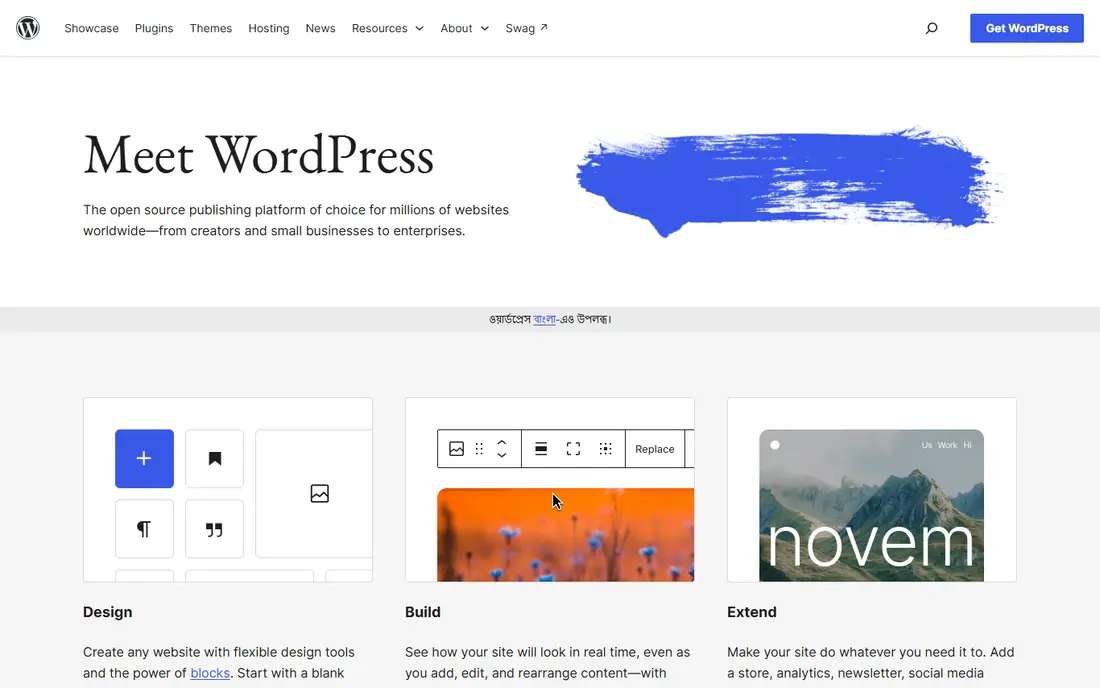
For teams that want a proven route to both app stores, WordPress is free open source software that powers a large share of websites, from blogs to business sites and news publishing. The block editor lets non technical editors publish pages and posts, while plugins add forms, search, commerce, and bookings. The trade is maintenance, since core, theme, and plugin updates need regular attention and good hosting to stay fast and safe. Check the current pricing page and the free tier limits before you commit, since plan details change and the entry tier may cap builds, seats, or usage.
- Huge plugin and theme library
- Large hiring pool
- Full ownership of site and data
- Updates and plugin upkeep are constant
- Performance depends on hosting
- Plugin sprawl can cause security risk
If your team already works in a matching language or stack, Drupal suits complex sites with many content types, roles, and access rules, such as universities, government, and large publishers. Its content modelling and permission system handle structure that simpler CMS tools struggle with. The trade is skill, since building and maintaining a Drupal site usually needs developer time and a clear content model. Run a small pilot with a real feature from your backlog, and judge it on build time, store submission, and how easy fixes are after release.
- Strong permissions and content types
- Good for large structured sites
- Open source ownership
- Learning curve is steep
- Developer help is often needed
- Theme and module upkeep needs time
When a single shared codebase matters more than a native look, Contentful is a headless CMS built for teams that publish the same content to websites, apps, and other channels. Editors model content once, and developers deliver it through fast APIs with workflow and localisation controls. The trade is cost and code, since usage based pricing and front end development need budgeting from the start. Ask who will maintain the project in six months, and pick the option your current team can support without hiring for a new language.
- Mature headless APIs
- Content modelling
- Localisation and workflow controls
- Pricing grows with usage
- Free tier limits suit small projects
- Front end still needs developers
As a practical choice for a first release, Sanity gives developers a customisable editing studio and a flexible content store, with real time collaboration for editorial teams. It suits product teams that want an editing experience shaped around their own workflow. The trade is build effort, since the studio and front end both need developer time before editors see value. Check the current pricing page and the free tier limits before you commit, since plan details change and the entry tier may cap builds, seats, or usage.
- Fully customisable studio
- Real time collaboration
- Flexible content modelling
- Needs developer setup
- Query language has a learning curve
- Pricing grows with seats and usage
For projects where design control is the main concern, Strapi is an open source headless CMS that teams can self host for full control over data and infrastructure. It offers APIs out of the box and a plugin system for common needs, with a paid cloud option for teams that prefer hosting handled for them. The trade is operations, since self hosting means your team owns updates, backups, and security. Run a small pilot with a real feature from your backlog, and judge it on build time, store submission, and how easy fixes are after release.
- Open source and self hosted
- REST and GraphQL APIs
- Full data control
- Self hosting needs server care
- Plugin quality varies
- Enterprise features are paid
Where speed of setup beats depth of customisation, Storyblok pairs a visual editor with headless delivery, so marketers can see page structure while developers keep API control. It suits marketing teams that want visual editing without returning to a monolithic CMS. The trade is balance, since visual editing helps, but the front end still needs developer work and budget. Ask who will maintain the project in six months, and pick the option your current team can support without hiring for a new language.
- Visual editor for headless content
- Component based pages
- Good for marketers
- Pricing grows with usage
- Front end still needs developers
- Advanced features sit on higher tiers
If you need to reuse web skills for a mobile release, Webflow lets designers build and publish marketing websites visually, with CMS collections for blogs, case studies, and landing pages, plus managed hosting. It suits design led teams that want to ship without plugin upkeep. The trade is caps and control, since plan limits on CMS items and custom code can constrain larger or more complex sites. Check the current pricing page and the free tier limits before you commit, since plan details change and the entry tier may cap builds, seats, or usage.
- Visual design control
- Managed hosting
- Built in CMS collections
- CMS item caps per plan
- Code export limits
- Commerce and logic features are narrower than code builds
For a smaller team that wants to keep maintenance simple, HubSpot Content Hub adds website and content tools to the HubSpot platform, so pages, forms, and CRM data share one system. It suits firms already using HubSpot for marketing and sales who want content and pipeline data together. The trade is platform fit, since value is highest inside HubSpot, so firms outside it should compare standalone CMS options. Run a small pilot with a real feature from your backlog, and judge it on build time, store submission, and how easy fixes are after release.
- Tight CRM and marketing links
- Hosted pages
- Built in SEO and reporting tools
- Best value inside HubSpot
- Pricing tiers need care
- Migration away needs planning
When the app must reach several device types at once, Ghost is built around publishing, with a clean editor, newsletters, and memberships for blogs and independent media. It suits writers and publishers who want speed and focus rather than a general website builder. The trade is breadth, since sites needing complex apps, forums, or commerce may need extra tools. Ask who will maintain the project in six months, and pick the option your current team can support without hiring for a new language.
- Clean writing experience
- Built in newsletters and memberships
- Fast pages
- Fewer plugins than WordPress
- Design options are narrower
- Self hosting needs care
As an option for teams with a clear existing workflow, Joomla is a free open source CMS with strong multilingual support and flexible controls for users, articles, and menus. It suits community sites, associations, and multilingual publishers that want ownership without licence cost. The trade is ecosystem size, since fewer themes and extensions exist than for WordPress, so check needs before building. Check the current pricing page and the free tier limits before you commit, since plan details change and the entry tier may cap builds, seats, or usage.
- Open source ownership
- Multilingual support
- Flexible user and content controls
- Smaller ecosystem than WordPress
- Learning curve for beginners
- Extension quality varies
How we picked these
We compared official feature pages, pricing pages, app store listings, and public reviews for each product, and we kept only products that exist and fit the topic today. Where a price or free tier could not be confirmed on a vendor page, we wrote See website rather than guessing a number. We also weighed fit for different team sizes, since a tool that suits a large enterprise may be a poor fit for a small team, and the reverse is also true. Products that needed a workaround for the core job, or that had closed or changed focus, were left out.
How to choose content management software
Decide who edits and who builds
If marketers edit daily and developers build rarely, a visual or hosted CMS fits better. If developers build custom front ends and marketers just fill fields, a headless CMS fits better. Match the tool to the daily editor, not just the launch team.
Check total cost, not just the licence
Add hosting, plugins, themes, and maintenance time to the licence price. A free CMS can still cost real money in hosting and upkeep, while a hosted CMS bundles those costs into one bill.
Test publishing from draft to live
Run a real article through draft, review, approval, scheduling, and publishing during a trial. Check roles, revisions, media handling, and search controls, since those steps reveal friction that a feature list hides.
Frequently asked questions
What is the best CMS software for a small business website?
WordPress, Webflow, and Ghost all suit small business sites, for different reasons. WordPress offers the most plugins, Webflow offers visual design control, and Ghost offers a simpler writing focus.
What is the difference between a traditional CMS and a headless CMS?
A traditional CMS stores content and renders the website. A headless CMS stores content and delivers it through an API, so developers can build any front end, app, or channel from the same content.
Is WordPress still a good choice in 2026?
Yes, for classic websites, blogs, and business sites. It needs regular updates and good hosting, but its plugin library and hiring pool remain unmatched.
Do headless CMS tools need developers?
Yes, in most cases. Editors work in the studio, but developers build and maintain the front end that displays the content, so budget developer time.
Which CMS is best for content management across many channels?
Contentful, Sanity, and Strapi suit multi channel publishing, since content is stored once and delivered through APIs to websites, apps, and other surfaces.
Sources we checked (10)

Online Jobs is an independent blog about careers, online work, learning new skills and the tools that help people earn. More about us.
Keep reading
All posts
n8n Alternatives
n8n alternatives compared for 2026, with Zapier, Make, Activepieces, and more, covering visual builders, code steps, self-hosting, and pricing models.

iPhone Alternatives
Looking for iPhone alternatives in 2026? Compare 9 Android phones from Samsung, Google, OnePlus, and more, with cameras, battery life, and honest trade-offs.

eBay Alternatives
Looking for ebay alternatives? We compared 9 marketplaces for sellers on fees, buyer reach, categories and ease of listing, to help you sell with confidence.