Best Competitor Analysis Tools in 2026: 9 Tools Compared

How we put this together: we compare official feature and pricing pages, app store listings, privacy policies and public user reviews. Prices change, so check the provider's site before you pay.
Key takeaways
- Semrush is our pick for all-in-one competitor research, because it covers organic search, paid search, traffic and backlink gaps in one suite.
- Ahrefs is strongest for backlink and content gap analysis, while Similarweb is strongest for traffic sources and audience data.
- SpyFu gives you the best PPC competitor intelligence for the money, starting at $39 per month.
- SE Ranking, Moz Pro and Serpstat suit smaller teams that want solid competitor data without enterprise pricing.
- Competitor data is estimated in most tools, so compare trends and gaps rather than treating one traffic number as exact.
Quick comparison
| Name | Who it suits | Starting price | Free option | |
|---|---|---|---|---|
 Semrush | All-in-one competitor research | Free | Yes | Visit |
 Ahrefs | Backlink and content gaps | $29 per month | Yes | Visit |
 Similarweb | Traffic and audience intelligence | $125 per month | Yes | Visit |
 SpyFu | PPC and ad history | $39 per month | Yes | Visit |
 SE Ranking | Budget competitor research | See website | Free trial | Visit |
 Moz Pro | Authority and link benchmarking | $49 per month | Free trial | Visit |
 BuzzSumo | Top content and social performance | $199 per month | Free trial | Visit |
 Majestic | Backlink quality and history | $49.99 per month | No | Visit |
 Serpstat | Budget all-in-one competitor data | $50 per month | Yes | Visit |
The best competitor analysis tools
We compared official pricing pages, feature pages and public documentation for competitor tools that work today. Our pick for most teams is Semrush, because it combines keyword gap, backlink gap, traffic analytics and advertising research in one workflow, while Ahrefs is our pick for teams whose main question is links and content.
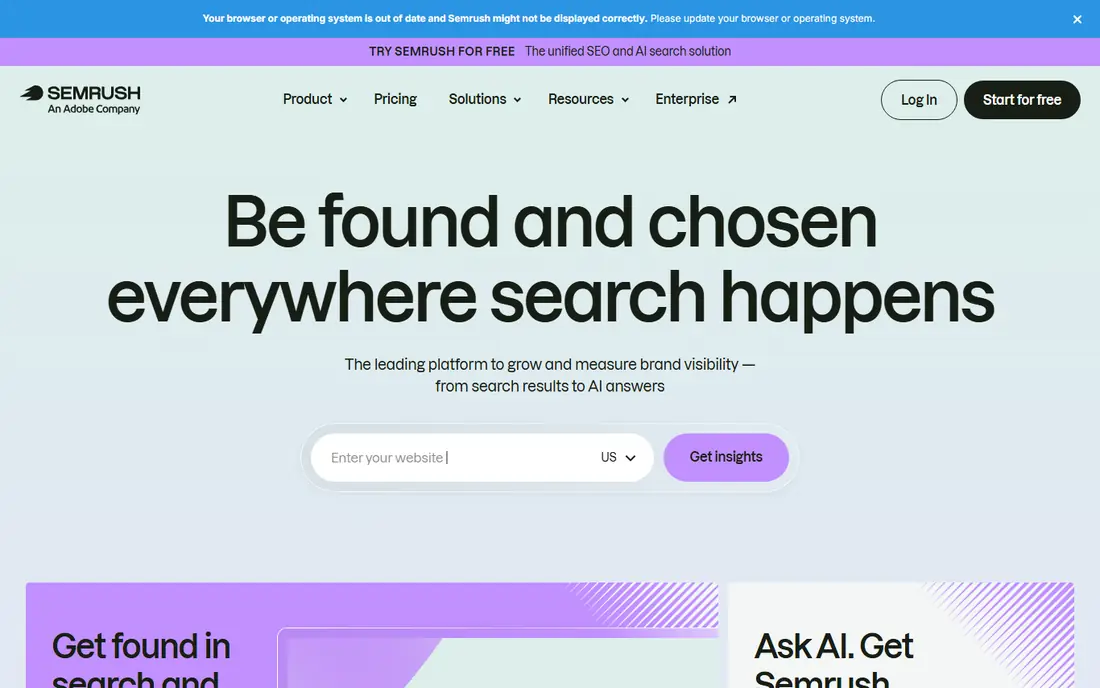
Semrush answers the first competitor question, which is where rivals actually get traffic and rankings. Keyword Gap compares your rankings with competitors and shows missed keywords, Backlink Gap shows link sources rivals have that you do not, and Traffic Analytics estimates visits, sources and engagement. Advertising research adds paid keywords and ad copy for the same rivals.
A free account gives limited reports, while the SEO plan starts at $139 per month. That price is high for a single site, but reasonable for agencies and content teams that use competitor research weekly. The main catch is breadth, since Semrush covers so many areas that new users need time to learn which report answers which question. Start with Keyword Gap and Traffic Analytics, then expand from there.
- Keyword Gap and Backlink Gap tools
- Traffic Analytics for competitor traffic
- Organic and PPC research in one suite
- SEO plan starts at $139 per month
- AI visibility needs higher tiers
- Data depth can overwhelm beginners
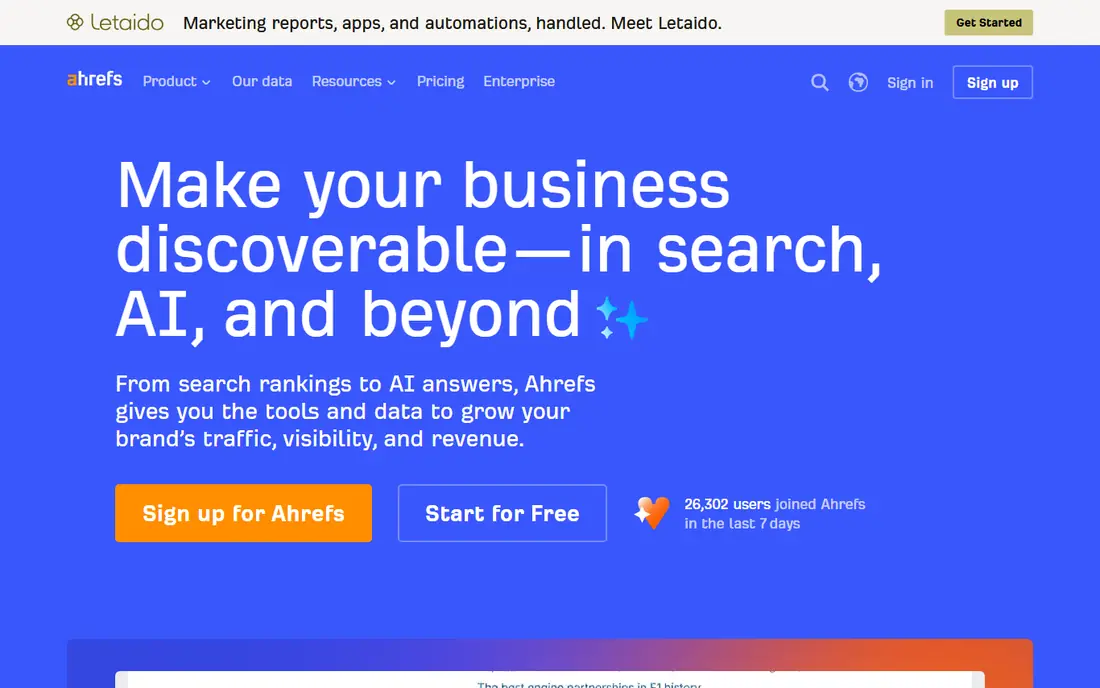
Ahrefs is the tool to open when links and content decide your market. Site Explorer shows a competitor full keyword, backlink and traffic profile, Content Gap finds keywords rivals rank for that you miss, and Top Pages reveals which competitor pages earn the most organic traffic. Link Intersect finds sites linking to rivals but not to you, which gives you a concrete outreach list.
Starter at $29 per month covers basic tools, while Lite at $129 per month suits professional competitor work. Free Webmaster Tools cover your own verified sites, but not rivals, so competitor research needs a paid plan. If your main competitor question is who links to rivals and what content works for them, Ahrefs gives you the clearest answer.
- Deep backlink index for competitor link profiles
- Content Gap for missed keywords
- Top Pages for competitor content that earns traffic
- Lite at $129 per month is the practical start for many teams
- PPC data is lighter than Semrush
- No free plan beyond Webmaster Tools for your own sites
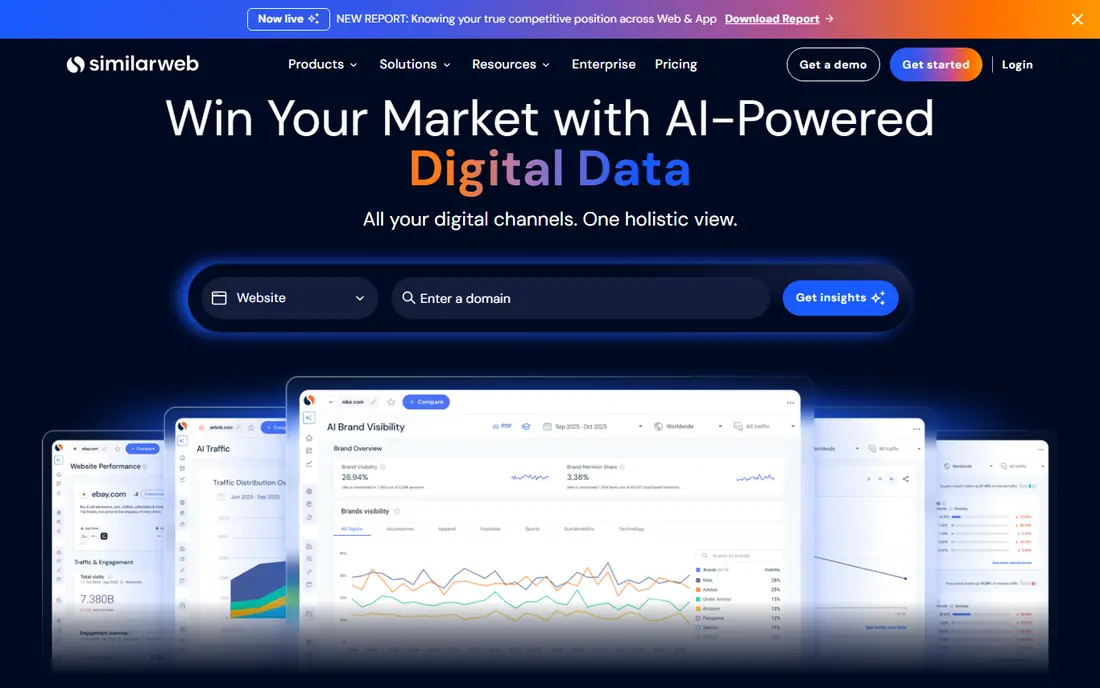
Similarweb suits teams that need to size a market, not just track keywords. You enter a competitor domain and see estimated traffic, traffic sources, top channels, referrals and audience patterns. That view helps you decide whether rivals grow through search, social, paid ads, email or direct visits, and where your own channel mix should change.
The catch is that traffic numbers are modelled estimates, so treat them as direction and trend rather than exact counts. A limited free version lets you test basic traffic views, while paid plans start at $125 per month in several listings, with higher tiers adding AI search intelligence and deeper market data. For market sizing and channel strategy, Similarweb is the best tool here. For keyword-level SEO work, pair it with Semrush or Ahrefs.
- Traffic estimates with channel mix and referral sources
- Audience and demographic insights
- Market and category benchmarking
- Traffic data is modelled, not exact
- Starting price listings vary, from $125 per month in several comparisons
- SEO depth trails Semrush and Ahrefs
SpyFu is the budget pick for PPC competitor research. It shows which keywords rivals buy, what ad copy they run, how long they have run it, and which organic keywords they also rank for. That history matters, because an ad that has run for months is more likely to work than a test that disappeared in a week. You can also track rankings and compare domains side by side.
Plans start at $39 per month, which undercuts Semrush and Ahrefs by a wide margin. Limited free searches let you test a domain before paying. The trade-off is backlink depth and enterprise reporting, which are thinner here. If your competitor question is mostly about Google Ads, SpyFu gives you the best value in this list.
- Long competitor keyword and ad history
- PPC keyword and ad copy analysis
- Rank tracking included at a low entry price
- Backlink data is lighter than Ahrefs
- Enterprise depth is limited
- Interface feels older than Semrush
SE Ranking gives smaller teams a solid all-rounder for competitor work. You can check competitor rankings, backlinks, top pages and site health in one tool, alongside your own rank tracking and audits. That combination suits agencies that need competitor context for several clients without paying for three separate tools.
A 14-day trial lets you test competitor reports before committing, but pricing listings vary, so check the vendor page at your keyword and project count. SE Ranking is not as deep as Semrush for large markets or as traffic-focused as Similarweb, but for budget-conscious teams it covers the core competitor questions well. It is a practical middle option between free tools and enterprise suites.
- Competitor research with rank tracking, backlink checker and site audits
- Good value for agencies
- AI search tracking on higher tiers
- Pricing listings vary by plan and billing
- Data depth trails Semrush for large markets
- Competitor traffic estimates are less detailed than Similarweb
Moz Pro is useful when you need a simple competitor benchmark that clients understand. Domain Authority gives a quick strength score for your site and rivals, Link Explorer shows competitor link profiles, and rank tracking shows who outranks you for core keywords. That simplicity helps smaller teams explain competitor gaps without a complex report.
Starter at $49 per month covers basic competitor work, with Standard at $99 per month adding more projects. The main limits are link depth and traffic data, since Moz does not match Ahrefs on links or Similarweb on traffic estimates. For a straightforward authority and link benchmark, Moz Pro is easy to use and easy to explain.
- Domain Authority for quick benchmarking
- Link Explorer for competitor link profiles
- Rank tracking and keyword research included
- Backlink index is smaller than Ahrefs
- Starter limits projects
- Competitor traffic data is limited compared with Similarweb
BuzzSumo answers a different competitor question, which is what content actually performs. You search a topic or a competitor domain and see which articles earn the most shares and links, which authors write them, and which formats work best. That insight helps content teams plan topics that have already proven demand, rather than guessing from keywords alone.
Plans start at $199 per month in several listings, with a trial for testing. That price makes BuzzSumo a specialist tool, not a general SEO suite, and it does not replace Semrush or Ahrefs for rankings and links. If content is your main competitor battleground, BuzzSumo earns its price. If rankings are the battleground, start with an SEO suite instead.
- Discovers top-performing competitor content by topic
- Backlink alerts and content alerts
- Influencer and author research for outreach
- Starting price at $199 per month is high for small teams
- Not a full SEO suite
- Rank tracking and technical audits are not its strength
Majestic is a specialist link tool, and it is the best choice when link quality matters more than link count. Trust Flow and Citation Flow help you judge whether a competitor link profile is strong or inflated, while historical data shows how that profile changed over time. That history is useful for link audits and for spotting rivals that built links quickly or lost them suddenly.
Plans start at $49.99 per month, with no free plan. The trade-off is breadth, since Majestic does not cover keyword research, rank tracking or content gaps in the way Semrush and Ahrefs do. Use Majestic alongside an SEO suite when link quality is the deciding factor, and use the suite alone when you need a broader competitor view.
- Trust Flow and Citation Flow for link quality
- Deep historical backlink data
- Link maps for competitor link profiles
- No free plan
- Keyword and content features are limited
- Interface feels technical for beginners
Serpstat suits teams that want an all-in-one competitor tool at a lower price. It covers keyword research, competitor domains, backlink analysis, rank tracking and site audits, which is enough for many small and mid-sized teams to run competitor research without a premium suite. A limited free plan lets you test basic competitor views before paying.
Plans start at $50 per month in several listings, with higher tiers adding more data and team features. The catch is data polish, since Serpstat data can feel rougher than Semrush or Ahrefs in competitive US markets, and some newer AI features need add-ons. For a budget all-in-one, Serpstat is a strong value pick, especially for teams outside the largest markets.
- Keyword, backlink, rank tracking and site audit data in one tool
- Lower entry price than Semrush
- Limited free plan for testing
- Data depth is rougher than Semrush and Ahrefs in some markets
- AI brand monitoring sits on add-ons
- Interface takes time to learn
How we picked these
We compared official pricing pages, feature pages and public documentation, and we kept only tools that exist today and truly fit competitor analysis, from SEO and PPC to traffic, content and links. We looked at keyword gap, backlink gap, traffic estimates, ad history, content performance and starting prices. We also noted the honest catch for each tool, because competitor data is often estimated, and the best tool depends on whether your main question is rankings, links, traffic, ads or content.
We did not claim hands-on testing we did not do. Our comparisons rest on vendor pages, pricing pages and public reviews, and prices can change, so check the vendor pricing page before you buy.
How to run competitor analysis that leads to action
Start with real competitors, not assumed ones. The domains ranking for your money keywords and cited in AI answers are your true rivals, even if they are not the companies you think of first. List five to ten of those domains, then compare them on keywords, links, traffic sources and top content.
Compare gaps, not just totals
A competitor with more total traffic is not always the threat, since much of that traffic may come from topics you do not target. Compare keyword gaps for your core terms, backlink gaps for link prospects, and content gaps for topics that earn traffic. Gaps turn competitor data into a task list, while totals only turn it into a chart.
Check traffic sources before you copy tactics
Check whether rivals grow through search, paid ads, social, email or referrals before you copy their tactics. A rival that grows through paid ads needs a different response from a rival that grows through organic content. Similarweb helps here, while Semrush and SpyFu help you check the paid and organic split in detail.
Re-run the analysis on a schedule
Re-run competitor analysis monthly or quarterly, since rankings, ads and content change quickly. Track the same core keywords, link prospects and top pages each time, so you can see trends rather than one-off snapshots. A single competitor report ages fast, while a regular cadence shows whether your response is working.
Frequently asked questions
What is the best competitor analysis tool?
Semrush is the best competitor analysis tool for most teams, because it covers keyword gaps, backlink gaps, traffic analytics and PPC research in one suite. Ahrefs is best for links and content gaps, Similarweb is best for traffic and audience data, and SpyFu is best for PPC history on a budget. The best tool depends on whether your main question is rankings, links, traffic, ads or content.
What is the best tool for competitor analysis in SEO?
Semrush and Ahrefs are the best tools for SEO competitor analysis, with Semrush stronger on breadth and Ahrefs stronger on backlink depth. SE Ranking and Serpstat offer solid SEO competitor data at lower prices, while Moz Pro gives a simple authority benchmark. For SEO specifically, start with keyword gap and backlink gap reports, then add traffic data for context.
Which tool is best for competitor analysis in PPC?
SpyFu is the best tool for PPC competitor analysis on a budget, because it shows long ad history, paid keywords and ad copy from $39 per month. Semrush also covers PPC research well, with paid keyword and ad data alongside organic data, but at a higher price. Choose SpyFu when ads are the main question, and Semrush when you need PPC plus organic in one tool.
How do I find my real competitors online?
Search your core money keywords and list the domains that rank for them, then check which domains are cited in AI answers for those topics. Those domains are your real online competitors, even if they differ from your offline rivals. Tools such as Semrush, Ahrefs and Similarweb can then size those rivals by keywords, links and traffic sources.
Is competitor traffic data accurate?
Competitor traffic data in most tools is modelled from panels, search data and other signals, so it is an estimate, not an exact count. Use it to compare trends, channel mix and relative size, rather than treating one number as precise. Pair modelled traffic with your own Search Console and analytics data for verified performance on your own site.
What is the best free competitor analysis tool?
Semrush, Similarweb and Serpstat all offer limited free competitor views, while SpyFu offers limited free searches. For a truly free start, use Google Search Console for your own data, search results for ranking rivals, and free competitor views in Semrush or Similarweb for basic traffic context. Paid plans are needed for full keyword gaps, backlink gaps and ad history.
Sources we checked (9)

Online Jobs is an independent blog about careers, online work, learning new skills and the tools that help people earn. More about us.
Keep reading
All posts
Best Tools for AI Mode
Compare the best tools for AI Mode visibility, from Google Search Console to Semrush, Ahrefs Brand Radar, Peec AI, and Otterly, with prices and limits.
Best SEO Reporting Software
Best SEO reporting software compared for 2026: AgencyAnalytics, Semrush, Ahrefs, SE Ranking and more for agencies, clients and in-house teams in the US.
Best Free SEO Tools
Find the best free SEO tools for keyword research, site audits, and rank checks. We compared nine free options, their limits, and who each one suits best.