Best Cloud Computing Companies in 2026: 10 Tools Compared


Widest service catalog · Starting price: Pay-as-you-go; see website
How we put this together: we compare official feature and pricing pages, app store listings, privacy policies and public user reviews. Prices change, so check the provider's site before you pay.
Key takeaways
- AWS, Microsoft Azure, and Google Cloud offer the widest service catalogs, while DigitalOcean, Vultr, and Akamai keep pricing simpler for smaller teams.
- Oracle Cloud and IBM Cloud fit database-heavy and regulated workloads better than they fit a first side project.
- Alibaba Cloud suits teams serving customers in Asia, while OVHcloud and Hetzner suit European hosting needs.
- The cheapest headline virtual machine price rarely predicts the monthly bill, since storage, bandwidth, and managed services add up fast.
Quick comparison
| Name | Who it suits | Starting price | Free option | |
|---|---|---|---|---|
| Amazon Web Services | Widest service catalog | Pay-as-you-go; see website | Yes | Visit |
 Microsoft Azure | Microsoft-centered teams and hybrid setups | Pay-as-you-go; see website | Yes | Visit |
 Google Cloud | Data analytics and AI workloads | Pay-as-you-go; see website | Yes | Visit |
 Oracle Cloud Infrastructure | Oracle database and enterprise workloads | Pay-as-you-go; see website | Yes | Visit |
 IBM Cloud | Regulated and hybrid enterprise workloads | Pay-as-you-go; see website | Yes | Visit |
 Alibaba Cloud | Teams serving customers in Asia | Pay-as-you-go; see website | No | Visit |
 DigitalOcean | Developers and small teams wanting simple pricing | Droplets from $4 per month | Yes | Visit |
 Vultr | Low-cost global compute | Compute from $2.50 per month | No | Visit |
 Akamai Cloud | Simple servers with wide network reach | See website | No | Visit |
 OVHcloud | European bare metal and cloud hosting | See website | No | Visit |
The best cloud computing companies
Cloud computing companies rent compute, storage, networking, and managed services on demand, so teams can run apps without owning servers. The best cloud computing companies for a given project depend on workload type, region, existing tools, and how predictable the monthly bill must be.
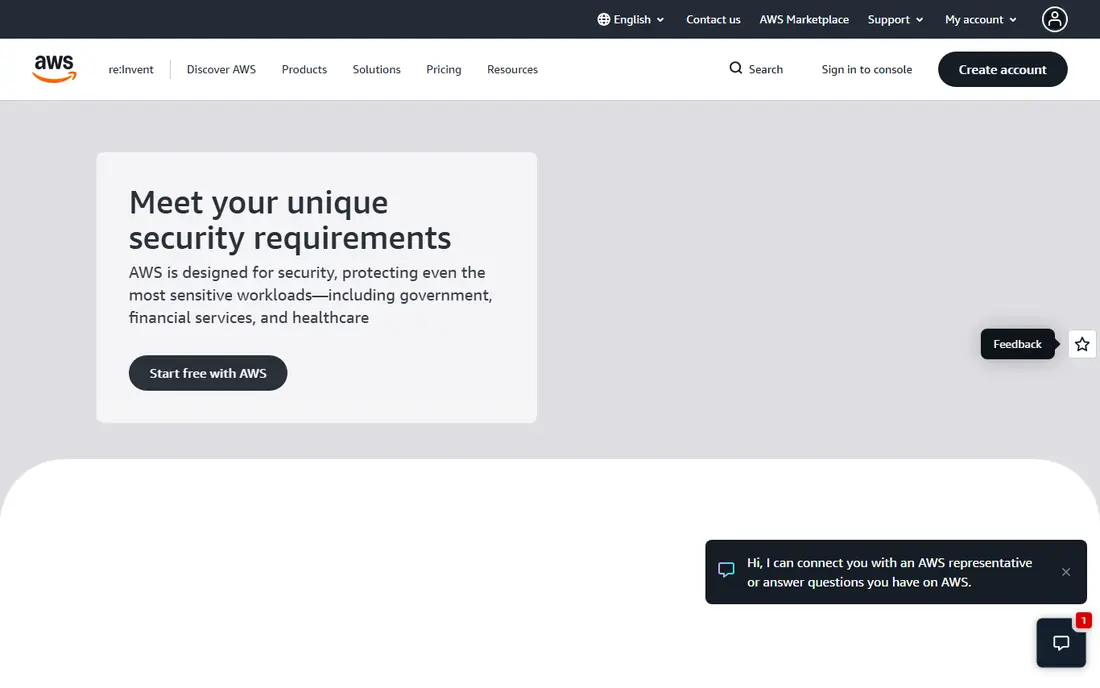
A first look at this option shows its huge service range and global region coverage. AWS covers compute, storage, databases, analytics, and AI services across many regions, with compliance options for regulated industries. That depth suits large and varied workloads, while small teams may find pricing and service choice harder to manage. The trade-offs deserve a clear look before signing up. Complex pricing and a steep learning curve is the main drawback to weigh, while Huge service range, global regions, mature compliance options is the main reason buyers stay with it. Check the current pricing page and the feature list for the plan you need, since tiers and add-ons change over time and the entry plan may not include every feature described here.
- Huge service range, global regions, mature compliance options
- Complex pricing and a steep learning curve
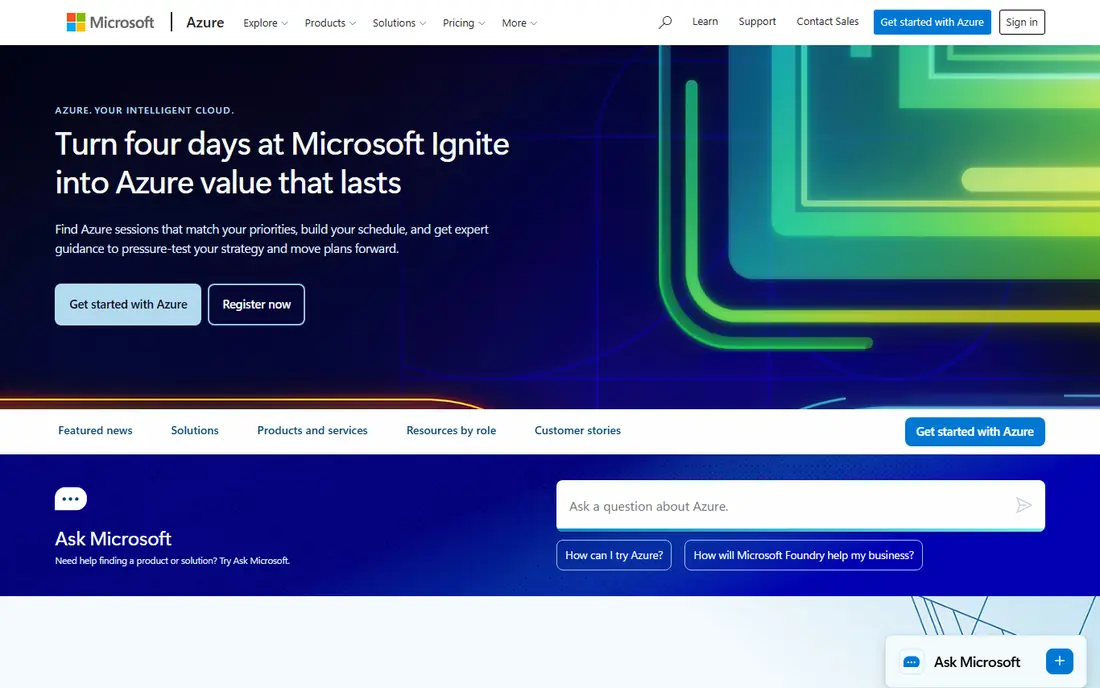
In daily use, this option stands out because its Microsoft links and hybrid tools. Azure fits teams already using Windows Server, Microsoft 365, and Entra ID, with hybrid tools that connect cloud and on-premises systems. App Service offers a free tier for simple apps, while enterprise agreements need careful review. The trade-offs deserve a clear look before signing up. Complex pricing and agreement terms is the main drawback to weigh, while Windows and Microsoft 365 links, hybrid tools, identity services is the main reason buyers stay with it. Check the current pricing page and the feature list for the plan you need, since tiers and add-ons change over time and the entry plan may not include every feature described here.
- Windows and Microsoft 365 links, hybrid tools, identity services
- Complex pricing and agreement terms
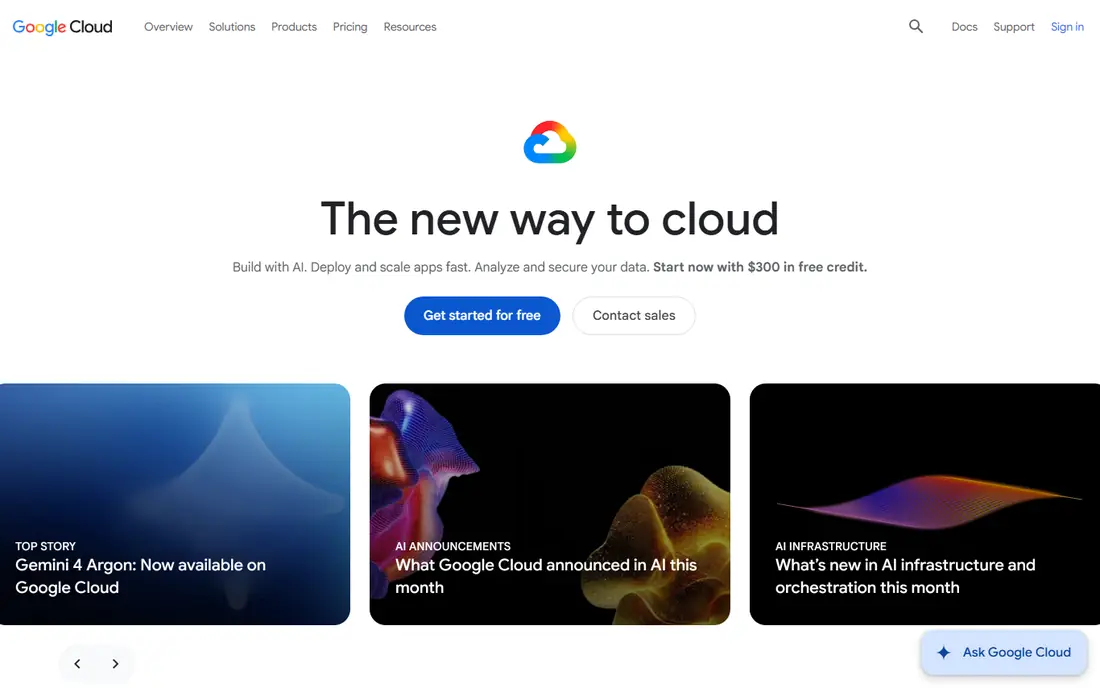
For buyers weighing options, this one earns attention for its data analytics and managed AI services. Google Cloud pairs a global network with BigQuery for analytics and Vertex AI for machine learning work. Kubernetes origins also appeal to container teams, while data transfer and analytics consumption need close cost monitoring. The trade-offs deserve a clear look before signing up. Pricing complexity for large data workloads is the main drawback to weigh, while BigQuery analytics, managed AI services, Kubernetes strength is the main reason buyers stay with it. Check the current pricing page and the feature list for the plan you need, since tiers and add-ons change over time and the entry plan may not include every feature described here.
- BigQuery analytics, managed AI services, Kubernetes strength
- Pricing complexity for large data workloads
Oracle Cloud Infrastructure
Who it suits: Oracle database and enterprise workloads
What sets this option apart is its Oracle Database support and Always Free tier. Oracle Cloud suits teams running Oracle databases, with Autonomous Database and a free tier for small workloads. Flat pricing and generous free outbound transfer appeal to enterprise buyers, while the catalog is narrower than the largest rivals. The trade-offs deserve a clear look before signing up. Smaller service catalog than AWS or Azure is the main drawback to weigh, while Oracle Database support, Always Free tier, flat network design is the main reason buyers stay with it. Check the current pricing page and the feature list for the plan you need, since tiers and add-ons change over time and the entry plan may not include every feature described here.
- Oracle Database support, Always Free tier, flat network design
- Smaller service catalog than AWS or Azure
Looking closer, this option works best when its hybrid deployment with Red Hat OpenShift. IBM Cloud focuses on hybrid setups, letting teams run workloads across cloud and on-premises systems with OpenShift. Regulated industries value its compliance tooling, while small projects may find the platform heavier than needed. The trade-offs deserve a clear look before signing up. Enterprise-style pricing and setup is the main drawback to weigh, while Red Hat OpenShift, hybrid deployment, strong compliance focus is the main reason buyers stay with it. Check the current pricing page and the feature list for the plan you need, since tiers and add-ons change over time and the entry plan may not include every feature described here.
- Red Hat OpenShift, hybrid deployment, strong compliance focus
- Enterprise-style pricing and setup
A practical view of this option starts with its strong region coverage across Asia. Alibaba Cloud offers broad compute, storage, and data services with deep coverage in China and across Asia. Teams serving Asian customers gain lower latency and local options, while US-only teams may prefer a provider with closer support and regions. The trade-offs deserve a clear look before signing up. Weaker default choice for US-only workloads is the main drawback to weigh, while Strong Asia region coverage, broad compute and data services is the main reason buyers stay with it. Check the current pricing page and the feature list for the plan you need, since tiers and add-ons change over time and the entry plan may not include every feature described here.
- Strong Asia region coverage, broad compute and data services
- Weaker default choice for US-only workloads
This option makes sense for buyers who its simple Droplets and clear pricing for small teams. DigitalOcean keeps virtual machines, managed databases, and app hosting easy to price and launch. App Platform offers a free tier for static sites, which suits side projects and small apps. Enterprise teams needing a huge managed catalog may need a larger provider. The trade-offs deserve a clear look before signing up. Smaller enterprise service range is the main drawback to weigh, while Simple Droplets, managed databases, App Platform, clear pricing is the main reason buyers stay with it. Check the current pricing page and the feature list for the plan you need, since tiers and add-ons change over time and the entry plan may not include every feature described here.
- Simple Droplets, managed databases, App Platform, clear pricing
- Smaller enterprise service range
On balance, this option appeals because its low-cost global compute options. Vultr offers shared and dedicated compute across many regions at low entry prices, plus bare metal for demanding workloads. Developer-friendly APIs suit teams that manage infrastructure as code, while managed service depth stays lighter than the largest clouds. The trade-offs deserve a clear look before signing up. Support and managed services are lighter than hyperscalers is the main drawback to weigh, while Global regions, bare metal, high-frequency compute is the main reason buyers stay with it. Check the current pricing page and the feature list for the plan you need, since tiers and add-ons change over time and the entry plan may not include every feature described here.
- Global regions, bare metal, high-frequency compute
- Support and managed services are lighter than hyperscalers
A first look at this option shows its predictable virtual machines backed by a global network. Akamai Cloud, formerly Linode, offers simple virtual machines, Kubernetes, and storage with a global network behind them. Predictable pricing suits teams that want steady bills, while enterprise managed services remain narrower than hyperscaler catalogs. The trade-offs deserve a clear look before signing up. Formerly Linode branding may confuse some buyers is the main drawback to weigh, while Predictable virtual machines, global edge network, object storage is the main reason buyers stay with it. Check the current pricing page and the feature list for the plan you need, since tiers and add-ons change over time and the entry plan may not include every feature described here.
- Predictable virtual machines, global edge network, object storage
- Formerly Linode branding may confuse some buyers
In daily use, this option stands out because its European data centers and bare metal options. OVHcloud offers VPS, public cloud, and bare metal servers from European data centers, which suits teams with European data needs. Bare metal appeals to workloads needing dedicated hardware, while buyers should check support terms for their plan. The trade-offs deserve a clear look before signing up. Support experience varies by region and plan is the main drawback to weigh, while European data centers, bare metal servers, VPS options is the main reason buyers stay with it. Check the current pricing page and the feature list for the plan you need, since tiers and add-ons change over time and the entry plan may not include every feature described here.
- European data centers, bare metal servers, VPS options
- Support experience varies by region and plan
How we picked these
We compared official feature pages, pricing pages, app store listings where relevant, privacy and security pages, and public user reviews. We grouped products by the job they do, then checked which plans include the features a buyer actually needs on day one. We did not claim hands-on testing, and we treated any price we could not verify on the vendor site as unconfirmed. That method keeps the list grounded in what vendors publish, rather than in marketing claims alone. Where a vendor uses custom quotes, we say so plainly, because a missing price is itself useful information for a buyer planning a budget and a timeline.
How to choose a cloud provider without bill shock
Start with one workload and one region, then add a spending alert before launch. A small pilot reveals real costs for storage, data transfer, and managed services, which headline virtual machine prices do not show. Keep the pilot scope narrow so the bill stays readable. Next, check the services the workload truly needs. A simple web app needs virtual machines, storage, and a database, while a data project needs analytics and AI services. A provider with a huge catalog helps only if those services fit the team skills and the compliance rules. Finally, review data transfer and support terms. Outbound data charges vary widely by provider, and support tiers change the total cost. Confirm region availability, backup options, and exit steps, including how data moves out if the team later switches providers.
Frequently asked questions
What is the best cloud computing company overall?
There is no single best cloud company for every workload. AWS offers the widest catalog, Azure suits Microsoft-centered teams, and Google Cloud suits data and AI workloads. Smaller teams often prefer DigitalOcean or Vultr for simpler pricing and a smaller learning curve.
Which are the best cloud companies for small businesses?
DigitalOcean, Vultr, and Akamai Cloud suit small teams with flat-rate virtual machines and clear pricing. DigitalOcean lists Droplets from $4 per month, and Vultr lists compute from $2.50 per month. Both suit simple apps better than complex enterprise platforms.
What is the best cloud computing company for AI workloads?
AWS, Azure, and Google Cloud all offer GPU instances and managed AI services, with different pricing and hardware options. DigitalOcean also offers GPU Droplets for smaller AI projects. Compare GPU availability in the chosen region before committing, since hardware varies by location.
Do cloud providers offer free tiers?
Yes, several providers offer free tiers or credits for new accounts. Oracle Cloud offers an Always Free tier, Azure and Google Cloud offer new-customer credits with terms, and DigitalOcean offers a free tier for some App Platform static sites. Terms change, so check the current provider page.
How do cloud costs work?
Most providers charge pay-as-you-go for compute time, storage volume, and data transfer, with discounts for committed use or reserved capacity. Managed databases, load balancers, and backups add separate charges. Use the provider cost calculator and set billing alerts before scaling.
Sources we checked (10)

Online Jobs is an independent blog about careers, online work, learning new skills and the tools that help people earn. More about us.
Keep reading
All posts
n8n Alternatives
n8n alternatives compared for 2026, with Zapier, Make, Activepieces, and more, covering visual builders, code steps, self-hosting, and pricing models.

eBay Alternatives
Looking for ebay alternatives? We compared 9 marketplaces for sellers on fees, buyer reach, categories and ease of listing, to help you sell with confidence.

ZoomInfo Alternatives
The best ZoomInfo alternatives in 2026, compared on price, free plans, data coverage, and which tool fits small teams or large sales teams best in detail.