Best Chatbot Apps in 2026: 9 Platforms Compared

How we put this together: we compare official feature and pricing pages, app store listings, privacy policies and public user reviews. Prices change, so check the provider's site before you pay.
Key takeaways
- Intercom and Zendesk AI suit support teams that need AI answers, a shared inbox and smooth handoff to humans.
- Drift suits B2B sales teams that want conversations to turn into booked meetings and qualified pipeline.
- Tidio, Freshchat and HubSpot suit smaller teams that need a simpler, lower-cost chatbot beside email and chat.
- ManyChat and Chatfuel suit social messaging on Instagram, Messenger and WhatsApp rather than website support.
- Ada and Botpress suit teams that need deeper automation, compliance or developer control.
Quick comparison
| Name | Who it suits | Starting price | Free option | |
|---|---|---|---|---|
 Intercom | Support and AI answers | See website | Free trial | Visit |
 Zendesk AI | Enterprise support | See website | Free trial | Visit |
 Drift | B2B sales conversations | See website | No | Visit |
 Tidio | Small team automation | Free | Yes | Visit |
 HubSpot Chatbot | CRM-linked chat | Free | Yes | Visit |
 Freshchat | Omnichannel support | Free | Yes | Visit |
 ManyChat | Social messaging automation | Free | Yes | Visit |
 Ada | Automated service at scale | See website | No | Visit |
 Botpress | Developer-built bots | Free | Yes | Visit |
The best chatbot apps
Chatbot apps differ in where they work and what job they do. Some answer support questions on a website, some qualify sales leads, some automate social messages, and some let developers build custom bots. The list below covers those jobs, so a reader can choose by channel and use case rather than by AI claims alone.
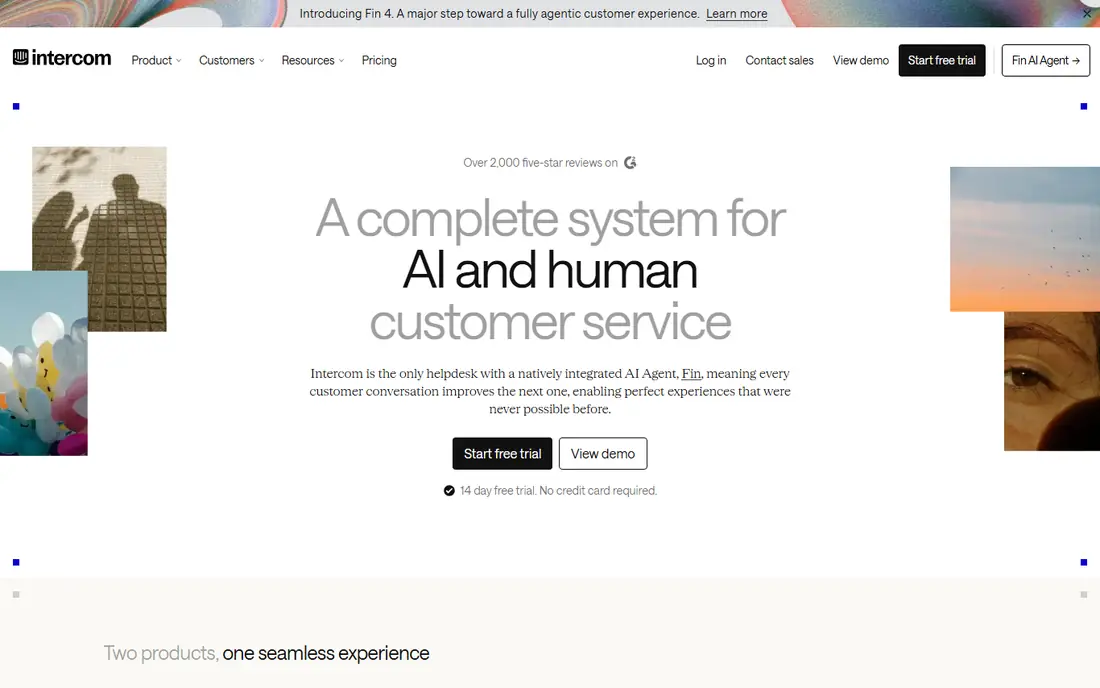
Intercom is a customer messaging platform whose AI agent, Fin, answers questions from help centre content, past conversations and connected data, then hands over to a human with full context when needed. That combination suits SaaS and ecommerce teams that want fast answers without losing the human option for complex cases. The shared inbox, live chat, email and automation tools sit in one place, which helps small support teams manage several channels.
Pricing needs care, because costs depend on seats, add-ons and AI resolution pricing in some plans. A team also needs good help centre content for the AI to answer well, because a bot can only be as clear as the knowledge it is given. For support-led teams that value a polished product and strong handoff, Intercom remains a leading choice.
- AI agent with knowledge-based answers
- Shared inbox for chat, email and social
- Smooth handoff to humans
- Pricing can rise with seats and AI resolutions
- Setup needs good help centre content
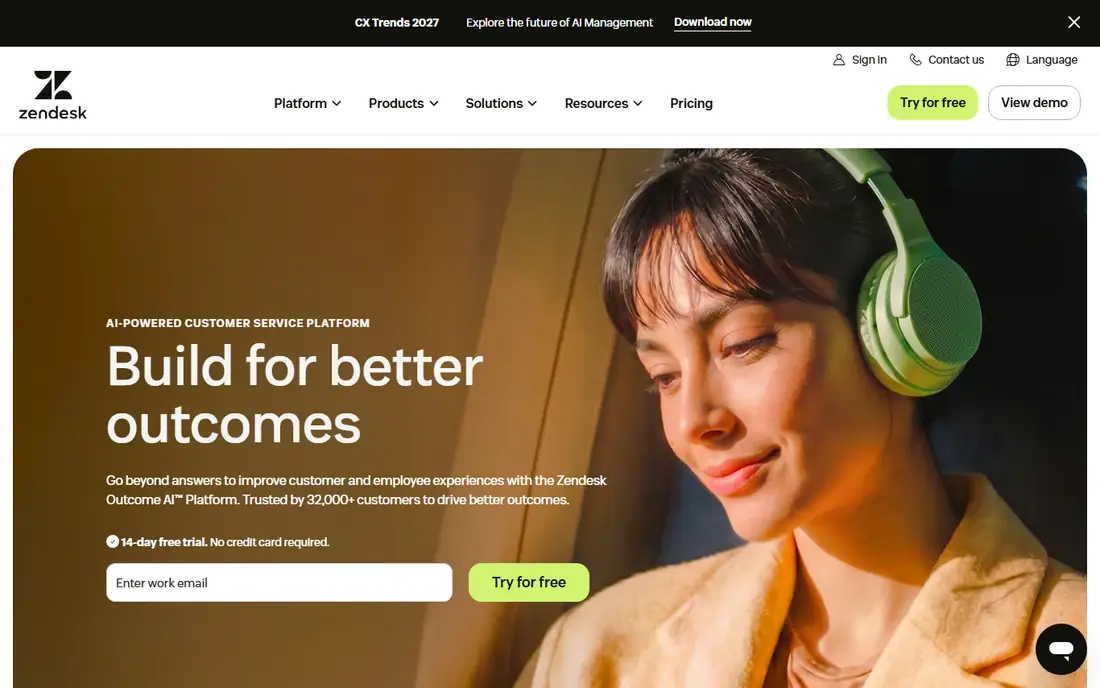
Zendesk AI brings AI agents, generative replies, triage and automation into Zendesk's support suite, which many large teams already use for tickets, chat, email and social. AI agents can resolve common questions, summarise conversations and route complex cases to the right team, while human agents keep full ticket history in the same system. That depth suits enterprises with high volumes and complex support workflows.
The main limit is that Zendesk AI works best as part of Zendesk, so a team that does not use Zendesk for support will face a larger migration. Pricing is per agent with AI add-ons on some plans, so total cost depends on team size and AI volume. For Zendesk users, it is the natural chatbot choice, and for large support teams starting fresh, it is a strong enterprise option.
- AI agents inside a mature ticketing system
- Intelligent triage and routing
- Multilingual support
- Enterprise pricing
- Best value inside the wider Zendesk suite
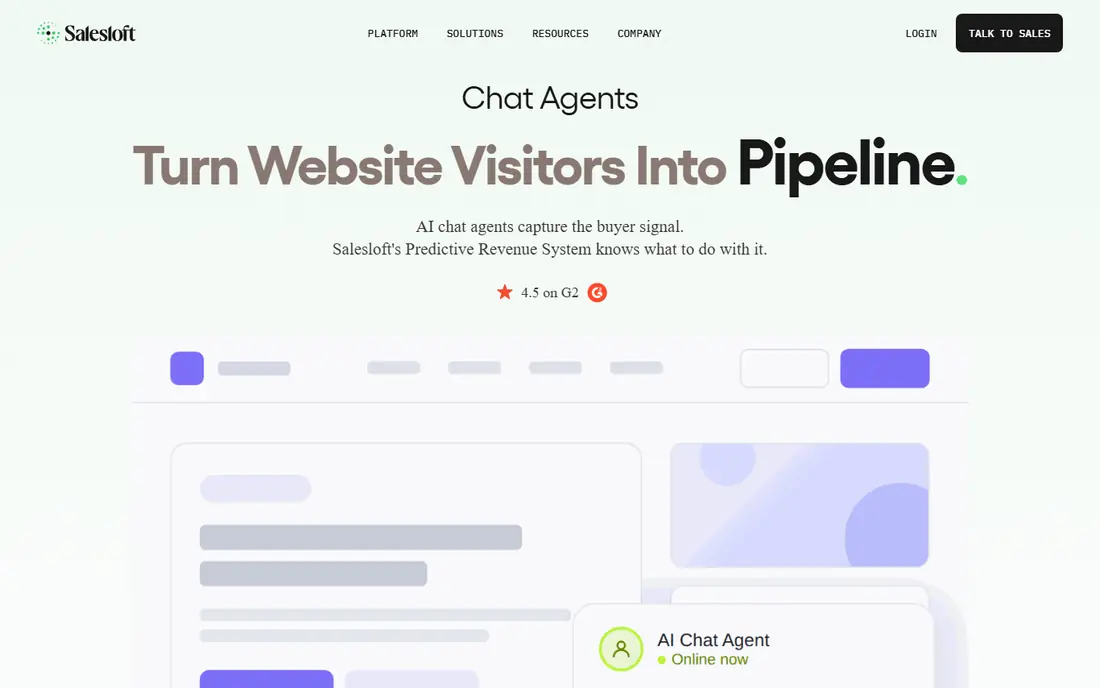
Drift, now part of Salesloft, is built for B2B sales rather than general support. It engages website visitors in conversation, qualifies them against target account and role rules, routes them to the right salesperson and books meetings without a form. That sales focus helps B2B teams turn website traffic into pipeline faster than a static contact form.
Drift is priced for enterprise B2B use, and it is not the best pick for a team that mainly needs support answers or social messaging. For a sales-led organisation with a clear ideal customer profile and a sales team ready to take live conversations, Drift's meeting and routing workflow is its main advantage over general chatbot tools.
- Conversational sales and meeting booking
- Account-based routing
- CRM links for B2B teams
- Enterprise pricing
- Less suited to general support than Intercom or Zendesk
Tidio suits small teams and ecommerce stores that need a chatbot quickly without enterprise cost or setup. Its visual flow builder lets a non-technical user build conversation flows, and its Lyro AI agent can answer common questions from a knowledge base and hand over to live chat when needed. Links to Shopify and other ecommerce tools help stores answer order, shipping and product questions in chat.
Lower plans limit AI automation volume, so a growing store may need to upgrade as chat volume rises. Tidio does not match Intercom or Zendesk on enterprise reporting or complex workflow depth, but for a small team that needs a working chatbot this week, it offers a strong balance of ease and price.
- Free tier to start
- Visual flow builder
- Lyro AI for automated answers
- Ecommerce links
- AI automation limits on lower plans
- Depth is below enterprise suites
HubSpot's chatbot builder suits teams that already use HubSpot as a CRM, because conversations, contacts, deals and tickets live in the same system. A team can build a chatbot to qualify leads, book meetings, answer common questions and route visitors to the right owner, with no separate integration to maintain. The free tier lets a team start with basic chatbots and live chat.
Advanced automation, AI features and reporting sit on paid HubSpot tiers, so a team that needs deep AI automation may still compare Intercom or Zendesk. For HubSpot users, though, the CRM link is a real advantage: every chat becomes part of the contact record, which helps sales and support follow up without switching tools.
- Chatbot inside HubSpot CRM
- Free tier to start
- Lead capture and routing linked to contacts
- Advanced automation sits on paid tiers
- AI depth depends on HubSpot plan
Freshchat, from Freshworks, is an omnichannel messaging tool for mid-size SaaS and ecommerce teams. It brings web chat, WhatsApp, Instagram and email into one inbox, with a no-code bot builder for common flows and AI features for intent detection and handoff. That channel mix suits teams whose customers message on several platforms and who want one team view rather than a separate inbox per channel.
Paid pricing is per agent, so costs grow with team size, and the most advanced AI features sit on higher plans. Freshchat does not offer the same enterprise depth as Zendesk AI, but for a growing support team that needs omnichannel chat at a moderate price, it is a practical option.
- Web, WhatsApp, Instagram and email in one inbox
- No-code bot builder
- AI intent and handoff features
- Pricing rises per agent on paid plans
- AI features vary by plan
ManyChat is built for social messaging automation, especially on Instagram, Facebook Messenger and WhatsApp. A team can build flows for comments, direct messages, lead capture, product drops and customer follow-up, with visual builders that do not need code. That social focus suits creators, ecommerce brands and marketers who get most customer messages on social platforms rather than on a website.
ManyChat is not a general support suite, so a team that needs ticketing, email support or website chat at scale should pair it with a support tool. Social platform rules also affect what messages can be sent and when, so a team should check those rules for each channel before building a large automation.
- Strong Instagram, Messenger and WhatsApp automation
- Visual flow builder
- Marketing and sales flows
- Not a website support suite
- Platform rules for social messaging apply
Ada is an AI customer service automation platform for larger teams that want to resolve a high share of routine questions without human handling. Its reasoning and automation features support multilingual conversations, voice and chat, and integrations with help desks and CRMs, with compliance features that suit finance, healthcare and other regulated sectors. For enterprises with high volumes of repeat questions, Ada's automation focus can cut support load significantly.
Pricing is quoted and implementation needs well-organised service content, so Ada suits larger teams rather than a small business that needs a quick chatbot. Teams should trial Ada with their most common service questions and measure resolution quality, not just automation rate, before committing.
- High automation for routine service tasks
- Multilingual support
- Strong compliance and enterprise features
- Pricing is quoted
- Setup needs clear service content and workflows
Botpress is an open, developer-friendly chatbot platform for teams that want to build custom bots with large language models, workflows and integrations. A developer can design conversation flows, connect knowledge sources, add tools and deploy to web, WhatsApp and other channels, with a free tier for building and testing. That control suits product teams, agencies and technical teams that need a bot tailored to a specific product or workflow.
Non-technical teams may find Botpress harder to adopt than Tidio, Intercom or HubSpot, because full value comes from custom building rather than templates alone. For teams with developer time and a custom use case, Botpress offers flexibility that closed chatbot apps do not, at a lower starting cost.
- Free tier for building
- LLM-powered bots with developer control
- Many channel integrations
- Needs technical skills for full value
- Support and hosting costs rise with scale
How we picked these
We compared official product pages, pricing pages, documentation and channel lists, and we checked that each platform is still available in October 2026. We looked for a clear chatbot job first, then for AI answer quality, human handoff, channel coverage, CRM links and pricing transparency. We mixed support, sales, social and developer tools because chatbot apps serve different jobs, and we did not claim hands-on trials that did not take place. Where pricing is quoted or depends on seats and AI volume, we wrote See website rather than repeating a third-party estimate as a list price.
What to check before you buy
Match the bot to the channel
Website support suits Intercom, Zendesk AI, Tidio, Freshchat or HubSpot. B2B sales suits Drift. Social messaging suits ManyChat. A bot built for the wrong channel will frustrate users even if its AI is strong.
Test handoff, not just answers
Ask what happens when the bot cannot answer, how context passes to a human, and how long a user waits. A bot that answers well but hands over poorly will damage trust faster than a bot that admits its limits early.
Check knowledge and training needs
AI bots need good help centre content, product data and example conversations. Budget time to write and maintain that content, and check how the bot learns from corrected answers over time.
Model seat and AI volume costs
Many platforms charge per agent, per resolution or per conversation. Model costs at current chat volume and at double that volume, and check what counts as a billable AI resolution before signing.
Frequently asked questions
What is the best chatbot platform?
Intercom and Zendesk AI lead for support, Drift leads for B2B sales, and Tidio leads for small teams on cost and ease. The best platform depends on whether the main job is support, sales, social messaging or custom building.
What is the best chatbot software for small business?
Tidio, HubSpot Chatbot and Freshchat are common small-business picks, because they offer free tiers and simple builders. ManyChat is the small-business pick for social messaging, while Botpress suits technical teams that want to build a custom bot.
Can a chatbot replace human support?
No, it should handle routine questions and route complex cases to humans with context. The best setups use AI for speed on common questions and humans for complaints, complex problems and high-value conversations.
How much does chatbot software cost?
Free tiers exist for Tidio, HubSpot, Freshchat, ManyChat and Botpress, while Intercom, Zendesk AI, Drift and Ada are priced by seats, AI volume or quote. Always model total cost at real chat volume rather than comparing entry prices alone.
What is the difference between a chatbot and a live chat tool?
Live chat connects a visitor to a human agent, while a chatbot answers automatically from flows or AI. Most modern tools combine both, with the bot handling routine questions and live chat taking over when a human is needed.
Do chatbots work on WhatsApp and Instagram?
Yes, with the right tool. Freshchat, ManyChat and Botpress support WhatsApp and social channels, while Intercom and Zendesk also cover social messaging in their suites. Check each tool's channel list and platform rules before building social flows.
Sources we checked (9)

Online Jobs is an independent blog about careers, online work, learning new skills and the tools that help people earn. More about us.
Keep reading
All posts
n8n Alternatives
n8n alternatives compared for 2026, with Zapier, Make, Activepieces, and more, covering visual builders, code steps, self-hosting, and pricing models.
iPhone Alternatives
Looking for iPhone alternatives in 2026? Compare 9 Android phones from Samsung, Google, OnePlus, and more, with cameras, battery life, and honest trade-offs.
eBay Alternatives
Looking for ebay alternatives? We compared 9 marketplaces for sellers on fees, buyer reach, categories and ease of listing, to help you sell with confidence.