Best CDP Platforms in 2026: 8 Platforms Compared


Packaged CDP with broad integrations · Starting price: $120 per month
How we put this together: we compare official feature and pricing pages, app store listings, privacy policies and public user reviews. Prices change, so check the provider's site before you pay.
Key takeaways
- Twilio Segment is the safest packaged CDP starting point, with a broad integration catalogue and a free tier for small volumes.
- Hightouch and RudderStack suit warehouse-first teams that want to activate data already stored in a cloud warehouse.
- Tealium and mParticle suit large enterprises with complex tag, consent and mobile data needs, though pricing is quote-based.
- BlueConic suits marketer-led teams that want profiles and audiences without heavy SQL or engineering work.
- Choose by data architecture first: packaged CDP, warehouse-native CDP and marketer CDP solve different problems, even though all use the CDP label.
Quick comparison
| Name | Who it suits | Starting price | Free option | |
|---|---|---|---|---|
| Twilio Segment | Packaged CDP with broad integrations | $120 per month | Yes | Visit |
 Hightouch | Warehouse-native activation | Free | Yes | Visit |
 Tealium | Enterprise tag and data governance | See website | No | Visit |
 RudderStack | Open, warehouse-first data routing | Free | Yes | Visit |
 mParticle | Mobile-heavy consumer products | See website | No | Visit |
 BlueConic | Marketer-led profiles and audiences | See website | Free trial | Visit |
 Treasure Data | Large enterprise customer data | See website | No | Visit |
 Klaviyo Data Platform | E-commerce customer profiles | Free | Yes | Visit |
The best CDP platforms
A customer data platform, or CDP, unifies customer data from websites, apps, CRMs, warehouses and offline sources into profiles, then sends audiences and events to advertising, email, analytics and support tools. The platforms below fall into three groups. Packaged CDPs store profiles themselves, warehouse-native CDPs activate data from your warehouse, and marketer-led CDPs focus on no-code audiences. We compared them on data collection, identity resolution, integrations, governance and pricing, so you can shortlist by architecture rather than by brand alone.
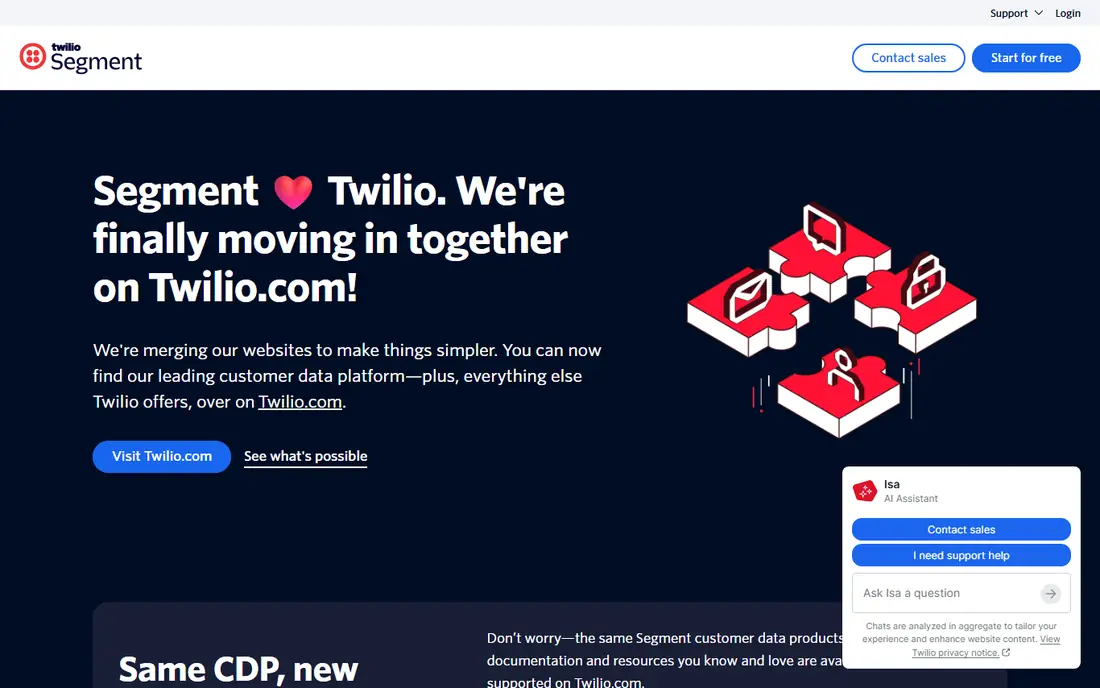
Segment, now part of Twilio, is the most widely known packaged CDP, and its integration catalogue is the reason. Teams can collect events from websites, apps and servers, build unified profiles, and route data to hundreds of destinations for analytics, advertising and messaging. The free tier covers up to 1,000 monthly tracked users, and the Team plan starts around 120 dollars per month for up to 10,000 monthly tracked users, which makes a pilot affordable. Data quality tools help teams validate events against a tracking plan before bad data reaches downstream tools.
The limit is that the full CDP, including advanced profiles and audience features, is quote-based, so the published Team price does not cover every use case. Costs also scale with tracked users, so a high-traffic site needs careful volume planning. Segment fits best for a team that wants a vendor-neutral hub, many integrations, and a proven packaged CDP without building activation logic from scratch.
- Very broad source and destination catalogue
- Free tier up to 1,000 monthly tracked users
- Clear Team plan from 120 dollars per month
- Full CDP features need a custom quote
- Costs rise with tracked users
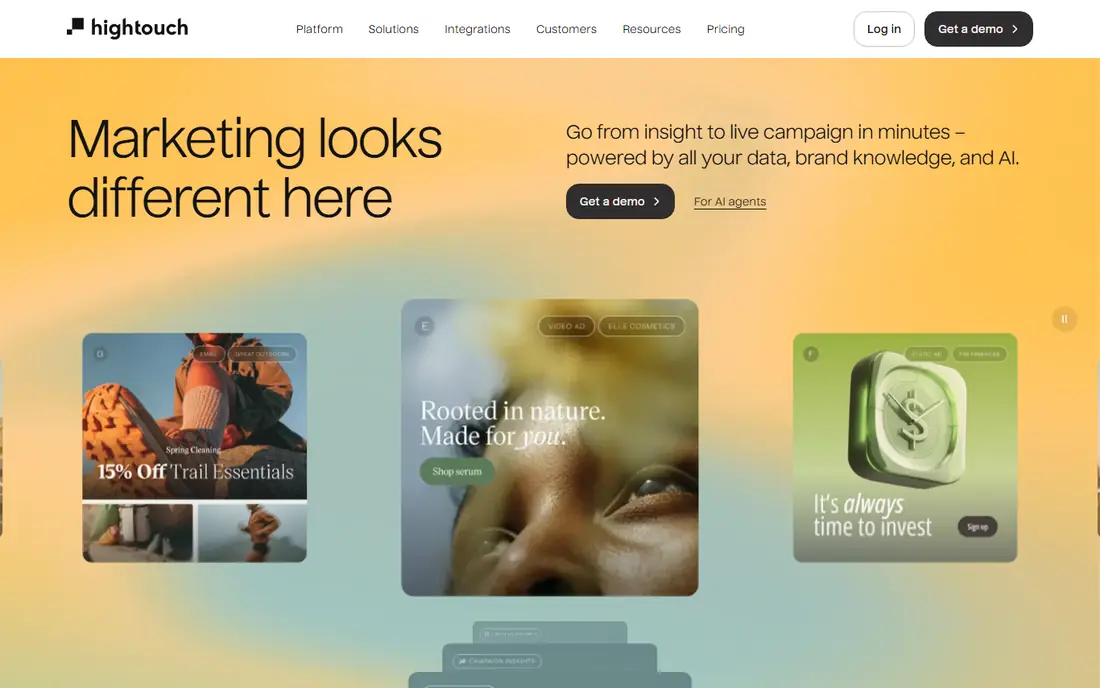
Hightouch is a warehouse-native, or composable, CDP. Instead of storing customer profiles in its own database, it reads modelled data from your cloud warehouse, resolves identities into Customer 360 profiles, builds audiences, and syncs them to more than 200 destinations. That approach appeals to data teams that already trust the warehouse as the source of truth, since it avoids duplicating data and reduces governance risk. Hightouch offers a free tier, which lets teams test syncs before committing to a paid plan.
Hightouch needs a warehouse that is already modelled well. If your warehouse is messy, incomplete or missing key customer tables, activation will expose those gaps rather than fix them. It also suits teams with data engineering capacity more than a purely marketing-led team. Choose Hightouch when your warehouse is central, your data team owns customer models, and you want activation without a second profile store.
- Activates data directly from the warehouse
- No need to copy data into a separate CDP store
- Free tier for testing
- Needs a well-modelled warehouse to work well
- Less suited to teams with no warehouse
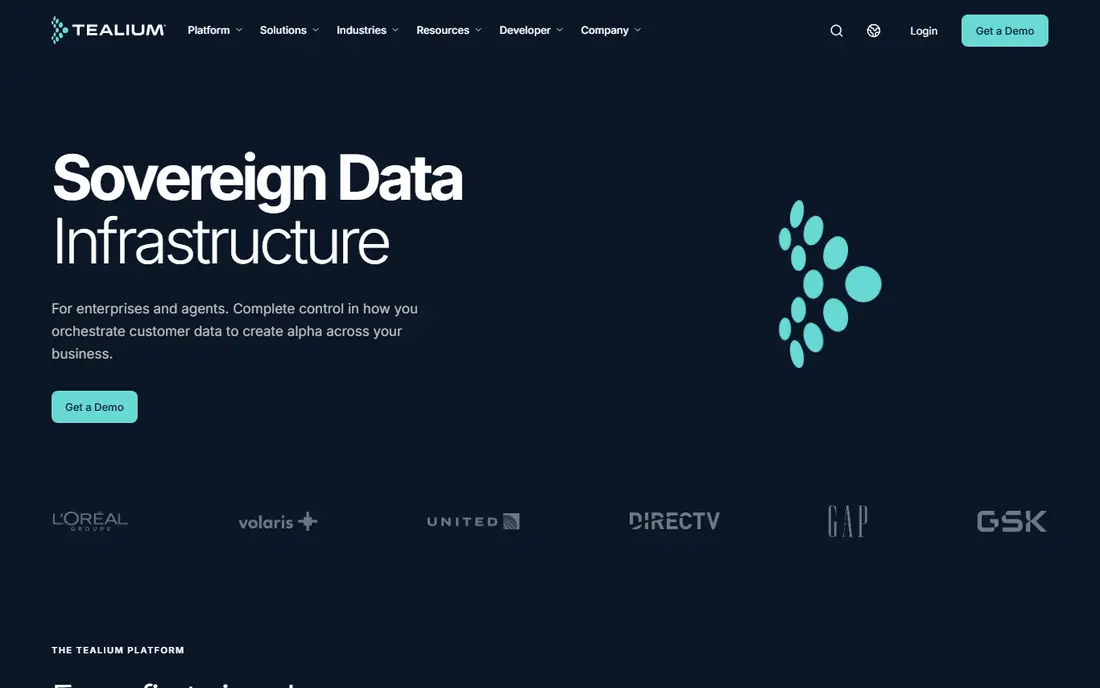
Tealium is an enterprise packaged CDP with deep roots in tag management. Its platform collects data from websites and apps, applies consent and governance rules, builds profiles, and activates audiences across advertising and marketing tools. For large firms with strict privacy, consent and data quality requirements, that governance layer is a major advantage. Tealium supports real-time data flows and a large integration catalogue, which helps enterprises that run many channels and regions.
Tealium is not a low-cost or self-serve purchase. Pricing is quote-based, and published guides place enterprise deployments at a high annual cost. Implementation also needs careful planning around tags, consent and data layers. Tealium fits best for large enterprises, especially those already using Tealium tag management, that need governance, consent and real-time activation at scale.
- Strong tag management and consent controls
- Large integration catalogue
- Enterprise governance and real-time data
- Pricing is quote-based and enterprise-level
- Implementation needs technical planning
RudderStack is a warehouse-first CDP with an open-source core, which appeals to engineering-led teams that want control over data pipelines. It collects events from sources, routes them to a warehouse and to destinations, and supports identity resolution and activation from warehouse data. The open-source version can be self-hosted, and a free tier lets teams test cloud features before paying. That openness reduces vendor lock-in compared with a closed packaged CDP, and it suits teams that already run data infrastructure.
RudderStack is not a marketer-only tool. Serious use needs data engineering, pipeline monitoring and warehouse modelling, and paid plans are priced by volume and features. Teams without engineering capacity may find a packaged CDP easier. Choose RudderStack when you want open infrastructure, warehouse-first activation, and the option to self-host parts of the pipeline.
- Open-source option and self-hosting
- Warehouse-first design
- Free tier for testing
- Needs engineering skill for serious use
- Paid plans start higher than the free tier suggests
mParticle, now part of Rokt, is a CDP built for mobile-heavy and multi-platform consumer products. It collects data from apps, web, connected TV and other sources, builds real-time profiles, and activates audiences across advertising, messaging and analytics tools. That mobile focus helps consumer brands that need to link app behaviour, web behaviour and offline data into one profile, with controls for data quality and privacy. mParticle also supports predictive audiences and journey tools for larger teams.
Pricing is quote-based, and published guides place mParticle in a high enterprise range, so it is not suited to a small startup or a low-volume site. Implementation also benefits from a data team that can manage SDKs, event design and governance. mParticle fits best for a consumer product with large mobile volume, multiple platforms, and a need for real-time activation at scale.
- Strong mobile and multi-platform data handling
- Real-time profiles and audiences
- Good for consumer apps at scale
- Pricing is quote-based and high for small firms
- Needs a demo for a firm figure
BlueConic is a marketer-operated CDP that lets marketing teams build unified profiles and audiences without writing SQL. Its listeners collect behavioural, transactional and campaign data, stitch identities into profiles, and make audiences available for email, advertising and personalisation. That no-code approach helps teams that need to act on customer data quickly, without waiting for a data engineering sprint. BlueConic also offers lifecycle and segment tools that suit retail, media and consumer brands.
BlueConic pricing is quote-based, and published guides place it in a high range for larger deployments, so small teams should request a quote early. It is also less warehouse-native than Hightouch, so a warehouse-first team may prefer a composable option. Choose BlueConic when marketers need to own profiles and audiences, when speed to campaign matters, and when SQL-heavy activation would slow the team down.
- No-code profile and audience building
- Listener-based data collection
- Good for marketing teams without SQL
- Pricing is quote-based
- Less warehouse-native than Hightouch or RudderStack
Treasure Data is an enterprise CDP that handles large volumes of customer data from many sources, builds unified profiles, and supports segmentation, journeys and activation. It is often shortlisted by large retail, manufacturing and consumer firms that need to unify offline, online and transactional data at scale. Its platform includes data collection, identity resolution, audience building and analytics, with governance controls for enterprise buyers. That breadth helps a large firm replace several point tools with one customer data system.
Treasure Data is not a self-serve tool for a small team. Pricing is quote-based, implementation is a project, and success needs data ownership and clear use cases. Teams without a large data volume or a complex offline-to-online problem may find Segment or Hightouch simpler and cheaper. Choose Treasure Data when scale, enterprise governance and complex data unification are the main requirements.
- Enterprise-scale data handling
- Strong for retail and manufacturing use cases
- Profile and journey tools
- Pricing is quote-based and enterprise-level
- Implementation is a larger project
Klaviyo Data Platform unifies marketing, commerce and service data into real-time customer profiles for online retailers. It offers identity resolution, segmentation, predictive analytics and warehouse syncs, with more than 350 integrations, and it activates profiles directly inside Klaviyo email, SMS and service flows. That tight link between profile and channel is the advantage: a segment built from purchase and browsing data can trigger a flow without a separate activation step. Pricing starts free for small lists and scales with contacts, which makes a pilot easy for a small store.
Klaviyo is an e-commerce CDP first. A B2B software firm, a bank or a media company with non-commerce data models may find a general CDP such as Segment or Hightouch a better fit. Pricing also rises with list size, so a large list needs a careful cost check. Choose Klaviyo Data Platform when you run an online store, especially on Shopify, and want profiles, segments and campaigns in one system.
- Deep Shopify and e-commerce integration
- Profiles tied directly to email and SMS
- Free start for small lists
- Best for e-commerce, less general for other industries
- Pricing scales with contacts
How we picked these
We looked for CDPs that are active in 2026, cover profile unification and activation in a meaningful way, and publish enough detail to compare architecture and pricing. We checked vendor homepages, pricing pages where available, and recent comparisons for free tiers and starting prices. We kept packaged, warehouse-native and marketer-led options, because the CDP label now covers all three, and a buyer who only compares packaged CDPs may miss a better warehouse-native fit.
We did not claim hands-on testing of every enterprise deployment, since many CDPs require a demo and a data project to evaluate fully. Where pricing is quote-based we say so, and where a free tier or starting price was published we used it. Always run a pilot with real data volumes, since CDP costs scale with users, events and destinations.
Choosing a CDP by architecture
Start with where your customer data already lives. If you have no warehouse and need event collection, profiles and activation in one place, shortlist Segment, Tealium or BlueConic. If your warehouse is already the source of truth, shortlist Hightouch, RudderStack and ask whether you need full CDP features or just activation. If you run an online store, shortlist Klaviyo Data Platform alongside Segment. That architecture question matters more than any feature checklist, because it decides who owns the data model and where governance lives.
Pilot with one use case and real volume
Pick one use case, such as abandoned cart audiences, churn prevention or paid media suppression, and run it end to end. Measure time from data change to audience live, match rates in the destination, and the effort needed to maintain the pipeline. A pilot with real volume also reveals true cost, since CDP pricing scales with tracked users, events and syncs. Choose the platform that makes that one use case reliable, not the platform with the longest integration list.
Check identity, consent and data quality early
Ask how identity resolution works, how anonymous and known profiles merge, and how consent is enforced across destinations. Ask how event validation works, how bad data is caught, and how you can correct a profile. These controls decide whether the CDP builds trust or creates a compliance risk. A platform that activates quickly but handles consent poorly will cost more in the long run than a slower, better-governed option.
Frequently asked questions
What is the best CDP platform?
Twilio Segment is the best overall packaged CDP for most teams, because of its broad integrations and free tier. Hightouch is best for warehouse-native teams, Tealium is best for enterprise governance, and BlueConic is best for marketer-led teams. The best platform depends on your data architecture, team skills and volume.
What is the best CDP software for a small business?
For a small business, Segment free tier, Hightouch free tier, RudderStack free tier or Klaviyo Data Platform free start are the most practical options. Start with a single use case, such as email audiences or ad suppression, and only pay when volume or destination needs exceed the free tier.
What are customer data platform best practices?
Start with a clear use case, define the customer model in the warehouse or CDP, validate events against a tracking plan, enforce consent across destinations, and measure activation speed and match rates. Keep governance owned by one team, avoid duplicating profiles across tools, and review data quality regularly as new sources are added.
Is a warehouse-native CDP better than a packaged CDP?
A warehouse-native CDP is better when the warehouse is already the source of truth and the data team owns customer models, since it avoids a second profile store. A packaged CDP is better when you have no warehouse, need event collection and profiles quickly, or want a self-contained system. Many firms use both: a packaged CDP for event collection and a warehouse-native tool for activation.
How much does a CDP cost?
Costs range from free tiers at Segment, Hightouch, RudderStack, Klaviyo, to around 120 dollars per month for Segment Team, to quote-based enterprise pricing at Tealium, mParticle, Treasure Data, BlueConic and Adobe. Always price by tracked users, events and destinations, since headline prices rarely cover full enterprise use.
What is the difference between a CDP and a CRM?
A CDP unifies behavioural, transactional and third-party data into profiles for activation across many tools, while a CRM mainly manages sales and service relationships and records. A CDP can feed a CRM with audiences and attributes, and a CRM can feed a CDP with sales data, but they serve different jobs.
Sources we checked (8)

Online Jobs is an independent blog about careers, online work, learning new skills and the tools that help people earn. More about us.
Keep reading
All posts
n8n Alternatives
n8n alternatives compared for 2026, with Zapier, Make, Activepieces, and more, covering visual builders, code steps, self-hosting, and pricing models.

ZoomInfo Alternatives
The best ZoomInfo alternatives in 2026, compared on price, free plans, data coverage, and which tool fits small teams or large sales teams best in detail.

Yotpo Alternatives
Find cheaper alternatives to Yotpo for reviews and loyalty, with Judge.me, Loox, Stamped, and more compared for Shopify stores in 2026, all in one guide.